


Certified auto technicians give you clearer diagnostics, fewer comebacks, and safer repairs. When a technician holds an ASE (Automotive Service Excellence) credential, that credential represents independently verified skill, not just years on the job. For car owners, that distinction translates directly into better outcomes at the shop.
- Fewer comebacks: Certified techs diagnose problems correctly the first time, reducing repeat visits.
- Warranty compliance: Many manufacturer and extended warranties require repairs performed by qualified technicians.
- Diagnostic accuracy: Certification tests cover real-world problem-solving, not just theory.
- Safety improvements: High-stakes systems like brakes and ADAS get handled by someone who has proven competence on those exact systems.
Kwik Kar Oil Change & Auto Care employs ASE Certified Master technicians, making it a local option worth knowing when you need verified, trustworthy service.
Table of Contents
- What does “certified auto technician” actually mean?
- How technicians earn and keep their ASE credentials
- Which systems are certified technicians tested on?
- The real benefits certified technicians deliver to you
- Why modern vehicles make certification more important than ever
- How to verify a technician’s credentials before you commit
- Is the price premium for certified service worth it?
- Key Takeaways
- Why we invest in ASE certification at Kwik Kar
- Certified service is available at Kwik Kar Oil Change & Auto Care
- Useful sources and further reading
- FAQ
What does “certified auto technician” actually mean?
Not every shop that says “certified” means the same thing. A certified auto technician holds a credential issued by an independent testing body, most commonly ASE, which has been certifying individual automotive professionals through standardized exams since 1972. The credential belongs to the person, not the building.
That distinction matters. A shop can display an ASE Blue Seal sign, but the Blue Seal is a shop-level recognition that requires at least 75% of its technicians to hold ASE credentials. It does not mean every tech who touches your car is certified. Individual ASE certification, by contrast, confirms that a specific technician passed subject-specific exams and documented hands-on work experience. You can learn more about what ASE certification means for you before your next service visit.
Manufacturer certifications also exist, issued by brands like Ford, GM, or Toyota through their dealer networks. These are valuable for brand-specific repairs but narrower in scope than ASE’s multi-brand, multi-system testing. When you see “certified” on a shop’s signage, asking which body issued the credential and to whom is always the right move.
How technicians earn and keep their ASE credentials
Earning an ASE credential is not a one-time event. The pathway combines documented hands-on work experience with passing one or more challenging subject-specific exams. Technicians must prove they have real-world experience before they can even sit for the test, so a freshly trained graduate cannot simply walk in and claim the credential.
“ASE certifications must be renewed regularly; technicians retest every 5 years to keep credentials current, ensuring they stay up to date with evolving vehicle technologies.”
— ASE Certification Pathway
That regular recertification cycle every few years is significant for you as an owner. A credential earned a decade ago and never renewed tells you very little about a technician’s current knowledge of hybrid systems or ADAS calibration. Between recertification cycles, technicians can use the ASE Renewal App to earn monthly credits that can extend credential validity or reactivate lapsed credentials, keeping their knowledge current without waiting for the full retest window.
When you ask a shop about credentials, always ask for the recertification date, not just whether the tech is “certified.”
Which systems are certified technicians tested on?
ASE certification covers a broad range of vehicle systems, organized into specialty areas. Here is what that looks like in practice:
- Engine performance and repair: Fuel systems, ignition, emissions, and internal engine components.
- Brakes: Hydraulic systems, ABS, and electronic brake controls.
- Electrical and electronic systems: Wiring, sensors, modules, and charging systems.
- Heating and air conditioning (HVAC): Refrigerant handling, compressor diagnosis, and climate controls.
- Transmission and drivetrain: Automatic and manual transmissions, axles, and driveshafts.
- Suspension and steering: Alignment, wheel bearings, and power steering systems.
- Advanced diagnostics: Scan tool interpretation, live data analysis, and fault-code resolution.
- Hybrid and electric vehicle systems: High-voltage battery management, regenerative braking, and EV-specific safety protocols.
For routine maintenance like oil changes or tire rotations, a single-area certification may be sufficient. For complex, multi-system repairs, an ASE Certified Master Technician is the stronger choice. Master status requires passing multiple exams across a full series, typically four to eight tests depending on the specialty track, plus documented experience. That breadth matters when a problem crosses system boundaries, such as an electrical fault affecting transmission behavior or a brake issue tied to ADAS calibration.
Pro Tip: Ask specifically whether the technician who will work on your car holds certification in the system being repaired, not just whether the shop employs certified staff generally.
The real benefits certified technicians deliver to you
Safety and liability
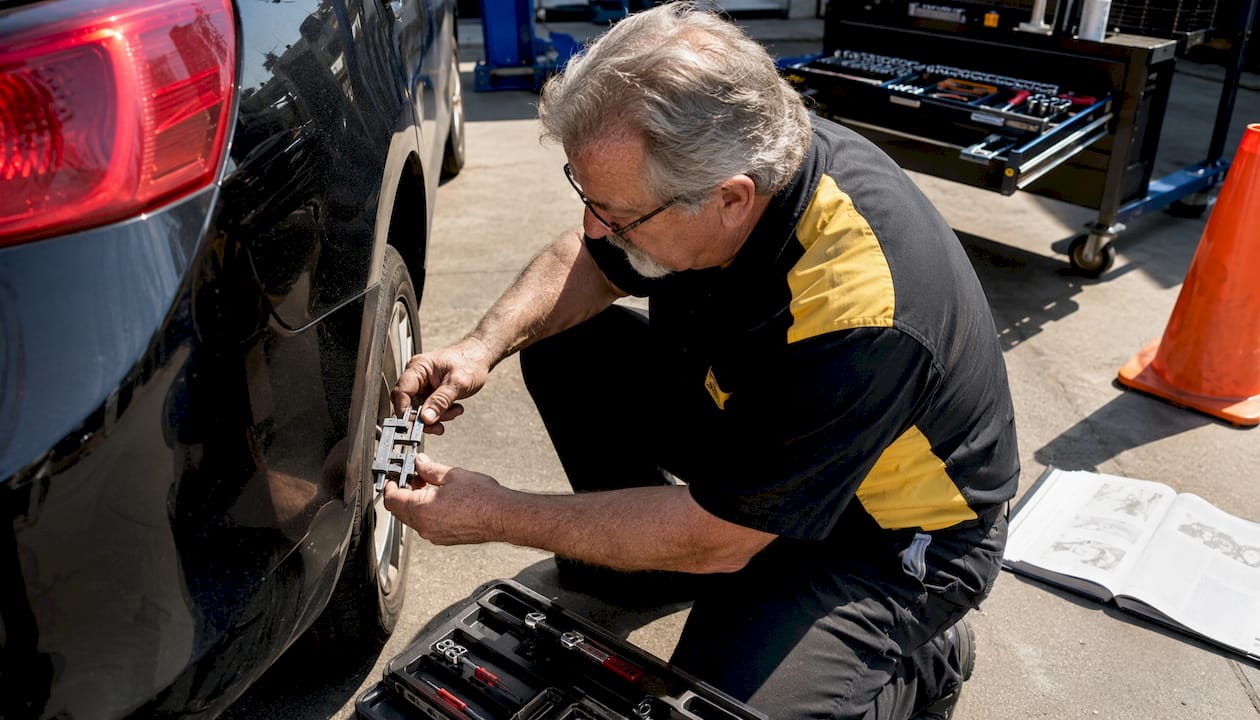
Brake repairs, steering work, and ADAS recalibration are not areas where guesswork is acceptable. A certified technician has been tested on the specific procedures and tolerances those systems require. Incorrect ADAS calibration after a windshield replacement, for example, can cause a forward-collision warning system to misfire or fail entirely. Getting it right the first time is not just about convenience; it directly affects how your vehicle behaves in an emergency.
Accurate diagnostics
Modern vehicles generate fault codes, but reading a code and diagnosing the root cause are two different skills. Certified technicians are trained to interpret live data, cross-reference system behavior, and isolate the actual failure rather than replacing parts until something works. That accuracy reduces your total repair cost because you pay for the fix, not the guessing process. Kwik Kar’s advanced engine diagnostics service is built around this principle.
Fewer comebacks
Shops and fleet operators that invest in technician certification report measurable reductions in repeat visits for the same problem. A repair done correctly the first time saves you time, money, and the frustration of returning to the shop a week later with the same symptom.
Warranty and insurance acceptance
Many extended warranties and some manufacturer warranties specify that covered repairs must be performed by qualified technicians. A repair done by an uncertified tech can void coverage, leaving you responsible for costs the warranty was supposed to cover. Certified service protects that investment.
Vehicle longevity and resale value
Consistent, correctly performed maintenance extends the life of your vehicle’s major components. A well-documented service history with certified repairs also supports resale value, since buyers and dealers can see the work was done to a verifiable standard.

Why modern vehicles make certification more important than ever
Today’s vehicles are not mechanical systems with a few electronic accessories. They are computing platforms on wheels, with dozens of interconnected modules managing everything from fuel delivery to lane-keeping. ASE and industry experts consistently describe independent certification as a critical trust proxy precisely because the consequences of mishandling these systems are serious.
Consider what is at stake with improperly serviced components:
- ADAS systems (adaptive cruise control, automatic emergency braking, lane-departure warning) require precise calibration after any suspension, steering, or glass work. An uncalibrated system can give false confidence or fail to activate when needed.
- High-voltage hybrid and EV components carry risks that require specific training and safety protocols. Mishandling a high-voltage battery pack is a genuine safety hazard.
- Integrated braking and stability control systems interact with multiple sensors and modules; a brake repair that ignores those connections can degrade the entire system’s response.
A 2023 ASE consumer survey showed that most customers consider ASE status when choosing a repair facility, reflecting growing awareness of these risks. Shops like Kwik Kar Oil Change & Auto Care that hold ASE and RepairPal certifications provide a verifiable answer to that concern.
How to verify a technician’s credentials before you commit
Knowing certification matters is only useful if you can actually confirm it. Here is a practical checklist:
Before you book:
- Ask the shop whether the technician assigned to your repair holds ASE certification in the relevant specialty.
- Request the technician’s name and ask to see their individual ASE certificate or myASE record.
- Confirm the recertification date on the certificate. An outdated certificate may reflect lapsed knowledge.
At the shop:
- Look for individual certificates displayed at the service counter or in the technician’s bay, not just a shop-level Blue Seal sign.
- Ask: “Which ASE tests does the technician who will work on my car hold?”
- Ask: “When did they last recertify?”
- Ask: “Can I meet the technician before the work begins?”
Red flags to watch for:
- Vague answers like “all our guys are certified” without specifics.
- Willingness to show only the shop’s Blue Seal sign, not individual credentials.
- Reluctance to name the specific technician assigned to your vehicle.
ASE certifies individuals, not shops, so the shop’s signage is a starting point, not a guarantee. Knowing how to find a trustworthy mechanic before you need one puts you in a much stronger position.
Is the price premium for certified service worth it?
Certified technicians often command a slightly higher hourly labor rate than uncertified counterparts. That premium is real, but so is what it buys you.
| Trade-off | Uncertified service | Certified service |
|---|---|---|
| Diagnostic accuracy | Variable; may require multiple attempts | Higher first-visit accuracy |
| Comeback risk | Higher probability of repeat visits | Lower; correct diagnosis reduces rework |
| Warranty compliance | May void extended or manufacturer coverage | Meets most warranty requirements |
| Safety-system work | Risk of improper calibration | Tested on specific system procedures |
| Long-term vehicle cost | Potentially higher due to rework | Lower over time with fewer repeat repairs |
For routine, low-stakes maintenance, the difference in outcome may be small. For anything touching safety systems, complex electronics, or warranty-covered components, the math favors certified service clearly. A single misdiagnosed electrical fault that requires two additional shop visits will cost more than the hourly premium you would have paid upfront for a certified tech who got it right the first time.
Key Takeaways
ASE-certified technicians deliver safer repairs, more accurate diagnostics, and better long-term value than uncertified alternatives, making certification the single most reliable quality signal available to car owners today.
| Point | Details |
|---|---|
| Certification is individual, not shop-wide | Always ask to see the specific technician’s ASE certificate, not just the shop’s Blue Seal sign. |
| Recertification every 5 years | Confirm the renewal date on the credential; an outdated certificate may reflect lapsed knowledge. |
| Master Technician for complex repairs | ASE Master status requires multiple exam passes and is best suited for multi-system or safety-critical work. |
| Certified service protects your warranty | Many extended warranties require repairs by qualified technicians; uncertified work can void coverage. |
| Kwik Kar Oil Change & Auto Care | Employs ASE Certified Master technicians with OEM-level diagnostics and transparent estimates before work begins. |
Why we invest in ASE certification at Kwik Kar
At Kwik Kar Oil Change & Auto Care, we made a deliberate choice to staff with ASE Certified Master technicians because we believe you deserve to know exactly who is working on your vehicle and what they are qualified to do. Certification is not a marketing badge for us; it is the standard we hold our team to every day. We provide written estimates before any work begins, so there are no surprises when you pick up your car. You are welcome to ask to see individual technician credentials when you visit our shop. We keep those records current and are proud to show them. Our recognition from RepairPal and NAPA AutoCare reflects the same commitment to verified, transparent service that ASE certification represents.
Certified service is available at Kwik Kar Oil Change & Auto Care
Choosing certified service should not require a research project. At Kwik Kar Oil Change & Auto Care, ASE Certified Master technicians handle everything from oil changes and brake repairs to advanced diagnostics and electrical work, all on domestic and import vehicles.
What you get when you book with Kwik Kar:
- ASE Certified Master technicians on staff for every service category
- OEM-level diagnostic tools for accurate, first-visit fault resolution
- Transparent written estimates before work begins, no surprises
- Warranty-compliant repairs that protect your coverage
- Fast turnaround and available coupons for service packages
Ready to experience the difference certified service makes? Visit Kwik Kar’s full-service auto repair center to book your appointment, or browse all available services to find what your vehicle needs. When you arrive, ask to see your technician’s ASE credentials. We will have them ready.
Useful sources and further reading
- ASE — About ASE and the Blue Seal: The primary source for understanding what ASE certification is, who it covers, and how the Blue Seal program works.
- ASE Certification Pathway: Explains the steps to earn and renew ASE credentials, including the regular recertification cycle every few years.
- ASE Certification Need to Know (PDF): Detailed breakdown of Master Technician requirements and the ASE Renewal App.
- ASE Resources for Drivers: Consumer-facing page explaining what ASE certification means for vehicle owners.
- Vehicle Service Pros — ASE as a competitive differentiator: Industry reporting on how ASE branding influences customer confidence and shop selection.
- Kwik Kar Oil Change & Auto Care — ASE & RepairPal Certified: Kwik Kar’s certification page, with details on staff credentials and shop recognitions.
FAQ
What are the main benefits of certified auto technicians?
Certified technicians deliver more accurate diagnostics, safer repairs on critical systems, and lower comeback rates than uncertified counterparts. Their credentials also help protect your warranty coverage on covered repairs.
Are ASE certifications worth it for the shop and the customer?
Yes. Shops that invest in ASE certification report measurable reductions in repeat visits, and customers gain confidence that the technician has passed independent, subject-specific exams rather than relying solely on on-the-job experience.
Why should you choose a certified automotive technician?
Modern vehicles contain complex, interconnected electronic systems where an incorrect repair can affect safety-critical functions like ABS, ADAS, and stability control. A certified technician has been independently tested on those exact systems.
How much do certified auto technicians earn compared to uncertified techs?
The U.S. Bureau of Labor Statistics tracks median wages for automotive service technicians and mechanics; certified technicians generally access higher pay scales within that range, reflecting the added skill and accountability their credentials represent.
How do you verify that a technician is currently ASE certified?
Ask to see the individual technician’s ASE certificate or myASE record, and confirm the recertification date. ASE credentials must be renewed every five years, so a current date on the certificate confirms the technician’s knowledge is up to date.