

You’ve probably run into the phrase brake tag louisiana in one of two ways. You moved to Louisiana and saw a sticker on someone’s windshield that looked different from registration. Or your current sticker is about to expire and you’re trying to figure out what the inspection station will look at before you pull in.
That confusion is normal. A brake tag is one of those state requirements that longtime locals treat as obvious, while newer drivers often wonder whether it’s the same thing as registration, emissions testing, or insurance verification. It isn’t exactly any of those, though it overlaps with all three in practical ways.
What matters most is this. The brake tag process is a safety inspection system. If you understand what inspectors check, what tends to fail, and what simple maintenance habits prevent trouble, the whole thing becomes far less stressful. If you also want a broader overview of Louisiana's broader automotive requirements, that resource helps put the inspection requirement in context with the rest of the state’s driver rules.
Your Guide to Louisiana's Brake Tag System
A lot of drivers first hear about brake tags from a friend, a mechanic, or a sign outside an inspection station. The name makes it sound like the state only cares about your brakes. In reality, the tag represents a wider safety inspection.
Think of it as your car’s basic roadworthiness check. If the vehicle passes, the state has proof that key safety items were inspected. If something fails, the problem usually isn’t mysterious. It’s often a lamp issue, a horn problem, worn brake components, or another item that a technician can identify quickly.
Why drivers get tripped up
The most common misunderstanding is mixing up the brake tag with registration. Registration shows that the vehicle is registered. The brake tag shows that it passed a required safety inspection.
That distinction matters because a car can be properly registered and still fail inspection for a safety issue. The reverse confusion happens too. Some drivers focus on the sticker date and forget the vehicle itself still has to meet the standard every time it’s inspected.
Practical rule: Treat the brake tag like a safety checkpoint, not a paperwork chore.
What makes the process easier
Drivers usually do best when they prepare the car before the appointment instead of waiting to find out what breaks the inspection. A quick check of lamps, horn, wipers, tire condition, and brake feel can save a repeat visit.
Fleet managers tend to understand this immediately. Preventive maintenance is cheaper and less disruptive than inspection-day surprises. The same logic works for one family sedan just as well as it does for a group of work trucks.
What Exactly Is a Louisiana Brake Tag
A Louisiana brake tag is proof that a vehicle passed the state’s safety inspection. The easiest way to understand it is as a health certificate for your car. It doesn’t certify that the car is perfect. It shows that the vehicle met the state’s minimum safety standards at the time it was inspected.
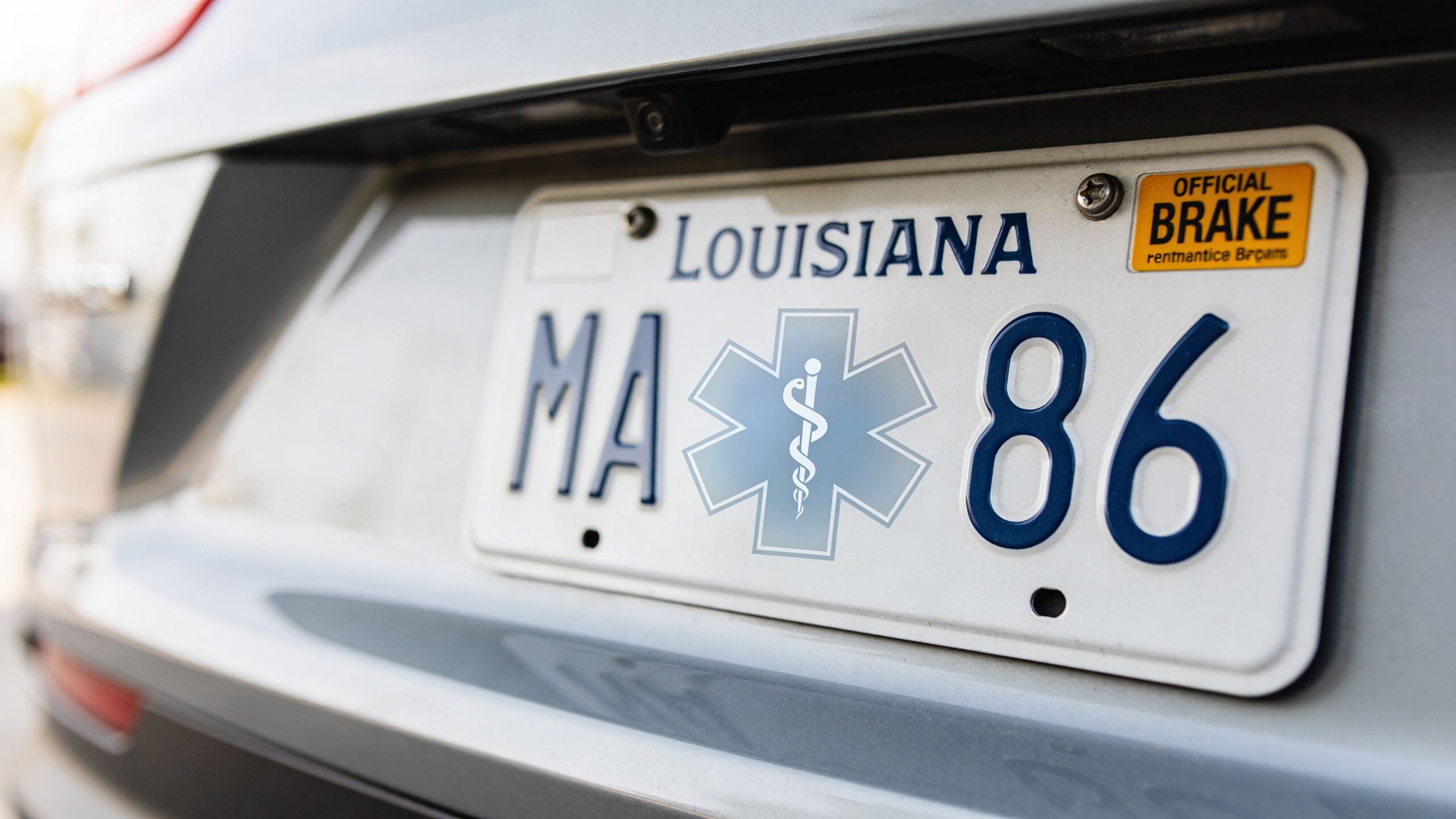
That’s why the system matters beyond the sticker itself. The state uses it to keep obviously unsafe vehicles off the road, and inspection stations use a consistent checklist rather than guesswork.
It’s separate from registration
Drivers often assume the windshield sticker and the registration process are the same event. They aren’t. Registration handles legal ownership and vehicle recordkeeping. The brake tag deals with whether the vehicle is safe enough to operate under Louisiana’s inspection rules.
That difference becomes clearer when a car is legal to own and insure but still has a failed brake lamp, weak horn, bad wipers, or braking problem. The state doesn’t treat those as minor cosmetic issues.
Where inspections happen
Louisiana uses certified inspection stations, not random repair shops acting on their own. In New Orleans, the system includes a network of certified stations, and public records identify locations such as Delta Fuel at 3300 South Claiborne Ave and University Shell at 6201 South Claiborne Ave as notable hubs within that network, while commercial vehicles, school buses, and government-owned vehicles must use designated commercial facilities by appointment according to the New Orleans brake tag station dataset.
That tells you something important. The brake tag system isn’t informal. It’s structured, documented, and designed to cover both private drivers and higher-duty vehicles.
Which vehicles draw closer scrutiny
Passenger cars still need to meet the inspection standard, but heavier and commercial vehicles face more specialized oversight. Public passenger vehicles, school buses, government units, and heavier commercial vehicles are handled through the formal inspection structure because their operating demands are different.
For a regular driver, the takeaway is simple:
- Your car needs more than working brakes. Lighting, visibility, and other safety systems matter.
- Your inspection station must be certified. The sticker only means something if it comes through the proper process.
- Your maintenance habits matter before the visit. An inspection reveals existing problems. It doesn’t fix them.
The Official Louisiana Inspection Checklist
When drivers ask what an inspector checks, they usually expect a short answer. The honest answer is broader. A proper Louisiana inspection looks at the systems that affect whether your vehicle can stop, signal, steer, and stay visible.
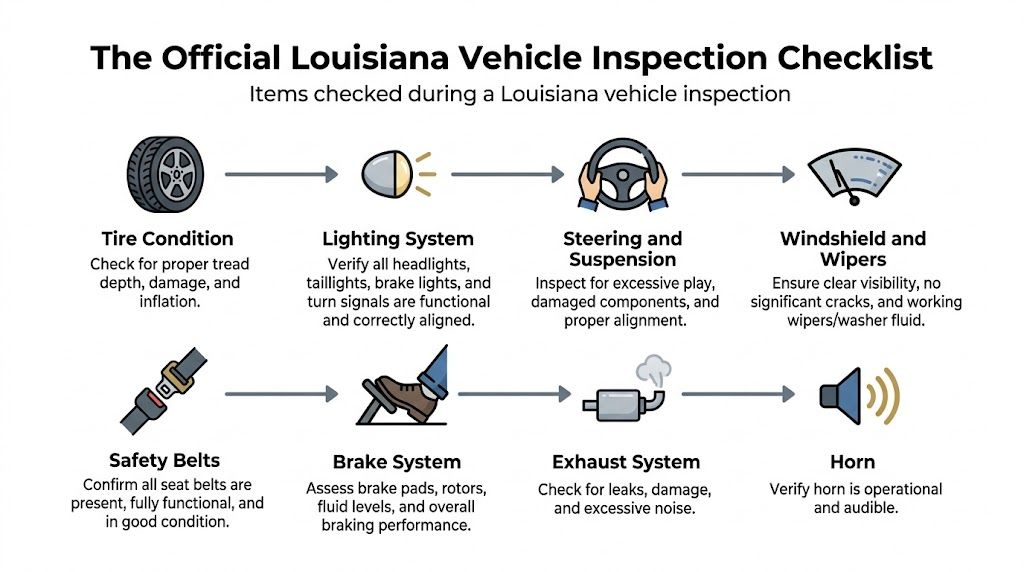
If you want a good companion resource for organizing your own pre-check routine, this vehicle inspection checklist is useful because it mirrors the way technicians think through a car before inspection day.
What the inspector is looking for
Here’s the practical version of the official checklist many drivers care about most:
- Tires: Inspectors look for unsafe wear, visible damage, and overall condition.
- Lights: Headlights, brake lamps, taillights, and turn signals need to function properly.
- Steering and suspension: Excessive looseness, damaged parts, or poor control can create a failure.
- Windshield and wipers: The driver needs clear forward visibility.
- Seat belts: Safety belts need to be present and usable.
- Brakes: The system has to perform properly, not just look acceptable in the bay.
- Exhaust: The exhaust system can’t be in unsafe condition.
- Horn: The horn has to work.
The brake test is not just a quick glance
Louisiana’s inspection protocol requires a road test at 20 MPH with the brakes applied slowly to assess braking performance, and for commercial vehicles the inspector must verify air, hydraulic, and electric braking system components, with wedge brake lining scribe mark movement not exceeding 1/16 inch under the official inspection procedure document.
That matters because drivers sometimes assume a brake inspection means someone just peeks through the wheel at the pad thickness. Louisiana’s process is more grounded in real vehicle behavior. The road test checks whether the vehicle responds predictably when braking.
A car can have parts that look acceptable at a glance and still behave poorly on the road.
Why certain items fail even when drivers feel fine behind the wheel
Drivers adapt to their cars. That’s one reason inspection failures can surprise people. You may not notice the gradual decline in braking response, a weak horn, a dim rear lamp, or wipers that smear instead of clear.
A technician won’t judge the car by what you’ve gotten used to. The car either meets the standard or it doesn’t.
A technician’s pre-inspection mindset
Before any inspection, it helps to think in categories instead of individual parts.
| Inspection area | What matters in practice |
|---|---|
| Braking | Straight, controlled stopping without obvious performance issues |
| Visibility | Clear glass, effective wipers, working lamps |
| Driver control | Steering response and suspension stability |
| Safety equipment | Horn and belts functioning as intended |
That mindset keeps you from making a common mistake. Drivers often replace one obvious bulb and assume the vehicle is ready, while missing the larger issue of brake feel, uneven stopping, or a visibility problem.
Common Reasons for Inspection Failure and How to Prevent Them
Most inspection failures aren’t dramatic. They’re usually everyday maintenance items that stayed on the to-do list too long. That’s good news, because these are the easiest problems to catch before you head to the station.
One of the most overlooked areas is rear visibility and signaling. Louisiana requires brake lamps to emit red light visible at least 300 feet to the rear, with no broken lenses or white light showing to the rear, and the horn must be audible at 200 feet under the City of New Orleans’ brake tag inspection standards. Those are specific standards, not rough guidelines.
The failures drivers can spot at home
A simple driveway check catches a surprising number of problems. Ask someone to stand behind the car while you press the brake pedal. Turn on every exterior light. Hit the horn. Run the wipers. Look at the windshield from the driver’s seat, not from the curb.
If your steering wheel shakes or the vehicle shudders while braking, don’t assume it will “probably pass.” A practical explanation of car shakes when braking can help you understand whether you’re feeling warped rotors, uneven pad wear, or a suspension-related issue. For a closer look at brake-specific warning signs, this guide to car brake problems is worth reviewing before you book the inspection.
Pre-inspection checklist for common failure points
| Failure Point | What to Check | Simple Fix |
|---|---|---|
| Brake lamps | Have someone confirm both sides light up red when you press the pedal | Replace failed bulbs or damaged lamp assemblies |
| Lens condition | Look for cracks, missing pieces, tape, or white light showing rearward | Install the correct lens or housing |
| Horn | Test it in a safe area and listen for a weak or inconsistent sound | Check horn operation and repair the circuit or horn unit |
| Wipers | Run them with washer fluid and watch for streaking or skipping | Replace worn blades and refill washer fluid |
| Windshield | Sit in the driver’s seat and check for cracks or visibility obstruction | Repair or replace damaged glass if visibility is affected |
| Tires | Look for worn tread, sidewall damage, or obvious uneven wear | Replace damaged tires and correct alignment or inflation issues |
| Brake feel | Notice pulling, grinding, vibration, or a soft pedal | Inspect pads, rotors, fluid condition, and related parts |
What works and what doesn’t
Some fixes are realistic for the average driver. Replacing a bulb or wiper blade is often simple. Ignoring a cracked lens because “the light still comes on” usually doesn’t work. The same goes for assuming a soft brake pedal will somehow feel better on inspection day.
Shop-floor reality: If the car gives you a warning sign during your normal commute, the inspection often confirms it rather than forgiving it.
The best approach is to treat unusual symptoms as maintenance prompts. Inspection stations don’t create brake noise, steering pull, or dim lamps. They just force a decision you’ve probably been postponing.
Getting Your Brake Tag Step by Step
You realize the brake tag is due the night before, then start wondering whether the horn still works, whether the brake lights come on, and whether that slight pull under braking is going to matter. That is the point where a simple inspection starts to feel bigger than it is. A better approach is to treat the visit like a short maintenance check with a clear order of operations.
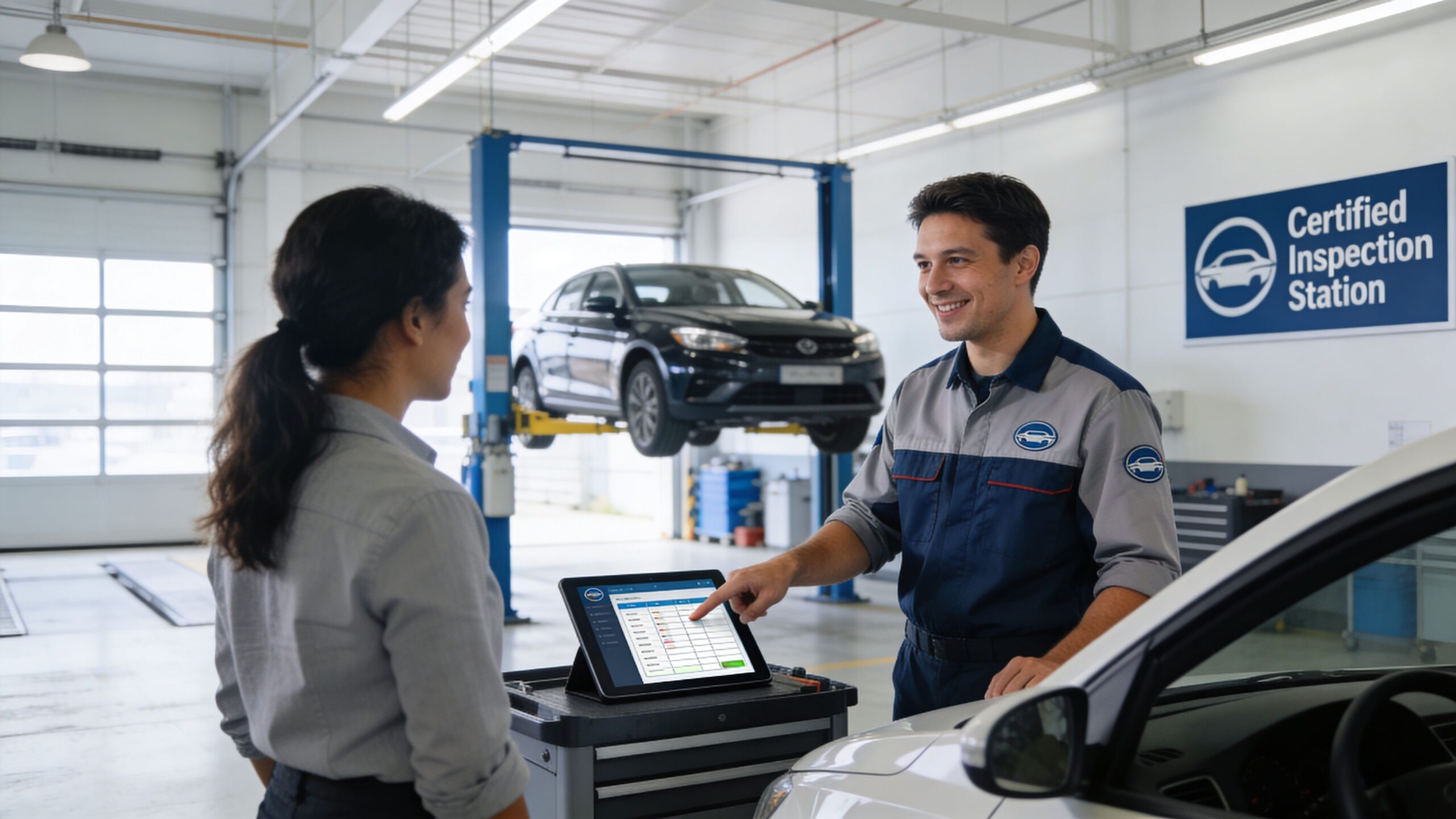
Step one, choose the right station
Start with a certified inspection station that handles your type of vehicle. For most drivers, that means finding a shop that performs inspections regularly and can also explain any failure in plain language. For commercial or heavier vehicles, confirm the station is set up for that class before you go.
Speed matters less than clarity. A fast inspection does not help much if you leave without understanding what failed or whether it is a quick fix or a real safety repair. At Kwik Kar, that practical explanation is what saves drivers time.
Step two, gather what you’ll need
Bring your registration and proof of insurance, and keep both easy to reach. That sounds basic, but it prevents the usual glove-box search at the counter.
Then do a five-minute driveway check. Turn on the headlights, brake lights, and signals. Hit the horn. Run the wipers with washer fluid. If the vehicle has been giving you clues such as a soft pedal, brake noise, steering pull, or vibration, address those before inspection day rather than hoping they stay hidden.
If you are unsure whether your brakes are nearing the end of their service life, this guide on the average life of brake pads gives a useful baseline. It is not a substitute for an inspection, but it helps drivers connect wear patterns to maintenance timing.
Step three, know what happens during the visit
The inspection itself is usually straightforward. The technician reviews the required documents, checks the vehicle items that apply, and determines whether the car meets Louisiana’s safety standard.
A clean car helps. Clear the dashboard if papers block visibility, and remove cargo that interferes with access to lights or other inspection points. That will not change the condition of the vehicle, but it makes the process easier and avoids delays.
Step four, if the vehicle fails
A failure is not always a major repair. In the shop, I often see simple issues such as burned-out bulbs, worn wiper blades, weak horns, or damaged lenses send a car back for correction. I also see failures that point to problems the driver has been feeling for weeks, especially brake wear or handling issues.
The right move is to fix the actual cause, not the symptom. Replacing a bulb solves a lighting problem. A soft brake pedal or grinding noise needs a proper brake inspection. That is where a good inspection station earns its keep, because you should leave knowing what is minor, what affects safety, and what should be repaired before the car goes back on the road.
Step five, keep records
Save the inspection receipt and any repair invoices. Those records make the next cycle easier, and they help you track patterns such as repeated bulb failures, uneven tire wear, or brake service intervals.
That habit matters even more as Louisiana moves toward more digital vehicle documentation. Drivers who already keep clean service records will have an easier time if inspection verification becomes more tied to electronic systems in the years ahead.
The Future of Louisiana Brake Tags
A lot of drivers hear "digital brake tag" and assume inspections are about to get easier. The paperwork may change. The responsibility to keep the car safe does not.
Louisiana lawmakers have discussed replacing the traditional windshield inspection sticker with a QR code-based system. If that proposal is enacted, the change is slated to take effect on January 1, 2027. The goal is to make verification faster for law enforcement while shifting more of the recordkeeping into a digital format.

What changes for drivers
The biggest change is how proof of inspection is checked. Instead of relying mainly on a visible sticker on the windshield, officers would use a scannable code tied to the vehicle record. For drivers, that likely means fewer questions about faded stickers, damaged decals, or whether the tag is positioned correctly.
It also points to a broader shift that shops and drivers should expect over time. Vehicle documentation is becoming more digital, and inspection records may follow the same path as registration renewals, insurance cards, and service reminders. Kwik Kar keeps an eye on those changes because they affect how drivers prepare, how records are stored, and how quickly inspection status can be verified.
What stays the same
The car still has to pass the same kind of safety review. A QR code will not fix thin brake pads, a cracked lamp lens, worn wiper blades, or tires that are at the end of their useful life.
That is the trade-off. Digital verification can make the system cleaner and faster, but it does not reduce the value of basic preventive checks.
Drivers who are ready for that future start with habits they can use now. Test all exterior lights once a month. Replace wipers before storm season, not after the first bad downpour. Pay attention to brake feel, pulling, vibration, and warning lights. Keep repair receipts and inspection paperwork together, whether that is in a glovebox folder or a phone file.
Those simple steps do two things. They help the vehicle pass today’s inspection, and they make the transition easier if Louisiana puts more of the brake tag process into digital records later.
Frequently Asked Questions About Louisiana Brake Tags
Is a brake tag the same as registration
No. Registration identifies and records the vehicle. A brake tag shows that the vehicle passed the required safety inspection.
What should I check the day before an inspection
Focus on items you can verify without tools. Test brake lights, turn signals, headlights, horn, and wipers. Look at the windshield from the driver’s seat and pay attention to how the car brakes during a normal drive.
Why do people fail even when the car seems fine
Drivers get used to gradual wear. A weak horn, dim lamp, poor wiper performance, or vibration under braking can become normal to the owner long before it looks acceptable in an inspection lane.
Do commercial vehicles get treated differently
Yes. Louisiana’s inspection process includes designated commercial facilities for certain vehicle categories, and commercial vehicles face more specialized brake-system review than a typical passenger car.
Will the sticker system stay the same
It may not. Louisiana has a proposal to shift from physical stickers to a QR code-based system in the future, but that change is tied to legislation and timing described earlier in this article.
What’s the smartest way to avoid problems
Don’t treat inspection as the first diagnosis. Treat it as confirmation that your routine maintenance has kept the vehicle ready. Drivers who check lamps, wipers, tire condition, and brake feel before the appointment usually avoid the most frustrating failures.
If your vehicle needs an inspection, brake service, routine maintenance, or a second opinion before you deal with a brake tag issue, Kwik Kar Oil Change and Auto Care is a practical place to start. Their team handles oil changes, diagnostics, preventive maintenance, and repair work for sedans, SUVs, light trucks, and fleet vehicles, with convenient service seven days a week so you can fix problems before they turn into inspection-day surprises.