


Most brake squeaks come down to three things: worn pads, moisture or debris, or loose hardware. None of these are usually an emergency. But if you hear grinding, feel the pedal change, or notice the car pulling to one side, stop driving and get the brakes inspected right away.
TL;DR:
- Moisture and rust typically cause squeaks that disappear after a few stops, but persistent noises may indicate worn pads or hardware issues.
- High-pitched squeals on the first stops of the day usually come from moisture, while constant squealing suggests pad or hardware problems.
- Grinding, pulling to one side, or a burning smell during braking require immediate inspection, as they signal potential safety hazards like metal-on-metal contact.
- Costs for brake repairs vary from inexpensive hardware cleaning to more costly pad and rotor replacements, so getting a written estimate is advisable before work begins.
- Regular preventive habits, such as checking pad thickness and replacing hardware during pad changes, can significantly reduce squeaking over the long term.
Table of Contents
- What Causes Brakes Squeaking?
- Quick, Safe DIY Checks Before You Call a Shop
- Is It Safe to Keep Driving With Squeaky Brakes?
- What Happens During a Professional Brake Inspection?
- How Much Does It Cost to Fix Squeaky Brakes?
- How to Stop Brakes From Squeaking for Good
- What Happens if You Ignore Squeaky Brakes?
- Do Weather and Seasons Affect Brake Noise?
- Kwik Kar’s Take: When DIY Ends and a Shop Visit Begins
- Get Your Brakes Checked at Kwik Kar Spring Valley
- Primary Sources and Further Reading
- Sources
- FAQ
What Causes Brakes Squeaking?
Brake noise almost always traces back to vibration somewhere in the system, and figuring out which part is vibrating tells you how urgent the fix is. According to AAA Club Alliance, brake squeaks commonly come from moisture, pad material, debris, glazing, poor installation, or sticking hardware, and not every squeak signals imminent failure.
Here’s how to sort out which one you’re dealing with:
- Worn pads and wear indicators. Most pads have a small metal tab built in that’s designed to scrape the rotor once the friction material gets thin. That high-pitched squeal is intentional. It exists to warn you before you’re driving on metal.
- Moisture and rust. A thin layer of surface rust forms on rotors overnight or after rain, and your first few stops of the day scrape it off with a squeak. This usually disappears within a mile or two.
- Debris caught between the pad and rotor. Small rocks, road grit, or brake dust can wedge into the caliper and create a scraping or intermittent chirp.
- Glazed pads or rotors. Riding the brakes downhill or repeated hard stops can overheat the friction surface, leaving a shiny, hardened glaze that squeals under normal use.
- Hardware and caliper issues. Missing shims, corroded anti-rattle clips, or a caliper slide pin that’s stuck can let the pad vibrate against the rotor. Ferodo’s technical guidance points to caliper slides and disc non-planarity as frequent sources of medium-frequency squeal.
- Pad compound. Semi-metallic pads tend to squeal more than ceramic pads because of how their materials resonate against the rotor. Neither is wrong for your car, but the tradeoff matters.
Quick, Safe DIY Checks Before You Call a Shop
You can rule out a lot of harmless causes in five minutes without touching anything you shouldn’t. Start by paying attention to when the noise happens.
- Note the timing. Does it squeak only on the first stop of the day, or every time you brake? Morning-only squeaks point to moisture. Constant squeaks point to pads or hardware.
- Listen for pitch and consistency. A steady, high-pitched squeal is different from an intermittent scrape or a rhythmic click. Write down what you hear.
- Look at the pads through the wheel spokes. If the friction material looks thinner than a quarter inch, that’s a strong signal you’re due for replacement.
- Check for visible debris. A stuck pebble near the caliper is an easy, safe fix. Remove it by hand once the car is parked and cool.
- Drive a few careful, moderate stops. This can burn off light surface rust and clear moisture. Don’t do this in traffic. Find an empty stretch of road.
Pro Tip: Never spray WD-40, grease, or general lubricant anywhere near your rotors or pads. It contaminates the friction surface and can seriously reduce your stopping power. High-temp brake grease belongs only on metal-to-metal slide points, never on the pad or rotor face.
Is It Safe to Keep Driving With Squeaky Brakes?
A squeak by itself usually isn’t an emergency, but a handful of symptoms mean you should stop driving and get the car looked at the same day. Motor1’s braking guide notes that high-pitched squeaks from moisture or new pads are typically harmless, while persistent squealing paired with performance changes is worth a real inspection.
Watch for these red flags:
- Grinding instead of squeaking. This usually means the pad material is gone and metal is contacting metal, which can score your rotors and cost more to fix the longer it continues.
- A soft, sinking, or vibrating pedal
- The car pulling to one side when you brake
- A burning smell after normal driving
- The brake warning light on your dashboard
If any of these show up, avoid highway driving, keep extra following distance, and get to a shop as soon as you can rather than waiting for a scheduled appointment.
What Happens During a Professional Brake Inspection?
An ASE-certified technician doesn’t just glance at your pads. A proper inspection follows a specific sequence, and understanding it helps you know what you’re paying for.
- Road test and history check. The technician confirms when and how the noise happens, matching your description to likely causes.
- Wheel removal and pad measurement. Pads get measured against the manufacturer’s minimum thickness.
- Rotor inspection. Technicians check for thickness variation and runout, the technical term for a warped or unevenly worn rotor surface, following practices outlined in Ferodo’s technical notes.
- Caliper slide check. Sticking guide pins get cleaned and lubricated, or replaced if corroded.
Common fixes include cleaning and relubricating hardware, replacing worn shims and clips, machining or replacing rotors, and swapping pads. Look for a shop that puts the estimate in writing before starting work and backs the repair with a warranty. That combination, paired with ASE certification, is a solid trust signal no matter where you take your car.
How Much Does It Cost to Fix Squeaky Brakes?
A quick visual inspection can often happen the same day you call, while a full diagnostic with a road test and wheel-off measurement takes longer. Many straightforward jobs, like cleaning and relubricating hardware, get finished same-day.
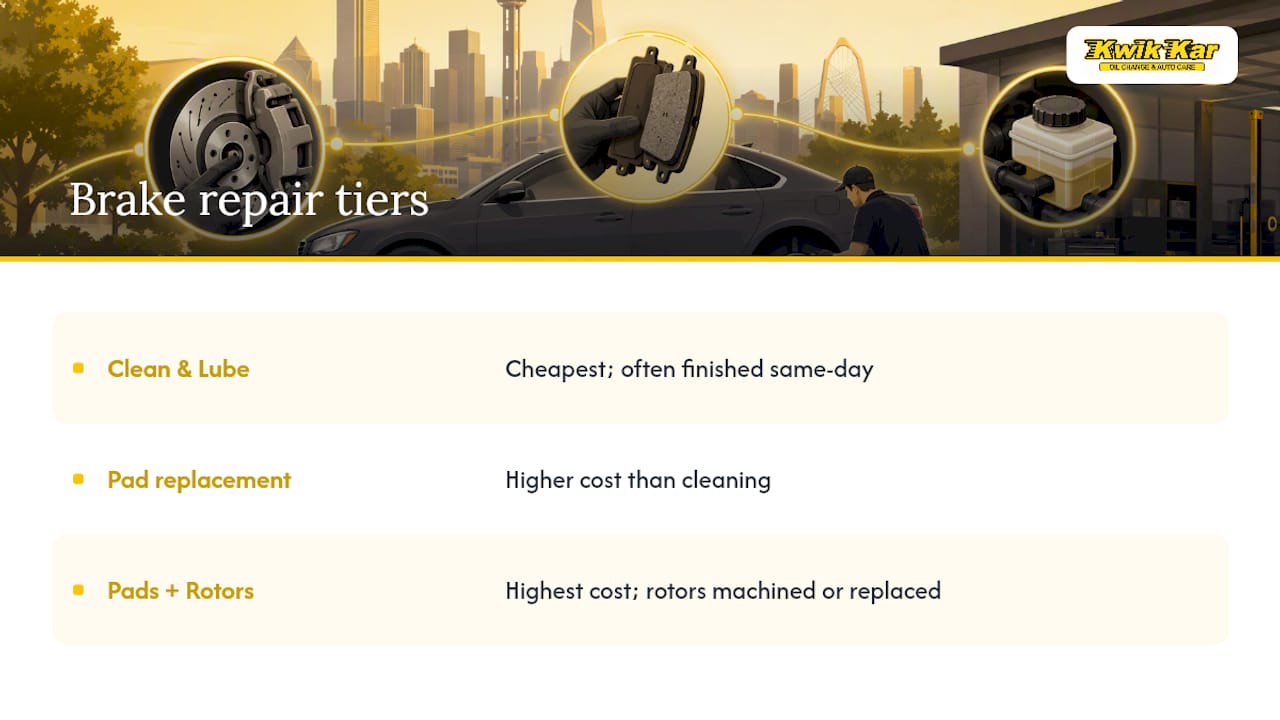
Costs vary widely depending on what’s actually wrong. Cleaning and lubricating existing hardware is the cheapest fix. Pad-only replacement costs more, and pad-plus-rotor jobs cost the most because rotors either need machining or full replacement. Vehicle make, parts quality, local labor rates, and whether your rotors can be resurfaced instead of replaced all shift the final number. Ask for a written quote before any work begins, and ask whether current specials or coupons apply to your repair.
How to Stop Brakes From Squeaking for Good
Preventing repeat squeaks comes down to a few habits that cost little but save you a repair down the road:
- Don’t wait for the wear indicator to make contact. Check pad thickness at every oil change instead of waiting for the metal-on-metal squeal.
- Replace anti-rattle clips and shims whenever pads are replaced. Economy pad kits sometimes skip these parts, which raises your odds of noise even with brand-new friction material.
- Choose a pad compound that matches your driving. Ceramic pads run quieter for most daily commuters; semi-metallic suits heavier towing or performance use but squeals more often.
- Bed in new pads properly. Follow a gradual series of moderate stops from lower speeds rather than immediately hammering the brakes on a steep downhill.
A partner guide on brake dust removal also covers safe cleaning intervals that help prevent the grit buildup that leads to scraping noises.
What Happens if You Ignore Squeaky Brakes?
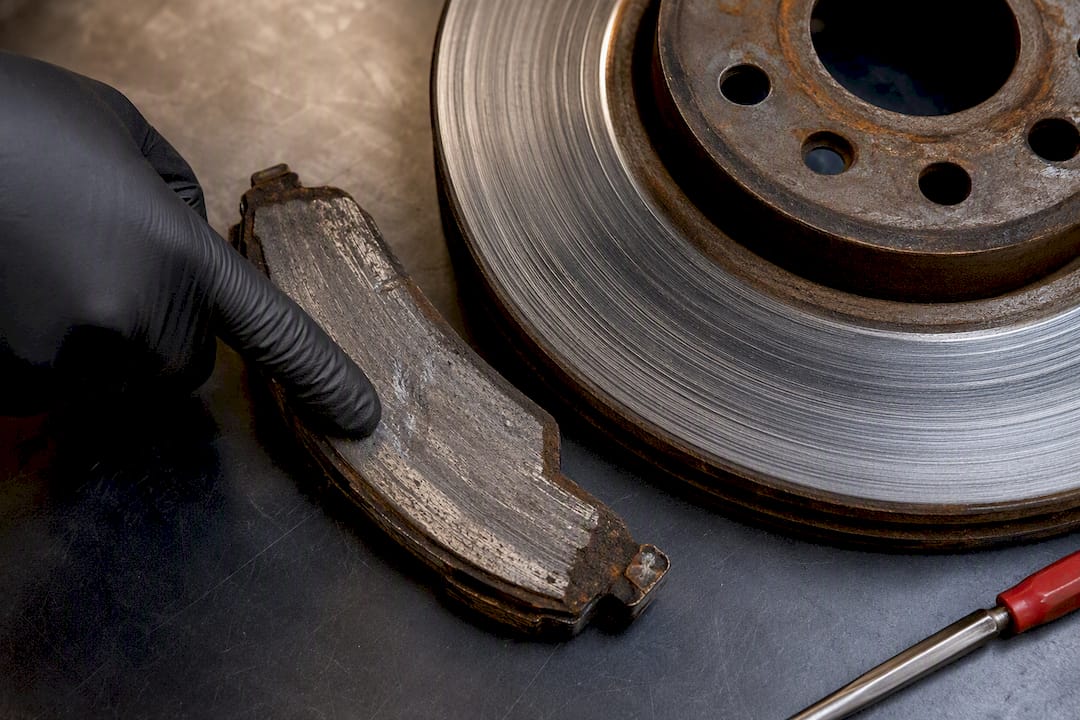
A squeak you dismiss today can turn into a much bigger repair bill later, and the timeline is usually shorter than drivers expect. Pads that squeal because they’re thin will eventually wear through completely, and once the friction material is gone, the metal backing plate grinds directly against the rotor. That contact scores grooves into the rotor surface, which often means the rotor needs machining or full replacement instead of a simple pad swap.
Ignoring hardware-related squeaks carries its own risk. A caliper slide pin that’s sticking won’t fix itself. Left alone, it can cause uneven pad wear, pull the car to one side under braking, or eventually cause the caliper to bind entirely, generating heat that damages the rotor and pad on that wheel. What started as a $0 problem, a simple cleaning and lubrication, becomes a caliper replacement.
There’s also a real safety cost. Worn pads and warped rotors both extend stopping distance, sometimes without an obvious change in how the pedal feels underfoot until the situation is already serious. Combine that with wet roads or a panic stop, and a delayed repair stops being a financial question and becomes a safety one. The fix for most of these issues, caught early, is inexpensive. Caught late, it rarely stays that way.
Do Weather and Seasons Affect Brake Noise?
Texas weather swings between two extremes, and both push on your brakes differently. Humid mornings and overnight rain leave a thin film of surface rust on rotors, which is why so many drivers hear a squeak on their very first stop of the day and then nothing for the rest of the drive. That’s normal and typically resolves within the first few stops as the rust wears off.
Summer heat creates a different problem. Dallas asphalt routinely pushes brake components hotter than they’d run in milder climates, and repeated hard stops in traffic can glaze the pad surface faster than in cooler weather. Glazed pads squeal more persistently and grip less effectively, which matters most in the exact stop-and-go conditions where you need reliable braking.
Dust and pollen buildup during dry, windy stretches can also work its way into the caliper area, adding a gritty, intermittent noise that a simple cleaning often resolves. Rotating between seasonal checks, a quick pad glance in the spring and a hardware check before summer heat peaks, catches most of these issues before they turn into anything more than a minor annoyance.
Kwik Kar’s Take: When DIY Ends and a Shop Visit Begins
Checking for debris or driving a few careful stops to clear morning moisture is smart, safe troubleshooting, and we’d encourage any driver to try it first. But once a squeak turns persistent, or you notice grinding, pulling, or a soft pedal, it’s time for an ASE-certified technician to take a look. When you call or book online, tell us exactly when the noise happens. That detail saves diagnostic time and gets you a more accurate estimate.
— Kwik Kar
Get Your Brakes Checked at Kwik Kar Spring Valley
A squeak that turns out to be nothing costs you a phone call. A squeak that turns out to be worn pads and a scored rotor costs a lot more the longer you wait. That’s the real value of a quick diagnostic estimate: it tells you which situation you’re actually in before you spend a dollar.
Kwik Kar Oil Change & Auto Care on Spring Valley Road in Dallas gives you a written estimate before any work starts, backed by ASE-certified technicians and warranty-covered repairs. Whether your brakes need a simple cleaning and relube or full pad and rotor replacement, our brake repair services cover the full range of fixes described above. If you’re not sure which category your noise falls into, our full auto repair services team can run the diagnostic and walk you through exactly what they find. Current customers can also apply the $30 off maintenance coupon with a free inspection toward the visit. Call ahead or book online, and describe when your brakes squeak so we can get you an accurate estimate before you arrive.
Primary Sources and Further Reading
Claims in this article draw on AAA Club Alliance for common causes, Motor1 for urgency guidance, Popular Mechanics for DIY fixes, and Ferodo for technician-level diagnostics.
Sources
- The Most Common Reasons For Squeaky Brakes | AAA Club Alliance
- Why Your Brakes Squeak And When You Should Actually Worry | Motor1
- How to Fix Squeaky Brakes: A Simple Guide | Popular Mechanics
- Brake noise – Technical Tips | Ferodo
FAQ
How Do I Get My Brakes to Stop Squeaking?
Start by cleaning off visible debris and driving a few moderate stops to clear surface rust, since many squeaks are temporary. If the noise persists, have a technician check pad thickness, hardware, and caliper slides for the underlying cause.
Is It Okay to Drive on Squeaking Brakes?
A brief squeak that’s tied to morning moisture or new pads is generally safe to drive on. Squeaking paired with grinding, pulling, a soft pedal, or a warning light means you should get the car inspected before driving further.
Can I Spray WD-40 on My Brakes to Stop Squeaking?
No. Spraying WD-40 or any general lubricant near your rotors or pads contaminates the friction surface and can significantly reduce your stopping power. High-temp brake grease belongs only on metal slide points, never on the pad or rotor face.
How Much Will It Cost to Fix Squeaky Brakes?
Costs range widely based on the cause: cleaning and lubricating hardware is the cheapest fix, pad replacement costs more, and pad-plus-rotor jobs cost the most. Ask the service provider for a written quote so you know the exact price before any work begins.
Why Are New Brakes Squeaking?
New pads and rotors often squeak during the bedding-in period, which typically resolves within the first 100 to 200 miles. If the squeak continues well past that mileage, it usually points to an installation or hardware issue that needs a technician’s attention.