That moment your eyes catch the temperature gauge creeping into the red is a stomach-dropping experience for any driver. It’s a universal sign that your car is overheating, and what you do in the next few moments is critical. The absolute first things to do are to turn on your hazard lights, get pulled over somewhere safe, and shut off the engine as fast as you can. Acting quickly is your best defense against serious engine damage.
Your Car Is Overheating On a Dallas Highway: What to Do Now
Seeing that temperature needle climb or a warning light flash on a busy Dallas highway can feel overwhelming. The key is to stay calm and be decisive. Your destination no longer matters; your immediate safety and your car's health are now the top priorities. Your only job is to get out of the flow of traffic.
First, hit those hazard lights. This is your universal signal to other drivers that you’ve got a problem and you’re slowing down. Glance at your mirrors and check your blind spots, then start making your way over to the right-hand shoulder. Slow, deliberate movements are best—no sudden jerks.
Once you’re safely off the road, shift into park and turn off the engine. This is the single most important step. Killing the engine stops it from generating any more heat, potentially saving you from catastrophic damage like a warped cylinder head or, even worse, a cracked engine block.
Crucial Safety Tip: Whatever you do, never try to open the radiator cap while the engine is hot. The cooling system is under extreme pressure. Opening that cap will unleash a violent eruption of scalding steam and coolant that can cause severe, life-altering burns.
For your immediate safety, it's vital to have a clear, step-by-step plan in mind. Here's a quick checklist to guide your actions in those first critical minutes.
Immediate Safety Checklist When Your Car Overheats
| Action | Reason |
|---|---|
| 1. Turn On Hazard Lights | Immediately alerts other drivers to your situation. |
| 2. Pull Over Safely | Gets you out of the way of traffic to prevent an accident. |
| 3. Shut Off the Engine | Stops heat generation and minimizes risk of severe engine damage. |
| 4. Do Not Open the Hood Immediately | Allows residual heat to dissipate and reduces burn risk. |
| 5. Do Not Open the Radiator Cap | Prevents the release of pressurized, scalding-hot steam and coolant. |
Following these five steps will help keep you safe and could be the difference between a minor repair and a major engine overhaul.
A Quick Tip While You Wait
After you've shut the engine off, you can turn your key to the "on" position (without starting the car). If you hear the radiator fans kick on, that's a good thing. They will help pull some of the lingering heat out of the engine bay while you wait. And you will have to wait—give it at least 30 minutes before you even think about touching anything under the hood. Patience is key here.
This simple process flow shows the most critical actions to take when your car overheats.
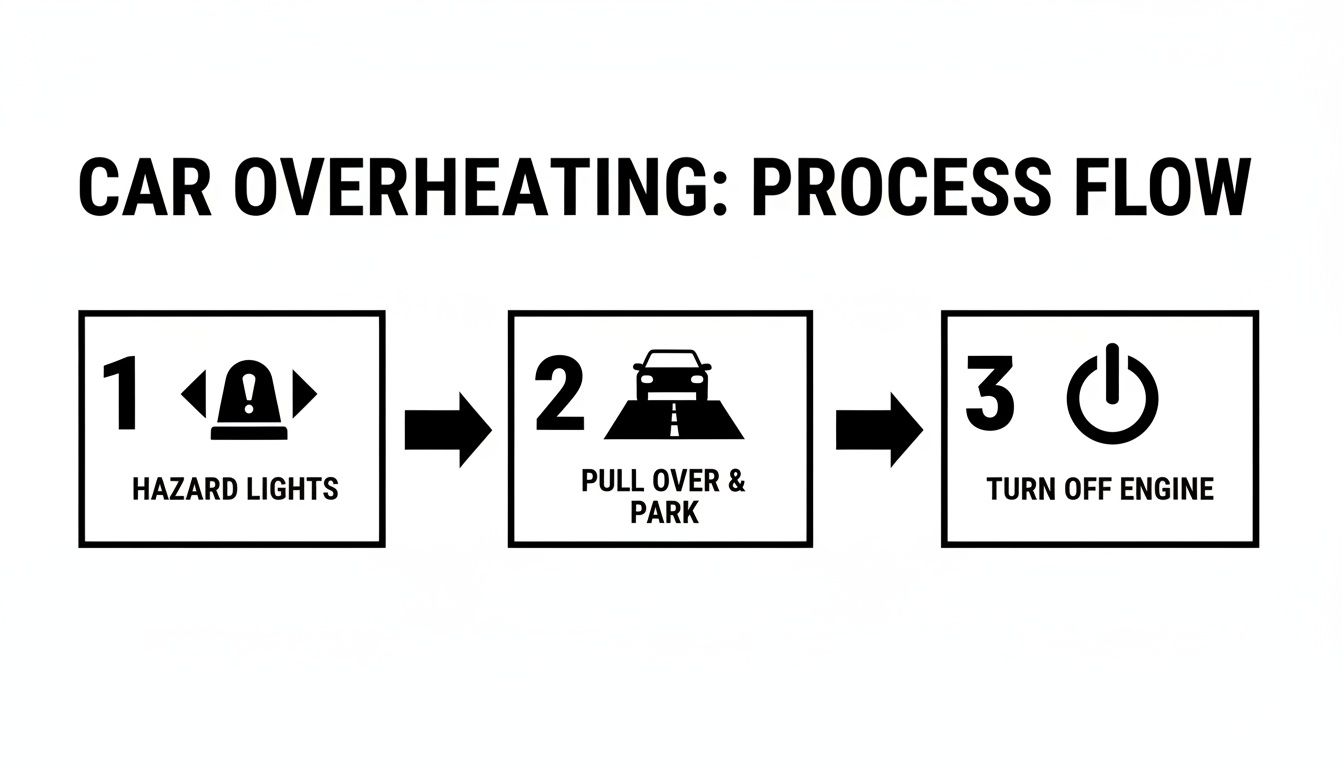
This visual is a great reminder of the three-step safety protocol: signal distress, get out of traffic, and cut the engine to prevent further damage. For a more detailed breakdown of what to do in any breakdown scenario, this guide on handling a broken down car is a fantastic resource. Remember, especially on a busy highway, staying in your vehicle with your seatbelt on is often the safest place to be until help arrives.
Quick Roadside Checks You Can Safely Perform
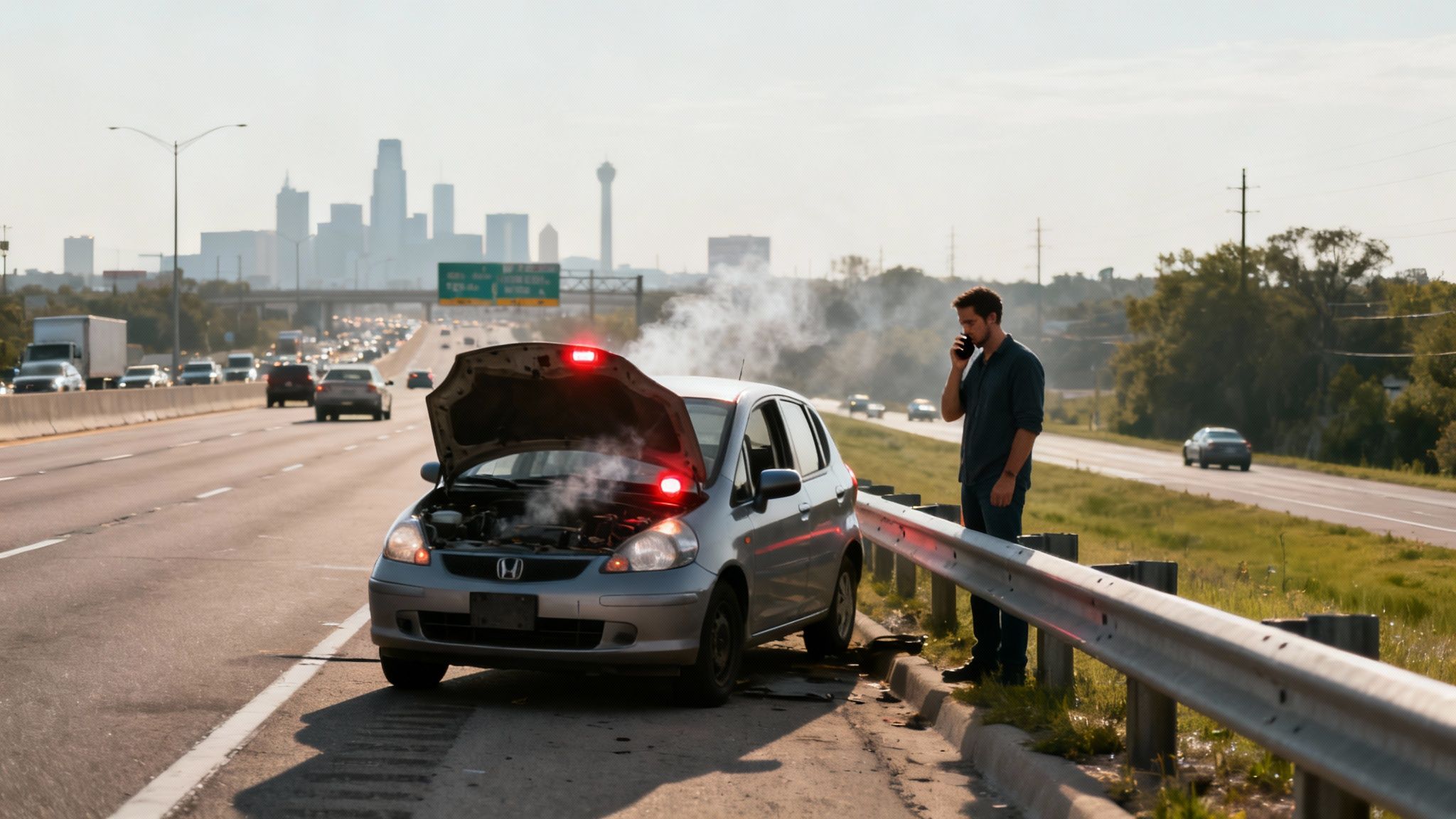
After your engine has had at least 30 minutes to cool down, you can pop the hood and do a little detective work. You don’t need any tools for this. The idea isn't to fix the problem yourself on the shoulder of a busy Dallas highway, but to gather some useful intel.
This information is gold whether you're calling for a tow or trying to explain what's happening to a mechanic later.
First, just take a look under the front of the car. Do you see any fresh puddles forming? Coolant is usually a bright, almost neon color—think green, pink, or orange—and it has a weirdly sweet smell. If you spot a vibrant puddle, you’ve probably found a significant leak.
Now, carefully open the hood and prop it up securely. Even after waiting, plenty of parts under there can still be scorching hot, so be extremely careful where you put your hands. Absolutely do not touch anything that’s still steaming or looks wet.
Inspecting Key Cooling System Components
With the hood open, you can continue your visual scan. Don’t worry if you’re not a mechanic; you’re just looking for anything that seems obviously wrong. This is a condensed version of what a technician does during a professional vehicle inspection checklist, focusing only on the cooling system.
Zero in on these three main areas:
- Coolant Reservoir: Find the plastic overflow tank. It’s usually a semi-clear tank with "MIN" and "MAX" lines marked on the side. If the fluid level is way down below the minimum line, low coolant is a huge reason your car is overheating.
- Hoses: Check out the big rubber hoses that connect to the radiator at the top and bottom. Look them over for any cracks, bulges, or wet spots that would signal a leak. A busted hose is one of the most common culprits.
- Radiator: Look at the very front of the radiator for blockages. It’s surprisingly common for a plastic bag, a clump of leaves, or other road junk to get sucked in, blocking airflow and causing the engine to run hot.
This kind of information is incredibly helpful. Telling your mechanic, "I saw a big puddle of green fluid under the engine," is much more useful than just saying, "my car is overheating."
Check Your Radiator Fan Function
Here's a quick trick to see if your electric radiator fans are working. This is a common failure, especially if your car is overheating in stop-and-go traffic.
With the engine cool and turned off, put the key in the ignition and turn it to the "on" position—but don't start the car. Now, turn your air conditioning on and set the fan to full blast. This should immediately kick on the electric cooling fans behind the radiator.
If they don't start spinning, you’ve likely found your problem. It could be a bad fan motor, a blown fuse, or a faulty relay. If the fans fire right up, you can probably rule them out as the source of the issue.
Important Takeaway: Never, ever pour cold water or coolant directly into a hot radiator. The extreme temperature shock can crack your engine block, turning a frustrating but manageable repair into a complete catastrophe. Always add fluid to the overflow tank, and only do so when the engine is cool.
These quick checks are all about arming you with knowledge. By safely spotting potential issues, you can give a clear, accurate report to a professional, which helps speed things up once your car gets to the shop.
Common Causes of an Overheating Engine Explained
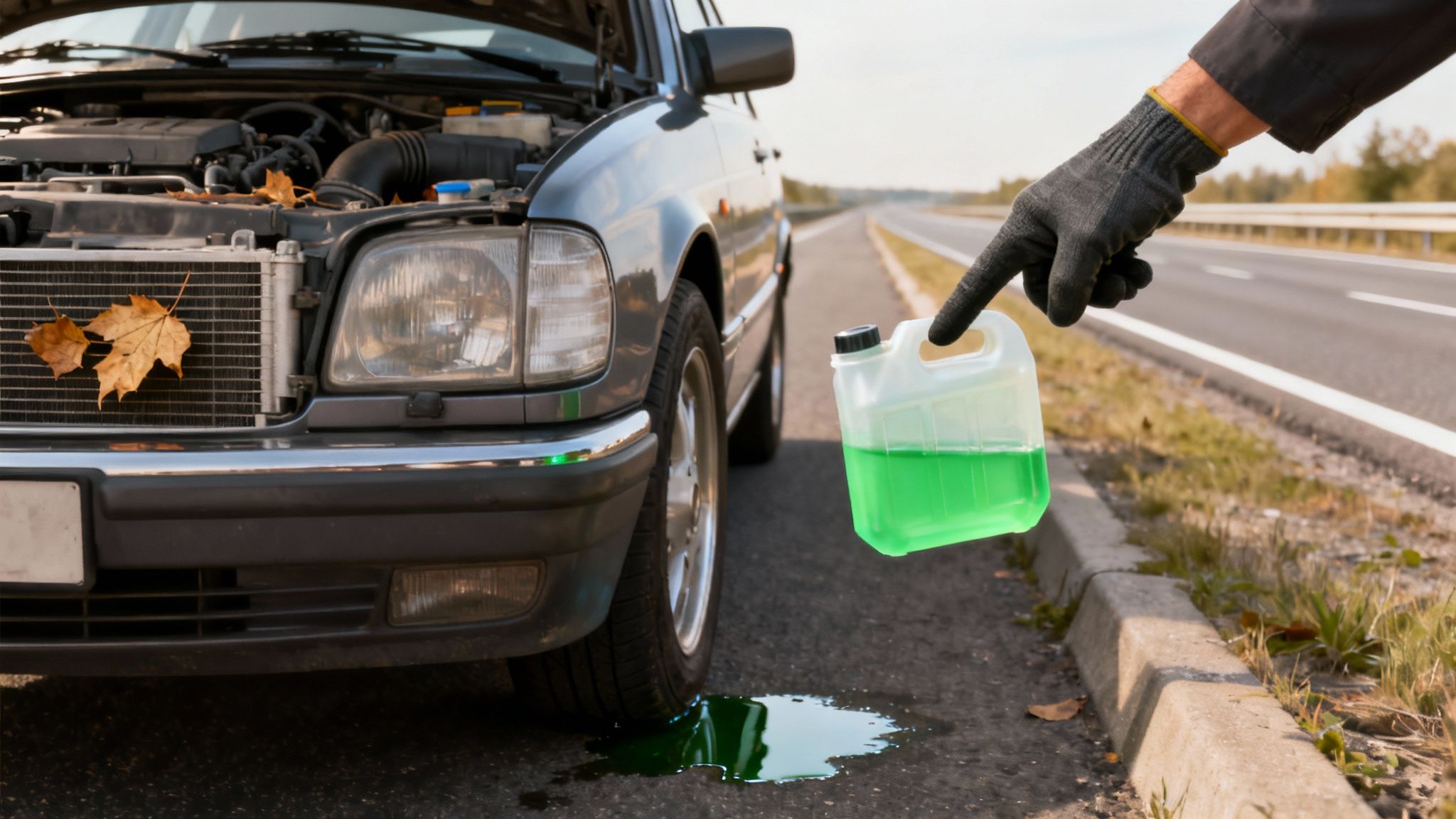
When your temperature needle starts climbing into the red, it's never just a random fluke. It's a clear cry for help from your car's cooling system. Think of your engine as a hard-working athlete—it creates a massive amount of heat to get you down the road, and the cooling system is its personal hydration crew, keeping things from boiling over.
If one part of that crew drops the ball, the engine’s temperature can quickly spiral out of control. Understanding what causes a car to overheat is the first step in avoiding it. The problems can range from simple fixes you can handle for a few bucks to major, wallet-busting engine repairs.
The Critical Role of Coolant
More often than not, the single biggest culprit behind an overheating engine is a problem with its coolant, which you probably know as antifreeze. This brightly colored liquid is the absolute lifeblood of your cooling system. Its whole job is to pull heat away from the engine and get rid of it through the radiator. When your coolant is low, there’s simply not enough fluid to keep up with the heat.
Coolant failure is statistically the number one reason a car is overheating, causing a staggering 42% of all cases worldwide. Right here in the U.S., over 120 million vehicles are driving around with low coolant every year, leading to an estimated $3.5 billion in related repair bills. And for us Texas drivers, the risk is even higher—we see 15% more incidents thanks to our brutal summer heat. For a deeper dive into these risks, you can check out the full research on heat-related vehicle issues at NoHeatstroke.org.
Key Takeaway: Your cooling system is a closed loop. If your coolant level is dropping, it didn't just "evaporate." It means you've sprung a leak somewhere that needs to be tracked down and repaired.
Those leaks aren't always big, obvious puddles. Sometimes they're slow drips that are much harder to spot.
- Cracked Hoses: The rubber hoses carrying coolant get old and brittle, eventually developing tiny cracks or splits, especially right where they connect to the engine or radiator.
- Radiator Leaks: Over time, corrosion or a stray rock from the highway can create tiny pinhole leaks in the radiator itself.
- Failing Gaskets: The gaskets that seal components like the water pump or thermostat housing can wear out, letting coolant seep out slowly.
Mechanical Failures Within the System
Beyond leaks, a few key mechanical parts can fail, each one causing a specific kind of overheating headache. These components all have to work together perfectly; when one quits, the whole system grinds to a halt.
A bad thermostat is a very common offender. It's a small, simple valve that's supposed to open and close to control the flow of coolant. If it gets stuck shut, it traps coolant inside the engine, never letting it get to the radiator to cool off. This will cause your engine to overheat incredibly fast, often just a few minutes after you start driving.
Another critical piece is the water pump. You can think of it as the heart of the cooling system. It's responsible for circulating coolant from the engine to the radiator and back again. If that pump fails—maybe because an internal part breaks or the belt driving it slips—the coolant stops moving entirely. Temperatures will skyrocket.
Finally, there's the radiator fan. This is absolutely essential for keeping things cool when your car isn't moving, like when you're stuck in Dallas rush-hour traffic. The fan pulls air through the radiator fins to dissipate heat. If the fan's motor burns out or a fuse blows, your car might run perfectly fine on the highway but will start overheating the second you slow down or come to a stop.
When It's Time to Call in the Pros for a Diagnosis
Knowing your limits is a huge part of smart car ownership, and that’s never truer than when your car is overheating. While it might be tempting to just top off the coolant and hope for the best, that's often just putting a bandage on a much deeper problem. Pushing a car with a compromised cooling system can quickly turn a manageable repair bill into a catastrophic engine replacement. Recognizing the red flags that scream "get professional help" is absolutely critical.
If you’ve added coolant and the temperature gauge immediately skyrockets again, that’s your car telling you to stop driving, period. Persistent overheating means the real issue hasn’t been touched. Likewise, if you spot a large, active puddle of coolant forming under your car, you're looking at more than a minor drip. That points to a serious breach in the system—think a split hose or a cracked radiator—and it needs a professional's touch right away.
Deciphering the Really Serious Symptoms
Some signs go way beyond a simple leak and point to severe internal engine trouble. These are the non-negotiable symptoms that mean your next call should be to a tow truck, not just a friend.
- Milky, Foamy Oil: Pull out your dipstick. If the oil looks like a creamy, coffee-colored milkshake, that's a tell-tale sign that coolant and oil are mixing. This is the classic symptom of a blown head gasket, a major and complex repair.
- Thick, White Exhaust Smoke: A little bit of vapor on a cold morning is one thing. But if you see billowing clouds of sweet-smelling white smoke pouring from your tailpipe, that's coolant being burned inside the engine's combustion chambers. This is another hallmark of head gasket failure.
Expert Insight: Continuing to drive with what you suspect is a blown head gasket can cause catastrophic, and often irreversible, engine damage. The cost of a tow is a tiny fraction of the thousands you might spend on a new engine.
What to Expect When You Get to the Shop
When you bring your vehicle to a service center like Kwik Kar, our technicians don't just start guessing. We follow a methodical diagnostic process to pinpoint the exact reason your car is overheating, ensuring we fix the right problem the first time around.
The process starts with a thorough visual inspection, where a technician will look for the obvious culprits. From there, we'll likely perform a cooling system pressure test. We use a special tool to pressurize the entire system. If it can't hold that pressure, we know there's a leak, and this test often helps us hear or see exactly where it’s coming from.
For more complex electrical or computer-related issues, we hook up advanced diagnostic scan tools. These devices talk to your car's onboard computer and pull any error codes related to components like the cooling fan controller or temperature sensors. Understanding the full scope of engine repair services highlights why this detailed diagnostic work is so crucial. Trusting a professional to get the diagnosis right is the fastest and safest way to get you back on the road.
How Preventive Maintenance Can Save Your Engine
The easiest way to deal with an overheating car is to make sure it never happens in the first place. Proactive care is always less stressful and far less expensive than a roadside breakdown, especially under the relentless Texas sun. A simple, consistent maintenance schedule focused on your vehicle’s cooling system is the ultimate defense.
Imagine driving down a busy Dallas highway on a scorching summer day, only to see your car's temperature gauge creeping into the red. It's a nightmare that hits thousands of drivers every year. According to the AAA Foundation for Traffic Safety, overheating is responsible for nearly 25% of all roadside breakdowns in the U.S. during summer, with over 1.2 million incidents reported annually. Just this year, Dallas-area shops like Kwik Kar have already handled over 5,000 overheating cases, and a huge number of them trace back to neglected cooling systems.
Building Your Cooling System Maintenance Plan
A solid maintenance plan doesn't have to be complicated. It's all about consistency with a few key services designed to catch small issues—like a worn hose or old coolant—before they can cause a catastrophic failure. Putting a regular schedule in place, much like a professional truck PM service, is one of the smartest things you can do for your vehicle's longevity.
Think of it as an annual physical for your car's most vital system. This approach keeps your engine healthy, preserves its value, and gives you real peace of mind on every drive.
Here’s a practical playbook for keeping your car running cool:
- Regular Coolant Flushes: Coolant doesn't last forever. Over time, it breaks down, loses its ability to fight corrosion, and can start to clog the narrow passages inside your radiator. A coolant flush, typically recommended every 30,000 to 50,000 miles (or whatever your manufacturer suggests), gets rid of all the old, tired fluid and restores your system's protective qualities.
- Hose and Belt Inspections: Every time you're in for an oil change, have a technician give your cooling system hoses and belts a quick look. They're checking for tell-tale signs of aging like cracks, mushy soft spots, or bulging. Replacing a questionable hose is a minor expense compared to the massive engine repair bill that a sudden burst can cause.
- Radiator Cap Check: This little part plays a huge role. The radiator cap is what maintains the proper pressure in your cooling system, which allows the coolant to absorb more heat without boiling over. A technician can test the cap's seal in just a few seconds during any service to make sure it’s still doing its job.
Pro Tip: Your car's cooling system is just as crucial as its lubrication system. A great way to stay on schedule is to time your cooling system checks with your oil changes. Our guide on when to get an oil change can help you create a synced-up maintenance routine.
Why Routine Checks Matter in the Dallas Heat
In a climate like ours, your car's cooling system is always working overtime. The constant high temperatures put a ton of extra strain on every single component, from the water pump to the radiator fan. Small weaknesses that might go completely unnoticed in milder weather can quickly escalate into major problems here.
A well-maintained cooling system is your best insurance policy against being stranded on the side of the road. By investing a little time and effort into preventive care at a trusted shop like Kwik Kar, you’re not just avoiding an overheating engine—you’re protecting your investment and ensuring your vehicle stays reliable, mile after mile.
Frequently Asked Questions About Car Overheating
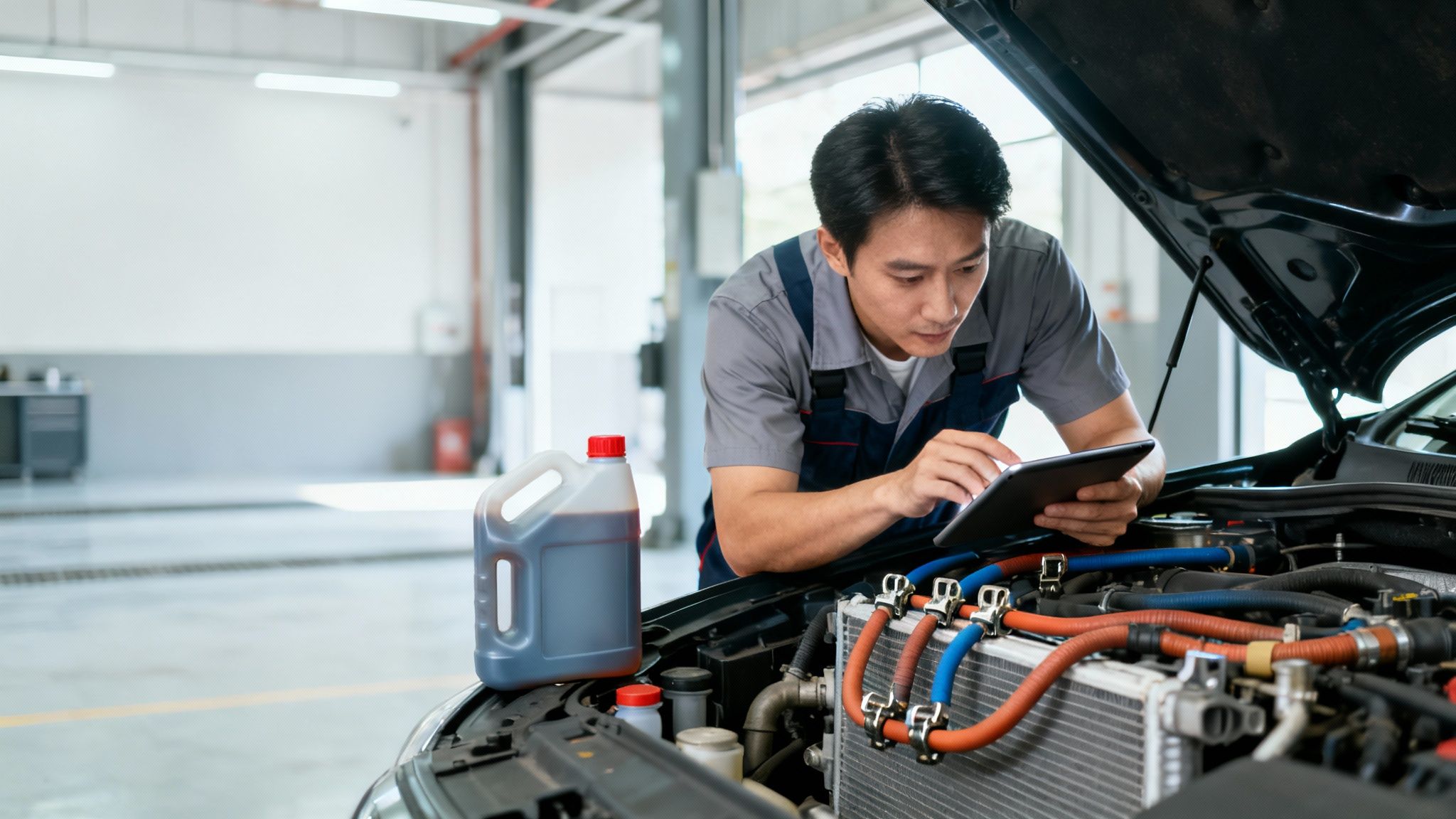
Even with the best guide, an overheating car can leave you with a lot of questions. We get it. Here are some of the most common concerns we hear from Dallas drivers, with quick, straightforward answers from our team.
Can I Drive My Car If It Is Overheating?
Honestly, you really shouldn't. Pushing an overheating car, even for what seems like a short trip, is a huge gamble. You risk catastrophic damage like a warped cylinder head or a blown head gasket.
What starts as a manageable repair can quickly turn into needing a complete engine replacement. If that temperature gauge hits the red, the only smart move is to pull over safely, shut off the engine, and call for a tow. Don't risk it.
Why Does My Car Overheat When the AC Is On?
This is a classic symptom. Running your air conditioner puts a significant extra load on the engine, making it work harder and generate more heat. At the same time, it forces your cooling fans to run constantly to keep up.
If any part of your cooling system—say, a weak fan or a radiator that's partially clogged—is already struggling, the extra strain from the AC is often what pushes the temperature into the danger zone.
A car that only overheats with the AC on often signals a problem with the radiator fans or restricted airflow through the radiator itself. It’s a clear warning sign that your cooling system can't handle the extra stress.
How Long Should I Wait Before Checking Under the Hood?
Patience is an absolute must here. After you've turned off the engine, give it at least 30 minutes to cool down. No exceptions.
The cooling system is under intense pressure when it's hot. If you try to open the radiator cap too soon, you can get a violent eruption of scalding steam and coolant. Let everything cool down completely before you even think about touching anything. Your personal safety is always the top priority.
If you're dealing with an overheating engine or just want to get ahead of problems with preventive maintenance, trust the experts at Kwik Kar Oil Change and Auto Care. Our skilled technicians will find the root cause of the issue and get you back on the road safely. Schedule your service with us today!