




If you're reading this after sitting on I-610, the Katy Freeway, or crawling through a long light cycle on Westheimer with the AC blasting, your engine oil has already had a hard day. Houston driving doesn't look severe on paper to a lot of owners. In the service bay, it absolutely is.
Generic maintenance advice misses what local drivers deal with every week. Heat, humidity, long idle time, short trips, dust, and repeated stop-and-go traffic all work against the oil that's supposed to protect your engine. A smart oil change houston plan isn't about following a sticker blindly. It's about matching your oil, filter, and service interval to what Houston does to a vehicle.
Why Houston’s Climate Demands a Smarter Oil Change Strategy
Houston punishes engine oil in ways a national maintenance chart usually doesn't account for. Summer temperatures often push past 95°F, humidity stays high, and traffic keeps engines hot long after the vehicle should've cooled down. According to Houston oil change guidance citing AAA climate impact data, in high-heat climates like Houston's, where summer temperatures often exceed 95°F with over 90% humidity, the effective life of even synthetic oil can be reduced by 20-30% compared to the manufacturer's standard 7,500-10,000 mile recommendation.

What heat and traffic actually do to oil
Engine oil isn't just there to lubricate. It also helps carry heat away from moving parts and suspend contaminants until the filter can catch them. In Houston, that job gets tougher because oil spends more time baking in a hot engine during idle, low-speed traffic, and repeated short trips.
Think of oil as the engine's circulatory and cooling system. When it's fresh, it flows correctly, cushions internal parts, and helps keep temperatures under control. When it breaks down, it gets less effective at all three.
Why Houston is harder than the average commute
A suburban highway run with steady speed is one thing. Houston rarely gives many drivers that kind of clean operating cycle for long. Long waits in traffic, aggressive heat soak after shutdown, construction dust, and constant AC load all push oil harder.
That matters because dirty, stressed oil stops protecting the way it should.
Practical rule: If your driving week includes heavy traffic, lots of idling, short errands, or repeated hot restarts, treat your vehicle as a severe-service vehicle even if the owner's manual gives a longer interval.
A lot of engines don't fail because the oil disappeared. They fail because the oil stayed in too long for the conditions. In Houston, that's a common mistake. Owners look at the mileage only and ignore how those miles were driven.
The safer approach is simple. Don't ask, "What's the longest interval my car might tolerate?" Ask, "What interval fits Houston traffic, Houston heat, and how I really drive?"
Matching Oil Change Intervals to Your Houston Driving Habits
The right interval depends less on wishful thinking and more on your daily pattern. A driver who does long highway stretches from the suburbs faces a different oil life curve than someone making short trips in Midtown or idling in delivery traffic around the Galleria.
Baseline intervals for Houston conditions
According to Houston Midas oil change recommendations, expert guidance for demanding conditions is conventional oil every 3,000 miles, synthetic blend every 5,000-7,500 miles, and full synthetic every 7,500-10,000 miles. The same source notes that degraded oil can increase metal-to-metal friction by 20-30%, increase engine temperatures, and reduce fuel efficiency by 2-5%.
Here's the practical version of that advice for local drivers.
| Houston Oil Change Interval Recommendations (2026) | Standard Driving Interval | Recommended Houston Interval (Heat & Traffic) |
|---|---|---|
| Conventional | 3,000 miles | 3,000 miles |
| Synthetic blend | 5,000-7,500 miles | lean toward the shorter end if you see heavy traffic, short trips, or long idle time |
| Full synthetic | 7,500-10,000 miles | lean toward the shorter end if your route is mostly stop-and-go or extreme heat use |
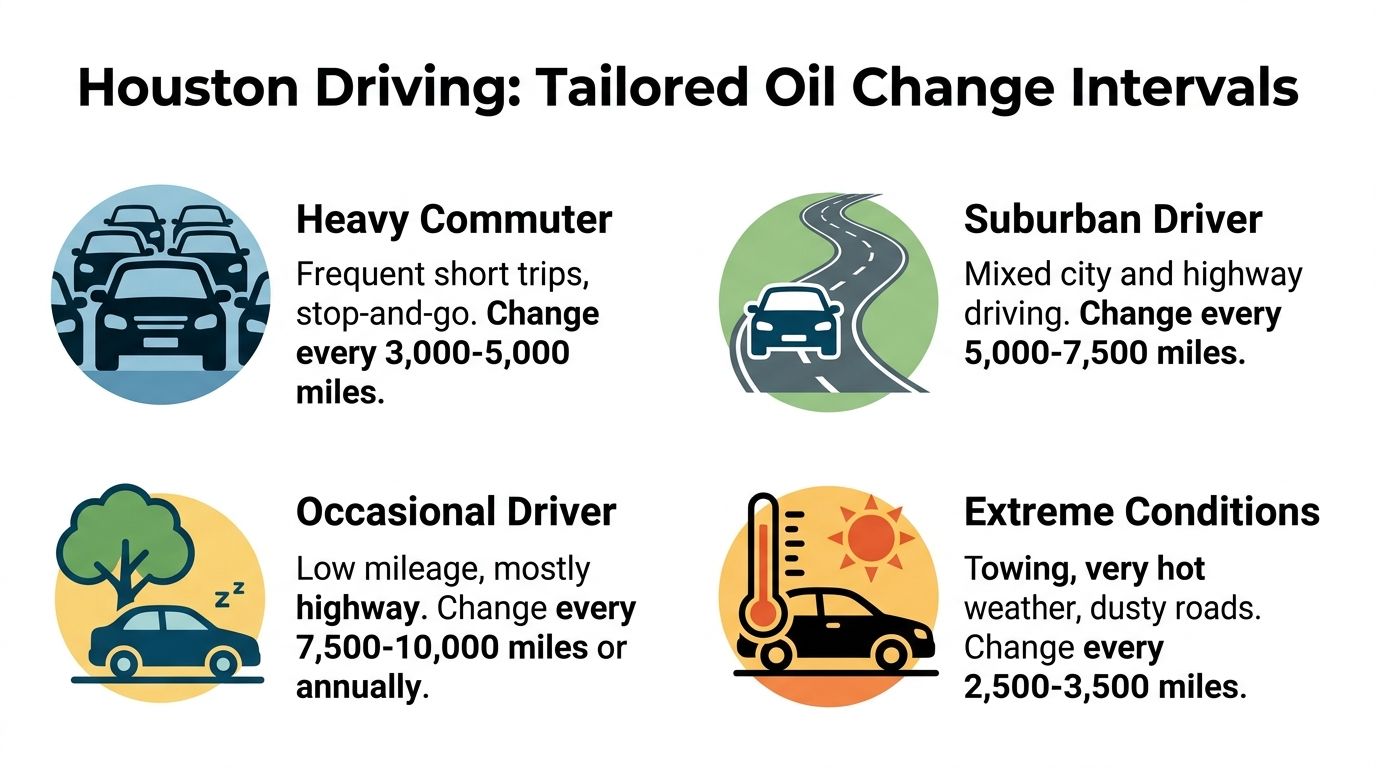
Four common Houston driving profiles
Not every driver needs the exact same schedule.
- Heavy commuter. If your day includes repeated backups, short hops, school pickup lines, and a lot of idling, use the shorter end of your oil type's range.
- Suburban mixed driver. If you split time between open roads and city traffic, you usually have more flexibility, but summer use still pushes intervals down.
- Occasional driver. Low mileage doesn't automatically mean long oil life. Cars that sit, then make short trips, can still stress oil.
- Extreme-use driver. Towing, jobsite dust, repeated hot weather use, and commercial stop-start routes need the most conservative schedule.
The owner's manual gives a starting point. Houston traffic usually decides the real interval.
If you want a deeper look at how newer lubricants compare, this guide on synthetic oil change interval recommendations is useful for understanding why some vehicles can stretch farther than others, and why many still shouldn't in severe local use.
What works and what doesn't
What works is matching the interval to the use pattern. What doesn't is assuming "mostly city" is close enough to "normal driving." It usually isn't. If your engine spends a lot of time hot and slow instead of warm and steady, shorten the interval and be consistent.
Decoding Oil Types and The Importance of a Quality Filter
Drivers usually focus on the oil and ignore the filter. That's backwards. In Houston, the oil and filter have to work as a pair.
How the main oil types differ
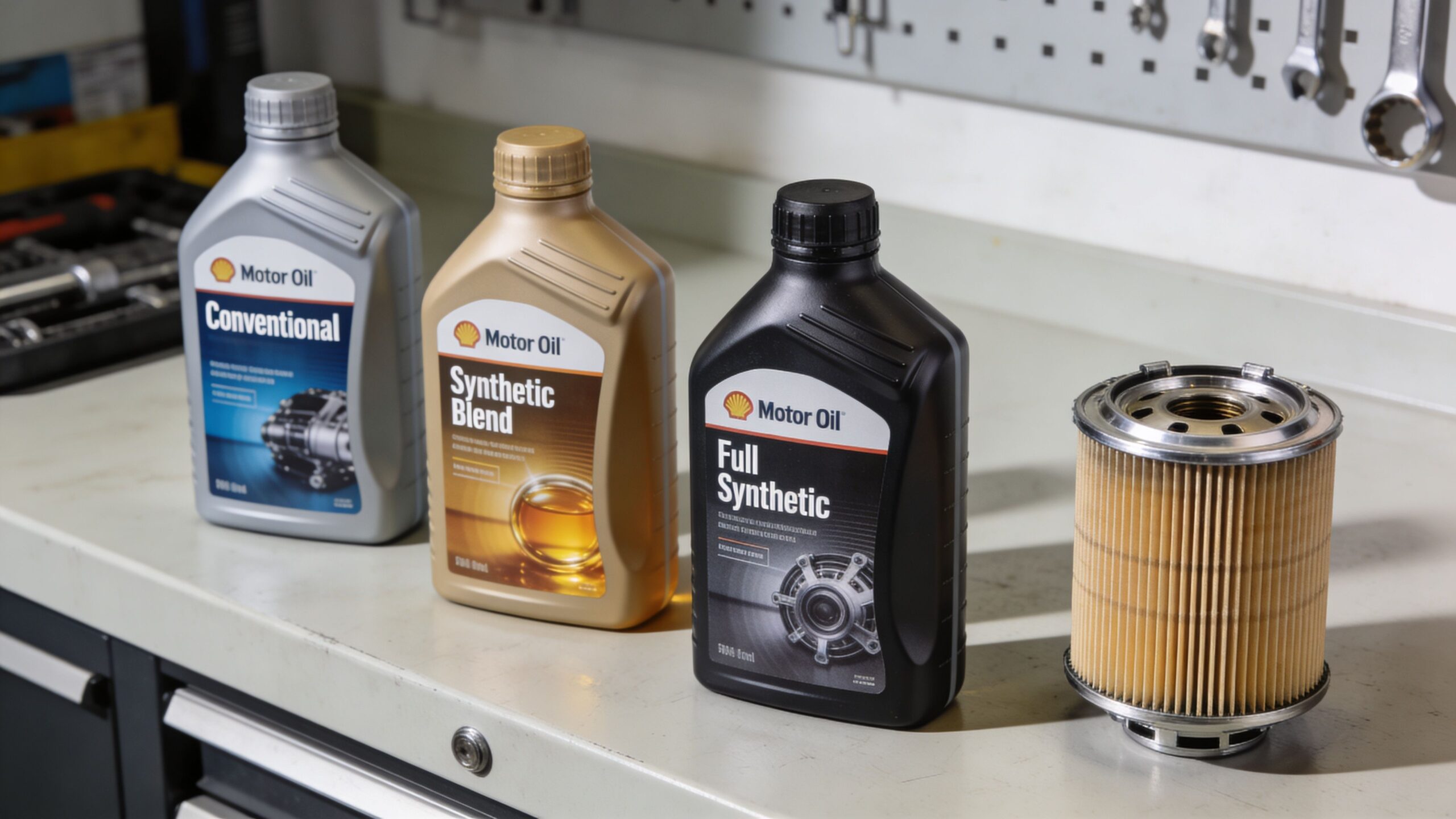
Conventional oil is usually the budget choice. It can still be the right fit for some older engines and lower-demand use, but Houston heat and traffic expose its limits faster.
Synthetic blend gives you a middle ground. For many daily drivers, it's a practical compromise between cost and heat resistance.
Full synthetic resists breakdown better under hard use, which matters when the engine spends a lot of time heat-soaked in traffic. For many Houston commuters, that's where the value shows up. This overview of the benefits of full synthetic oil is a helpful reference if you're deciding whether the extra cost fits your car and your route.
Why the filter matters more than most drivers think
A cheap or neglected filter can cancel out the benefit of fresh oil. According to Houston oil filter service data, a quality oil filter captures 95-99% of harmful particles larger than 20 microns. The same source states that neglecting filter changes can double the concentration of abrasive particles after just 5,000 miles, contributing to a 15% higher rate of crankshaft bearing failures in high-mileage vehicles.
That tracks with what technicians see in real life. Sludge, carbon, and fine metal don't have to look dramatic to do damage. They just have to keep circulating.
A good oil filter is a lot like a good water filter at home. If it stops trapping contamination, the fluid may still be moving, but it isn't clean.
A practical way to choose at the counter
Use this approach when you're deciding what to buy:
- Older vehicle on a tighter budget. Conventional or blend may be fine if you stay disciplined on interval.
- Daily commuter in heavy Houston traffic. Full synthetic usually makes more sense because the oil sees more heat stress.
- Higher-mileage engine. Ask for the oil type that matches the engine's condition and usage pattern, not just the cheapest menu line.
- Any vehicle. Replace the filter every oil change. Skipping it is false economy.
A quick visual refresher helps if you want to see how oil and filters work together inside the engine.
What to Expect During Your Houston Oil Change Service
A proper oil change isn't just drain, fill, and out the door. If that's all a shop is doing, you're not getting much of a service. In Houston, where heat exposes weak hoses, low fluids, and early leaks fast, the inspection side matters almost as much as the oil itself.
What a complete visit should include
A solid service visit usually starts with confirming the correct oil type and filter for the vehicle. After that, the technician drains the old oil, replaces the filter, refills with the proper grade, and checks the level after startup.
Then the useful part begins. A quality oil change should also include a look at the rest of the vehicle's basic health.
- Fluid check. Coolant, washer fluid, and other accessible fluids should be checked and topped off as needed.
- Under-hood inspection. Belts, hoses, and obvious leaks should be inspected because Houston heat is hard on rubber and seals.
- Tire and safety glance. Tire pressure, visible tread condition, and other obvious wear items should get a quick review.
- Service record update. You should leave knowing what was installed and when the next service window makes sense.
What fair pricing looks like
In the Houston market, Auto Pros Houston reports that typical prices for a conventional oil change range from $35-$75, while full synthetic services range from $65-$125, aligning with Kelley Blue Book estimates. The same source notes that regular changes with clean oil can improve fuel economy by up to 2-4%.
That's why the cheapest advertised special isn't always the best deal. A low headline price can mean a basic oil dump with a low-grade filter, minimal inspection, or extra charges once the car is in the bay.
Ask one direct question before approving service: "What's included in this oil change, and what's extra?" A good shop answers clearly.
If you maintain more than one type of engine, it's worth noticing how similar the maintenance logic is across machines. The basics of choosing the right lubricant, changing it on time, and protecting internal parts apply whether you're caring for a commuter car or reading up on a boat engine oil change for marine equipment.
How to Choose the Right Houston Auto Shop
You sit in traffic on I-10 for an hour with the AC blasting, then pull into the first quick-lube place you see because the oil reminder has been on for a week. In Houston, that decision matters more than it would in a cooler, lighter-traffic city. Heat, humidity, long idle time, and short trips between congestion all put extra stress on engine oil, so the shop needs to do more than drain and refill.

A good Houston shop makes maintenance simpler and gives advice that fits how the vehicle runs here.
| What to look for | Why it matters |
|---|---|
| Clear pricing | You should know the oil type, filter brand or grade, labor, and any extra services before work starts |
| Convenient access | Easy scheduling and usable hours make it less likely you'll push service too far past due |
| Consistent inspection habits | A technician should catch seepage, cracked hoses, and other visible wear that Houston heat often speeds up |
| Fit for your vehicle use | A beltway commuter, delivery van, and weekend truck should not all get the same service recommendation |
The best shops ask a few basic questions before they write up the ticket. How many miles do you drive each week? Do you spend a lot of time idling? Mostly highway, or mostly stop-and-go? Do you tow, haul, or make repeated short trips? Those answers help set a service rhythm that makes sense for Houston conditions instead of relying on a generic sticker interval.
Communication is another quick test. If every conversation jumps straight to the highest-priced package, keep your guard up. A reliable shop should be able to explain why it recommends a certain oil and filter, what the service includes, and what can wait until a later visit.
Look for these signs:
- They ask about driving conditions, not just mileage. Houston engines often rack up wear from idle time and heat exposure that mileage alone does not show.
- They write down the exact oil and filter used. That record helps you stay consistent and avoids confusion at the next service.
- They inspect with purpose. You want a quick but serious look for leaks, fluid condition, and heat-related wear items.
- They handle repeat service well. That helps households with multiple cars and business owners trying to avoid downtime.
Shop setup matters too. Some locations are built strictly for fast turnover. That can work fine for a straightforward commuter car that gets regular service on time. If your vehicle has a warning light history, higher mileage, or hard-use patterns common in Houston, a shop that also handles diagnostics and follow-up repairs usually saves time.
For drivers comparing options, Kwik Kar Oil Change and Auto Care is one local shop that offers oil changes, state inspections, diagnostics, seven-day availability, and fleet support. If you're checking cost before you book, review the current Houston-area oil change specials and then confirm what oil, filter, and inspection items are included.
Choose the shop that gives you a clear record, a realistic service recommendation, and answers that match Houston driving. That approach usually saves more money than chasing the lowest advertised price.
Smart Savings on Your Next Houston Oil Change
Saving money on maintenance doesn't mean buying the cheapest oil change on the board. It means avoiding the expensive consequences of a poor one.
Where smart savings actually come from
Start with timing. Delaying service to save money usually does the opposite, because worn oil increases stress on the engine and can uncover bigger problems later.
Then look at the offer itself. Check current oil change specials in Spring Valley before you book. A straightforward special can make a better oil and filter package affordable without forcing you into corners that don't fit your car.
Practical ways to keep cost under control
- Match the oil to the vehicle. Don't pay for an upgrade your driving doesn't need, but don't underbuy for a heavy commute.
- Bundle useful services. If you're already in the bay for an oil change, it's efficient to handle items like a state inspection or a basic vehicle check at the same visit.
- Use the inspection value. A good technician can catch seepage, hose wear, or low fluid conditions early, when the fix is simpler.
- Keep records. Knowing exactly when the last service happened prevents both overservicing and neglect.
The cheapest invoice and the lowest ownership cost usually aren't the same thing. In Houston, the owner who stays on top of service usually spends less money and deals with less stress.
Your Houston Oil Change Questions Answered
How often should I get an oil change in Houston if I don't drive much
A low odometer reading does not always mean the oil is in good shape. In Houston, a car that sits in heat and humidity, then gets used for short trips with long idle time, can build moisture and fuel contamination in the oil faster than owners expect. That is common with errand cars, school-run vehicles, and second cars that only come out on weekends.
Use the mileage and time interval in your owner's manual as the starting point, then adjust for how the vehicle is used. If the engine rarely gets a long, steady drive, ask the shop to judge service timing by months and driving pattern, not miles alone.
Is synthetic oil worth it for Houston drivers
For many Houston drivers, yes.
Synthetic oil usually holds up better in high engine temperatures and heavy traffic, which matters here because engines spend so much time idling in summer heat with the A/C working hard. The extra cost often makes sense for commuters, turbocharged engines, newer vehicles, and anyone who gets stuck on Houston freeways every day. For a lightly used older vehicle with simple driving habits, conventional or synthetic blend oil may still be a reasonable choice if the manufacturer allows it.
Should I replace the oil filter every time
Yes. Fresh oil pushed through a loaded or low-quality filter is a poor combination.
The filter has to catch the carbon, metal particles, and sludge the oil carries away. In Houston conditions, where heat and stop-and-go driving speed up oil breakdown, changing the filter with the oil is standard practice, not an upsell.
Why do prices vary so much between shops
Price differences usually come down to parts quality, oil type, labor time, and how complete the service is. One shop may quote the lowest number, then use a basic filter and the minimum oil needed. Another may include a better filter, fluid top-offs, and a real inspection.
Data published in 2025 by CanvasRebel's interview on Houston auto service pricing cited typical local oil change ranges of $40 to $60 for conventional and $80 to $120 for synthetic, with the final price depending on the oil, filter, labor, and taxes. The practical takeaway is simple. Ask for a line-by-line breakdown before approving the work.
What should I ask before approving service
Ask clear questions and listen for clear answers:
- What exactly is included in this price
- What brand and grade of oil are you putting in the vehicle
- What filter are you using
- Based on my Houston driving, when should I service it again
If the advisor cannot answer those directly, keep looking. A good shop should explain the trade-offs without rushing you.
If your vehicle is due, schedule service with Kwik Kar Oil Change and Auto Care and ask for an oil and filter recommendation based on how the car handles Houston heat, humidity, and traffic.