



Your oil life light came on during a Katy Freeway commute. Or maybe you remembered the sticker on your windshield while waiting in the school pickup line near Cinco Ranch. Either way, you need an oil change, and you need it handled without wasting half your day or guessing whether the shop is giving you the right service.
That’s where local context matters. An oil change katy tx search shouldn’t lead you to generic advice written for mild weather and easy driving. Katy drivers deal with heat, humidity, stop-and-go traffic, short errand runs, and long highway miles around Houston. Those conditions affect how oil breaks down and how often your engine needs attention.
A good oil change isn’t just about swapping old oil for new. It’s a practical maintenance decision that helps your engine stay cleaner, cooler, and better protected. It also gives you a chance to catch small problems before they turn into expensive repairs.
Your Trusted Partner for Auto Care in Katy
If you live in Katy, your vehicle probably does more than just get you to work. It handles grocery runs, school drop-offs, weekend road trips, medical appointments, and those last-minute errands that always seem to pile up. When your car is part of your daily routine, maintenance can’t feel confusing or risky.
That’s why drivers look for a shop they can trust, not just a place that changes oil. They want clear answers, fair recommendations, and service that respects their time. They also want technicians who understand the difference between a vehicle that mostly cruises on open roads and one that spends its life inching through traffic and idling in the heat.
Local driving means local maintenance decisions
Katy isn’t a one-size-fits-all driving environment. One driver may spend the week on the freeway. Another may make repeated short trips around town, where the engine heats up and cools down over and over. Those patterns change how hard your oil has to work.
That same local mindset applies to the rest of the vehicle, too. Oil protects the inside of the engine, but the outside of the car also needs attention over time. If you want to safeguard your vehicle from corrosion, it helps to understand how moisture, road grime, and neglected surfaces can affect long-term condition.
Practical rule: The most useful auto shop is the one that explains the “why” behind a recommendation, not just the price on the invoice.
What drivers usually want most
Most Katy vehicle owners are looking for the same things:
- Fast service: You don’t want routine maintenance to take over your schedule.
- Straightforward guidance: If your car needs full synthetic, you should know why.
- Broader support: Oil changes often lead to questions about inspections, diagnostics, filters, or fleet maintenance.
- Predictable costs: People are more comfortable approving work when the pricing is explained clearly.
A solid service visit should leave you with less uncertainty, not more. That’s the standard that matters when you’re trying to keep a sedan, SUV, light truck, or work vehicle on the road.
Why Regular Oil Changes Are Critical in the Texas Climate
You leave home on a hot Katy morning, sit through traffic near I-10 or Grand Parkway, make a few short stops, then head back out in afternoon heat. During that whole routine, your engine oil is doing quiet, demanding work. It has to coat moving parts, carry heat away from hot engine components, and hold onto dirt and combustion byproducts until the oil and filter are replaced.
Oil works a lot like the protective film on a skillet. When that film is fresh, parts slide and heat is easier to manage. As oil ages, that protective layer gets thinner and dirtier, so the engine has to work with less cushioning and less control over heat.
That matters more in Katy than many drivers expect.
Heat speeds up oil breakdown. Stop-and-go Houston-area traffic keeps engine temperatures up while airflow stays low. Short trips can also leave moisture and contaminants in the oil because the engine may not stay at a steady temperature long enough to burn them off as effectively. Even if you are not piling on huge mileage, local driving conditions can still be hard on the oil.

What happens when oil breaks down
Oil usually wears out gradually, not all at once. First, heat and oxygen start to change the oil chemically. Then contaminants build up. Over time, the oil becomes less effective at reducing friction, controlling deposits, and protecting internal surfaces from wear.
You may hear technicians talk about oxidation, sludge, or acidity. Those terms all point to the same basic idea. Old oil is less stable and less protective than fresh oil.
A driver usually will not get much warning. The engine does not always make a dramatic noise the moment oil protection drops. Instead, wear can build slowly in the background, especially during hot-weather driving and frequent idling.
Why Katy driving is especially tough on engine oil
Mileage matters, but miles are only part of the story. How those miles happen matters too.
A Katy commuter who spends time creeping through traffic puts a different kind of stress on oil than someone who drives steady highway miles in cooler weather. A vehicle used for school drop-offs, errands, and short local trips may cycle from cold to hot and back again several times a day. That repeated heat cycling can be tough on both oil and engine components.
Common local conditions that make routine oil service more important include:
- Long idle time in traffic: The engine keeps running and generating heat, even when the vehicle is barely moving.
- Short local trips: Moisture and fuel dilution can linger in the oil when drives are brief.
- High ambient temperatures: Texas heat raises the baseline stress on the oil before the engine reaches normal operating temperature.
- Mixed driving patterns: Errands, freeway runs, and weekend travel all place different demands on the engine.
Why regular oil changes help in practical terms
Fresh oil gives the engine a cleaner, more stable protective layer. That helps reduce friction between moving parts and supports better temperature control inside the engine. It also gives the oil filter a better chance to do its job before contaminants build too far.
There is another practical benefit. An oil change is one of the easiest times to catch small problems early. During a visit to Kwik Kar, technicians can check for leaks, look at fluid condition, inspect the filter area, and spot signs that wear or neglect may be starting to show up.
For many Katy drivers, that is the value. Routine oil service helps lower the chance of gradual engine wear, and it gives you regular checkpoints instead of waiting for a warning light or a bigger repair bill.
A simple way to remember it is this:
- Fresh oil protects better in high heat and heavy traffic.
- Better protection helps limit long-term engine wear.
- Regular service creates more chances to find problems early.
In Texas conditions, oil changes are not just a mileage box to check. They are one of the simplest ways to help your engine stay cleaner, run smoother, and last longer.
Choosing the Right Oil Change Service for Your Vehicle
Pull up to a stoplight on Grand Parkway in August, sit through a few long cycles with the air conditioner running, then head back into stop and go traffic. Those are the moments that make oil choice matter. The right oil for a Katy driver is not just about price or brand. It is about giving your engine the kind of protection that fits local heat, traffic, trip length, and the way your vehicle was built.
Some engines are fairly forgiving. Others are not. A late-model turbo engine, for example, asks much more from its oil than an older non-turbo sedan used for occasional errands. That is why a quick menu board is only part of the answer. A better starting point is your owner’s manual, followed by a technician who understands how Houston-area driving affects oil in real life.
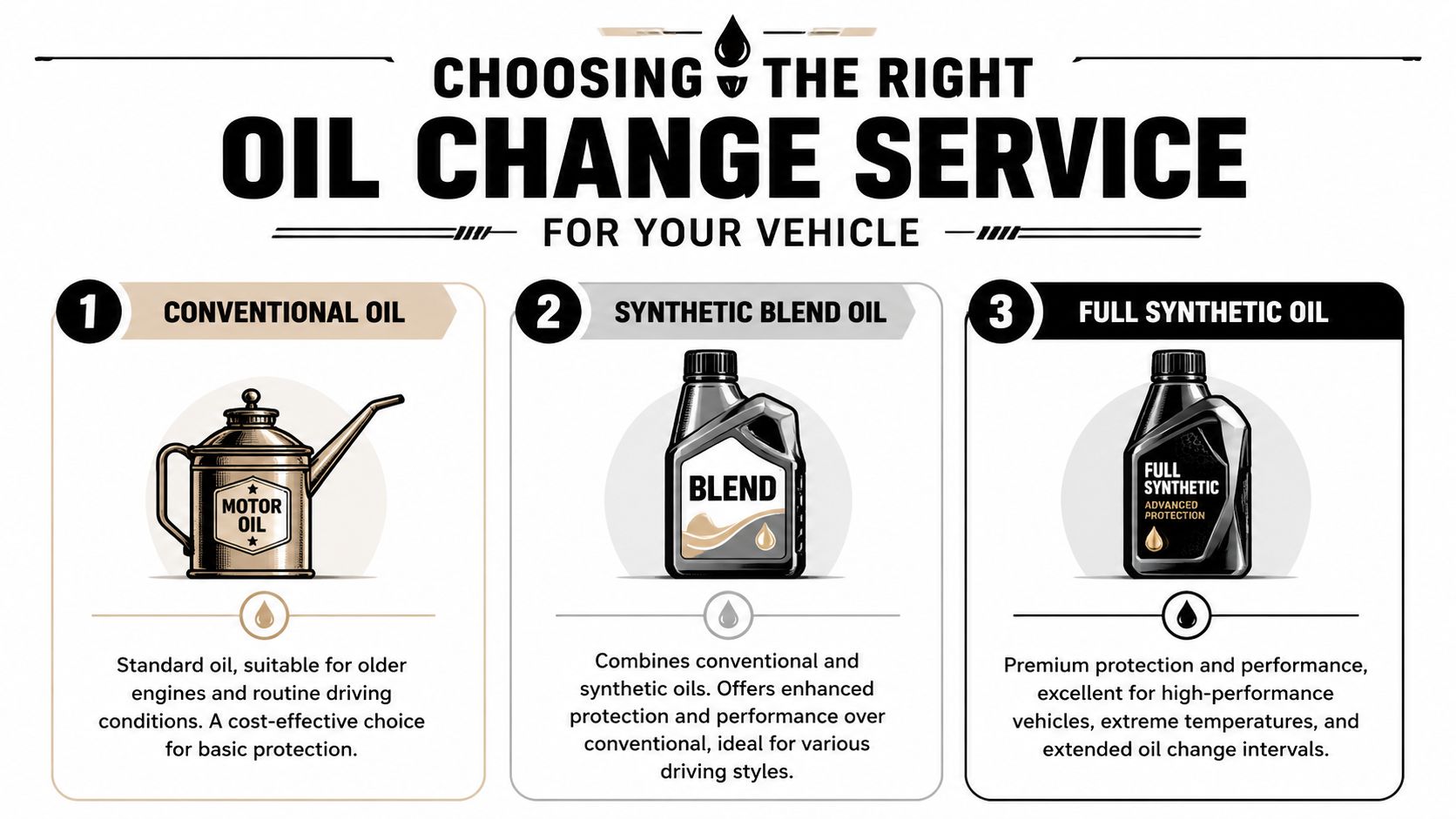
The four main oil options
Here is the practical version of what each oil type is designed to do.
| Oil Type | Best For | Change Interval | Key Benefit |
|---|---|---|---|
| Conventional | Older vehicles with basic driving needs | Follow manufacturer guidance and shop recommendation | Lower upfront cost |
| Synthetic Blend | Drivers who want more protection than conventional | Varies by vehicle and use | Balanced performance and value |
| Full Synthetic | Newer engines, turbo engines, heavy traffic, hotter conditions | Often longer, based on vehicle requirements | Strong heat resistance and stability |
| High-Mileage | Older vehicles with aging seals or wear concerns | Based on condition and manufacturer guidance | Formulated for vehicles with accumulated miles |
Conventional oil
Conventional oil is the traditional choice. It can still make sense for some older vehicles if the manufacturer allows it and the car is used in fairly light, predictable conditions.
Its tradeoff is that it generally breaks down faster under heat and stress than synthetic oil. In a place like Katy, where long idle times and hot pavement are part of normal driving, that shorter performance window matters. Conventional oil can still do the job, but it leaves less margin for harsh conditions.
Synthetic blend
Synthetic blend sits between conventional and full synthetic. It gives you some of the improved heat resistance and stability of synthetic oil without the full jump in cost.
For many drivers, this is a reasonable middle-ground option. If your week includes school pickup lines, short errands, and a few freeway trips, a blend may fit your vehicle well. It is often a practical choice for drivers who want stronger protection than basic oil but do not necessarily need the highest tier.
Full synthetic
Full synthetic is usually the strongest fit for newer engines and tougher use. It holds up better under heat, flows well at startup, and keeps its protective properties longer than conventional oil in many driving conditions.
That matters in Katy. Hot weather and repeated traffic slowdowns put oil under steady stress, much like asking the same pair of work gloves to handle hotter tools for longer periods. Full synthetic is built for that kind of workload. If your owner’s manual specifies synthetic, that is the standard to follow. Downgrading to save money on one visit can cost more over time through added wear.
Drivers who want a full service oil change in Katy should expect the shop to confirm the exact oil grade and specification their engine requires, not just the general oil type.
High-mileage oil
High-mileage oil is made for engines that have been on the road long enough to show normal wear. If your vehicle has minor seepage, uses some oil between visits, or has a lot of miles on it, this formula may help maintain cleaner operation and support older seals.
It is not a repair in a bottle. If there is a mechanical problem, the oil will not solve it. But for an aging vehicle that still runs well, high-mileage oil can be a smart maintenance choice.
How to choose in real life
A simple way to decide is to work through four questions.
- What oil does the owner’s manual require? Start there, because the engine was designed around that specification.
- How do you drive around Katy? Frequent idling, short trips, and heavy traffic usually push drivers toward stronger oil protection.
- What kind of engine do you have? Turbocharged and newer engines tend to be less forgiving about oil quality.
- What condition is the vehicle in now? An older engine with high miles may benefit from a different formula than a newer low-mileage car.
Oil works like the engine’s cooling and cushioning fluid at the same time. If the oil is not matched to the vehicle and the local driving pattern, it may still lubricate, but not as well or for as long as the engine needs.
That is where local service becomes useful. A technician at Kwik Kar can match the oil to the vehicle, the mileage, and the way Katy drivers use their cars, which is much more helpful than choosing from a generic national menu with no local context.
What to Expect During Your Kwik Kar Service Visit
You pull in after a week of Katy traffic, long idle time at lights, and a few errands in afternoon heat that feels hard on everything under the hood. You want the visit to be simple. You also want to know your engine is getting the right care for local driving conditions, not a rushed one-size-fits-all service.
When you pull in
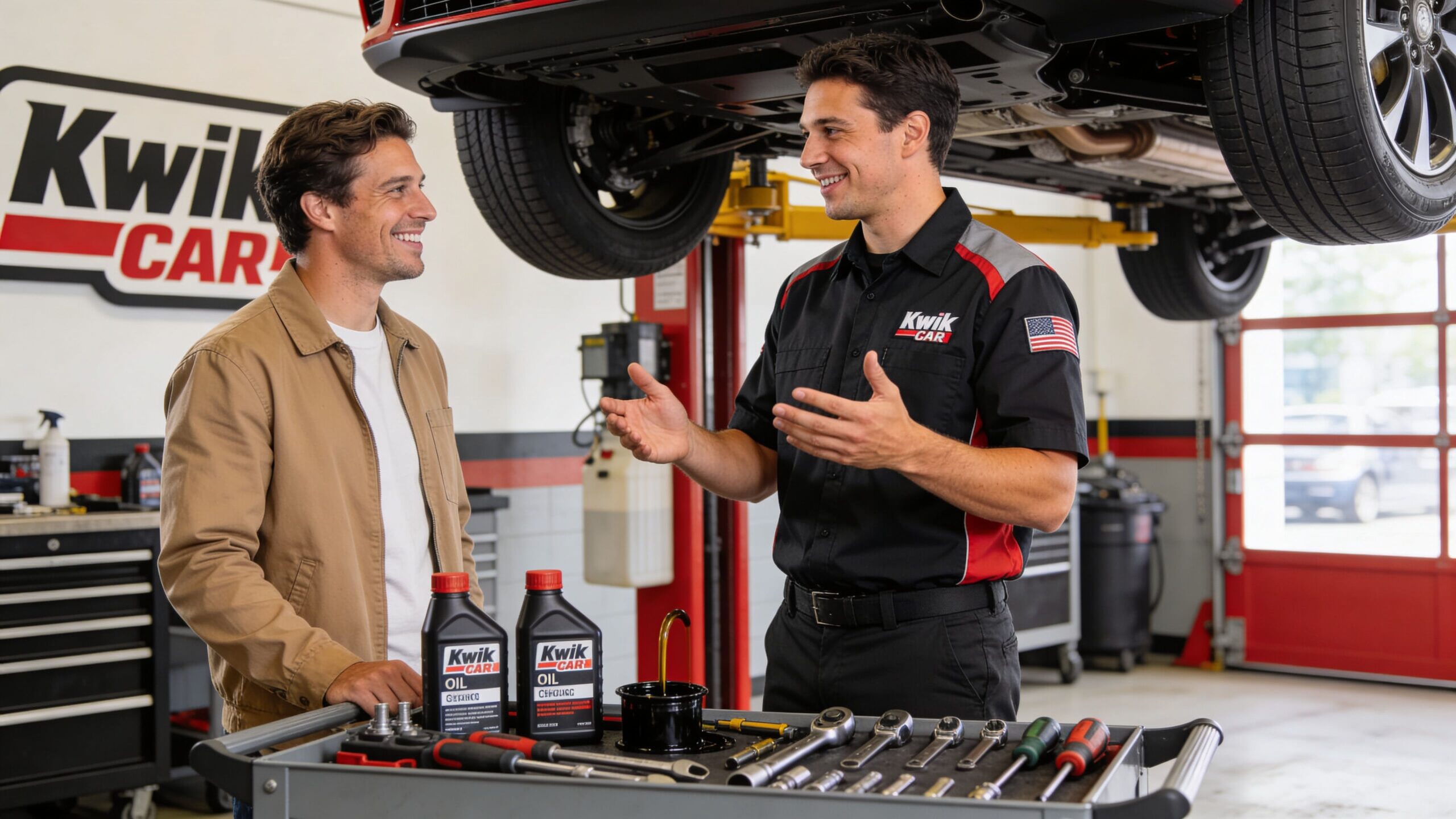
The visit usually starts with a short conversation. A technician may ask about your mileage, the type of driving you do, and anything you have noticed lately, such as a dashboard reminder, a rougher idle, or oil usage between services. That matters in Katy because stop-and-go driving, short trips, and high temperatures can stress oil faster than many drivers expect.
The next step is confirming the correct oil and filter for your vehicle. If you have been looking into a full service oil change in Katy, the main benefit is accuracy. Your engine needs the right viscosity, the right filter, and the right fill level. Oil works like the engine’s protective film, and using the wrong product is a little like wearing the wrong shoes for a long walk in Texas heat. You can still move, but you will not get the same protection.
The service itself
A good oil change visit should feel organized and easy to follow. The old oil is drained, the filter is replaced, and fresh oil that matches the vehicle specification is installed. The technician should also check that the drain plug is secure and that there are no obvious signs of leaks around the service points.
Speed is helpful, but careful work matters more. A fast visit only helps if the basics are right the first time.
Some shops also use specialized equipment to keep parts cleaner during maintenance and inspection work. In the broader repair industry, tools such as automotive ultrasonic cleaners are one example of how modern shops improve cleaning precision on serviceable components.
What technicians often inspect while your car is in the bay
An oil change is also a useful checkpoint. Since the vehicle is already being serviced, technicians can spot small issues before they turn into larger repairs. In Houston-area driving, that extra set of eyes can save trouble because heat and traffic tend to expose weak points faster.
Common inspection items include:
- Fluid levels and condition: coolant, brake fluid, and other key fluids may be checked for low levels or visible contamination.
- Air and cabin filters: dirty filters can affect engine breathing and interior airflow.
- Tire pressure: low or uneven pressure is common and can hurt fuel economy and tire life.
- Visible wear items: wiper blades, belts, and other easy-to-see components may be reviewed for wear.
These checks give context to the oil change. Instead of leaving with only fresh oil, you leave with a clearer picture of how the vehicle is doing.
A quick video overview can also make the process easier to visualize before you arrive.
A good service visit leaves you understanding what was done, what looks fine, and what may need attention soon.
Before you leave
Before heading out, you should know what oil was installed, whether the technician saw anything that needs monitoring, and roughly when to come back based on your vehicle and your driving habits. That last part matters more in Katy than in milder climates. Repeated heat cycles, idling, and short-trip driving can shorten the useful life of oil.
The best service visits feel clear, not confusing. You ask questions, get straight answers, and leave knowing your car is ready for the next round of Texas driving.
Your Complete Auto Care and State Inspection Hub
You are on your lunch break in Katy, your inspection sticker is due, and the car is already due for service. In a place where long commutes, stop and go traffic toward Houston, and intense afternoon heat all work your vehicle harder, splitting those needs between multiple shops turns a simple maintenance day into a hassle.
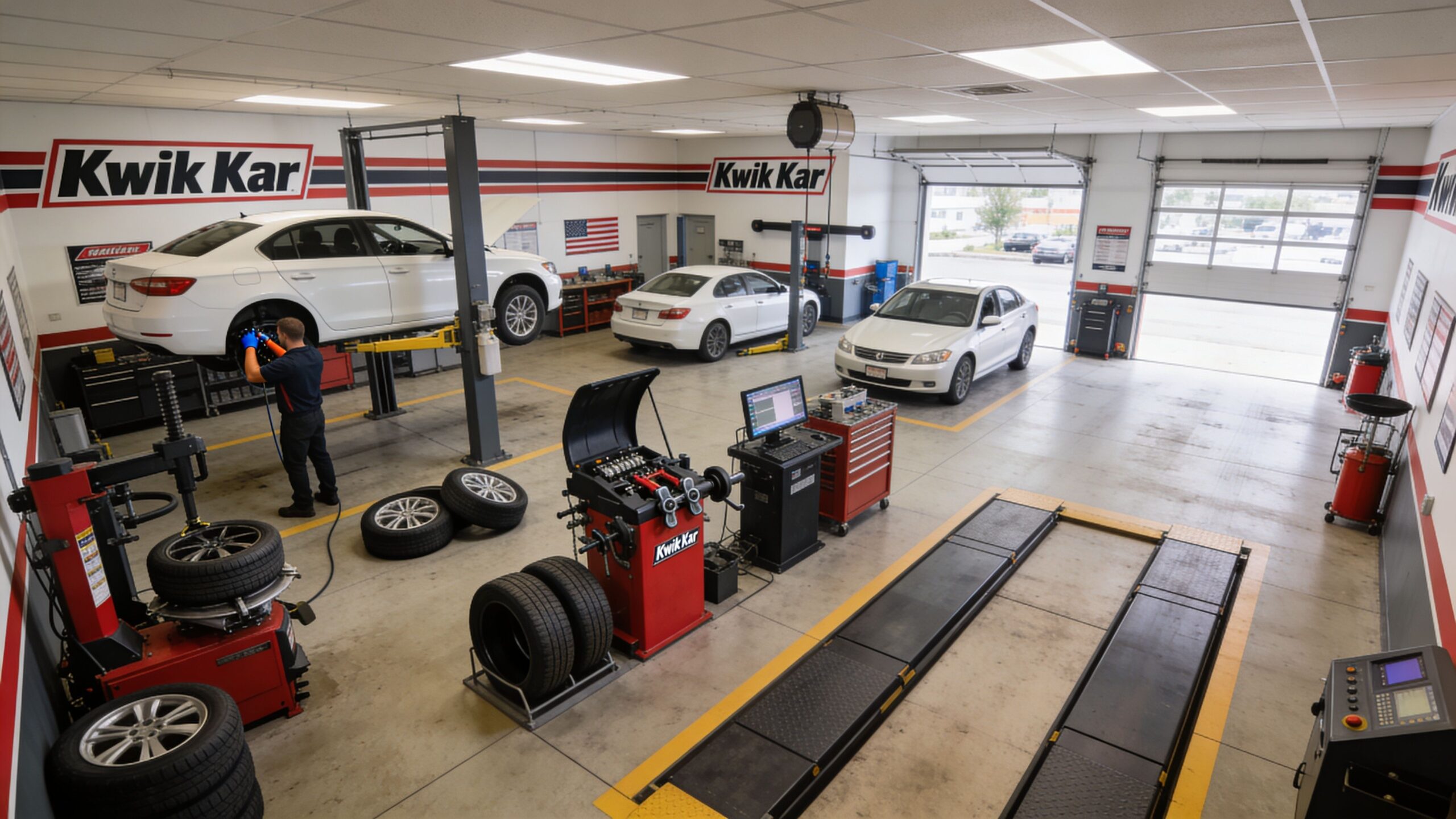
A shop that can handle oil service, inspections, diagnostics, and follow-up repairs in one visit saves time, but the bigger benefit is continuity. The technician sees the vehicle as a whole system. If an inspection turns up a worn component or a fluid-related concern, you can address it before it grows into a breakdown during a hot Texas week.
Why technician skill matters
Oil changes sound simple until you look at what modern vehicles require. The right viscosity, the correct oil standard, proper filter selection, reset procedures, and a trained eye for nearby wear items all matter. It works like cooking with the right ingredients and the right temperature. Skip either one, and the result is off.
That matters even more in Katy. High heat can stress oil faster, and frequent idling or short trips around town may keep the engine from operating under ideal conditions. A careful technician helps match the service to how the vehicle is really driven, not just to a generic sticker reminder.
State inspections and repair follow-through
State inspections are easier when the same shop can also handle what the vehicle may need to pass. If a light, worn wiper, tire issue, or another problem shows up, you do not have to start the process over at a second location.
That one-stop approach helps in a few common situations:
- Inspection and routine service at the same time: one appointment instead of two
- A small repair found during the visit: easier to handle now than forget until the next deadline
- A clearer maintenance history: one shop records what was inspected, serviced, and repaired
For drivers, that means less backtracking. For the vehicle, it means fewer delays between finding a problem and fixing it.
Why fleet owners value one location
Business vehicles have a different kind of pressure. When one truck, van, or light-duty work vehicle is down, schedules slip and customers notice. Fleet maintenance works better when oil changes, inspections, and repair support happen under one roof with a consistent service record.
Shop equipment and cleaning methods matter here too, especially for parts that collect varnish, carbon, or other contamination over time. A technical overview of automotive ultrasonic cleaners explains how specialized cleaning can help with contaminated parts and precision work in modern service environments.
For Katy drivers who want routine maintenance, inspections, and repair support in one place, Kwik Kar Oil Change and Auto Care is a practical option. If you want to pair that convenience with savings, check current Kwik Kar oil change specials in Katy.
Transparent Pricing and Current Online Specials
Price matters, but customers aren’t just looking for the cheapest oil change. They want to know what they’re paying for and whether the recommendation makes sense for their vehicle. That’s the part that builds trust.
Oil change pricing can vary for good reasons. The type of oil affects the cost. So does the amount of oil your engine requires. Filter choice, vehicle design, and whether you’re combining maintenance items during the visit can also change the final total. None of that is a problem when it’s explained upfront.
What transparent pricing should look like
A clear estimate should answer a few simple questions:
- What oil is going in the vehicle? Conventional, blend, full synthetic, or high-mileage.
- Why is that oil being recommended? The answer should relate to your vehicle or your driving conditions.
- What’s included in the service? Oil alone isn’t always the whole story.
- Are there any optional items? You should be able to separate needs from nice-to-have add-ons.
Paying more only makes sense when you understand what extra protection or service you’re actually getting.
Why online specials are worth checking first
Coupons and service specials can make a noticeable difference, especially if you stay on top of maintenance and plan ahead. Instead of guessing what current offers are available, check the shop’s current oil change specials and online coupons before you go.
That step helps in two ways. First, it may lower the cost of routine maintenance. Second, it gives you a better idea of what services are actively being promoted, which can help you ask smarter questions when you arrive.
Transparent pricing isn’t about promising that every vehicle costs the same. It’s about making sure you know what you’re approving and why.
Find Us in Katy Hours and Easy Appointment Booking
Convenience often decides whether maintenance gets done on time or pushed back another week. If booking service feels complicated, people delay it. The easier the process is, the more likely you are to take care of the car before a small issue grows.
Kwik Kar Oil Change and Auto Care is located at 1690 S Fry Road in Katy, TX 77450. For most drivers, the easiest next step is to confirm location details on the business website and reserve a visit online instead of waiting until the last minute.
The easiest ways to book
You’ve got a few practical options:
- Schedule online: Use the shop’s online appointment booking page to request a convenient time.
- Call the shop: This is useful if you have a specific question about your vehicle or want to combine services.
- Walk in when needed: Many drivers still prefer to stop by when their schedule opens up.
Why flexible hours matter
Seven-day availability helps people fit maintenance into real life. Weekday commuters may prefer an early or midweek visit. Parents may need a weekend slot. Business owners may try to rotate fleet vehicles during lighter work periods.
Reviews on platforms like Google and Yelp also matter at this stage. They don’t replace your own judgment, but they can help you gauge whether a shop communicates clearly, finishes work on time, and treats customers respectfully.
If you’ve been putting off an oil change because you didn’t want the hassle, this is the point to make it simple. Pick a time, get it on the calendar, and handle it before it turns into a bigger maintenance issue.
Frequently Asked Questions About Katy Oil Changes
A common Katy scenario goes like this. You run a few short errands, sit in traffic on I-10 or Fry Road, and assume your car is not working very hard because the miles stay low. Your engine sees it differently. Heat, stop and go driving, and short trips can wear oil down faster than many drivers expect.
Do I need an appointment for an oil change in Katy
Walk-in service works for many routine oil changes. An appointment helps if your day is packed, your vehicle needs more than one service, or you want a better idea of your wait time.
How do I know which oil my car needs
Your owner’s manual is the starting point. It lists the oil viscosity, such as 0W-20 or 5W-30, and whether your engine requires synthetic oil.
If that feels like reading a label in a different language, here is the simple version. The oil has to match the way your engine was built. Using the wrong type can reduce protection in hot Texas weather, especially during long idle times and heavy traffic. A good shop should confirm the specification before service starts.
Is full synthetic worth it in Katy
For many Katy drivers, yes. Full synthetic oil handles heat better, resists breaking down longer, and usually protects better during slow traffic and repeated short trips.
That matters around Katy and the Houston area because oil does not only age by mileage. It also ages from heat cycles, time, and contamination. If your driving includes school pickup lines, weekend errands, commute traffic, or long summer idling with the AC on, synthetic oil is often a smart fit. It is not required for every vehicle, but local conditions make it more useful than many people realize.
What does a multi-point inspection usually include
A multi-point inspection is a quick health check for the systems that tend to cause trouble between visits. Shops often look at fluid levels, tire pressure, filters, battery condition, belts, hoses, and wiper wear.
It helps to picture it like a routine checkup at the doctor. The visit may be for one main reason, but the quick screening can catch a smaller problem before it turns into an expensive repair.
Can I wait too long even if I don’t drive much
Yes. Oil can still collect moisture and contaminants even when mileage stays low. Short trips are especially hard on engines because the oil may not get hot enough for long enough to burn that moisture off.
That is one reason low mileage vehicles in Katy still need regular attention.
Will an oil change fix every engine problem
An oil change protects your engine and reduces wear. It does not repair leaks, silence every noise, or clear a warning light caused by a mechanical fault.
Fresh oil is preventive maintenance. It is one of the best ways to reduce engine stress, but it is not a substitute for diagnosis when something is already wrong.
Does the shop handle used oil responsibly
Professional shops typically collect and recycle used oil and filters as part of the service. If you want to be sure, ask how disposal is handled during your visit. That is a fair question, and a reputable shop should be able to answer it clearly.
If your vehicle is due for service, Kwik Kar Oil Change and Auto Care is a practical place to start. You can ask questions, confirm the right oil for your engine, and get advice that fits the way Katy drivers use their vehicles.