
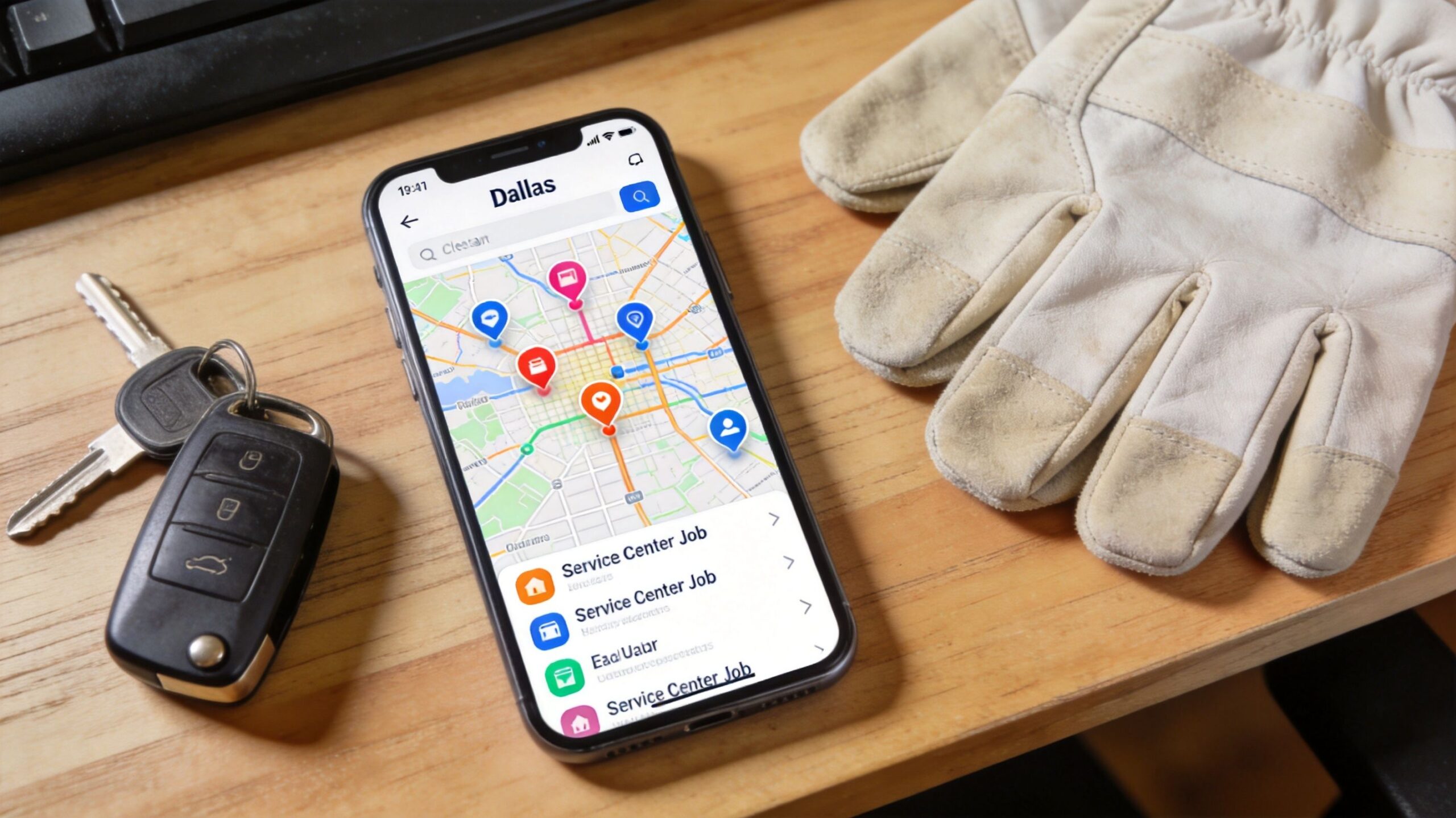
You're probably doing what most applicants do. Typing oil change near me hiring into your phone, opening a stack of job posts, and trying to figure out which ones are real opportunities and which ones are just another revolving-door shop that will burn you out fast.
That's a smart question to ask early.
Quick-lube work can be a solid way into the auto industry, but only if you approach it like a career move instead of a random hourly job. Shops hire for attitude, pace, safety, and reliability long before they hire for deep mechanical knowledge. If you understand that, you'll already be ahead of a lot of applicants in Dallas.
Starting Your Search for an Oil Change Job in Dallas
The Dallas market gives you a lot of options, and that's both good and bad. You can usually find openings without much trouble. The harder part is spotting the shop where you can stay, learn, and move up.
That matters because turnover in this trade is real. Data from the Bureau of Labor Statistics shows automotive service technicians have a median tenure of just 1.2 years, which is 40% below the national average according to this industry hiring summary. That lines up with what managers see on the ground. Some people come in thinking it's easy work, then leave when they realize the pace is constant, the weather is hot, and customers expect speed without mistakes.
What separates a good search from a bad one
A weak search is just scrolling Indeed and firing off the same resume to every shop in town. A stronger search looks at how the shop operates. Do they stay busy seven days a week? Do they handle inspections, maintenance, and customer-facing service, not just oil changes? Do they seem organized?
Those details tell you whether you're walking into a place that teaches habits you can build on.
Practical rule: Don't chase the first opening. Chase the shop where the manager seems organized, the bays look clean, and the process looks repeatable.
What to pay attention to in Dallas
Dallas drivers depend on fast routine service, but they also want convenience and value. That means you should pay attention to locations that combine quick maintenance with promotions, scheduling, and steady customer volume. Watching how a shop presents its service specials can tell you a lot about how seriously it takes daily traffic and customer retention. You can even see the kind of consumer offers that shape demand by looking at local examples like these Dallas-area oil change deals.
A promising applicant doesn't just ask, “Who's hiring?” A promising applicant asks, “Where can I learn the right pace, the right customer habits, and the right shop discipline?”
That's the mindset that gets noticed.
Finding Openings and What Kwik Kar Really Looks For
Most applicants overcomplicate the first step. They assume they need a long list of certifications before they even try. For entry-level lube work, that's usually not the deciding factor.
Shops need people who show up on time, listen the first time, stay calm when the line backs up, and don't cut corners on safety. If you've got that, you're already viable.
Where to look beyond the big job boards
Job boards matter, but they're not enough. A lot of good applicants miss openings because they only wait for an ad to show up in their feed.
Use a three-lane search:
Check the company employment page
Start with the official Kwik Kar employment page. That gives you the cleanest signal on whether the business is actively looking and how it wants people to apply.Call the location directly
Don't call during the lunch rush. Mid-morning or mid-afternoon is usually better. Ask if the manager is accepting applications for lube tech or entry-level service roles.Visit in person when the shop isn't slammed
A short visit shows initiative. It also lets you read the room. You can tell a lot from how the front counter handles customers and how the crew moves in the bays.
What gets attention fast
If you're trying to land a quick-lube job, managers are screening for risk. They want to know whether you'll create problems or solve them.
Here's what usually helps:
- Reliable attendance: If your past jobs show you stayed put and showed up, say that plainly.
- Comfort with physical work: This is not desk work. You'll be on your feet, moving fast, working around heat, fluids, and noise.
- Coachability: A new hire who takes instruction well is more valuable than a stubborn applicant with half-learned habits.
- Customer sense: Oil change work isn't only wrench work. You talk to people, explain findings, and help keep the visit smooth.
- Clean work habits: Managers notice whether you care about spills, tool placement, and keeping the bay under control.
What doesn't help
A lot of applicants think they need to sound like master mechanics. That backfires.
Don't claim you can diagnose everything if you can't. Don't pad your experience. Don't act like oil changes are beneath you. Shops want someone who respects the work because routine service is where discipline starts.
If you're new, say you're ready to learn, work hard, and follow process. That answer lands better than fake confidence.
The basic qualifications that matter
You don't need to present yourself as a finished technician. You need to present yourself as someone worth training. If you have a valid license, steady transportation, and a record of handling responsibility, put that forward.
Managers know they can teach drain-and-fill procedure, filter replacement, inspection flow, and bay rhythm. It's much harder to teach urgency, humility, and consistency.
Crafting Your Resume and Applying Like a Pro
Most entry-level automotive resumes fail for one simple reason. They read like generic job history instead of a fit for the bay.
A service manager scanning resumes wants to see whether you can handle pace, responsibility, and routine. Your resume should answer that in a few seconds.

How to translate non-automotive experience
If you worked retail, food service, warehouse, delivery, landscaping, or construction, you already have relevant material. The trick is framing it correctly.
A cashier role can show customer communication and cash-handling accuracy. Warehouse work can show physical stamina, process discipline, and speed. Restaurant experience can show composure under pressure and teamwork during rush periods.
A useful way to think through this is matching your experience to company needs. That approach works especially well when you're moving from another field into auto service.
What to put on the page
Keep it simple. One page is fine for most entry-level applicants.
Use a short summary like this:
Dependable entry-level automotive applicant with strong customer service experience, a clean work ethic, and willingness to learn shop procedures, safety standards, and preventive maintenance tasks.
Then list past jobs with bullets that show behavior, not fluff.
- Handled fast-paced customer traffic: Good for front-counter and service-lane rhythm.
- Worked full shifts on my feet: Good for bay readiness.
- Followed safety and cleanliness standards: Good for oil, tools, lifts, and inspections.
- Collaborated with team members during rush periods: Good for shop flow.
- Maintained punctual attendance: Managers care about this more than fancy wording.
Three ways to apply well
Online application
Submit the form carefully. Use a professional voicemail greeting and a real email address. If there's a box for extra notes, keep it brief and direct.
Say you're applying for an entry-level technician role, you're available for in-person interview, and you're ready to learn fast.
Phone call follow-up
Call after you apply, but don't sound pushy. Ask whether the manager had a chance to review your application and whether they'd like to meet.
Good script:
- Start clear: “Hi, I submitted an application for an entry-level technician role.”
- Show intent: “I wanted to introduce myself and let you know I'm serious about the position.”
- Close: “If the manager is available later this week, I'd be glad to come by.”
In-person drop-off
This still works when done right. Dress clean. Don't show up looking like you just rolled out of bed. Don't interrupt a busy counter with a long speech.
Bring a printed resume and say you're looking for the service manager. If they're unavailable, ask when a better time would be to return. That shows you understand shop flow.
Small details that help
A lot of hiring comes down to whether the manager can picture you in uniform next Monday without drama.
That means your application should feel low-maintenance. No sloppy email address. No spelling mistakes. No late callback. No weird attitude. Make it easy for the manager to say yes.
Acing Your Kwik Kar Interview and Skills Test
Once you get called in, the hiring process gets more practical. At that point, the manager is no longer asking, “Can this person fill out an application?” They're asking, “Can this person work safely, take direction, and fit into the bay without slowing everyone down?”
That's a different standard.
What the interview is really measuring
Managers listen for three things in an entry-level interview. First, whether you respect safety. Second, whether you can handle repetitive work without getting sloppy. Third, whether you'll help the team instead of creating friction.
Don't try to impress with jargon. A straight answer beats a flashy one.
If you want extra reps before you go in, it helps to practice common job interview questions out loud. That matters more than people think. Applicants often know what they mean, but they ramble when they're nervous.
Questions you should be ready for
Here are the ones that come up in one form or another:
| Interview question | What the manager wants to hear |
|---|---|
| Why do you want this job? | You want to learn the trade, work hard, and build real skills |
| Have you done automotive work before? | Honest experience level, plus willingness to be trained |
| How do you handle fast-paced work? | You stay organized and don't panic |
| What does safety mean to you? | You follow procedure every time |
| How would you handle a frustrated customer? | You stay respectful and get the right person involved |
A good answer sounds grounded. For example, if you're asked why you want the job, don't say “cars are my passion” and leave it at that. Say you want hands-on experience, you like practical work, and you're looking for a shop where you can start at the basics and earn more responsibility.
A manager can train a new tech. A manager can't easily fix a careless one.
How to handle the hands-on test
Some shops will want to see how you move around a vehicle, use basic tools, or explain a simple maintenance task. If you get a skills test, don't assume they only care about speed.
They're watching your sequence.
Top quick-lube shops use structured training. New hires often start with hands-on shadowing and must pass skill certifications on tasks like a 15-minute oil change, aiming for a 95% efficiency benchmark. That training investment is tied to 85% retention after 6 months, versus 60% for untrained hires, according to the BLS-related automotive training overview.
That tells you something important. A strong applicant mirrors that structure before getting hired.
What good shop behavior looks like
If you're asked to demonstrate anything around a car, think in this order:
Safety first
Confirm the vehicle is secure. Respect lift points or jack placement. Don't rush past the basics.Set up your workspace
Keep tools where you can reach them. Don't scatter parts. Don't look chaotic.Follow a consistent sequence
Draining oil, replacing a filter, checking fluids, and documenting observations should feel methodical.Keep it clean
Wipe spills. Control mess. Clean habits signal professionalism.Communicate what you're doing
If the manager is watching, narrate briefly. Not every second, just enough to show you're thinking.
A lot of applicants lose points by trying to look fast. Fast without control looks dangerous. Controlled and attentive is what earns trust.
How to talk about inspections and service flow
Quick-lube shops don't just change oil. They inspect, flag concerns, and help customers understand what the car needs now versus later. That's why it helps to study a real maintenance checklist before the interview. Reviewing something like a 17-point oil change inspection process gives you a clearer sense of how professional shops combine speed with routine checks.
If the interviewer asks how you'd avoid mistakes, say you rely on process. Confirm vehicle information. Confirm fluid type. Follow the checklist. Double-check before the car leaves the bay.
That answer sounds simple because it is. Good bay work usually is.
A short visual refresher can also help you get your head in the right space before interview day.
What to do after the interview
Follow up the same day or the next morning with a short thank-you message. Keep it brief. Thank the manager for the time, mention that you're interested in the role, and say you'd be ready to get started.
That's enough.
Pay, Benefits, and Your Career Path at Kwik Kar
Pay matters. In Dallas, it matters even more because your commute, rent, and tool costs add up fast. I tell applicants to look at two things at the same time. What you can earn now, and how quickly the shop lets you grow into higher-value work.
For a Dallas-area benchmark, the U.S. Bureau of Labor Statistics groups quick-service and entry-level tech work under automotive service technicians and mechanics, with wage data for the Dallas-Fort Worth-Arlington market here: https://www.bls.gov/oes/current/oes493023.htm. That number is broader than oil-change work alone, so treat it as a market reference, not a promise. Entry-level lube jobs usually start lower than a fully developed technician role, but the upside comes from overtime, consistency, and whether the shop actually trains people up.
A busy, well-run Kwik Kar can be a good place to build from the ground floor. A slow shop with weak management can keep you stuck.
What advancement can actually look like
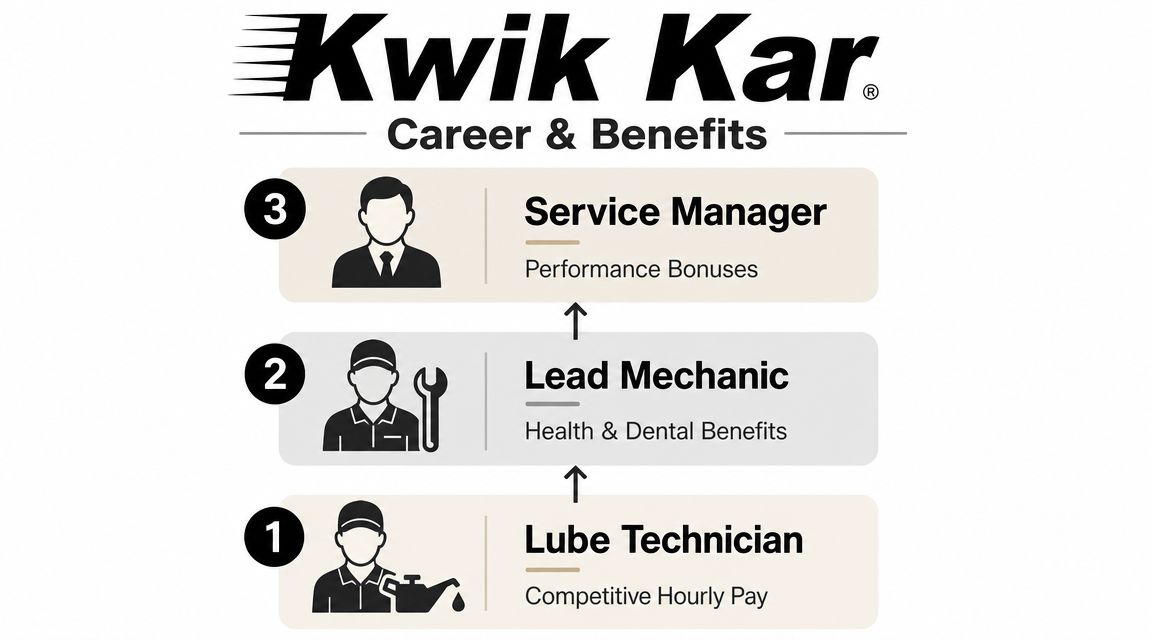
At a Dallas quick-lube shop, the path usually looks simple on paper and harder in real life:
| Stage | What you're expected to master |
|---|---|
| Lube technician | Oil changes, inspection flow, bay safety, customer basics |
| Lead mechanic | More responsibility, troubleshooting support, team guidance |
| Service manager | Workflow control, customer handling, staff accountability |
The people who move up are the ones a manager can trust on a Saturday rush. They catch the wrong filter before it goes on. They keep the bay clean without being told. They can explain a basic service issue to a customer without creating confusion at the counter.
In Dallas, that also means being useful in a high-volume environment. Shops near commuter corridors, retail centers, and dense neighborhoods tend to reward reliability fast because every no-show or careless mistake hits the whole day's workflow.
Why fleet work matters
One strong career lane is fleet service. It is less flashy than performance work, but it can be steadier and more valuable over time. If you get good at repeat maintenance, inspection accuracy, and documentation, you become useful to commercial accounts that care about uptime more than sales talk.
That matters in Texas because commercial vehicle demand is strong, and analysts at IMARC describe the U.S. fleet management market as a growing segment tied to outsourcing, maintenance control, and operating efficiency: https://www.imarcgroup.com/fleet-management-market. You do not need to memorize industry reports in an interview. You do need to understand why a shop values someone who can service the same work vehicles correctly, on schedule, every time.
The best entry-level techs build value through consistency, clean process, and trust. That is what turns oil change work into a real career path.
Benefits and the bigger employment picture
Ask direct questions about benefits, schedule stability, and how the shop handles payroll and HR. Those answers tell you a lot about whether you're joining an organized operation or walking into constant confusion. I have seen good technicians leave decent-paying jobs because the scheduling was sloppy and the support systems were worse.
If you want background on how companies structure that side of the business, this breakdown of PEO vs HRO is useful context. You are not trying to become an HR specialist. You are checking whether the business behind the bays is stable enough to support a long-term career.
At the applicant level, that is the significant trade-off. A shop can offer a dollar more per hour and still be the worse job if turnover is high, training is weak, and nobody knows who is responsible for what.
FAQs for Dallas-Area Kwik Kar Applicants
Do I need my own tools to get hired
For an entry-level lube role, not always. Many shops provide the basic equipment needed for routine service. What managers care about first is whether you can use tools responsibly, keep track of equipment, and maintain a clean work area.
If you already own a basic set, that can help. If you don't, don't let that stop you from applying. Just be honest about what you have.
Will I have to work weekends
You should expect some schedule flexibility in this line of work. Dallas-area quick-service shops stay busy when customers are off work, and that usually means weekends matter.
If you have restrictions, say so early. Don't wait until after the interview. Managers can work with clear expectations a lot better than last-minute surprises.
Does being bilingual help in Dallas
Yes, it often does. In a market like Dallas, clear communication matters at the counter and in the bay. If you can explain service recommendations comfortably to more customers, that makes you more useful to the team.
It won't replace work ethic or reliability. It does make you more versatile.
What if I have no shop experience at all
That's not a deal breaker. A lot of applicants get hired because they show maturity, urgency, and willingness to learn. If you've worked in any environment where pace, teamwork, and customer interaction mattered, bring that up.
The key is not pretending you know more than you do. Managers respect honesty paired with effort.
What should I wear when I apply in person
Keep it clean and practical. You don't need a suit. You do need to look like someone who takes the opportunity seriously.
A collared shirt or clean work shirt, neat pants, and closed-toe shoes are enough. Leave the sloppy gym clothes at home.
If you're ready to stop scrolling job boards and start building real shop experience, take the next step with Kwik Kar Oil Change and Auto Care. Check current opportunities, show up prepared, and apply like someone who wants a career, not just a clock-in code.