If you're staring down your annual registration renewal and feeling a bit confused about the latest vehicle inspection rules in Plano, you're not alone. The old system changed pretty drastically back in 2025, but don't worry. An annual emissions test is still required here in Collin County, and we at Kwik Kar are here to walk you through exactly what that means for you.
Your Quick Guide to Plano Vehicle Inspections
If you’ve lived in Plano for a while, you’re probably used to the yearly ritual of getting a state safety inspection sticker. That all changed on January 1, 2025, and it’s created some real questions for local drivers. Let’s clear things up.
A new law, House Bill 3297, did away with the mandatory annual safety inspection for most personal cars and trucks across Texas. However, because Plano is in an air quality-focused county, some rules still apply to us. While the safety check is gone, a yearly emissions test is still required for most gasoline-powered vehicles.
You'll also notice a $7.50 inspection program replacement fee that gets collected when you renew your vehicle's registration.
Plano Vehicle Inspection Rules at a Glance (2026)
To make it simple, we've broken down the current rules for different vehicles you'll see on Plano roads. This table covers exactly what's needed to keep your registration up to date in 2026.
| Vehicle Type | Required Inspection | Key Details |
|---|---|---|
| Gasoline Vehicles (2-24 years old) | Emissions Test | This is the standard OBDII (On-Board Diagnostics) test that remains mandatory in Collin County. If your car falls in this age range, you must pass this test annually before renewing your registration. |
| New Vehicles (under 2 years old) | None | Brand new cars get a pass for their first two years. You won't need an emissions test until the car is two years old. |
| Older Vehicles (25+ years old) | None | Classic or antique cars aged 25 years or older are exempt from the annual emissions testing requirement. |
| Diesel Vehicles & Motorcycles | None | These vehicle types are completely exempt from the emissions testing program in Plano. |
| Commercial Vehicles | Safety Inspection | The rule change did not apply to commercial vehicles. They are still required to pass an annual safety inspection to operate legally. |
Essentially, for the vast majority of drivers in Plano, the focus has shifted from a broad safety check to a specific environmental one.
What’s Still Required for Most Drivers in Plano
So, what does this mean for your average car or truck in 2026? It’s pretty straightforward.
- Annual Emissions Test: If your gasoline-powered car or truck is between 2 and 24 years old, you must pass an annual emissions test. It’s a non-negotiable part of your registration renewal.
- No More Safety Sticker: That familiar sticker on your windshield is officially a thing of the past for personal vehicles.
- Registration Fee: You’ll pay a small "inspection replacement fee" along with your normal registration costs.
The big takeaway is simple: the state’s requirement has shifted from overall mechanical safety to air quality compliance. While the state no longer forces a check of your brakes and tires, making sure your car isn’t polluting our air is still a top priority.
Why a Voluntary Safety Check Still Matters
Just because the state removed the mandate doesn't mean safety is any less important. In fact, a voluntary safety check is now more crucial than ever for your own peace of mind on Plano’s busy roads. To see what a thorough check-up includes, you can review this detailed vehicle inspection checklist to understand all the parts that keep your car running safely.
Of course, a safe car is only one part of being a responsible driver. Having the right insurance coverage is just as critical. For a deep dive into local options, check out this Plano Car Insurance Ultimate Guide.
Understanding the Texas Emissions Test in Collin County
Even though the old-school safety inspection is gone for most of us, the annual emissions test is still a major requirement here in Plano. So, what exactly is this test that decides if your car is good to go for another year?
Think of it this way: your car has a brain. It’s called the On-Board Diagnostic (OBDII) system, and it constantly keeps tabs on how your engine, exhaust, and other critical parts are performing. The annual emissions test is really just a quick, clean check-in with that brain.
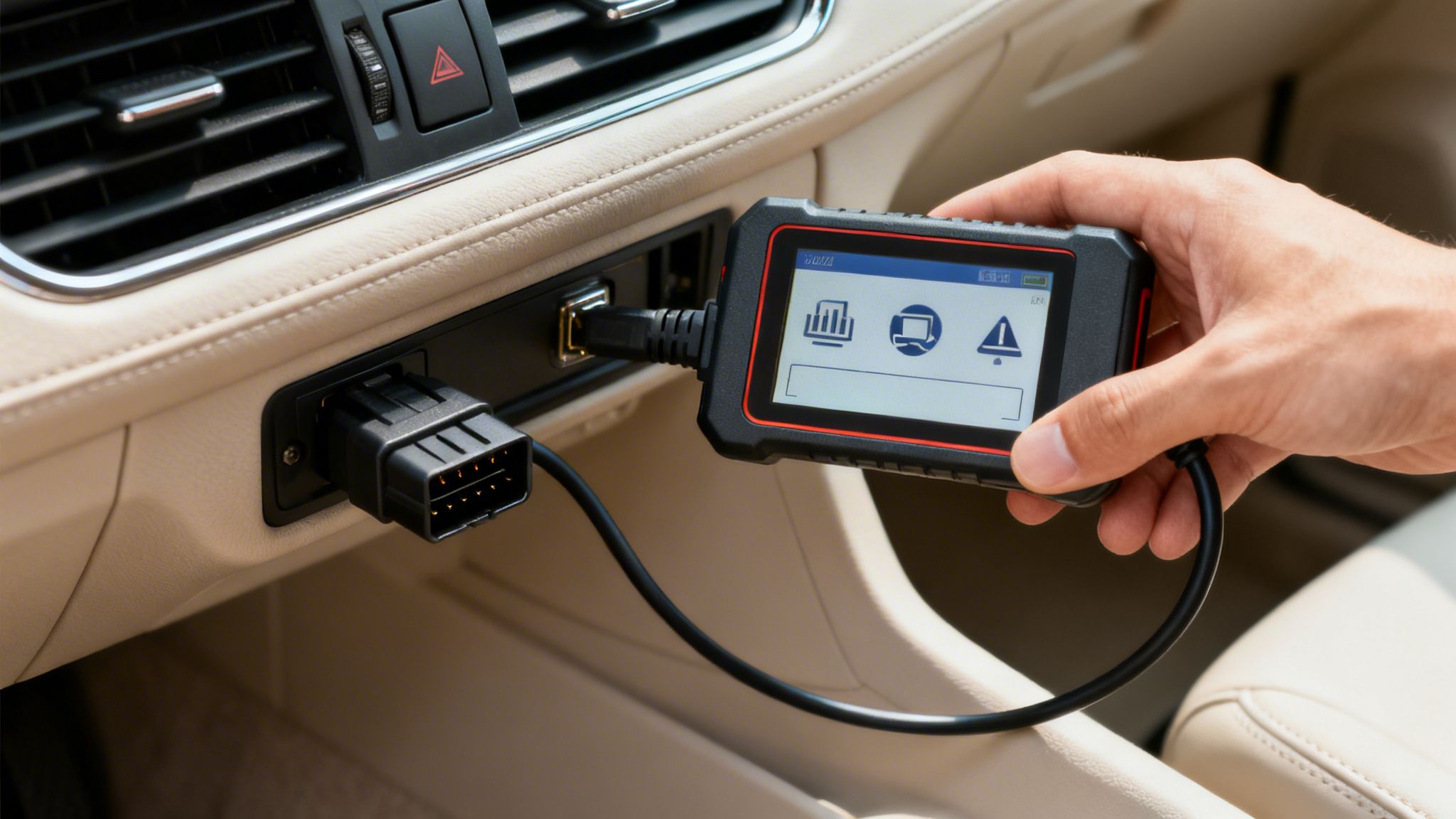
Our technicians simply plug a scanner into your car's OBDII port, which is usually right under the dashboard. This scanner has a quick "talk" with your car's computer, asking if it's flagged any issues with the emissions controls. It's a surprisingly simple process—no messy tailpipe probes or getting under the hood.
Who Needs an Emissions Test in Plano
Not every car rolling through Plano needs an emissions test. The rules are pretty specific and mostly come down to your vehicle's age, the kind of fuel it uses, and where it's registered. Since Plano is in Collin County—one of the key DFW counties monitored for air quality—the requirements are straightforward.
Here's the simple breakdown of who needs the annual test:
- Gasoline-powered vehicles: If your car or light-duty truck runs on gas, it's on the list.
- Vehicles aged 2 to 24 years: This rule targets cars that are past their brand-new phase but not quite old enough to be considered classics.
This approach makes sense, as it focuses on the vehicles most likely to affect our air quality if something's not working right. For a deeper look at what gets checked, you can learn more about the Texas emissions test in our detailed guide.
Vehicles Exempt from the Emissions Test
On the flip side, some vehicles get an automatic pass on this annual requirement. You do not need an emissions test if your vehicle is in one of these groups:
- Brand new vehicles: Cars under two years old are given a pass for their first couple of years.
- Older vehicles: Any car or truck that's 25 years old or older is exempt.
- Diesel-powered vehicles: All diesel engines are exempt from the OBDII emissions test.
- Electric vehicles (EVs): Since they have zero tailpipe emissions, EVs are naturally exempt.
- Motorcycles: These two-wheelers aren't part of the testing program either.
This system helps keep the focus where it matters most for our local air quality. Plano, being in an emissions-focused county, required both safety and OBDII tests until the big overhaul in 2025, which did away with safety inspections for regular cars. Today, about 70% of Plano's gasoline vehicles—roughly 175,000 cars and SUVs—still need these yearly emissions checks, and the pass rate usually stays between 85-90%.
What the OBDII Test Actually Checks
When we plug that scanner into your car, it’s not checking your tire pressure or the life of your brake pads. It has one job: to check the health of your emissions control system.
An OBDII emissions test is essentially a health check for your car's pollution control system. It verifies that key components are functioning as designed to keep harmful pollutants out of the air we breathe.
The system reports on a few critical parts, but here are the most common ones that can cause a car to fail:
- Catalytic Converter: This is the workhorse that converts nasty gases like carbon monoxide into much less harmful stuff.
- Oxygen (O2) Sensors: These sensors are crucial. They monitor the oxygen in your exhaust so the engine can tweak the fuel mixture for the best efficiency and cleanest burn.
- Evaporative Emission Control (EVAP) System: This system’s whole job is to stop raw gas fumes from escaping into the atmosphere. Believe it or not, a loose gas cap is one of the top reasons this system flags an error.
- "Check Engine" Light Status: This one's simple. If your check engine light is already on, it’s an automatic fail. That light means your car’s OBDII system has already found a problem that needs attention.
The Step-by-Step Plano Inspection Process at Kwik Kar
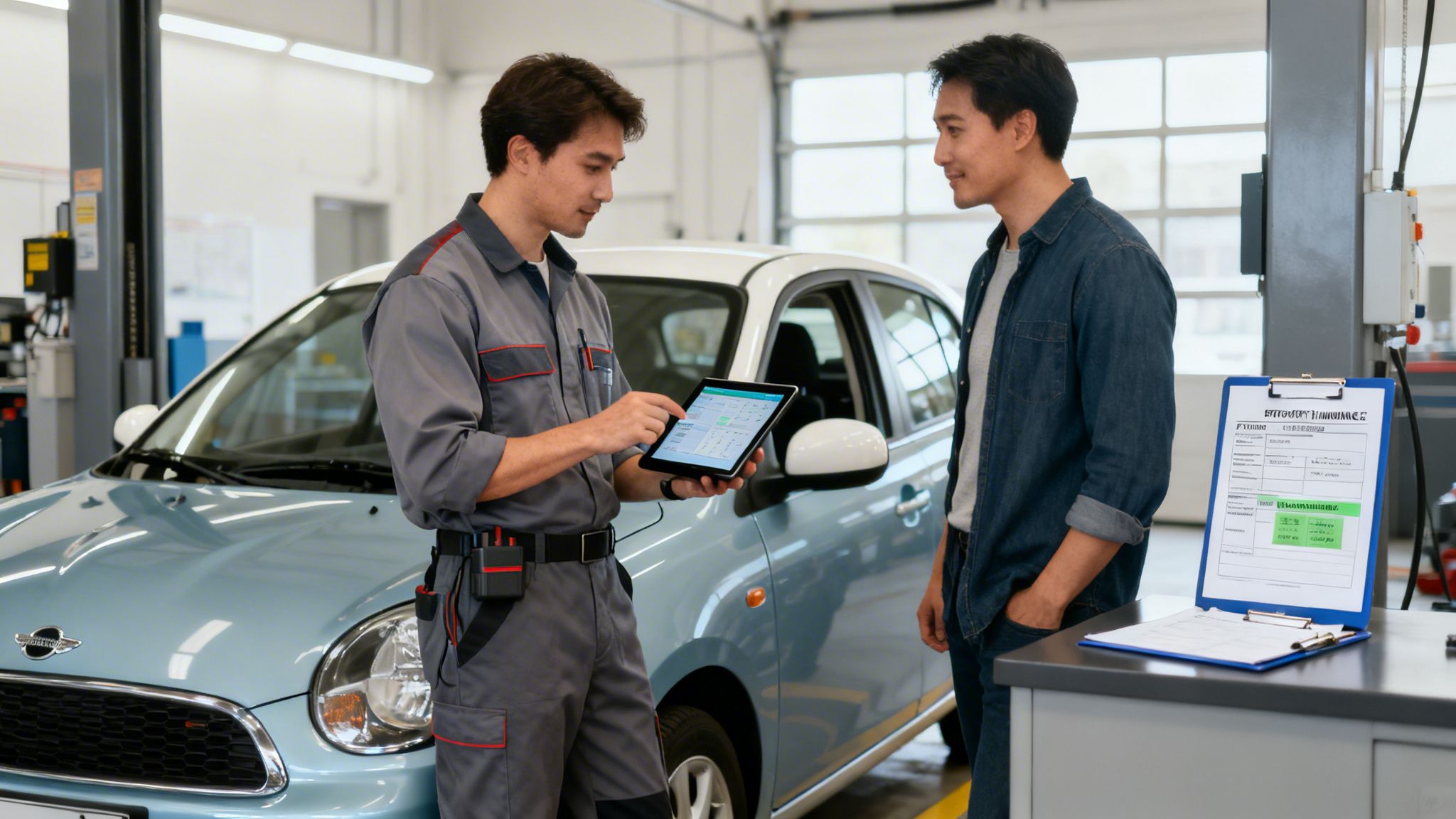
Getting your annual state inspection shouldn't be a confusing or lengthy ordeal. Here at Kwik Kar, we've refined our vehicle inspection in Plano, Texas to be as transparent and efficient as possible. Our objective is to make sure you understand exactly what is happening with your vehicle from the moment you pull in until you receive your results.
We view the inspection as a routine but important check-up for your car. Our technicians will walk you through every step, ensuring you are fully informed and comfortable throughout the predictable, convenient process.
Arriving for Your Inspection
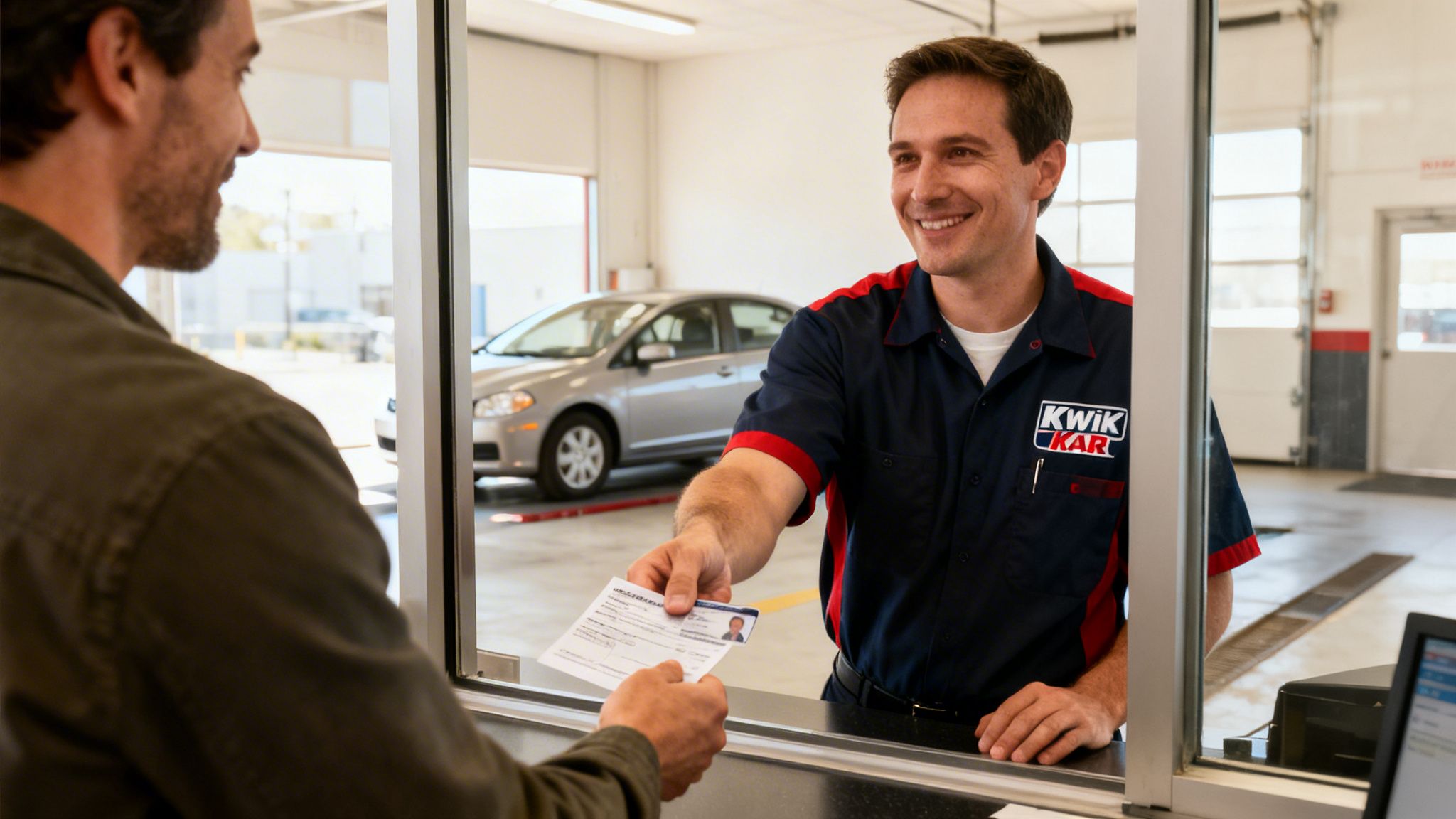
Your inspection begins the moment you arrive at our Plano facility. The first step is a quick and simple document check to ensure all state requirements are met. You will only need two items on hand for this part.
This initial verification takes just a minute or two. Once we've confirmed your documents, we enter your vehicle's information into the state system and proceed to the service bay for the technical inspection.
What You Need to Bring:
- Proof of Insurance: Current Texas liability insurance is mandatory. A digital copy displayed on your phone is perfectly acceptable.
- Your Photo ID: A valid driver's license is required to verify your identity.
That’s all! With these two documents, we have everything we need to perform the state-mandated inspection.
The Emissions Test A Quick Conversation with Your Car
With the paperwork handled, our ASE-certified technician will move your vehicle into the service bay for the core of the inspection: the On-Board Diagnostics (OBDII) test. This is the central component of the required vehicle inspection in Plano, Texas.
This test is surprisingly fast and completely non-invasive. Our technician simply connects a specialized scanning tool to your vehicle’s OBDII port, which is typically found under the dashboard on the driver's side.
The OBDII test is not a physical tear-down of your engine. It is a digital communication process where our scanner "talks" to your car’s onboard computer, which continuously monitors the emissions system’s health and performance.
This digital "conversation" concludes in just a few minutes. The scanner downloads the system's readiness status and checks for any Diagnostic Trouble Codes (DTCs) that would signal an emissions-related fault. The entire scan is usually completed in less than five minutes.
Reviewing the Results Together
Transparency is a cornerstone of our service philosophy. As soon as the OBDII scan is complete, our technician will share the findings with you directly. We believe in showing you the results, not just telling you.
Passing Your Inspection: If your vehicle passes, fantastic! Our technician will give you the official Vehicle Inspection Report (VIR). We also transmit the passing result electronically to the Texas Department of Public Safety database. This gives you the green light to renew your registration online or in person.
Handling a Failed Inspection: If your car does not pass, there is no reason to be concerned. This is where our expertise becomes truly valuable. A failed result simply means your vehicle's computer has detected an issue that requires attention before it can be certified.
Our technician will explain precisely which Diagnostic Trouble Code caused the failure. We translate technical codes—such as "P0420," which indicates a catalyst system problem—into straightforward language, explaining the issue and its effect on your vehicle. We will then provide a clear, itemized estimate for any repairs needed, placing you firmly in control of the next steps. Our priority is to equip you with the information to make a confident decision, never to pressure you into services.
Common Inspection Failures and How to Fix Them
Failing your annual emissions test can be frustrating, but it’s almost never a sign of a massive, wallet-draining problem. Most of the time, it just means your car's onboard computer has spotted a specific, fixable issue. Think of a failed report not as a dead end, but as a simple to-do list.
The single most common reason for a failed vehicle inspection in Plano, Texas is a lit-up Check Engine Light. This light is your car’s way of talking to you. A steady light is a polite nudge to "schedule service soon," but a flashing one is a much more urgent warning to "pull over and turn the engine off" to avoid serious damage.
Here at Kwik Kar, our technicians are fluent in check engine light. We use advanced diagnostic tools to find the exact source of the problem, so you aren't stuck guessing or paying for repairs you don't need.
Top Reasons for Emissions Test Failures
While a lot of things can cause an emissions failure, a few usual suspects pop up more than others. These parts are essential for your car's efficiency and its ability to keep harmful pollutants in check. When one starts to go, your car's computer is the first to know.
These are the top three culprits we see day in and day out at our Plano shop:
- Faulty Oxygen (O2) Sensor: These little sensors are constantly measuring the unburned oxygen in your exhaust. Your engine’s computer uses this info to get the fuel-to-air mix just right. A bad sensor messes with that mix, tanking your gas mileage, increasing emissions, and guaranteeing a failed test.
- Loose or Damaged Gas Cap: It sounds almost too simple to be true, but a bad gas cap is a leading cause of failure. The cap is a crucial seal for the Evaporative Emission Control (EVAP) system, which stops gas fumes from escaping. A loose, cracked, or worn-out cap creates a leak that triggers the Check Engine Light.
- Worn-Out Catalytic Converter: This one is a bigger job, but the catalytic converter is a non-negotiable part of your exhaust system. Its job is to turn highly toxic pollutants like carbon monoxide into much less harmful stuff. Over time, it can get clogged or damaged, which is an automatic inspection failure.
Fixing these issues is all in a day's work for our team. Swapping out a gas cap takes seconds, and replacing an O2 sensor is a common, straightforward repair that gets your car running clean again.
Decoding the Check Engine Light
An illuminated Check Engine Light is an automatic failure during a vehicle inspection in Plano, Texas. The light means your On-Board Diagnostics (OBDII) system has logged one or more Diagnostic Trouble Codes (DTCs). These codes are what point our technicians straight to the problem.
For example, a code like P0442 tells us there's a small leak in the EVAP system—often caused by that pesky gas cap. Another common one, P0420, signals that the catalytic converter isn't working as efficiently as it should. Our diagnostic process takes all the guesswork out of the equation.
A failed inspection isn't a dead end; it's a roadmap. It provides precise information about a system that needs attention, empowering you to make a targeted repair that not only helps you pass the test but also improves your car's overall health and fuel economy.
Why Safety System Checks Still Matter
Even though the mandatory safety inspection was phased out in 2025, keeping your car's safety features in working order is more important than ever. Back when they were required, those inspections caught issues on about 15-20% of vehicles, things like worn-out brakes or dangerously bald tires.
While the checks are no longer state-mandated, NHTSA data from 2023 showed Texas had over 4,000 fatal crashes. A staggering 25% of those were linked to mechanical failures that an inspection might have prevented.
This just underscores how vital it is to voluntarily check the systems that protect you. Something as simple as a malfunctioning car seat belt sensor can have serious consequences. When you come to Kwik Kar for your emissions test, just ask, and we'll be happy to perform a complimentary courtesy check of your lights, tires, and other key safety items. Your safety on Plano roads will always be our top priority.
So, Is a Safety Check Still a Smart Move? You Bet It Is.
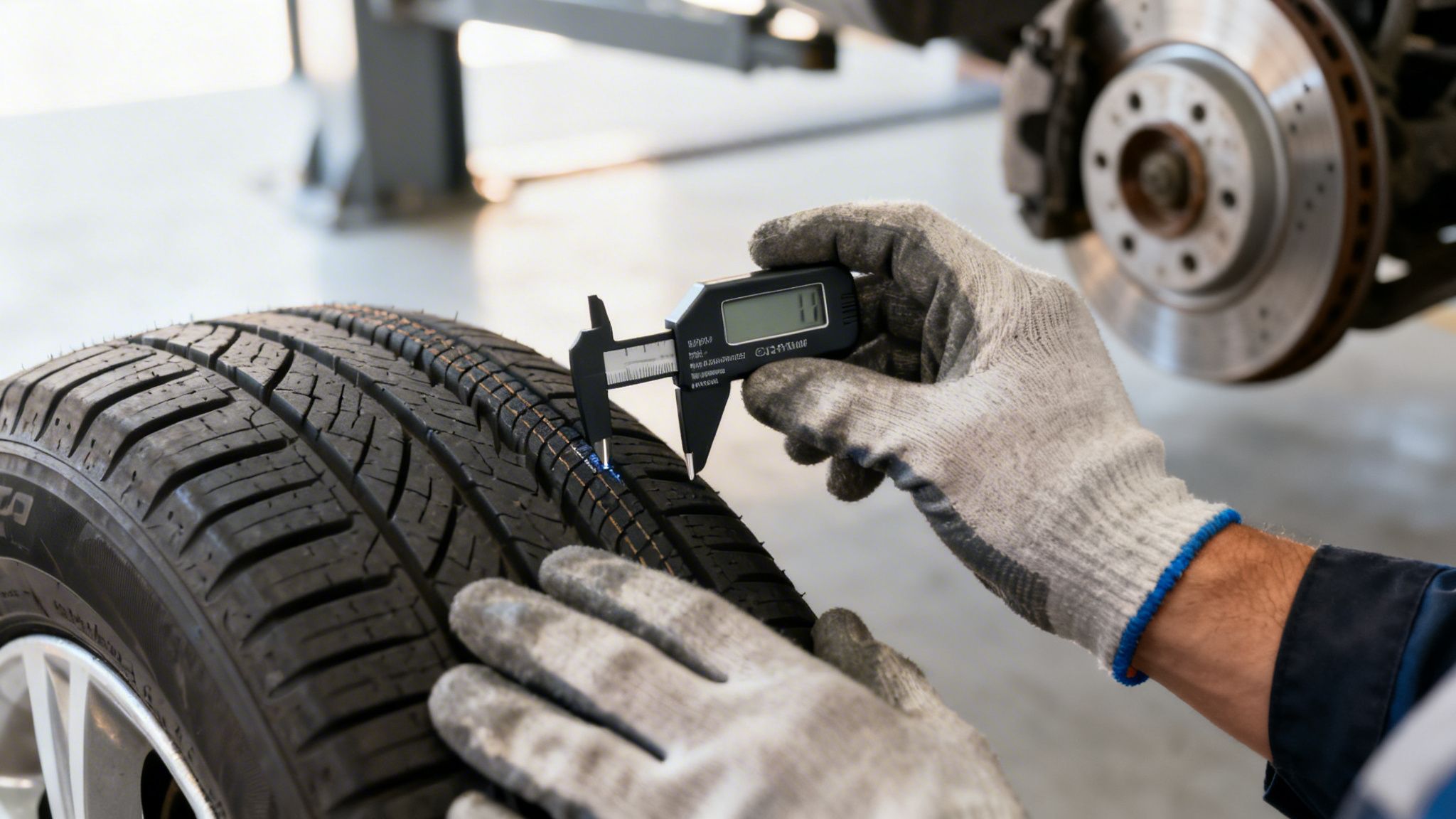
The State of Texas decided to get rid of the mandatory annual safety inspection for most of us, but that doesn't mean the need for one simply vanished. Think of it this way: your doctor doesn't force you to get an annual physical, but you know it’s the smartest way to catch health problems before they get serious. That same logic applies perfectly to your car, especially with the wear and tear of driving around Plano and the greater DFW area.
Calling a voluntary safety check an "expense" really misses the bigger picture. It's one of the best investments you can make—in your family’s safety, your car's lifespan, and your own wallet. Being proactive is your best defense against the unexpected, whether that's slamming on the brakes in traffic on the Dallas North Tollway or hitting a slick patch after a classic Texas thunderstorm.
Ultimately, a voluntary check is about buying peace of mind. It’s about knowing, with real confidence, that the car carrying your most precious cargo is fundamentally sound, no matter what the state requires for a registration sticker.
It’s About Protecting More Than Your Registration Sticker
While the annual emissions test is still required to make sure your car is running clean, a voluntary safety check looks at the mechanical parts that actually keep you in control on the road. It’s a thorough review of the components that naturally wear down and can fail without much warning. Finding a small issue with your brakes or tires today can absolutely prevent a dangerous, and expensive, failure tomorrow.
This isn't just a hunch; it's a fact. Data from the NHTSA shows that mechanical failures are a contributing factor in a significant number of accidents. These are the exact kinds of problems a good safety inspection is designed to catch.
A voluntary safety check isn't about just checking a box for the state. It's about making sure your car is truly ready for the real-world challenges you face every day.
What We Look For in a Kwik Kar Safety Check
When you bring your vehicle to Kwik Kar for a voluntary safety check, our certified technicians don't just glance things over. We perform a detailed, multi-point inspection of the systems that are critical for safe and reliable driving. Our entire goal is to give you a clear, complete picture of your car's health.
Here are a few of the core systems we put under the microscope:
- Braking System: We inspect your brake pads for wear, check rotors for damage, and look at fluid levels to ensure you have the stopping power you need, exactly when you need it.
- Tires and Wheels: We measure your tread depth to make sure you have proper grip, check for uneven wear that might point to an alignment problem, and verify your tire pressure is correct.
- Steering and Suspension: Our techs examine the parts that keep your ride smooth and your steering true, from tie rods and ball joints to shocks and struts.
- Lights and Signals: We make sure every exterior light—headlights, taillights, brake lights, and turn signals—is working perfectly so you can see and be seen.
- Wipers and Fluids: We check the condition of your wiper blades (a must in Texas weather!) and top off essential fluids like your windshield washer fluid.
This isn't just a random list; it's your car's safety report card. It answers the questions that really matter: Can I stop in time? Is my car visible at night? Will it handle correctly if I have to swerve? Answering "yes" to these questions is what makes a voluntary safety check an undeniable investment in your security on every single drive.
Choosing Kwik Kar for Your Plano Vehicle Inspection
When it’s time for your annual registration renewal, you’ve got more than a few options for a vehicle inspection in Plano, Texas. But let's be honest, not every auto shop is built the same. Deciding where to go isn’t just about getting a sticker on your windshield; it’s about finding a reliable partner you can trust with your vehicle’s safety and your own peace of mind.
At Kwik Kar Oil Change and Auto Care, we’ve worked hard to build a reputation that’s about more than just fast service. We set ourselves apart by focusing on three things that every Plano driver deserves: real convenience, proven expertise, and the kind of trust that’s earned over time, not just claimed in an advertisement. We know your time is tight, which is why our doors are open seven days a week to work with your schedule.
Expertise You Can See and Trust
What truly makes the Kwik Kar experience different is the skill of our team. Our technicians are ASE-certified professionals who know the Texas state inspection and emissions testing system inside and out. They don’t just plug in a scanner and read a code; they understand what the data means and can give you clear, straightforward explanations about your car's health.
This level of professional expertise means we can quickly pinpoint any problems and recommend solutions that actually work. We take the guesswork and the anxiety out of the inspection process. You’ll never be left wondering what some technical term means or why a certain repair is being suggested.
When you choose Kwik Kar, you’re not just getting an inspection. You're getting a dedicated team committed to making sure your vehicle runs safely and efficiently, all backed by our comprehensive satisfaction guarantee.
Convenience and Transparency Are Standard
We believe auto care should be simple and honest. From the moment you pull into our shop, you’ll see we do things a little differently. We take pride in our fair pricing and clear communication, making sure you are always in control of the decisions about your vehicle. You won't find any surprise fees or confusing explanations here.
This commitment to transparency carries over into our full range of services. Whether you’re here for a simple emissions test or you need more detailed diagnostic work and repairs, our process is designed to be efficient and to respect your time. If you'd like to read up on the specifics, you can explore the details of the official Kwik Kar state inspection service right on our website.
Ultimately, helping you pass the state inspection is just one small part of what we do. Our real goal is to build a lasting relationship with you, earning your confidence and becoming the shop you trust for all your car's needs. Choose Kwik Kar for your next Plano vehicle inspection and see for yourself what a difference genuine care and expertise can make.
Your Plano Vehicle Inspection Questions Answered
Getting a vehicle inspection in Plano, Texas can feel like a chore, and with the rules sometimes changing, it's easy to have questions. We hear a lot of the same ones from local drivers, so we've put together some straightforward answers to help you get prepared and stay legal on the road.
How Much Will My Plano Inspection Cost? How Long Will It Take?
The state-mandated fee for the emissions test is set by Texas, and it's typically under $25. At Kwik Kar, we know your time is valuable, and we work hard to be efficient. The OBDII test itself is very quick and usually takes just 10-15 minutes.
Our main goal is to get you safely back on your way with as little fuss as possible. If you decide to add a voluntary safety check, or if we find something that needs fixing, we'll explain all the time and cost details upfront. You'll never get a surprise bill from us.
My Check Engine Light Is On. Will My Car Fail?
Yes, if your Check Engine light is on, it's an automatic failure for the Texas emissions (OBDII) test. That light is your car’s computer telling you it has found a problem in the engine or emissions system.
Don't panic—this is one of the most common issues we see. Before you pay for an official test you know will fail, bring your car to Kwik Kar. Our technicians can run a quick diagnostic scan to find the exact cause and recommend the right fix to get you a passing result.
Think of the Check Engine Light as your car asking for help. Ignoring it leads to a failed inspection, but addressing it with a quick diagnostic scan puts you on the fast track to passing and ensures your car is running efficiently.
What Happens After My Vehicle Passes the Inspection?
Once your vehicle passes, our technician will give you a Vehicle Inspection Report (VIR) to keep for your records. At the same time, we send the "pass" result electronically straight to the state's database.
This electronic confirmation is what really matters. It allows you to go online or visit the Texas DMV to renew your vehicle registration right away. Your new registration sticker acts as proof of both your registration and your passed inspection, all in one.
My Car Is Brand New. Do I Still Need an Inspection in Plano?
Brand-new vehicles get a break. They are exempt from the annual emissions test for their first two years. When you register your new car for the first time in Texas, you'll pay a slightly higher fee that accounts for this initial two-year period.
After your car hits its two-year mark (based on the model year), it will need to join the annual inspection cycle. From that point forward, you'll need to get the emissions test done every year before you can renew your registration.
For any of these services, from a quick emissions test to a comprehensive diagnostic, trust the experts at Kwik Kar Oil Change and Auto Care. We’re here to make your vehicle inspection process in Plano simple and stress-free. Schedule your visit today at https://www.kwikkarspringvalley.com.