



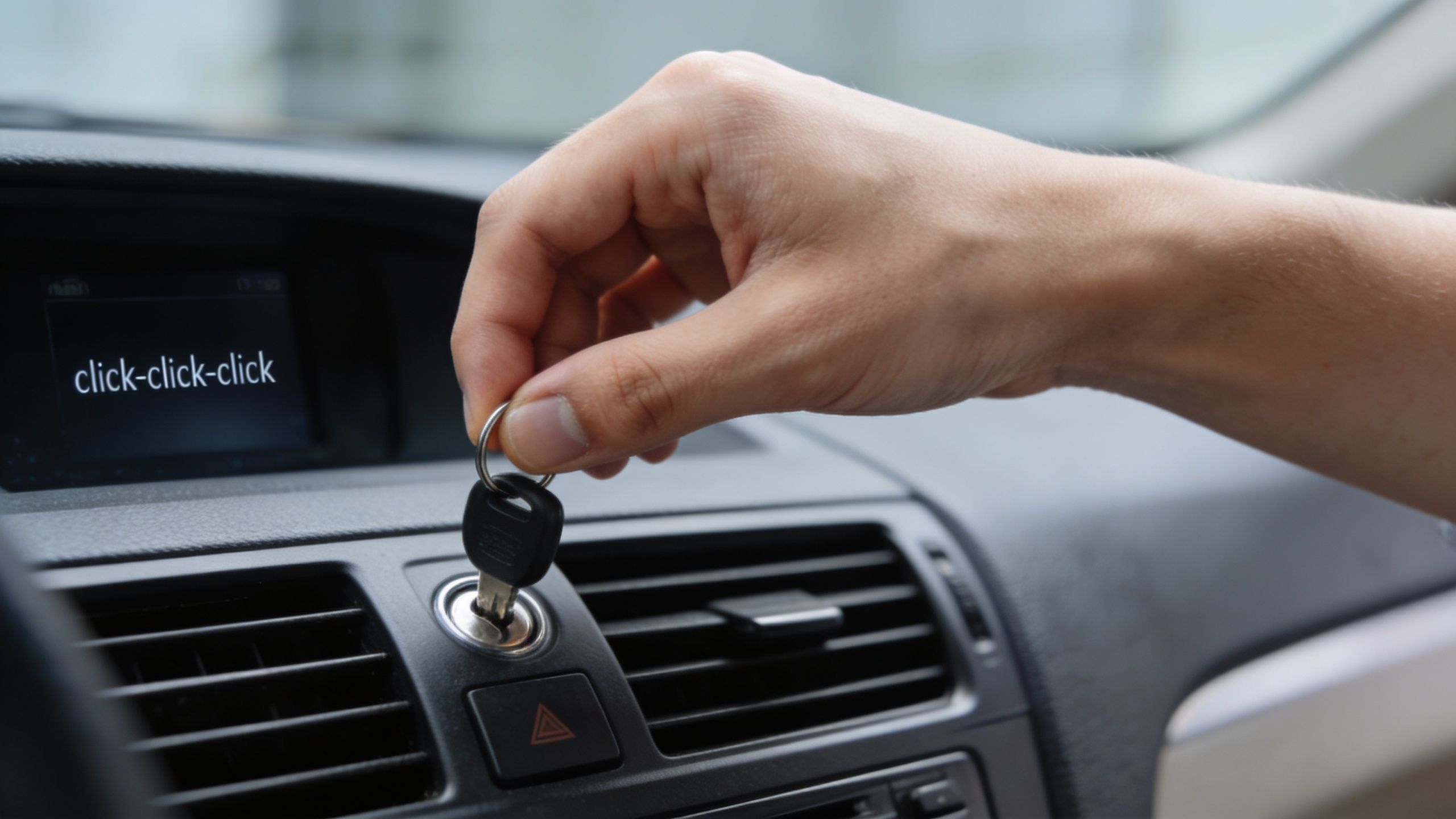
You walk out to the car, already thinking about the drive across Dallas, the school drop-off, the meeting you can’t miss, or the first service call of the day. You turn the key, or press the start button, and get nothing useful back. Maybe it’s a slow crank. Maybe it’s the familiar click-click-click. Maybe the dash lights up but the engine won’t fire.
That moment feels bigger than a battery problem because it throws off the whole morning.
Most overnight battery failures aren’t random. There’s usually a specific reason the battery lost charge while the car sat parked, and the fix depends on finding the right cause instead of guessing. If you’ve been searching for what causes car battery to drain overnight, the answer is rarely just “you need a new battery.” Sometimes you do. Sometimes the battery is only the victim.
Dallas drivers deal with a rough combination of heat, traffic, short errands, and electronics-heavy vehicles. That mix changes how battery problems show up. If you want a useful second perspective on how shops diagnose overnight car battery drain, that guide is also worth reading before you start replacing parts.
That Dreaded Silence The Morning Your Car Wont Start
A dead battery rarely announces itself the day before. The car may have started fine after work, made one short stop for groceries, and then sat overnight in the driveway. By morning, it’s done.
I’ve seen the same pattern in sedans, SUVs, light trucks, and fleet vehicles. The owner usually thinks the battery “just died overnight,” but what in fact happened started earlier. The battery was already being drained, undercharged, weakened by heat, or pulled down by an electrical load that stayed on after the vehicle shut off.
What that morning failure usually means
When a battery won’t start the car after sitting for one night, the issue usually falls into one of a few buckets:
- Hidden electrical draw: Something kept using power while the vehicle was off.
- Weak battery condition: The battery doesn’t have enough reserve left to make it through the night.
- Charging problem: The battery wasn’t fully recharged during recent driving.
- Simple oversight: A light, accessory, or add-on stayed on longer than it should have.
A battery that dies overnight is a symptom. The real job is identifying what pulled charge out of it, or kept charge from getting back in.
That distinction matters. If you replace a battery without checking the rest of the system, the new one can fail the same way. That’s frustrating for any driver, but it’s especially costly when your vehicle is part of your workday and downtime means missed time, rescheduled plans, or roadside assistance.
Understanding the Silent Culprit Parasitic Drain
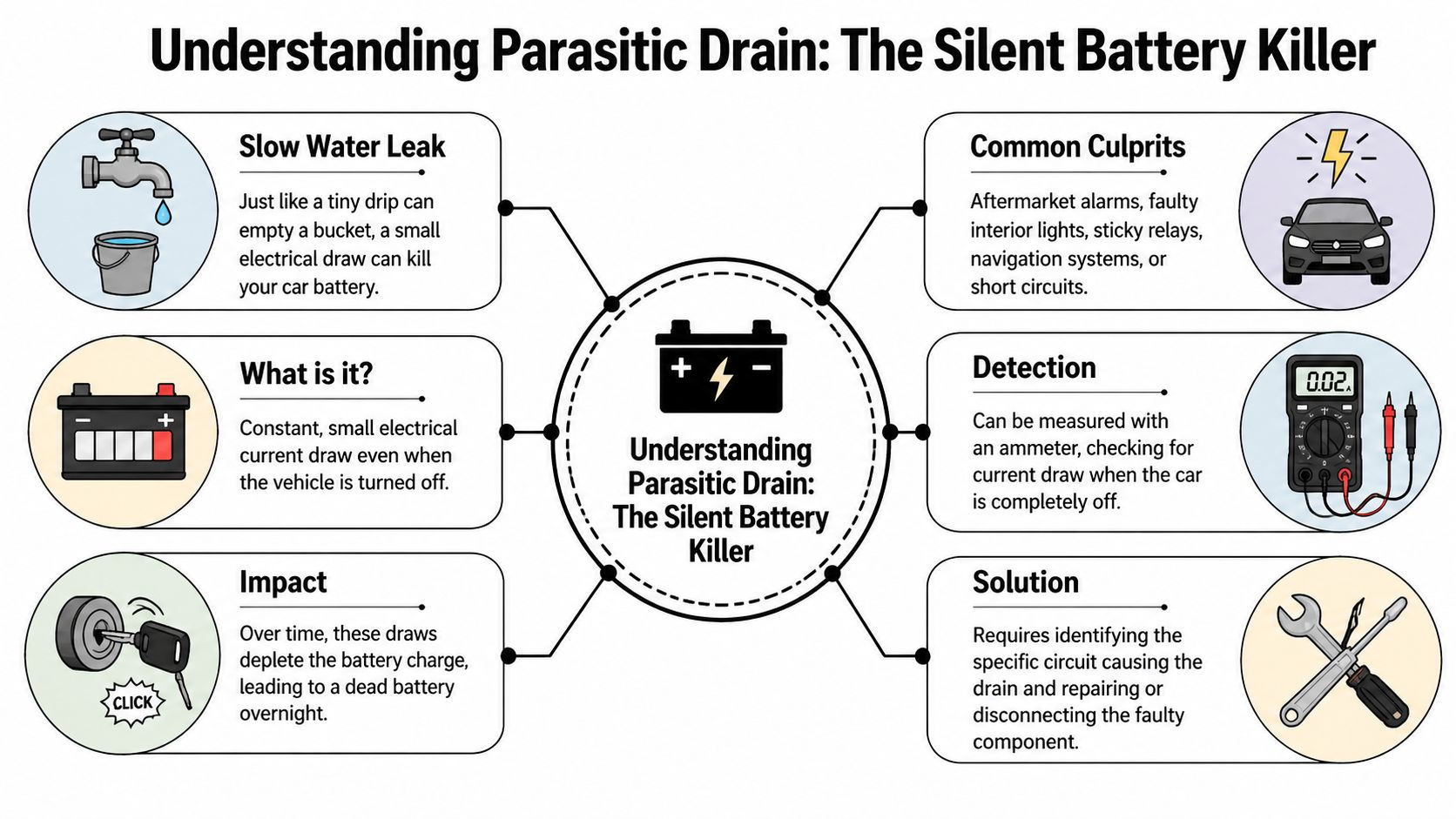
The most common answer to what causes car battery to drain overnight is parasitic drain. It’s similar to a leaky faucet filling a bucket in reverse. The leak looks small, but if it runs long enough, the bucket empties.
A vehicle always uses a little electricity after shutdown. The clock, alarm, memory settings, and onboard computers need a small amount of standby power. That’s normal. What isn’t normal is when one component keeps drawing more current than it should.
What counts as normal and what doesn’t
In modern vehicles, normal parasitic draw should not exceed 50 milliamps (0.050 amps), and anything higher points to a problem that can deplete a typical battery overnight, according to Endurance’s explanation of overnight battery drain.
That number gives technicians a clear line. Below it, the vehicle is usually behaving normally. Above it, something is staying awake when it should be asleep.
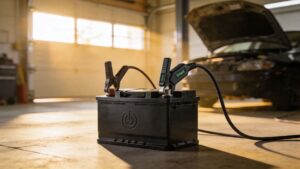
If you’re trying to understand whether your battery itself is weak or just discharged, a battery voltage chart for common charge states helps make sense of the readings.
Common culprits that stay on after shutdown
Some of the biggest troublemakers are simple parts that don’t look serious at first glance:
- Glove box, trunk, or under-hood light issues: A misaligned switch can leave a small bulb on all night.
- Stuck relays: A relay can keep a circuit energized after the key is off.
- Faulty control modules or sensors: Modern vehicles rely on modules that should go to sleep. When one doesn’t, it keeps pulling current.
- Aftermarket accessories: Alarm systems, stereo equipment, GPS units, and other add-ons can create drain when wired poorly or when a module fails.
- Wiring faults: Damaged insulation or poor connections can keep power flowing where it shouldn’t.
How a shop confirms it
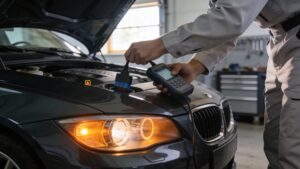
A proper parasitic draw test isn’t guesswork. The technician connects a multimeter in series with the negative battery cable and measures current flow with the vehicle shut down, doors closed, and systems off. If the reading is too high, the next step is fuse-by-fuse isolation to identify the circuit.
Practical rule: If you keep jump-starting the car and the problem returns after it sits, stop assuming it’s only battery age. Hidden draw is one of the first things to test.
This is why random parts replacement often doesn’t work. The battery may be dead, but the underlying fault might be a relay, lamp switch, module, or add-on device that drains power after every trip.
Exploring Other Common Causes of Battery Failure
Parasitic draw gets most of the attention, but it isn’t the only reason a vehicle won’t start the next morning. A battery can fail overnight because it was already weak, because the charging system didn’t restore it during driving, or because something simple stayed on.
An aging battery loses reserve
A battery doesn’t need to be completely dead to cause trouble. It only has to lose enough reserve that it can’t spin the starter in the morning.
Most batteries weaken gradually. The driver notices slower cranking, occasional hesitation on startup, or a need for a jump after the car sits. Once the battery’s internal condition drops far enough, a normal night of sitting can be enough to push it over the edge.
Look at the battery label if you can see it. If it’s been in the vehicle for years, age alone may be part of the problem. That doesn’t prove the battery is the only issue, but it tells you the battery deserves testing before you blame wiring.
The charging system may not be doing its job
The battery starts the car. The charging system has to pay that energy back.
The alternator should produce 13.5 to 14.5 volts during normal operation, and when it underperforms, the battery may never recover properly between trips, especially after short drives, as outlined in this guide on overnight battery drain and charging problems. If you’ve also noticed dim lights, weak restarts, or warning lights, it’s worth reviewing these signs an alternator may be going bad.
A bad voltage regulator can create the same kind of undercharging even if the alternator itself isn’t completely failed. That’s why battery and charging system testing should be done together.
Human error still causes plenty of dead batteries
Not every overnight drain is complicated. Sometimes it’s one of these:
- Interior light left on: Dome lights are easy to miss, especially in older vehicles.
- Door or trunk not fully latched: The switch may keep a light or module active.
- Phone charger or accessory left plugged in: Some power outlets stay live with the car off.
- Aftermarket equipment left in standby: Dash cams, stereos, and trackers can keep drawing power.
These issues are easy to dismiss because the vehicle may still start once or twice before it doesn’t. That delay makes the problem feel mysterious.
Why guessing wastes money
A lot of battery complaints get misread because the symptoms overlap. A weak battery can look like a bad alternator. An undercharging alternator can look like parasitic draw. A trunk light can mimic both.
The fix only sticks when the test matches the symptom. Replacing the battery first is sometimes correct. It’s also one of the most common wrong guesses.
That is where a step-by-step process matters. Start with the battery’s condition, verify charging output, then investigate key-off draw and accessory behavior. In the shop, that’s faster than chasing the loudest symptom.
How Dallas Heat and Traffic Wreak Havoc on Your Battery
Dallas doesn’t treat batteries gently. Local driving patterns and summer temperatures create a combination that shortens battery life and exposes weak electrical systems fast.

Heat does more damage than many drivers expect
Cold weather gets blamed because that’s when a weak battery often refuses to crank. In Dallas, heat is usually the long-term battery killer.
According to Midtronics on how temperature affects battery performance, cold weather can reduce battery capacity by up to 60%, while heat above 100°F accelerates fluid evaporation and can shorten battery lifespan by 50% per year. That matters here because summer parking lots, driveways, and under-hood temperatures stay punishing for months.
Heat weakens the battery first. Then a normal overnight load becomes a no-start event later.
Stop and go driving adds a second problem
A lot of Dallas driving looks easy on paper but hard on charging systems. The vehicle may technically be driven every day, yet the pattern is short errands, school pickup, traffic lights, and stretches of slow movement where the battery never fully recovers from startup.
That creates a chronic undercharged state. The car isn’t dead because one dramatic failure happened. It’s dead because the battery was never brought back to full strength.
Why local habits matter more than mileage
Two drivers can put the same miles on a vehicle and get very different battery life. One driver takes longer highway runs. The other does repeated short urban trips with accessories running and long idle periods in heat.
The second vehicle often shows the problem sooner.
- Short commutes: The battery gives up energy at startup and may not get enough back.
- Heavy accessory use: Air conditioning, screens, chargers, and telematics all add electrical demand.
- Outdoor parking: Heat soak punishes the battery even when the car isn’t moving.
If a battery keeps failing in summer, don’t assume the replacement battery was bad. Look at where the car sits, how it’s driven, and whether it gets enough charging time between starts.
This is one reason battery complaints in Dallas often need more than a quick jump and a visual check. Climate and traffic can turn a borderline battery into an overnight problem very quickly.
Your Simple DIY Diagnostic Checklist Before You Call
Before you schedule testing, there are a few safe checks you can do yourself. These won’t replace a full electrical diagnosis, but they can help you rule out obvious causes and give you better information when you call for help.
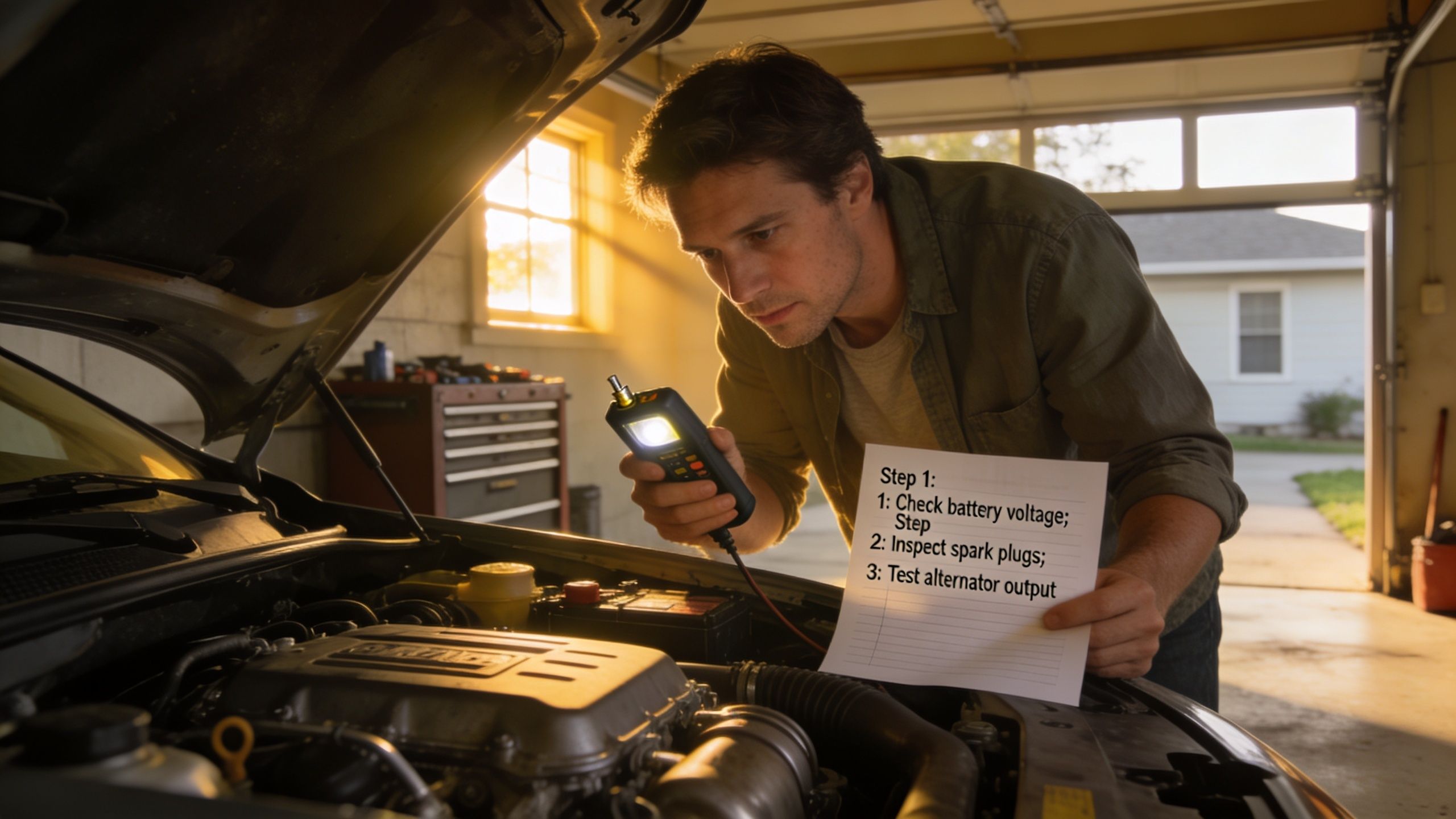
Start with the easy walk-around
Do this in the evening before the car sits and again if you can after dark.
- Check visible lights: Look for dome lights, map lights, vanity mirror lights, and any glow from the trunk or cargo area.
- Open and shut every latch firmly: A door or rear hatch that’s almost closed can keep a circuit awake.
- Unplug accessories: Chargers, adapters, dash cams, and anything attached to a power outlet should come out for the test night.
- Listen briefly after shutdown: Cooling fans and module noises may continue for a short time, but anything that seems to run much later deserves attention.
Look at the battery itself
Open the hood and inspect the battery before you assume it’s an electrical mystery.
Corrosion on the terminals often looks like blue, green, or white fuzzy buildup. That material interferes with a solid connection and can mimic charging or starting problems. Also check whether the terminal clamps look loose or whether the cables can be moved by hand.
Battery age matters too. A date sticker or stamped code can tell you whether you’re dealing with a relatively recent battery or one that’s nearing the end of its useful life.
Think about how you’ve been driving
This step gets overlooked all the time. Frequent short trips can leave the battery partly charged, and for many repeat dead-battery cases, chronic undercharging is commonly the issue. The pattern is especially common in urban driving, where trips of less than 20 to 30 minutes may not give the alternator enough time to recharge the battery, as explained in this article on repeated overnight battery drain.
If you want a more detailed walkthrough, this guide to testing car battery drain gives a good overview of what to watch for.
A quick visual demo can also help if you’re trying to understand the basics before touching anything electrical:
When to stop the DIY process
Don’t start disconnecting modules, probing wires, or pulling random fuses if you’re not comfortable around automotive electrical systems. Modern vehicles can react badly to the wrong test sequence, and an interrupted module sleep cycle can confuse the diagnosis.
A good DIY checklist should answer one question. Did you find something obvious, or do you need proper testing now?
When to See a Pro Kwik Kars Expert Battery Diagnostics
If the battery keeps dying after you’ve checked the obvious items, it’s time for tools and a repeatable diagnostic process. At this point, DIY usually runs out of runway.
A shop can test more than battery voltage. It can verify battery health under load, confirm charging system output, and measure actual key-off current draw. One option for that kind of work is Kwik Kar Oil Change and Auto Care, which performs battery testing, charging system checks, and diagnostic repair work on passenger vehicles and fleet units.
What professional testing actually looks for
A real overnight-drain diagnosis usually includes several checks:
- Battery load testing: Confirms whether the battery can still deliver starting power under demand.
- Charging system analysis: Verifies alternator output and checks for undercharging behavior.
- Parasitic draw testing: Measures current with the car off and isolates the problem circuit if draw is excessive.
- Connection inspection: Looks for corrosion, loose terminals, and cable issues that interrupt charging or cranking.
DIY checks vs professional diagnostics
| Symptom / Test | DIY Check (At Home) | Professional Diagnostic (At Kwik Kar) | Estimated Cost |
|---|---|---|---|
| Car won't start in the morning | Check for lights left on, unplug accessories, note recent driving habits | Full starting and charging system evaluation | Varies by vehicle and testing needed |
| Battery appears weak | Inspect age label, look for corrosion, note slow cranking | Battery load test to verify condition and reserve capacity | Varies by battery and shop policy |
| Suspected charging problem | Watch for warning lights or dim lights | Charging system output test and regulator evaluation | Varies by vehicle and fault |
| Suspected parasitic drain | Limited visual check for obvious lights or add-ons staying on | Multimeter draw test and fuse-by-fuse circuit isolation | Varies by diagnosis time |
| Repeat dead battery after replacement | Compare usage patterns and parking habits | Combined battery, alternator, and draw diagnosis to find root cause | Varies because repeat-failure cases take more time |
What works and what usually doesn't
A battery charger can help if the battery is undercharged. It won't fix a relay stuck on overnight. Cleaning terminals can improve a poor connection. It won't cure a failing alternator diode or a sleeping problem in a control module.
What usually doesn't work is replacing parts in a chain. Battery first, then alternator, then starter, all because the car still won't start reliably. That gets expensive quickly and still may not touch the underlying fault.
Bring the car in when the problem is repeatable. An active symptom is easier to verify than a story about what happened three mornings ago.
If the battery is going flat more than once, professional testing saves time because it narrows the problem instead of broadening the parts bill.
Preventive Care for a Reliable Start Every Morning
Battery problems are easier to prevent than to untangle after the third no-start. The main trouble spots are straightforward. Batteries age, heat wears them down, short trips leave them undercharged, and electrical faults can drain them while the car is parked.
The practical fix is regular inspection before the failure becomes a morning surprise. Check the battery's age. Keep terminals clean and tight. Pay attention to changes in cranking speed. If your driving is mostly short city trips, give the battery a better chance to recover or ask for the charging system to be checked during routine service.
For Dallas drivers, seasonal timing matters. Before the hottest stretch of summer, and again when weather shifts, it's smart to have the battery and charging system looked at as part of normal maintenance instead of waiting for a no-start in the driveway.
A reliable start usually comes from catching the small problem early, not from dealing with the big problem later.
If your car has started hesitating, needed a jump, or keeps losing charge overnight, schedule a battery and electrical system check with Kwik Kar Oil Change and Auto Care. A proper test can tell you whether you're dealing with battery age, charging trouble, or hidden draw so you can fix the cause instead of guessing.