
Price matching at an auto shop is defined as a policy where the shop agrees to match a lower, verifiable price from a local competitor for the exact same part or service. This practice is the industry’s standard term for competitive price alignment, and you’ll also hear it called a “price match guarantee” at retail auto parts counters. Understanding what does price matching mean at an auto shop gives you real leverage the next time you get a quote that feels too high. Kwik Kar Oil Change & Auto Care builds transparent estimates into every service visit, so you always know what you’re paying before work begins.
What does price matching mean at an auto shop?
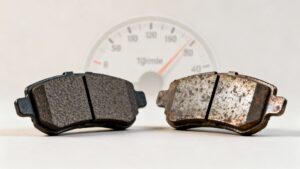
Price matching is a pricing policy where a shop agrees to lower its price to match a competitor’s verified, lower quote for an identical item or service. The key word is identical. Price matching policies typically apply to in-stock parts with the same brand, part number, and condition. A shop will not match a price on a different brand of brake pad just because it costs less somewhere else.
The policy exists for a clear business reason. Shops use price matching to retain customers who might otherwise leave for a lower quote. For you as a car owner, it creates a direct path to competitive pricing without having to switch providers. The catch is that most formal price match programs cover parts, not labor, because labor rates vary too much between shops to make a direct comparison fair.
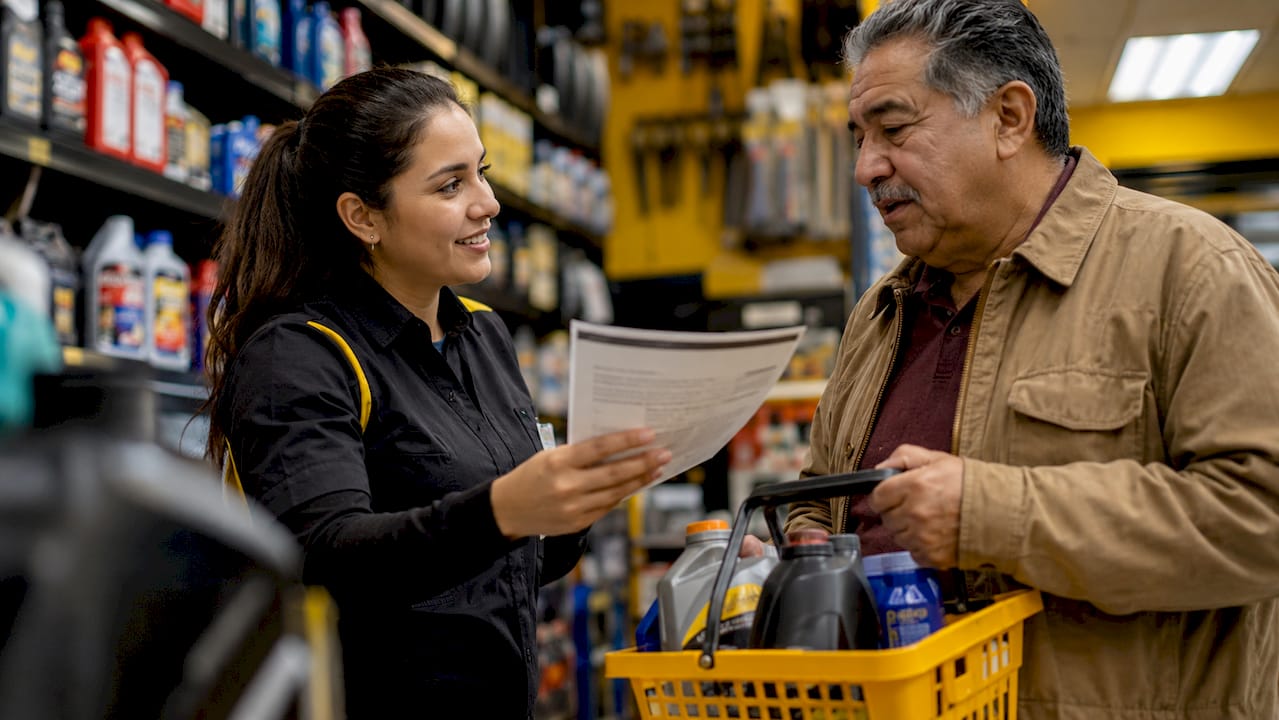
Auto parts retailers apply this policy most consistently to standardized retail items like tires, filters, and batteries. Formal price matching is primarily reserved for these standardized retail items, not complex repair labor, because labor overhead is unpredictable. That distinction matters when you walk into a shop expecting a full-service repair to be price matched.
How does price matching work for parts and services?
The mechanics of a price match request follow a clear sequence. Understanding each step helps you avoid the most common reasons shops deny requests.
- Find a lower price. Locate a verifiable, lower price from a local competitor for the exact same part. Online-only pricing from large e-commerce retailers typically does not qualify.
- Gather proof. Proof can be screenshots, a printed competitor ad, or an official written estimate. A verbal quote from a friend does not count.
- Confirm the match is exact. The part brand, model number, and in-stock availability must be identical. Apples-to-apples comparison is the single most common reason price match requests get denied when it is missing.
- Present the request before work starts. Shops will not retroactively apply a price match after the repair is complete.
- Wait for verification. The shop contacts the competitor or checks the source to confirm the price is current and accurate.
Labor price matching works differently, and most shops do not offer it at all. Labor rates reflect local overhead, technician certification levels, and shop equipment costs. Two shops quoting the same repair can legitimately charge different labor rates without either one overcharging. Trying to price match labor alone is rarely productive.
Pro Tip: Always ask for a written estimate that separates parts costs from labor costs. That breakdown lets you target the parts line for a price match without getting tangled in a labor rate dispute.
What are the benefits and limitations of price matching in auto shops?
Price matching delivers real savings when used correctly, but it has firm limits that most car owners do not anticipate.
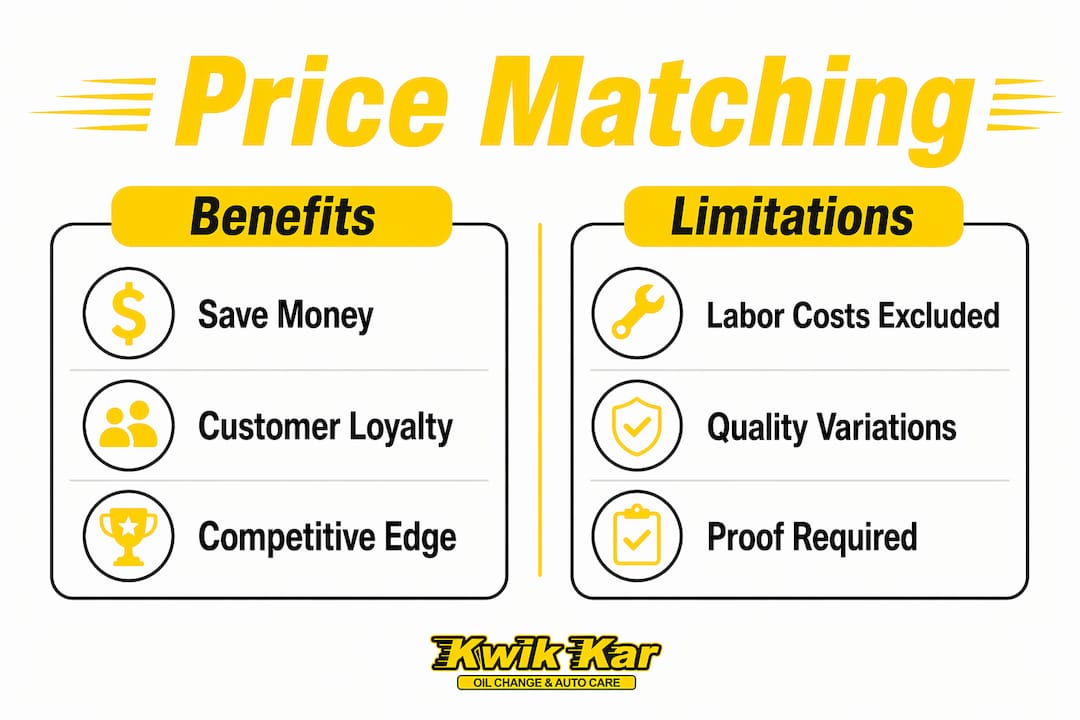
Benefits you can count on:
- You pay a competitive price for parts without switching shops.
- You keep your relationship with a trusted mechanic while still getting a fair deal.
- You gain negotiation leverage even at shops without a formal policy, because showing a competitor quote opens a conversation.
- You avoid the time cost of driving to a different shop for a marginally lower price.
Limitations that catch customers off guard:
- Labor costs are almost always excluded from price matching.
- OEM parts and aftermarket parts are not interchangeable for matching purposes. A shop quoting an OEM part will not match an aftermarket price.
- Warranty coverage differs between part types. A cheaper matched price may come with a shorter or weaker warranty.
- Online retailer prices rarely qualify because policies often exclude online-only pricing due to comparability issues.
A shop refusing to price match does not automatically mean it is overcharging you. Shops quoting OEM parts might not match prices of aftermarket parts quoted by competitors, and that difference in part quality justifies the price gap.
The most overlooked limitation is service quality. A shop with ASE Certified Master technicians, RepairPal certification, and a warranty on labor charges more for a reason. Chasing the lowest price match without factoring in those credentials can cost you more in the long run through repeat repairs.
How can you use price matching to save money on auto repairs?
Getting the most out of price matching requires preparation before you walk into any shop. Here is how to do it right.
- Research prices before you call. Use RepairPal or Openbay to get benchmark estimates for your specific repair. These tools give you a credible reference point even if the shop has no formal price match policy.
- Get written estimates from at least two local shops. Written estimates carry more weight than online price guides when you present them to a mechanic.
- Confirm part specifications before comparing. Note the brand, part number, and whether the part is OEM, OE-equivalent, or aftermarket. Mismatched specs are the top reason price match requests fail.
- Ask about the shop’s price match policy upfront. Do not wait until after the diagnosis. Knowing the policy before work begins saves time and avoids awkward conversations at checkout.
- Use benchmark pricing as negotiation leverage. Many auto shops do not have formal price match policies, but presenting a competing estimate often prompts a shop to adjust its quote voluntarily.
For a deeper look at how shops build their quotes, the guide on how repair estimates vary by shop explains the factors behind price differences in plain terms.
Pro Tip: Ask the shop to itemize parts and labor separately on every estimate. That single step reveals where the real price gap is and tells you exactly which line to target with a price match request.
Why do prices vary so much between dealerships and independent shops?
Pricing differences between dealerships and independent shops are large and predictable. Dealership labor costs are often 50–100% higher than independent shops for the same repairs. Parts, however, can run 20–40% cheaper at independents because of different sourcing channels.
| Cost Category | Dealership | Independent Shop |
|---|---|---|
| Labor rate | Higher (50–100% premium) | Lower |
| OEM parts | Standard pricing | Often discounted |
| Aftermarket parts | Rarely used | Commonly available |
| Formal price matching | Rarely offered | More common on parts |
| Commercial account pricing | Volume discounts apply | Retail pricing standard |
Dealerships rarely offer formal price matching on labor because their rates reflect manufacturer-trained technicians and proprietary diagnostic equipment. Independent shops have more flexibility on parts pricing, which is why auto repair price match policies are more common at independents and parts retailers.
Commercial accounts operate under entirely different pricing structures with volume discounts and tax exemptions. Those terms do not apply to walk-in retail customers. If a shop quotes you a price that seems unusually low, ask whether it reflects a commercial account rate that may not be available to you.
The practical takeaway is this: use the pricing gap between dealerships and independents as your baseline when evaluating any quote. Understanding how auto repair pricing works helps you recognize when a quote is genuinely competitive and when it warrants a price match conversation.
Key Takeaways
Price matching at an auto shop applies primarily to identical parts, rarely to labor, and works best when you arrive prepared with written proof and verified part specifications.
| Point | Details |
|---|---|
| Price matching definition | A shop agrees to match a lower, verified competitor price for the exact same part or service. |
| Parts vs. labor | Price matching covers parts reliably; labor is almost always excluded due to variable overhead costs. |
| Proof is required | Bring screenshots, printed ads, or written estimates. Verbal quotes do not qualify. |
| OEM vs. aftermarket matters | Shops will not match an aftermarket price against an OEM quote. Part type must be identical. |
| Benchmarking tools work | RepairPal and Openbay give you negotiation leverage even when no formal policy exists. |
The real value of price matching goes beyond the discount
At Kwik Kar Oil Change & Auto Care, we see price matching requests regularly, and here is what most customers miss: the conversation matters more than the policy. A customer who walks in with a written competitor estimate and asks a direct question almost always gets a fair response, whether or not we have a formal price match program posted on the wall.
What I have found over years of working with car owners is that the customers who save the most money are not the ones who found the lowest price online. They are the ones who understood what they were buying. They knew the part brand, they knew the labor scope, and they asked the right questions. That preparation is worth more than any price match guarantee.
The other thing worth saying plainly: a lower price is not always a better deal. A shop with ASE and RepairPal certification charges what it charges because the technicians are trained, the parts are quality, and the work is backed by a warranty. Matching a price from a shop that uses unbranded aftermarket parts and has no certified technicians is not a comparison. It is a gamble.
Use price matching as one tool in a larger decision. Compare prices, yes. But also compare credentials, warranties, and the shop’s track record. The best repair is the one you do not have to repeat.
— Kwik Kar
Transparent pricing and trusted repairs at Kwik Kar Oil Change & Auto Care
Kwik Kar Oil Change & Auto Care gives you a written estimate before any work begins, so there are no surprises at checkout.
Our ASE Certified Master technicians use quality OEM and OE-equivalent parts on every repair, and our RepairPal and NAPA AutoCare certifications back that standard. You do not need to negotiate a price match to get a fair price. You get transparent, competitive pricing from the first conversation. Visit our full auto repair services page to see what we cover, or stop by our Dallas location for a no-pressure estimate. For additional guidance on comparing quotes before your visit, the team at Dent Eraser offers a practical breakdown of how auto repair estimates are structured.
FAQ
What does price matching mean at an auto shop?
Price matching at an auto shop means the shop agrees to lower its price to match a verified, lower quote from a local competitor for the exact same part or service. The match requires identical part brands, models, and in-stock availability.
Does price matching apply to labor costs?
Price matching rarely applies to labor costs because labor rates vary based on technician certification, shop overhead, and repair complexity. Most auto shop price match policies cover parts only.
What proof do you need for an auto repair price match?
You need a written estimate, printed competitor ad, or screenshot showing the lower price for the identical part. Verbal quotes and online-only retailer prices typically do not qualify under standard auto shop price match policies.
Why would a shop refuse a price match request?
A shop may refuse if the competitor’s part is a different brand, grade, or warranty tier. Price match refusal can reflect higher part quality or better warranty coverage, not overcharging.
How can you find fair pricing if a shop has no price match policy?
Use tools like RepairPal or Openbay to benchmark repair costs, then present those estimates to your mechanic. Informed consumers can use these benchmarks to negotiate fair prices even without a formal price match program in place.