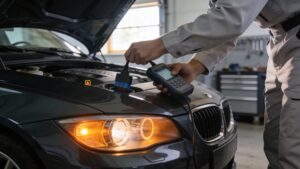




You turn the key, and the engine gives you that slow, tired rrr… rrr… maybe one weak click, then nothing. In Dallas, that moment often shows up at the worst time. You're late for work, the groceries are warming up in the back seat, or a fleet vehicle is supposed to be on the road already.
Most drivers think about the battery only when the car won't start. That's understandable. The battery sits under the hood doing its job until one hot afternoon, one short-trip week, or one charging problem pushes it over the edge. Then suddenly it matters a lot.
Battery charging basics aren't just for mechanics. They help you make better decisions about jump-starts, charger settings, summer maintenance, and when it's time to stop guessing and test the system properly. The same basic ideas also show up in home backup power, so if you're comparing vehicle needs with broader battery storage solutions, it's useful to understand how batteries store energy, accept a charge, and wear down over time.
Your Car's Lifeline Why Battery Health Matters
A car battery is the electrical reserve that wakes the whole vehicle up. It gives the starter the burst it needs, helps stabilize voltage, and supports electronics when the engine isn't spinning fast enough to do all the work on its own. If the battery is weak, the symptoms don't always start with a total no-start. Sometimes the first clue is a sluggish crank, flickering interior lights, or electronics acting a little strange.
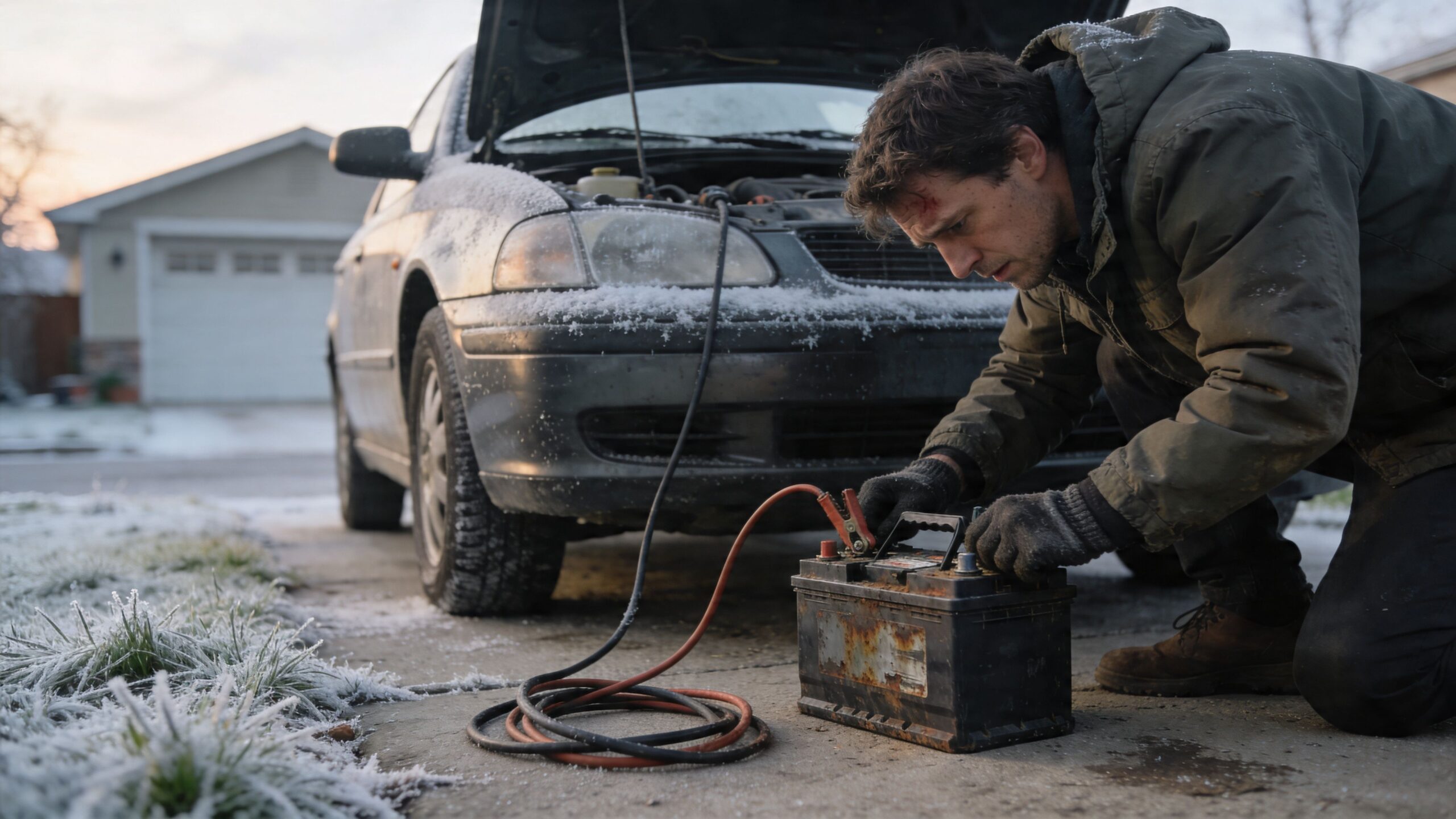
In a Dallas shop, we see something that generic battery guides often miss. Heat is hard on batteries. A battery can seem fine in spring, then struggle once long hot days arrive and the car spends hours baking in a parking lot. Add stop-and-go driving, heavy air conditioner use, and short trips that don't give the system much recovery time, and a battery can lose its margin faster than people expect.
Why a little knowledge saves trouble
Battery charging basics help in practical ways:
- You avoid bad habits: Repeated jump-starts can get you moving, but they don't solve the reason the battery went flat.
- You choose the right charger: A small setting can be safer for a regular car battery than trying to force power in too quickly.
- You catch problems earlier: Weak charging, dirty terminals, or heat damage often show warning signs before a breakdown.
A battery problem rarely shows up out of nowhere. Most of the time, the car gives you hints first.
For fleet managers, battery health matters even more. One vehicle that won't start can disrupt schedules, deliveries, and driver time. For everyday drivers, it usually means inconvenience and stress. Either way, understanding how charging works gives you a better shot at preventing the problem instead of reacting to it in a parking lot.
Understanding Your Car Battery's Anatomy
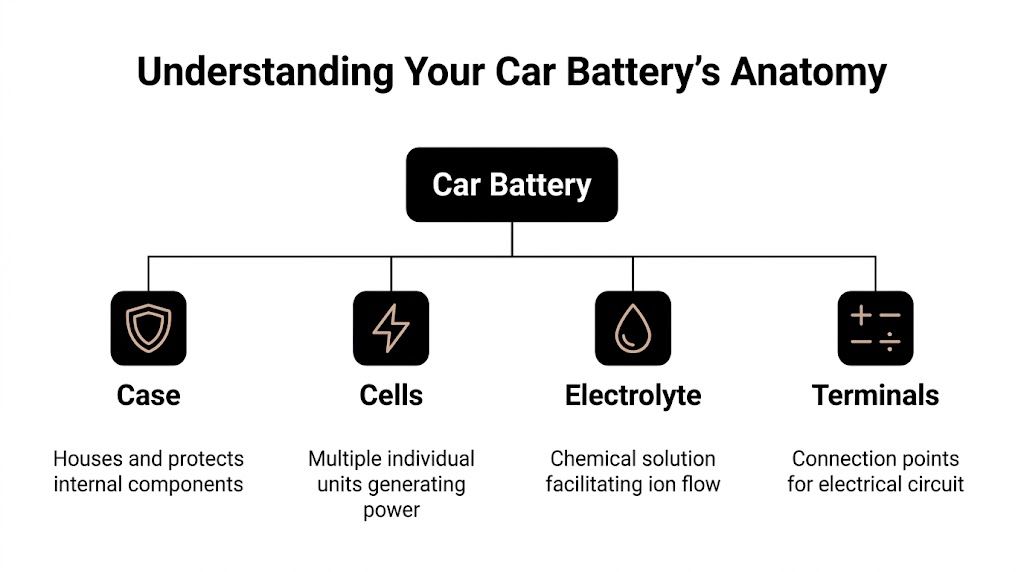
Most gas-powered vehicles use a 12-volt lead-acid battery. That sounds technical, but the layout is simpler than it looks. The design resembles a six-pack. Inside the plastic case are individual cells working together. Each one contributes part of the total voltage, and together they provide the power your vehicle needs to start and run electrical systems.
The parts that matter
Here are the main pieces under the hood.
| Part | What it does | Why you care |
|---|---|---|
| Case | Holds everything together and protects the internals | Cracks, swelling, or leaks are warning signs |
| Cells | Produce the battery's voltage | If one cell weakens, the whole battery suffers |
| Electrolyte | Supports the chemical reaction inside the battery | Heat can speed wear and damage |
| Terminals | Connect the battery to the vehicle | Corrosion or looseness can block current flow |
The positive and negative terminals are the contact points you see from above. They may look simple, but a little corrosion there can create big starting problems. That's one reason a battery can test okay on paper but still act weak in the vehicle.
What's happening inside during use
A battery isn't a box that stores electricity like water in a bucket. It's a chemical device. During discharge, the materials inside the battery react and provide current to the starter, lights, and electronics. During charging, that process gets reversed as the battery is pushed back toward a usable state.
That idea clears up one common confusion. Charging isn't just "putting power back in." The battery has to be able to accept that charge. If it's damaged, overheated, sulfated, or severely worn out, it may not recover the way you expect.
Practical rule: If the battery case looks swollen, cracked, or wet, don't try to handle it casually. Have it inspected before charging.
Lead-acid and lithium aren't the same conversation
For many sedans, SUVs, and light trucks, the starting battery is still a lead-acid design. Hybrids and EVs add lithium-ion systems, and those batteries follow different charging rules. The big takeaway is simple. The chemistry decides the charging method. Using the wrong approach can shorten battery life or create a safety problem.
That matters because people often buy a charger online, hook it up, and assume all batteries respond the same way. They don't. A regular car battery, a hybrid pack, and an EV battery all need the correct profile, limits, and monitoring.
The Three Key Stages of Battery Charging
A smart charger does not send the same amount of power the whole time. It works in stages so the battery can recover without overheating or being pushed past what its chemistry can handle.
That matters even more in Dallas. Summer heat speeds up battery wear, increases internal stress, and can make a weak battery seem fine one day and fail the next. A charger that follows the right sequence gives the battery a better chance to recover safely, especially after heavy accessory use, repeated short trips, or long idle time in a hot parking lot.
Bulk charging
The bulk stage is the first stage. The charger delivers strong current while the battery is still able to accept it, and the battery voltage rises toward normal charging range. As noted in lead-acid charging basics from Chargetek, most of the charge is replenished during this stage.
This is the part that does the heavy lifting after a battery has been run down. For Dallas drivers, bulk charging often follows the kind of use pattern that is hard on batteries here. Lots of short errands with the A/C blasting, long waits in traffic, or fleet vehicles that stop and restart all day.
Absorption charging
Once the battery gets close to full, the charger changes approach. It holds the voltage steady and lets the current taper down as the battery accepts the last part of the charge more slowly.
This is the stage that tests people's patience. The charger may look like it has slowed to a crawl, but that is usually correct behavior. Pushing high current into a nearly full battery creates extra heat, and heat is already the enemy in North Texas.
If the battery keeps needing attention, charging alone may not solve it. Repeated low-battery events can point to a weak battery, a drain, or one of the warning signs of a failing alternator.
Float charging
After the battery reaches full charge, many smart chargers switch to float mode. In this stage, the charger supplies a small maintenance charge to offset the battery's natural self-discharge.
Float mode is helpful for vehicles that sit. That includes a weekend car, a backup work truck, or fleet units parked between assignments. It is also useful during hot weather because batteries can lose condition faster when they spend long periods under heat stress.
Float mode maintains a healthy battery. It does not repair a failing one.
Why jump-starting isn't the same as charging
A jump-start gives the engine enough help to crank. It does not walk the battery through the full charging process.
That difference shows up all the time in the shop. A driver gets a jump, drives away, and assumes the problem is handled. Then the car struggles again the next morning because the battery never had time to recover properly, or because the charging system has another fault.
A quick way to separate the terms:
- Jump-start: gets the engine started
- Charger: restores the battery in a controlled way
- Healthy battery: accepts charge and holds it
If a battery needs frequent jumps in Dallas heat, have the battery and charging system tested soon. High temperatures can hide a battery's decline until it fails under load.
Good charging is controlled, patient, and matched to the battery's condition. For local drivers and fleet managers, that means less downtime, fewer surprise no-starts, and a better chance of catching a weak battery before a hot afternoon turns it into a tow call.
Alternators vs Chargers How Your Battery Gets Power
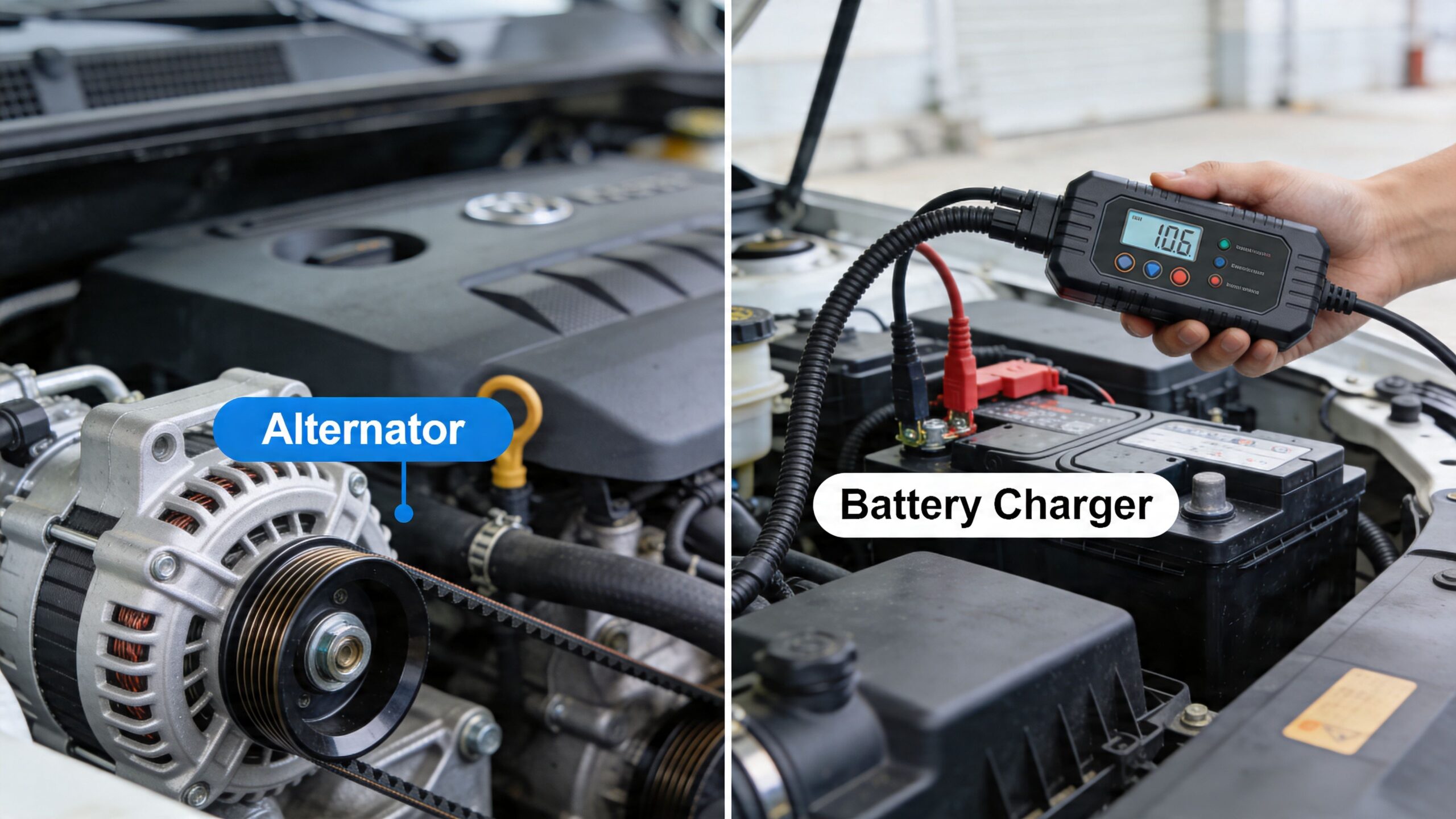
Many drivers mix these up, and it leads to bad assumptions. The alternator and the battery charger both help the battery, but they don't do the same job.
The alternator's job on the road
Once the engine is running, the alternator supplies power to the vehicle's electrical systems and helps replenish the battery. Think of it as the onboard power plant. It keeps the lights, blower motor, radio, and other accessories supplied while the engine is running.
But an alternator isn't really a deep-recovery tool. If the battery is heavily discharged, trying to rely on driving alone to bring it all the way back can put extra strain on the charging system. It may also hide the actual problem for a day or two.
The charger's job in the garage
An external charger is better when the battery is low and needs controlled recovery. A charger can work slowly and deliberately. It can hold the right voltage, taper current when needed, and maintain the battery if the car sits.
That difference matters in real life:
- Alternator: supports the car while you drive
- External charger: restores or maintains the battery when parked
- Battery test: tells you whether the battery can still hold what it's being given
If you're not sure whether the problem is the battery or the charging system, it helps to know the signs an alternator may be going bad. The symptoms can overlap, and guessing often leads people to replace the wrong part.
A quick comparison
| Power source | Best use | Limitation |
|---|---|---|
| Alternator | Running vehicle systems and topping off during driving | Not ideal for recovering a deeply discharged battery |
| External charger | Controlled charging and maintenance | Requires the right settings and safe setup |
For a visual walkthrough, this short video helps show how the charging system pieces fit together.
A good rule is simple. If the car starts and drives but keeps acting weak later, don't assume the alternator "must have charged it up." Sometimes the battery never recovered. Sometimes the alternator isn't doing its share. Sometimes the wiring or terminals are dropping voltage. Those are different fixes.
A Practical Guide to Using a Battery Charger Safely
Charging a battery at home is manageable if you slow down and treat it like a safety procedure, not a shortcut. Batteries can produce gas, terminals can spark, and using the wrong setting can overheat the battery instead of helping it.
Pick the right charger setting
One of the most useful battery charging basics is C-rate. It describes charging speed relative to battery capacity. A 1C rate charges a battery in 1 hour, and C/5 takes 5 hours. For a standard car battery, a slower rate like C/10 is often recommended, and for a typical 50Ah battery that means a 5-amp charger setting, based on QuantumScape's explanation of C-rate.
In plain language, lower and slower is usually kinder to a regular starting battery. Fast charging has its place, but heat is the enemy, especially in Dallas.
Follow this connection order
If you're charging the battery in the vehicle, use a deliberate sequence.
- Check the battery first: Don't charge a battery with visible damage, leakage, or severe swelling.
- Work in a ventilated area: Charging can produce gas.
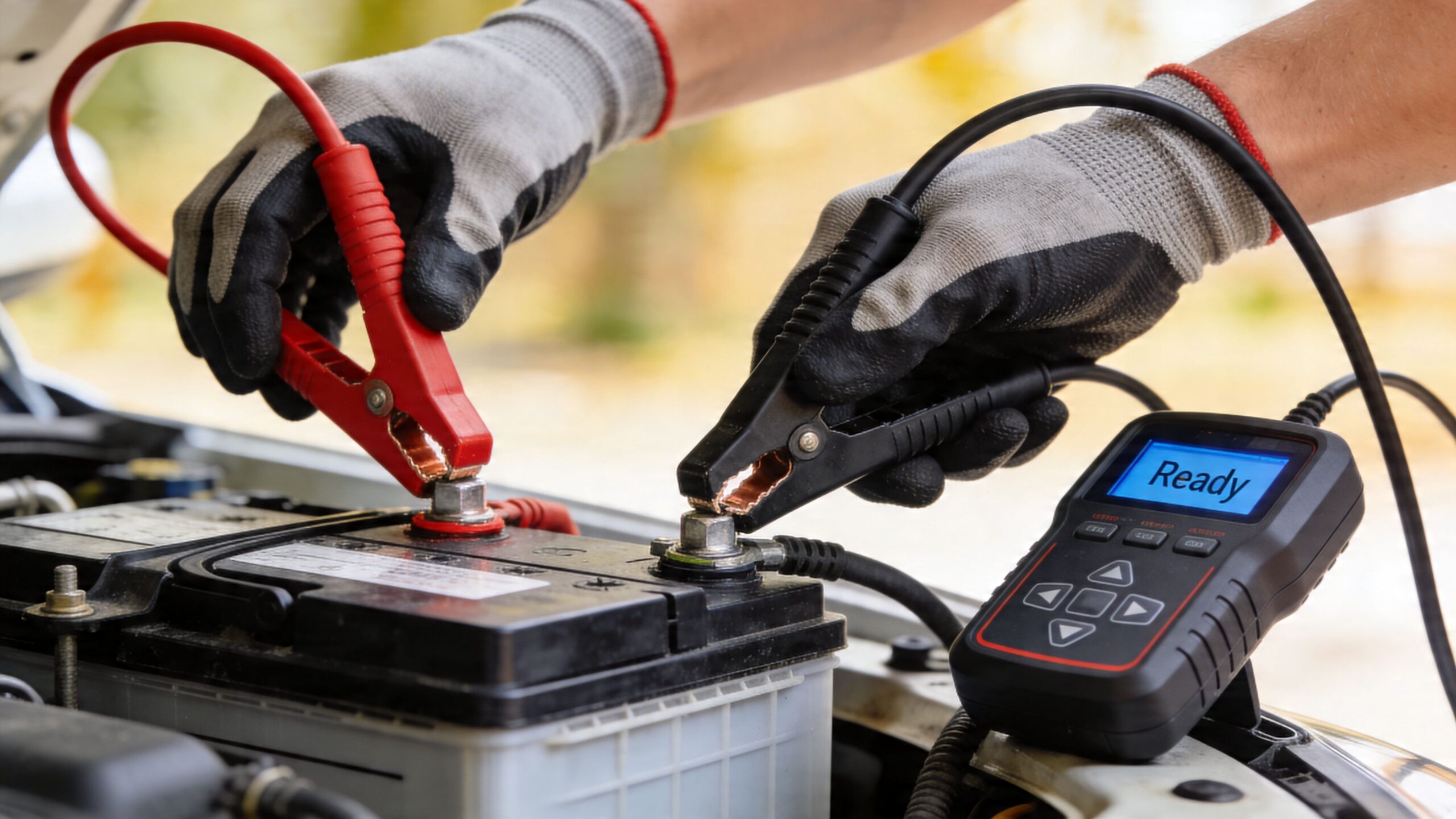
- Connect positive first: Attach the positive clamp to the positive terminal.
- Then connect negative: Attach the negative clamp as directed by the charger's instructions.
- Set the charger correctly: Match the battery type and choose an appropriate amperage.
- Unplug before removing clamps: When you're done, disconnect power to the charger first.
- Remove negative first, then positive: That order reduces the chance of accidental sparking.
People often rush the last step. That's where mistakes happen.
Charging is not the time to improvise with mystery settings or loose clamps.
Smart charger or basic charger
A basic charger can work, but a smart charger makes life easier because it can adjust charging automatically instead of pushing the same output nonstop. For lead-acid batteries, that's useful because the battery needs different treatment as it moves toward full charge.
If you want a better sense of whether the battery is healthy before charging it again, this guide on checking car battery health can help you know what to look for.
When professional equipment makes more sense
Some situations are better handled in a shop. If the battery keeps dying, if the cables are badly corroded, if the battery won't hold charge, or if the vehicle may have a charging-system fault, a charger at home won't tell you the whole story. Kwik Kar Oil Change and Auto Care can perform battery testing, charging-system checks, and inspection of battery connections and cable ends with corrosion protection. That's useful when you need to know whether the battery itself is weak or the vehicle is failing to charge it correctly.
Signs Your Car's Charging System Needs Attention
You leave work in Dallas after a 102 degree afternoon, turn the key, and the engine cranks slower than it did last week. The battery may still be alive, but the charging system could already be falling behind.
A healthy charging system keeps the battery topped off the way a steady drip system keeps a plant from drying out in summer. If that flow gets weak, the battery starts living on its savings. In North Texas heat, those savings disappear fast.
What you might notice first
A slow crank is one of the earliest clues. The engine still starts, but it sounds heavy and tired. That can point to an aging battery, low alternator output, or extra resistance at the cable connections.
Dimming headlights matter too, especially if they fade at idle or change brightness when the blower motor and air conditioner are running. In Dallas, that pattern shows up often because summer driving puts more demand on the electrical system. The AC runs harder. Cooling fans run longer. If the alternator is weak, those added loads can expose the problem.
The battery warning light on the dash is another signal people misread. It does not solely mean "buy a battery." In many cases, it means the battery is not being charged the way it should be because of the alternator, voltage regulator, belt condition, or wiring.
Then there is corrosion on the terminals. That white or bluish crust works like plaque in an artery. Power can still get through, just not as freely as it should. A battery with decent charge can act weak if the connection is dirty or loose.
Why Dallas heat changes the picture
Heat speeds up battery wear and makes small charging problems show up sooner. Under-hood temperatures in summer traffic are much harsher than the air temperature on your weather app. That matters because chemical breakdown inside the battery speeds up as temperatures climb.
Here is the confusing part. Heat can make an old battery seem normal right up until it fails. Warm temperatures help the battery produce power in the moment, so cranking may seem acceptable for a while. At the same time, the heat is shortening battery life and reducing reserve strength behind the scenes.
That is why a car can feel "fine yesterday" and still refuse to start today.
For Dallas drivers and fleet managers, this pattern is expensive. One weak battery can turn into a missed route, a late delivery, or an employee stuck in a parking lot. Shops like Kwik Kar often identify the cause with charging-system testing, because repeated jump-starts do not tell you whether the battery is bad, the alternator is weak, or the connections are restricting current.
A practical way to read the symptoms
Look at the pattern, not just the symptom:
- Starts poorly after sitting overnight: the battery may be weak, or something may be drawing power while the vehicle is off
- Acts worse with the AC, lights, or blower on: alternator output may be low, especially at idle
- Needs jump-starts more than once: the battery may not be holding a charge, or the vehicle may not be recharging it properly
- Shows corrosion or loose terminals: current flow may be restricted even if the battery itself is still usable
- Runs fine on the road but struggles in stop-and-go traffic: low charging performance at idle can show up faster in Dallas heat
Fleet vehicles need even closer attention because they often idle longer, run more accessories, and cannot afford surprise downtime. A scheduled fleet preventive maintenance program helps catch weak charging output, worn belts, and terminal problems before they turn into a no-start.
If you notice two or more of these signs, guessing usually costs more than testing. A quick inspection can separate a simple connection issue from a battery or alternator problem before the next hot afternoon finishes the job.
Proactive Battery Maintenance for Dallas Drivers and Fleets
The best battery repair is the one you never need because you caught the problem early. In Dallas, that usually means respecting heat, keeping connections clean, and not waiting for a dead battery to tell you maintenance was overdue.
Habits that help regular drivers
A few simple practices go a long way:
- Check the terminals: If you see corrosion, looseness, or grime, get it cleaned before it interferes with current flow.
- Pay attention to driving patterns: Cars that take lots of short trips may not give the battery enough recovery time.
- Don't ignore sluggish starts: A weak crank in hot weather is worth checking sooner rather than later.
- Use a maintainer for vehicles that sit: A parked extra vehicle often loses charge unnoticed.
For newer hybrids and EVs with lithium-ion batteries, a different habit matters. The 80/20 Rule recommends charging to 80% for daily use and avoiding discharge below 20% to reduce stress and heat buildup, according to Super B's smart charging overview. Full 100% charges are better reserved for times when you need the full range.
What fleets should do differently
Fleet vehicles don't get the luxury of surprise downtime. A battery issue affects schedules, drivers, customers, and repair planning. That's why fleet maintenance should include routine battery and charging-system checks, especially before and during the hottest stretch of the year.
A structured fleet preventive maintenance program helps managers catch weak batteries, charging faults, and connection issues before they become roadside problems. The value isn't just battery life. It's operational reliability.
A Dallas-specific maintenance mindset
In cooler climates, people can get away with being casual about batteries. Dallas is less forgiving. Heat accelerates wear, short trips reduce recovery, and electrical demand stays high because the climate control system works hard for months.
A practical routine looks like this:
| Driver type | Smart habit |
|---|---|
| Daily commuter | Watch for slower starts and have the battery tested if the car sounds different |
| Occasional driver | Use a maintainer if the vehicle sits often |
| Fleet manager | Schedule battery and charging checks as preventive maintenance, not after failures |
| Hybrid or EV owner | Follow the 80/20 daily charging habit when practical |
Small checks beat emergency calls. Clean terminals, proper charging, and timely testing matter more in Dallas than is often realized.
If your car has been slow to start, your battery light has come on, or you just want clarity before the next heat wave, schedule a battery and charging-system check with Kwik Kar Oil Change and Auto Care. Their technicians can test battery condition, inspect connections, and check the charging system so you know whether the fix is simple maintenance or a deeper electrical issue.