


You turn the key, crank the fan to full blast, and expect relief from a Dallas afternoon. Instead, the vents hit you with something that smells like a damp gym bag, old socks, vinegar, or worse. That’s one of the most common warm-weather complaints we hear, and it usually has a real cause inside the HVAC system, not just “bad air.”
For Dallas drivers, car ac smells tend to show up at the worst time. High heat, humidity, short in-town trips, and constant AC use give moisture more chances to sit where it shouldn’t. If you drive a work truck, shuttle vehicle, or a fleet car that makes repeated short runs, the problem can show up even faster because the system rarely gets enough time to dry out fully.
The good news is that some odor problems are easy to handle at home. Others need a deeper cleaning or diagnosis, especially if the smell points to a leak, clogged drain, or heavy microbial buildup. The trick is knowing which is which before you waste time on sprays that only cover it up.
Why Your Car AC Smells Like That on a Hot Day
A Dallas driver usually notices it after the car has been sitting in the sun. The AC fires up, the cabin starts cooling, and then that stale, wet smell rolls out for the first minute or two. In many cars, that odor starts at the evaporator core, where condensation forms during normal AC operation. If that moisture doesn’t drain well or the system never gets a chance to dry, mold and bacteria can grow there.
That matters for comfort, but also for health. A 2023 AAA study found 70% of vehicles had microbial growth in their AC systems, which can trigger asthma and respiratory irritation, a concern that’s especially relevant for Dallas allergy sufferers in humid conditions, as noted in this AAA-related overview of AC mold exposure risks. People often treat the smell as a nuisance and miss the bigger issue.
Short-trip driving makes this worse. A quick run to work, school pickup, or a few stops around North Dallas cools the evaporator, creates condensation, and then shuts the car off before airflow can dry the area. If there’s also moisture getting into the cabin, it compounds the problem. If you’ve ever dealt with damp carpets or a leak, it’s worth checking related causes like water getting into a car cabin, because cabin moisture and AC odor problems often travel together.
Practical rule: If the smell is strongest right when the AC first turns on, then fades, the source is often moisture and buildup inside the HVAC box rather than something sitting loose in the cabin.
Why Dallas cars deal with this more often
Texas heat keeps AC systems working hard for much of the year. Humid air means more condensation. Dust, pollen, and city driving add contamination to that moisture.
Older vehicles also tend to hold odor longer because filters, drains, and seals have had more time to collect debris. Fleet vehicles feel it even more because many run all day but in short cycles.
Decoding the Odor Your Guide to Common AC Smells
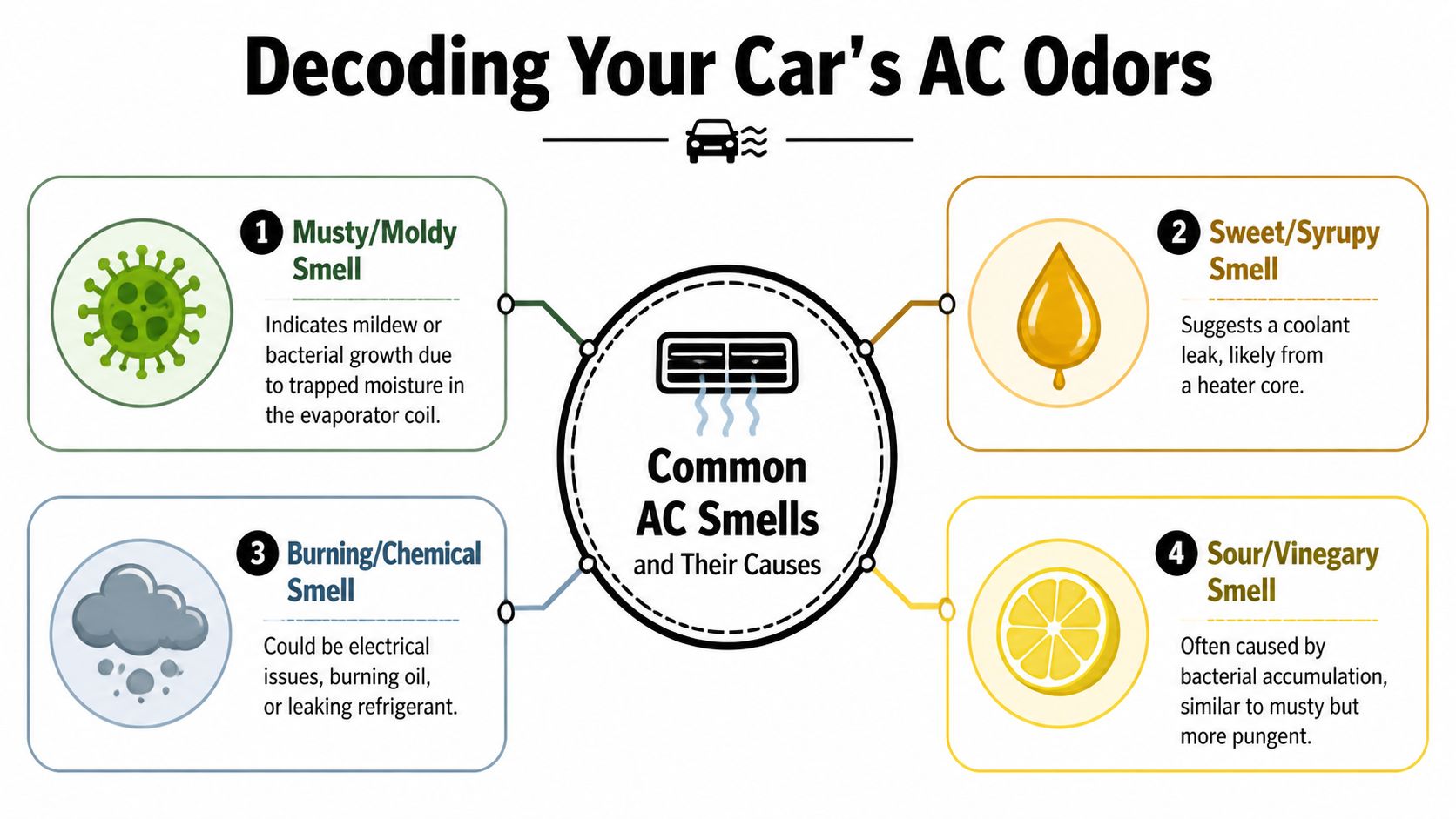
Before you buy a cleaner or book a repair, identify the smell. Different odors point to different systems.
The smell chart that helps most
| Smell | Most likely cause | What to do next |
|---|---|---|
| Musty or dirty sock | Moisture and microbial growth on the evaporator | Check filter first, then consider evaporator cleaning |
| Vinegar or sour | Bacterial growth in damp HVAC areas | Inspect filter and drainage, then sanitize if needed |
| Sweet or syrupy | Possible coolant leak, often heater core related | Stop guessing and have it inspected |
| Burning or chemical | Electrical issue, fluid contamination, or other mechanical problem | Get it checked promptly |
| Rotten or decay-like | Organic debris or pest intrusion | Inspect intake and cabin filter area, then clean thoroughly |
The most common one is the musty smell. Up to 70% of AC odor complaints in service centers stem from microbial buildup on the evaporator core, especially in humid climates where condensation gets trapped and creates the classic dirty-sock odor, according to Consumer Reports’ explanation of musty car AC smells.
What mildew smell usually means
A mildew smell usually points to moisture that stayed trapped long enough for growth to start. That’s why the odor often gets stronger after the vehicle sits overnight, then eases once air moves through the system.
Homeowners deal with a similar moisture problem indoors. If you want a simple plain-English explanation of how damp, enclosed spaces let mold develop, Restore Heroes’ black mold explanations are useful because the basic moisture principle is the same, even though the setting is different.
If your AC smell changes from musty to sweet or chemical, stop treating it like a cleaning problem. That can be a repair problem.
When smell alone is enough to change your plan
Use odor as a triage tool.
- Musty at startup only usually supports a cleaning approach.
- Sour or vinegary every time often points to heavier bacterial contamination.
- Sweet smell with foggy windows can indicate coolant in the cabin air stream.
- Burning smell is not a DIY deodorizer situation.
Quick and Easy Fixes You Can Do This Weekend
Start with the highest-payoff job first. In many cars, that’s the cabin air filter.
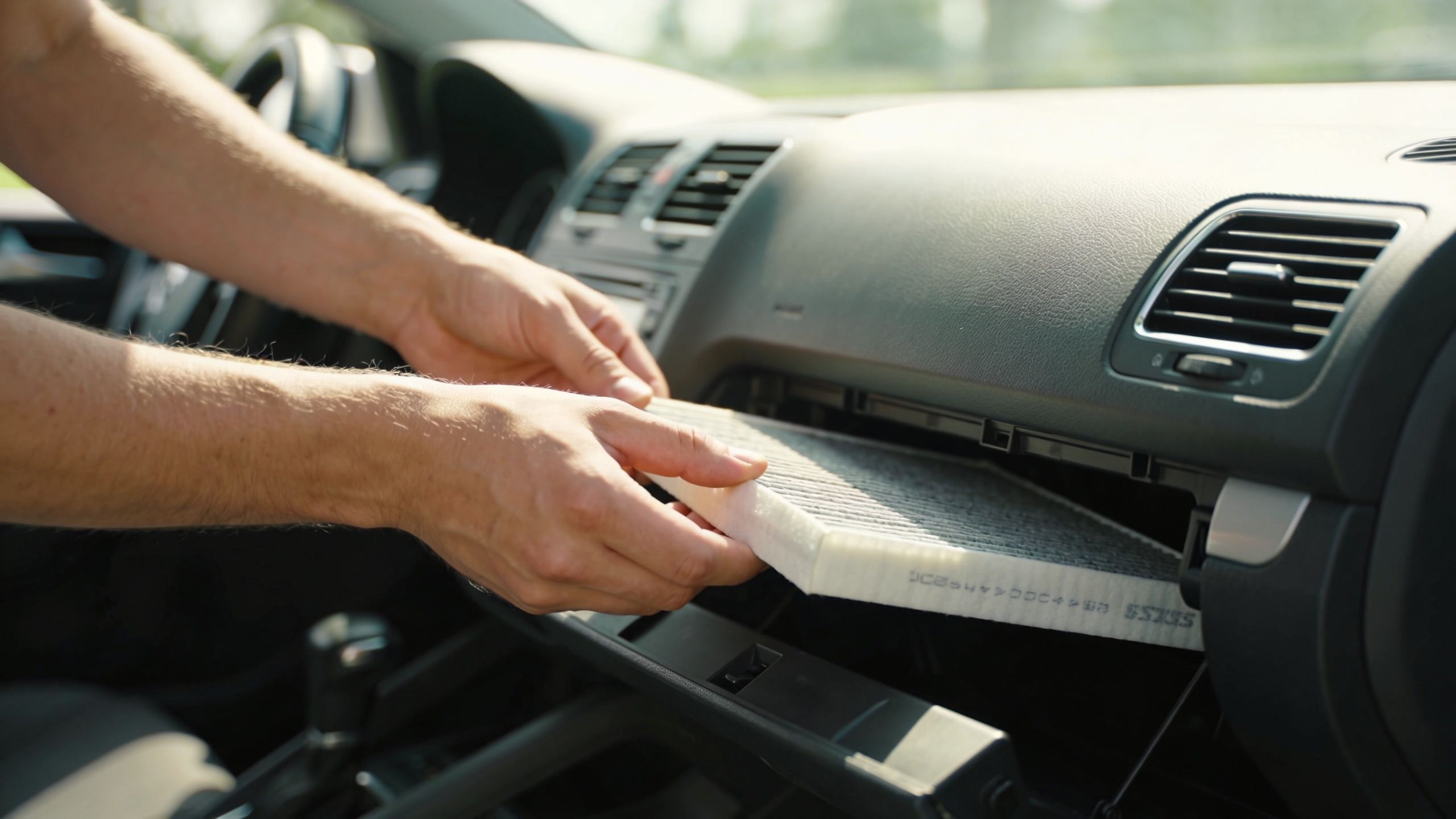
A dirty filter can hold dust, pollen, moisture, and debris. A clogged cabin air filter is responsible for 30-40% of AC odor cases by trapping humidity and debris that feed bacterial colonies, and odor type can help with diagnosis because mildew often points to evaporator fungus while a vinegar smell suggests bacteria, as explained in Tyre Pros’ guide to air-con smells.
Replace the cabin filter first
On a lot of vehicles, the filter sits behind the glove box. Some are under a dash panel or cowl cover, but glove-box access is common.
Here’s the simple process:
- Open the glove box and remove the stops if your car uses them.
- Find the filter door and slide out the old filter.
- Check airflow direction marked on the frame.
- Install the new filter in the same direction.
- Look at the old filter. If it’s dark, damp, or packed with debris, you likely found part of the problem.
Choose a quality replacement that matches the vehicle’s fitment. A poorly fitting filter lets air bypass the media and can leave you with the same smell.
Use the fan-dry habit
This costs nothing and helps more than people expect. Before you park, switch the AC compressor off and let the fan run for a short stretch. That moving air helps dry the evaporator surface so moisture doesn’t sit there.
This is especially useful if your driving pattern is all short hops. Delivery drivers, service vans, and school-run vehicles benefit from this because those vehicles rarely get a long highway run to dry out naturally.
Shop advice: A new filter plus better shutdown habits can knock out light odor problems without any chemicals at all.
Clean out what you can actually reach
Check the cowl area at the base of the windshield. Leaves and debris there can hold moisture and get pulled toward the fresh-air intake.
Also inspect the cabin around the passenger footwell and mats. Damp carpet, spilled drinks, and soaked floor liners can fool drivers into blaming the AC when the odor originates inside the cabin.
Try an odor treatment, but keep expectations realistic
An over-the-counter AC refresher or odor bomb can help when the problem is light. Follow the product directions exactly. Set the ventilation mode as instructed and let the product circulate fully.
If you want to watch the process before trying it, this walkthrough gives a good visual of basic in-car AC cleaning steps:
These products can freshen vents and reduce mild odor, but they often don’t reach deep contamination on the evaporator core. If the smell comes back quickly, that’s your sign the source is still there.
A good weekend decision rule
- Do DIY first if the smell is mild, mostly musty, and there are no other symptoms.
- Move past DIY if the odor is strong, returns fast, or changes character.
- Stop immediately if you smell coolant, fuel, burning material, or anything sharp and chemical.
Advanced DIY Cleaning for Persistent Odors
If the cabin filter didn’t solve it, you’re into the deeper-cleaning stage. This is still possible at home on some vehicles, but you need to be realistic. Wear gloves, use eye protection, and don’t force parts that don’t want to move.
Clear the condensate drain
The AC system pulls moisture from the air, and that water has to leave through a drain. If the drain is partially blocked, water can sit in the HVAC case and keep feeding odor.
Typical signs include a persistent musty smell, dampness near the passenger side, or little to no water dripping under the vehicle after AC use on a hot day.
A cautious DIY approach looks like this:
- Find the drain location by checking a service manual or model-specific guide.
- Use light pressure only if you probe the drain opening. Don’t jam a hard tool deep into the housing.
- Watch for water release after clearing a blockage. If water drains out, you may have found the cause.
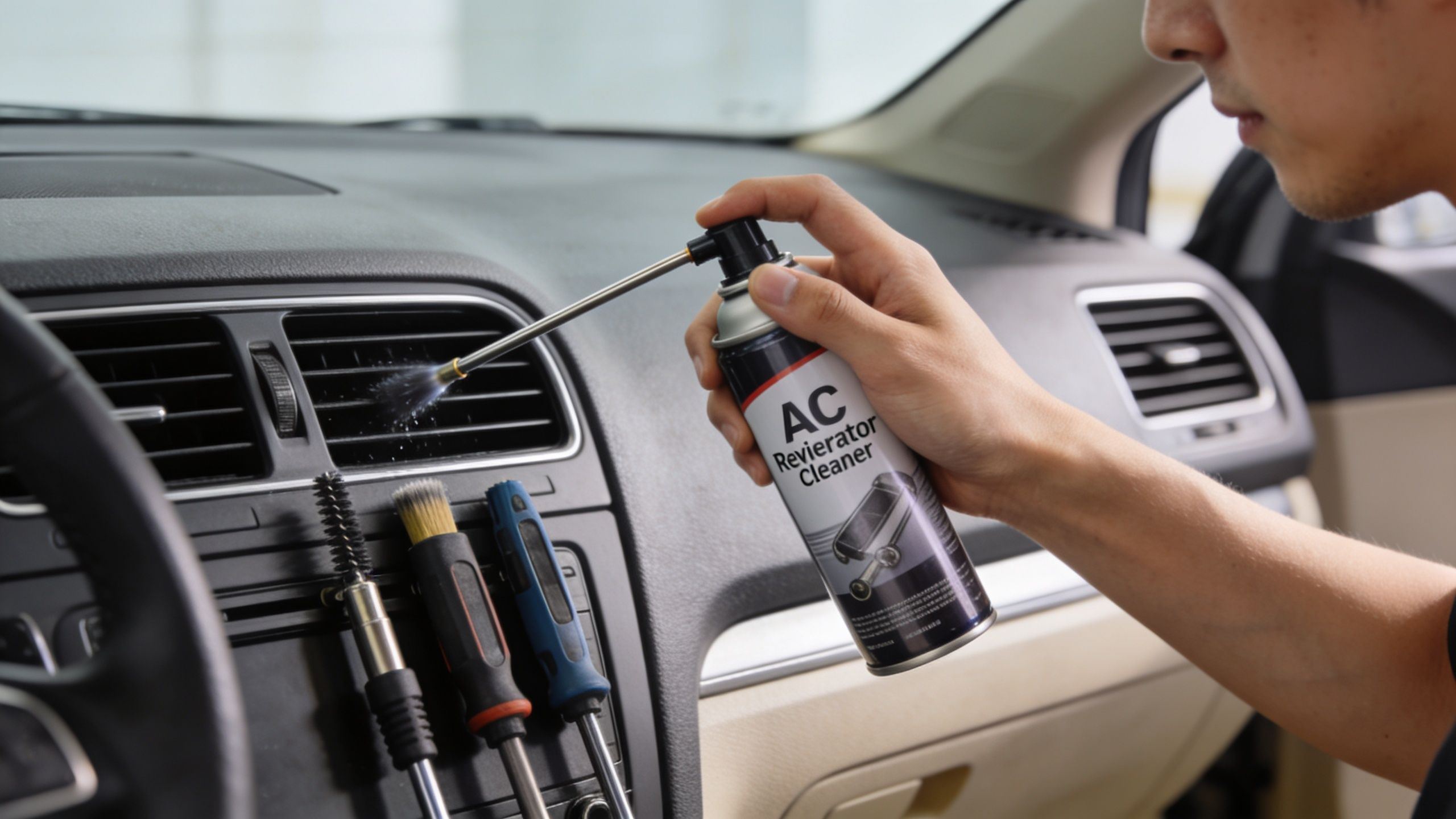
Use a foaming evaporator cleaner
This is different from a fragrance bomb. A proper evaporator cleaner is meant to expand and coat the evaporator area more directly.
Apply it exactly as the product instructions require. Some go through the fresh-air intake. Others are designed for more direct access through a service opening or drain path.
A few pointers matter:
- Read the label fully before you start, especially fan settings and recirculation instructions.
- Let the foam dwell for the full recommended time.
- Vent the cabin afterward so residue and loosened odor can clear out.
A lot of homeowners learn the same lesson with duct contamination. Surface treatment doesn’t do much if moisture remains trapped. That’s why guides on preventing air duct mold in homes are useful as a comparison. The environment is different, but the principle is the same: moisture control matters as much as the cleaner.
Don’t spray random household disinfectants into modern HVAC systems and hope for the best. Use a product meant for automotive evaporators.
Know when advanced DIY stops making sense
If access to the evaporator is poor, if the drain is hard to reach, or if you suspect rodent nesting material, most drivers are better off stopping here. The risk isn’t just wasted time. It’s broken trim, damaged components, or a smell that gets masked for a few days and then comes right back.
When to Trust the Professionals at Kwik Kar
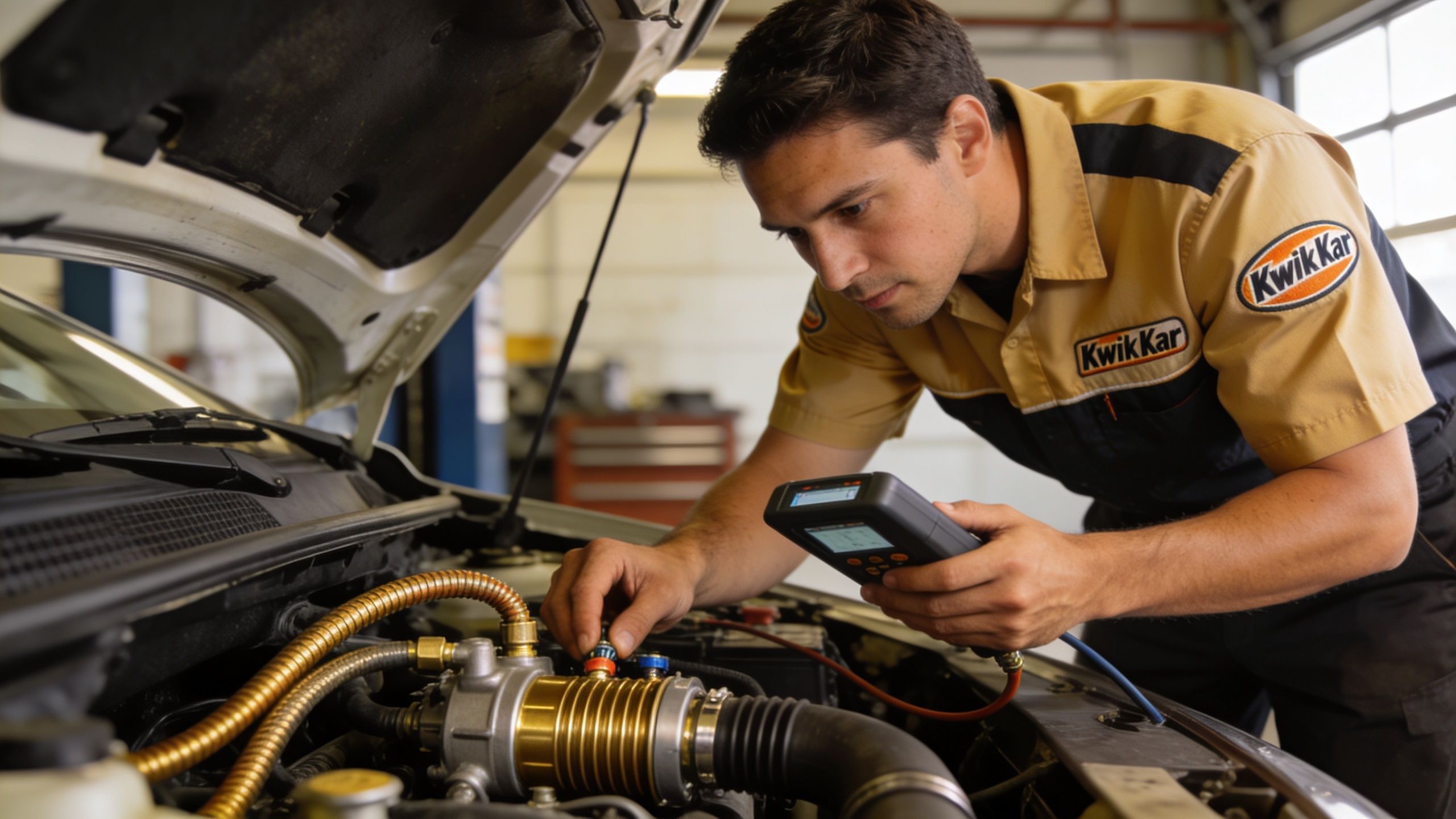
Some car ac smells stop being a weekend project. If the odor is sweet, burning, rotten, or still present after filter replacement and cleaning attempts, it’s time for a proper inspection.
Red flags that mean stop DIY
Drivers can save themselves frustration by making a clean decision.
- Sweet smell inside the cabin can point to coolant, not mold.
- Burning or harsh chemical odor may involve electrical or fluid issues.
- Repeated odor after sprays and filter changes usually means the contamination is deeper in the system.
- Evidence of pests or debris needs more than a scent treatment.
- Fleet downtime concerns matter too. If a work vehicle keeps coming back with the same complaint, patch fixes cost time.
What a professional cleaning actually includes
A real HVAC odor service is more than spraying perfume in the vents. A professional AC service involves diagnosing the source, applying an EPA-approved foaming antimicrobial agent that kills 99.9% of bacteria on the evaporator, clearing the drain tube to prevent recurrence, and fogging the entire HVAC system. This method resolves 85-90% of persistent odor cases where DIY sprays fail, based on the process described by Old Ox Tire’s breakdown of professional AC odor treatment.
That sequence matters because each step solves a different part of the problem. Diagnosis identifies whether the smell is microbial, mechanical, or external. Foam treats the evaporator. Drain service removes the moisture trap. Fogging helps sanitize the rest of the airflow path.
If you want a sense of what service options can include before you book anything, this guide to car AC repair pricing in Dallas is a useful reference point.
Why this matters more for fleets
Fleet managers usually don’t need the cheapest possible first step. They need the step that keeps drivers in service and avoids repeat complaints.
For that reason, Kwik Kar Oil Change and Auto Care is one practical option when a vehicle needs inspection, drain clearing, evaporator treatment, or broader AC diagnosis rather than another off-the-shelf spray attempt.
If the smell comes back fast after a DIY treatment, the cleaner probably reached the symptom but not the source.
Preventing Future AC Smells and Keeping Your Cabin Air Fresh
Once the smell is gone, the goal changes. Keep moisture from staying in the system long enough to cause the same problem again.
The routine that works best
Use a simple maintenance rhythm:
- Replace the cabin filter on schedule and sooner if you drive in heavy pollen, dust, or construction zones.
- Run the fan briefly before shutdown so the evaporator isn’t left wet.
- Keep the cowl area clear of leaves and debris near the fresh-air intake.
- Pay attention to damp interiors because cabin moisture can feed odor just as easily as HVAC moisture.
- Don’t ignore early smells when they only show up at startup.
If you think about cabin freshness the same way you think about indoor air hygiene, the logic gets clearer. The same common-sense habits behind best practices for airside hygiene apply here too: clean filtration, moisture control, and replacing dirty media before it turns into a contamination source.
A good preventive habit for Dallas drivers
Pair AC care with routine maintenance. When you’re already handling a service visit, it’s a smart time to check airflow, inspect the filter, and replace it if needed. If you’re not sure when that should happen, this guide on when to change a car air filter is a good place to start.
For fleet vehicles, prevention matters even more. Drivers spend hours in the cabin, and repeat odor complaints usually mean the vehicle is already overdue for a filter check, drain inspection, or HVAC cleaning.
Car ac smells usually start small. That’s the best time to deal with them.
If your vents still smell off, or you want the system checked before the next Dallas heat wave, schedule service with Kwik Kar Oil Change and Auto Care. A quick inspection can tell you whether you need a filter, a cleaning, or a deeper repair, and that’s a lot better than guessing.