


You notice the problem at the worst possible time. Maybe you're loading groceries, heading to work, or getting ready for a weekend drive out of Dallas, and you look under the cargo floor only to find a compressor kit, a can of sealant, or nothing useful at all. A lot of drivers assume their car came ready for a flat. Many don't.
That's why buying a spare tire deserves more thought than it often receives. The right spare isn't just “a tire that sort of fits.” It has to match your vehicle closely enough to mount safely, clear the brakes, carry the load, and avoid upsetting modern systems like ABS and traction control. That's where people get into trouble, especially when they buy online based only on tire size and skip the wheel details.
If you drive in Dallas, preparation matters. Long commutes, highway speeds, summer heat, construction zones, and rough shoulders all make a weak roadside plan feel weak very quickly. A properly chosen spare gives you options. A poorly matched one gives you a second problem.
Why Your Car Probably Needs a Spare Tire
A lot of drivers still believe a newer car comes with the basics covered. That assumption is outdated.
In 2017, AAA found that nearly one-third of new 2017 model year vehicles, 28%, did not include a spare tire as standard equipment, and AAA responded to over 450,000 roadside calls in the previous year for members whose vehicles lacked a spare according to AAA's report on missing spare tires in new vehicles. Automakers cut spares for a simple reason. Less weight helps fuel economy, saves space, and reduces production cost. That may work on a spec sheet, but it doesn't help much on the shoulder of Central Expressway.
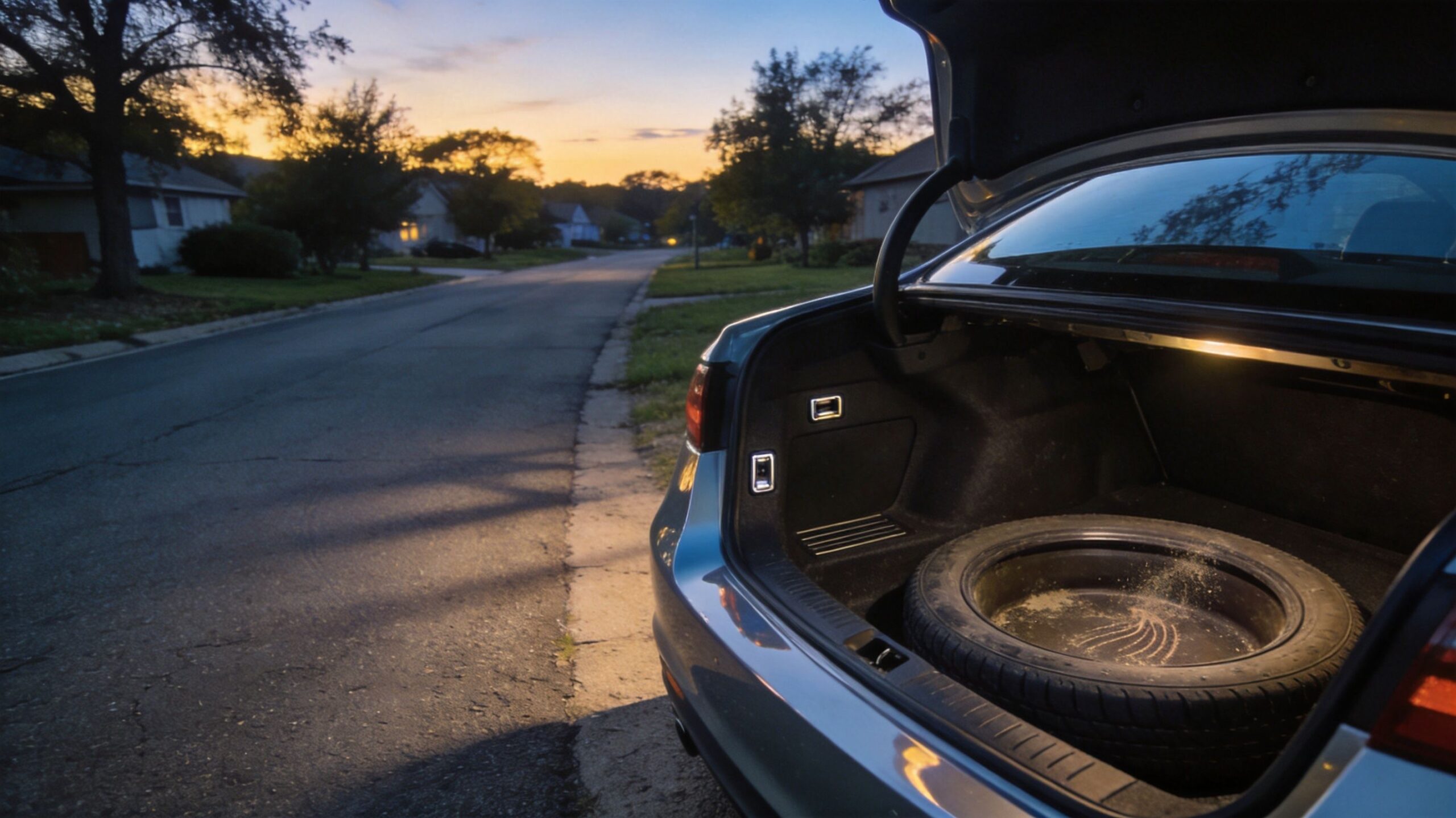
What you may actually have
Some vehicles still include a temporary spare. Some give you run-flats. Some only provide a sealant kit and small compressor. Those are not equal solutions.
A sealant kit can help with a simple tread puncture, but it won't do much for a torn sidewall, bent wheel, or larger road hazard. Run-flat tires can be useful, but replacement cost and ride trade-offs catch many owners off guard. A real spare remains the most flexible backup.
Full-size vs donut
Most drivers choosing a spare are deciding between two practical options:
| Spare type | What works | What doesn't |
|---|---|---|
| Full-size spare | Drives much more like your regular tire, better for longer trips, better for heavier vehicles and highway use | Takes up more cargo space, weighs more, usually costs more |
| Temporary spare or donut | Easier to store, lighter, often simpler to package in smaller cars | Limited-use solution, more speed and distance restrictions, less margin in heat and rough road conditions |
Practical rule: If you regularly drive highways, carry family or work gear, or leave the city often, a full-size spare is usually the more dependable choice.
For Dallas drivers, that trade-off is pretty straightforward. If your vehicle has room and you want the least stressful backup, full-size usually wins. If trunk space is tight and you mainly want an emergency option to get off the road and to a repair shop, a donut can still make sense.
The key is not just owning a spare. The key is owning one that fits your vehicle correctly and suits the way you drive.
Decoding Your Vehicle's Tire Specifications
A lot of spare tire buying mistakes start with one shortcut. Drivers match the sidewall size, order a tire, and assume the job is done. On many vehicles, that leaves out the fit checks that matter most.
Start with the three places that matter
Check the owner's manual first. If your vehicle was designed to use a compact spare, the manual usually lists the approved type, where it stores, and any speed or distance limits.
Next, read the driver's door jamb sticker. That label gives the factory tire size and pressure information for the original setup. It is the fastest way to confirm what the vehicle was built around.
Then inspect the sidewall on the tires currently installed. The code shows width, aspect ratio, construction type, and wheel diameter. That helps, but it is not the whole answer. If a previous owner changed the wheels or tire package, the sidewall may describe what is on the car now, not what safely fits as a spare.
If you are already checking the sidewall, it is a good time to verify age too. This guide on how to read the date code on tires can help you spot an older spare before you trust it.
The specs people miss most often
The first one is bolt pattern, sometimes listed as PCD. That means the number of lug holes and the spacing between them. Close does not count here. A wheel with the wrong pattern may seem to start onto the studs, then bind, seat unevenly, or damage hardware.
The next check is hub-centric fit. Many modern vehicles are designed for the wheel to center on the hub, not just on the lug nuts. If the center bore is off, the wheel may not sit square. That can lead to vibration, uneven loading, and a spare that never feels stable on the road.
I see this missed on aftermarket spare setups more than drivers expect, especially on crossovers and SUVs around Dallas. The wheel may bolt on, but if the hub fit is wrong or the offset is off, brake clearance and ride quality become a problem fast.
Then look at overall diameter and load rating. A spare that is too far off in diameter can interfere with ABS, traction control, and how the vehicle handles. A spare with too little load capacity may mount and inflate, but it is still the wrong part for the weight it has to carry.
A safe spare matches the vehicle at the wheel and hub, not just at the tire size line on the sidewall.
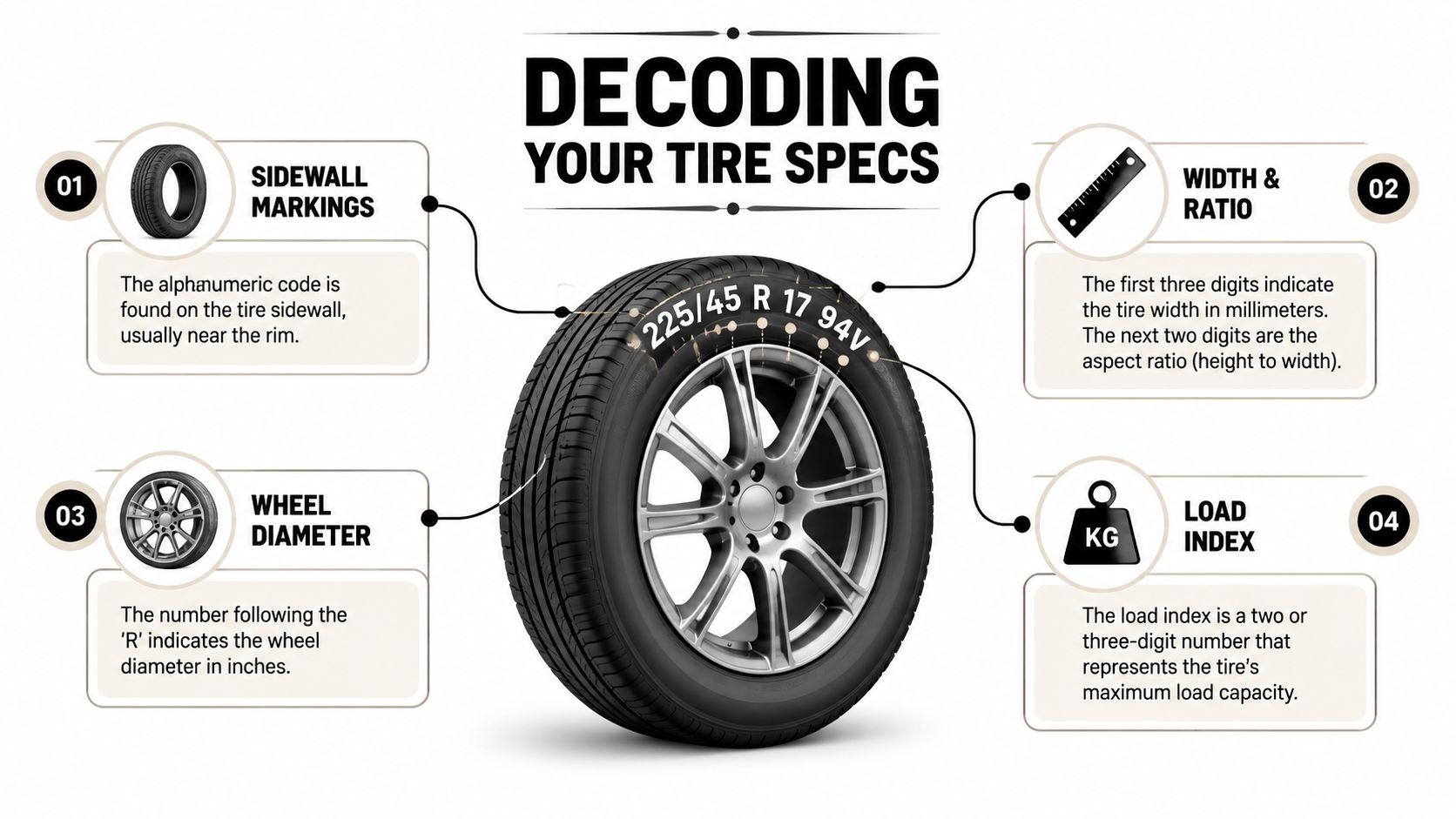
What the sidewall code tells you
A typical tire code gives you several useful details:
- Width: The first number is the tire width in millimeters
- Aspect ratio: The second number is the sidewall height compared with the width
- Construction: The “R” means radial construction
- Wheel diameter: The last number in the size code is the wheel size in inches
- Load index and speed rating: These show how much weight the tire can carry and the speed range it was built for
For spare tire shopping, load index deserves more attention than it usually gets. Budget listings can make two tires look interchangeable when they are not. That matters on heavier sedans, three-row SUVs, half-ton trucks, and vehicles with larger wheel packages.
A simple verification checklist
Before you buy, confirm all of these together:
- Approved tire size: Match the vehicle's approved size range
- Wheel diameter: Make sure it clears the brake components
- Bolt pattern: Exact match only
- Center bore and hub fit: Verify hub-centric fit before ordering
- Offset: Check that the wheel sits in the correct position
- Load rating: Confirm the spare can carry the vehicle safely
- Storage fit: Make sure the spare fits the well, rack, or cargo area you plan to use
For Dallas drivers, a local verification step pays off. Heat, highway speed, and long stretches between stops expose bad fitment in a hurry. If you want to be sure the spare you buy will mount correctly and store properly, Kwik Kar can verify the wheel specs, check hub fit, and install it before it becomes a roadside problem.
Where to Purchase Your Spare Tire
Once you know your specs, the next question is where to buy. At this point, cost and confidence start pulling in different directions.
Online retailers
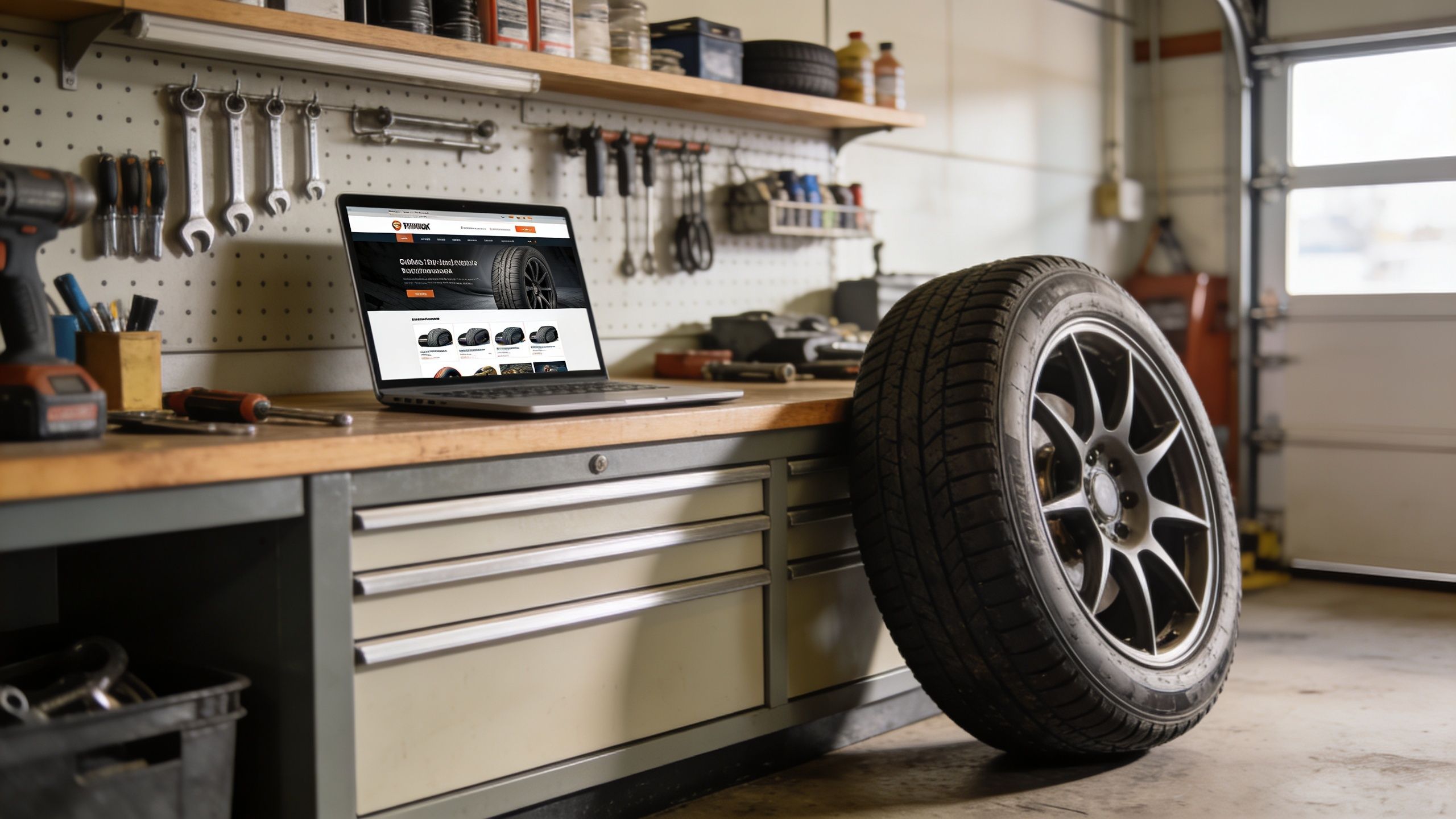
Online ordering works well if you already know the exact wheel and tire combination you need. The selection is broad, and it's easy to compare brands and styles side by side.
The downside is that online filters don't always catch every fitment issue. Offset, center bore, brake clearance, and spare-well storage can still get missed. Data referenced in a Discount Tire spare buyer's guide notes that 20 to 30% of SUV owners report fitment issues with aftermarket spares, such as incorrect offset or hub bore size according to Discount Tire's spare tire buyer guidance. That's why an online bargain can turn into wasted time and a return headache.
If you're also comparing overall tire budgeting, this article on the average price for new tires gives useful context.
Local tire shops
A good local shop gives you something online ordering can't. Real-time fit verification. That matters more than people think, especially on newer vehicles with tighter brake clearances and less storage room.
A local shop can usually inspect your current wheel setup, confirm whether a full-size spare will fit the well, and tell you if a compact spare is the safer practical choice. If your car has aftermarket wheels, this becomes even more important because the original factory assumptions may no longer apply.
The cheapest spare is the one you only have to buy once.
Salvage yards and used wheel options
This route can work if you're trying to keep costs down and your vehicle has a common wheel pattern. A salvage yard can sometimes be the best place to find an OEM wheel that matches correctly.
Still, you need to inspect used parts carefully. Check for bends, cracks, corrosion around the bead, and damage around the lug seats. A used wheel with a worn or aged tire mounted on it may still need a new tire before it's roadworthy. If you don't know the wheel's history, caution matters.
Which option makes sense
Here's the practical breakdown:
| Where to buy | Best for | Main risk |
|---|---|---|
| Online retailer | Drivers with exact fitment data and confidence in wheel specs | Ordering the wrong offset, bore, or bolt pattern |
| Local tire shop | Drivers who want fitment verified before purchase | May have less instant inventory than large online catalogs |
| Salvage yard | Budget-conscious buyers looking for OEM wheel compatibility | Unknown wear, hidden wheel damage, aged tire condition |
For most Dallas drivers, the safest path is simple. Verify the vehicle specs first, then buy from a source that can confirm wheel fit, not just tire size. That approach costs less than correcting a mismatch later.
Installation, Storage, and Essential Tools
Buying the right spare is only half the job. If it isn't installed correctly, secured properly, and stored with the right tools, it won't help much when you need it.
Installation basics that matter
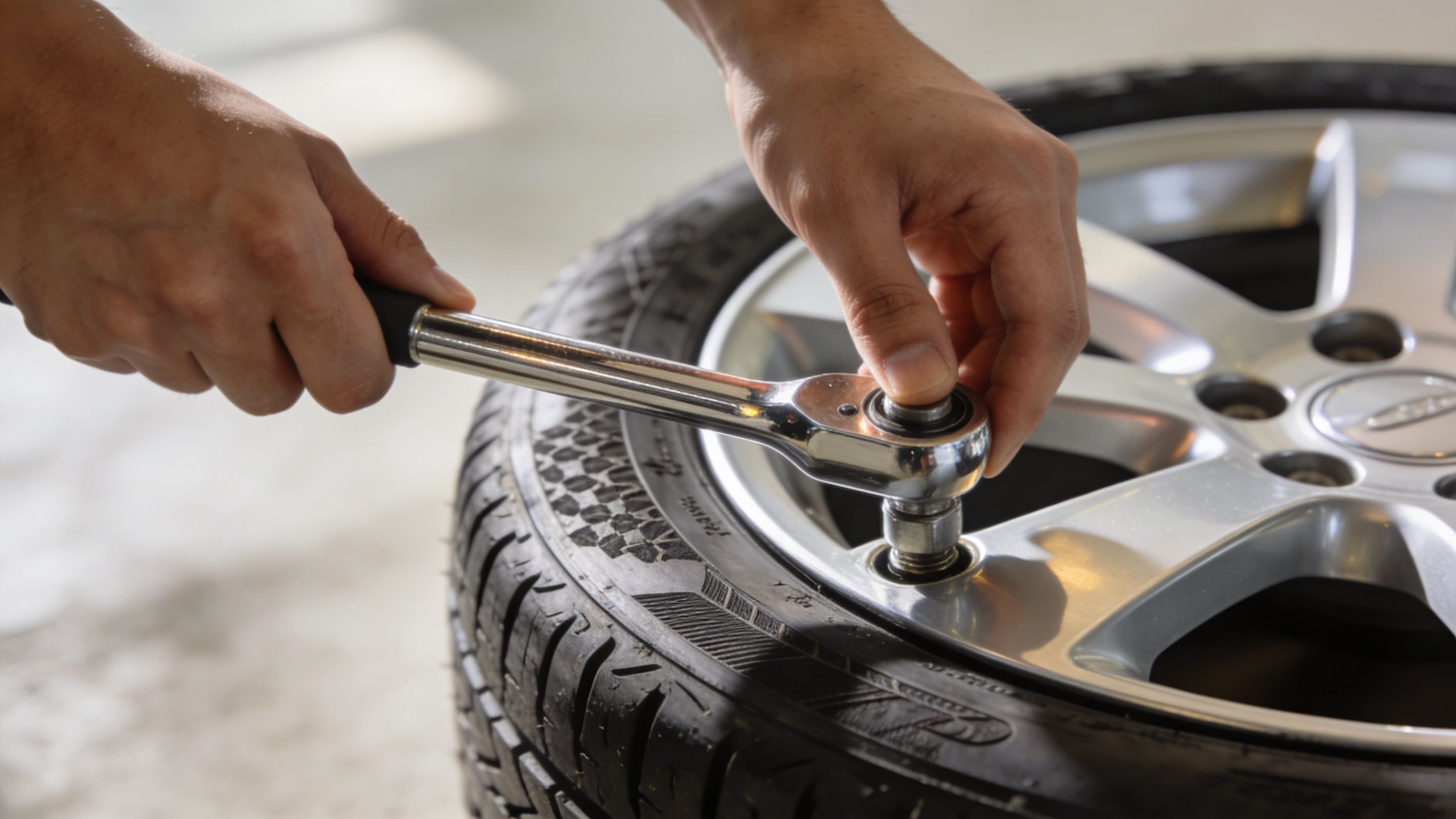
Drivers often rush. Don't. Firestone notes that full-size spares offer 98% reliability for unlimited distance, while temporary donuts have a 25% failure rate after 100 miles, and for a 99% secure fit the recommended sequence is to loosen lugs before jacking, mount the spare, partially lower the vehicle to apply 50 ft-lbs, then fully lower and apply a final 100 to 140 ft-lbs in a star pattern according to Firestone's spare tire considerations.
That sequence matters because it helps the wheel seat evenly. Tightening lugs in a star pattern reduces the chance of clamping the wheel unevenly. On aluminum wheels, uneven tightening can cause vibration, poor seating, or damaged hardware.
Use the designated jacking points in the owner's manual. Don't place the jack under a random suspension arm or body seam and hope for the best.
The tools that should stay with the spare
A spare tire without tools is just cargo. Keep a basic kit with it:
- Vehicle-compatible jack: Make sure it can reach the lift point at your vehicle's ride height
- Correct lug wrench or socket: Verify it fits your lug nuts, especially if you have locking lugs or aftermarket wheels
- Wheel chock or solid block: Prevents the vehicle from rolling during a roadside change
- Gloves and flashlight: Small items, big difference at night or in bad weather
For everyday tire care that helps all five tires last and perform better, these tire maintenance tips are useful to keep in mind.
A quick visual walk-through helps many drivers more than text alone:
Storage mistakes to avoid
A compact spare usually fits in the factory well. A full-size spare often doesn't. If you upgrade to full-size, make sure it's secured so it can't shift under braking or in a collision.
Good storage means the tire is restrained, accessible, and protected from constant abrasion against trim panels or loose cargo. If it lives under luggage, tools, sports gear, or work equipment, you may not reach it when you need it most. Keep the path to the spare clear enough that you can get to it on the shoulder without unloading half the vehicle.
Maintenance, Inspections, and Replacement Timeline
A spare tire isn't a buy-it-and-forget-it item. It ages. It loses pressure. It can dry out while looking perfectly fine at a glance.
The most common problem I see with little-used spares is simple neglect. The tire is there, the wheel looks clean, and the owner assumes it's ready. Then a flat happens and the spare is soft, cracked, or buried under cargo with no usable jack.
What to check regularly
A quick inspection doesn't take long. Focus on the basics:
- Pressure: Check it regularly, because spares often sit untouched for long periods
- Sidewall condition: Look for cracking, cuts, bulges, or weathering
- Tread and surface condition: Even an unused spare can age out
- Tool kit completeness: Confirm the jack, wrench, and lock key are still there
- Storage security: Make sure the spare is fastened and easy to access
A spare only feels optional until the day you need it.
When to replace it
Replace a spare when its condition says it's time, not just when the tread wears down. Age, dry rot, sidewall cracking, prior damage, and long-term underinflation all matter. This is especially true for a compact spare that's been sitting in heat for years or for a used spare of unknown age.
If you bought a used wheel and tire package, inspect it more carefully and sooner. If your vehicle has had wheel or brake changes since new, re-check compatibility before relying on that spare for an emergency.
Why inspections matter
Routine service visits are the easiest time to have the spare checked. During a normal maintenance stop, a technician can inspect inflation, visible tire condition, wheel condition, and whether your tool kit is complete. That's also a good time to ask whether the spare still makes sense for your current setup if you've changed tire sizes or wheel styles since you bought the car.
Prepared drivers don't need a perfect roadside situation. They just need equipment that still works.
Be Prepared on Dallas Roads with Kwik Kar
A flat on Central Expressway at rush hour is a bad time to learn your spare does not fit the hub or clear the brakes. Dallas roads leave little room for guesswork, especially in summer heat or fast traffic. Buying a spare is a safety decision, and the details matter.
The part many drivers miss is wheel fitment. Tire size is only one piece of the job. The spare also needs the correct bolt pattern, the right center bore for proper hub-centric fit, enough load capacity for the vehicle, and enough brake clearance to mount safely. Get one of those wrong, and the spare may not go on at all, or it may not sit correctly on the vehicle.
Your spare should also match how you use the car. A compact spare can work if your goal is getting off the road and to a nearby shop. A full-size spare makes more sense for long Dallas commutes, highway driving, family trips, and heavier vehicles like SUVs and trucks.
If you want certainty before you buy, have the vehicle checked first. At Kwik Kar Oil Change and Auto Care, our team can verify wheel and tire specs, confirm bolt pattern and hub fit, check that your jack and lug wrench still match the vehicle, and make sure you leave with a spare setup that fits your car and your driving needs.