


Walking into a repair shop and receiving a page of costs and line items can feel like reading a foreign language. Understanding what a car service estimate actually is separates car owners who stay in control of their repair bills from those who get surprised by them. A service estimate, also called a repair estimate or written estimate, is a formal document that details expected parts, labor, and associated costs before any work begins on your vehicle. This guide breaks down exactly what goes into one, how they are built, and how to use them to your advantage.
Table of Contents
- Key takeaways
- What a car service estimate really means
- What a car estimate includes
- How estimates are built and why they change
- Using estimates to make smarter repair decisions
- My honest take on car service estimates
- Transparent estimates at Kwik Kar Oil Change & Auto Care
- FAQ
Key takeaways
| Point | Details |
|---|---|
| Estimates are not final bills | A written estimate is a planning tool, not a binding invoice. Final costs may change based on hidden damage found during repair. |
| Itemized line items protect you | A proper estimate lists parts, labor hours, and rates separately so you can verify each charge before authorizing work. |
| Supplements can increase costs | Hidden damage discovered during teardown can trigger supplement estimates. Shops must get your approval before proceeding. |
| Tax is often excluded | Sales tax typically does not appear on an estimate but shows up on the final invoice, which can catch owners off guard. |
| Multiple estimates save money | Comparing at least two or three estimates helps you spot pricing gaps and choose a shop based on transparency and value. |
What a car service estimate really means
A car service estimate is a detailed written document listing the work a shop plans to perform, the parts required, and the expected cost of labor before any repair begins. Think of it as the proposal stage of your car repair. You review it, ask questions, and authorize the work before anything gets touched.
In states like California, this document carries legal weight. California law requires that an estimate itemize parts and labor prices and specify whether parts are new, used, or reconditioned. You cannot simply receive a single number and be told “trust us.” That practice is not compliant with consumer protection standards.
Here is where many car owners get confused. An estimate, a work order, and an invoice are three distinct documents that serve very different purposes:
- Estimate: The initial document listing anticipated costs before work starts. It is your authorization gate.
- Work order: Created after you approve the estimate. This is the shop’s internal instruction document for the technicians.
- Invoice: The final bill you receive after work is complete, reflecting actual costs including any approved changes and applicable tax.
“Estimate, work order, and invoice form a legal paper trail that protects the consumer and provides review points at different repair stages.” — California BAR regulations
The estimate is not a guaranteed price. It is a snapshot of expected costs based on visible information at the time of inspection. The estimate vs. invoice distinction matters because it tells you exactly which document you are looking at and what authority it carries.
What a car estimate includes
Learning to read a car estimate confidently starts with knowing the standard line items. A well-structured estimate should never present a single lump sum. Instead, it breaks costs into categories. Here is what you should expect to see:
- Parts: Listed individually with descriptions. Each part should be labeled as new, used, or rebuilt. A new alternator and a remanufactured one carry different costs and different reliability expectations.
- Labor hours and rate: Labor is typically expressed as a number of hours multiplied by the shop’s hourly rate. A job listed as “2.5 hrs @ $120/hr” gives you $300 in labor costs alone.
- Materials and refinishing: In collision work, this includes items like sandpaper, primer, paint, and clear coat. These are legitimate costs that belong on the estimate.
- Sublet repairs: Some shops outsource specialized work like alignments or glass replacement. That cost should appear on your estimate as a sublet line item.
- Sales tax: Here is the detail that surprises most people. Sales tax is excluded from estimates in certain jurisdictions and only appears on the invoice. Budget for it separately.
| Line item | What it covers | Shown on estimate? |
|---|---|---|
| Parts (new/used/rebuilt) | Physical components replaced | Yes |
| Labor | Technician time at hourly rate | Yes |
| Materials/refinishing | Consumables like paint and primer | Yes |
| Sublet repairs | Work outsourced to another shop | Yes |
| Sales tax | State/local tax on parts | Often excluded |
Pro Tip: Ask the shop to specify whether each part is new OEM (original equipment manufacturer), aftermarket, or remanufactured. The difference significantly affects both cost and longevity, and shops are legally required to disclose this in regulated states.

You can go deeper on reading each of these line items in this repair estimate breakdown guide from Kwik Kar. When estimates omit these details or bundle costs together without explanation, that is a red flag worth addressing before you sign anything.
For context, car maintenance costs in 2026 are calculated using a combination of parts pricing databases, regional labor rates, and vehicle-specific time guides. Knowing that helps you understand why your estimate for the same repair might differ between shops.
How estimates are built and why they change
Most car owners assume an estimate is finalized the moment a shop hands it over. In reality, the estimate process has stages, particularly in collision repair scenarios, and understanding those stages prevents bill shock later.
Here is the typical car maintenance estimate process:
- Initial visual inspection: A technician or estimator examines the vehicle and identifies all visible damage. This inspection drives the first estimate you receive.
- Estimating software entry: Shops use specialized software combined with technician assessments to generate estimates listing labor, parts, and refinishing costs in detail.
- Estimate delivery and authorization: You receive the estimate, review the costs, and sign off before work begins.
- Teardown and hidden damage: Once panels are removed and components are disassembled, technicians often discover damage that was not visible during the initial inspection.
- Supplement creation: When new damage is found, the shop creates a supplement, which is an updated estimate covering the additional work. Collision repair supplements reflect newly discovered damage, not arbitrary price increases.
- Supplement approval: The shop must get your authorization again before proceeding with the additional work.
“Early teardown disclosure reduces surprises by identifying hidden damage before full repair authorization, improving estimate accuracy and customer trust.” — BAR ARSC Newsletter Fall 2025
Regulations in California now require that teardown estimates specify the area being disassembled, the cost of teardown and reassembly, and which parts are typically destroyed during the process. Tear down disclosure requirements exist specifically to give you a complete picture before you commit to a full repair.
Pro Tip: Ask the shop to perform a teardown inspection before writing the final estimate when you suspect more damage exists beneath the surface. Paying a modest teardown fee upfront for a more accurate estimate is almost always worth it compared to being hit with multiple supplements mid-repair.
The supplement process is normal and not something to fear. What you should watch for is a shop that proceeds with additional repairs without getting your written or verbal approval first. That is both a legal issue and a trust issue.
Using estimates to make smarter repair decisions
Receiving an estimate is not the end of the process. It is actually the moment where you have the most control over the outcome of your repair. Here is how to use that window effectively.
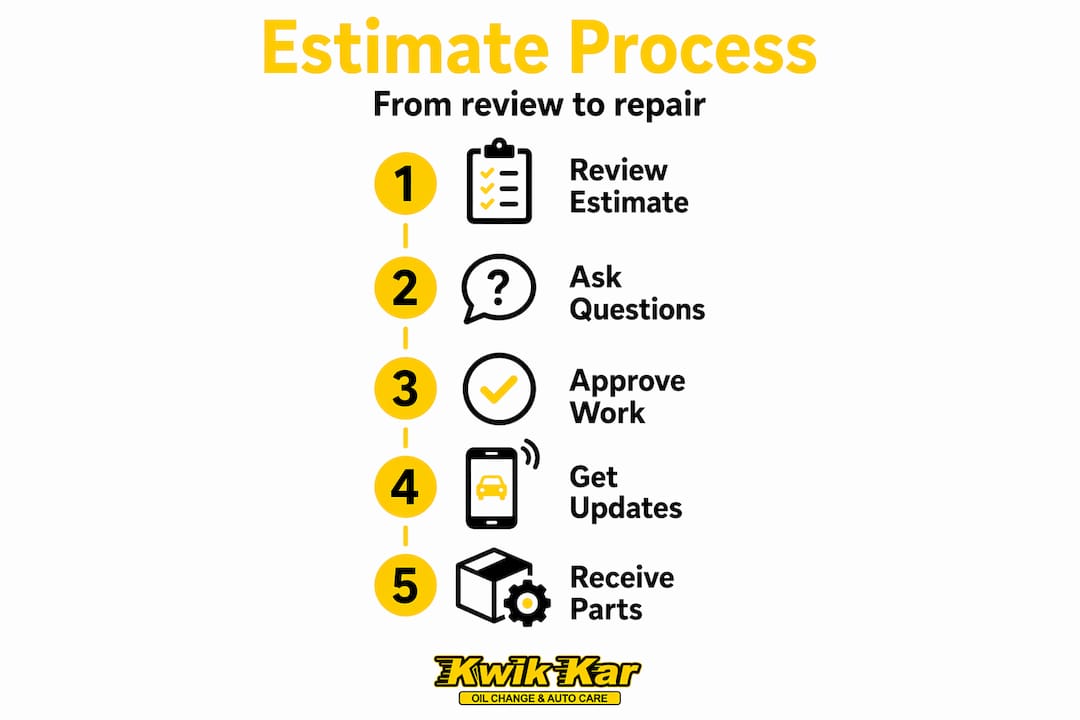
Comparing estimates the right way
Getting multiple repair estimates is one of the most practical steps you can take. Insurance companies frequently provide their own estimates, which may come in lower than independent shop estimates. A lower number does not automatically mean a better deal. It may reflect fewer labor hours, cheaper parts, or overlooked repair steps. When comparing, line up the same categories side by side. You can use a resource like this auto estimate comparison guide to make that process more structured.
Red flags to watch for in any estimate
- A single lump sum with no itemized breakdown
- Parts listed without specifying new, used, or rebuilt condition
- Labor listed as a flat fee with no hours or rate disclosed
- Missing information about sublet work
- No description of what each repair step actually covers
Your rights and the shop’s responsibilities
You have the right to a written estimate before any work begins. You also have the right to receive your old parts back after replacement unless they are sent back to a core supplier. Shops must contact you and get approval before exceeding the authorized estimate amount. Understanding these rights puts you in a much stronger position when negotiating or questioning a bill.
Working with your insurance company
When insurance is involved, get at least one independent estimate alongside whatever the insurer provides. Independent estimates help reveal quality or scope differences that a single insurance estimate may not capture. If there is a significant gap, you have grounds to negotiate or request a supplement.
Choosing a repair shop based purely on the lowest estimate often costs more in the long run. Look for shops that provide detailed written estimates, communicate proactively about changes, and back their work with warranties. That combination of transparency and accountability is what separates trustworthy shops from the rest. You can also check for services flagged in this overpriced car repairs guide to know which charges to question on any estimate you receive.
My honest take on car service estimates
I have seen car owners hand back a signed estimate without reading a single line item on it. It happens more often than most shops would admit. The assumption is that if a certified technician says it costs a certain amount, it must be accurate and fair. Sometimes it is. But the owners who never look closely are also the ones who call back two days later upset about a charge they did not expect.
In my experience, the biggest mistake car owners make is treating an estimate as a formality rather than a negotiation checkpoint. You are not obligated to approve every line item as written. If something is unclear or seems inflated, ask for clarification. A good shop will explain it without hesitation. A shop that gets defensive when you ask questions is telling you something important.
What I have learned over years in this industry is that understanding tax treatment in estimates alone prevents a surprising number of disputes. Car owners read the estimate price, budget to that number, and then feel blindsided when the invoice is higher due to tax and approved supplements. That is not a scam. It is a communication gap that a few minutes of careful reading would have closed.
My recommended approach is simple: read every line, ask about every charge you do not recognize, and confirm whether sales tax is included or excluded. That habit transforms the estimate from a stressful document into a useful tool.
— Kwik Kar
Transparent estimates at Kwik Kar Oil Change & Auto Care
At Kwik Kar Oil Change & Auto Care, every repair starts with a clear, itemized written estimate reviewed with you before any work begins. The team of ASE Certified Master technicians uses current diagnostic tools and estimating practices to give you an accurate picture of what your vehicle needs and what it will cost. Kwik Kar is also recognized by RepairPal and NAPA AutoCare, so you know the pricing and quality standards meet independent benchmarks. When you are ready to get a reliable estimate for your next repair or maintenance service, visit Kwik Kar’s full-service auto repair center in Dallas and experience what transparent, certified service actually looks like.
FAQ
What is a car service estimate?
A car service estimate is a written document provided before repairs begin that itemizes expected parts, labor hours, labor rates, and associated costs. It serves as a planning and authorization tool, not a final bill.
What does a car estimate include?
A proper estimate lists individual parts with their condition (new, used, or rebuilt), labor hours and hourly rate, materials or refinishing costs, and any sublet work. Sales tax is often excluded and appears only on the final invoice.
Why do estimates change after I approve them?
Supplements are added when hidden damage is discovered during teardown that was not visible during the initial inspection. Shops are required to get your approval before proceeding with any additional work covered by a supplement.
How do I get a car estimate I can actually trust?
Ask for a fully itemized written estimate, request that all parts be labeled by condition, and compare at least two or three estimates from different shops. Look for shops that are ASE Certified and recognized by organizations like RepairPal for pricing accuracy.
Is the estimate price what I will actually pay?
Not always. The estimate reflects costs based on visible damage and does not include sales tax in many jurisdictions. Approved supplements for hidden damage can also increase the final invoice beyond the original estimate amount.