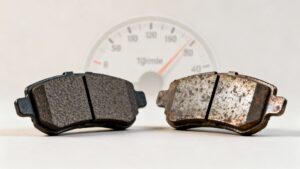




Your car’s maintenance schedule is a manufacturer-approved service plan that tells you exactly what to service, and when, based on mileage or time intervals. It covers everything from oil changes and fluid checks to belt replacements and brake inspections, all timed to prevent damage before it starts. Think of it as the single most reliable document for keeping your vehicle running safely and holding its value over time.
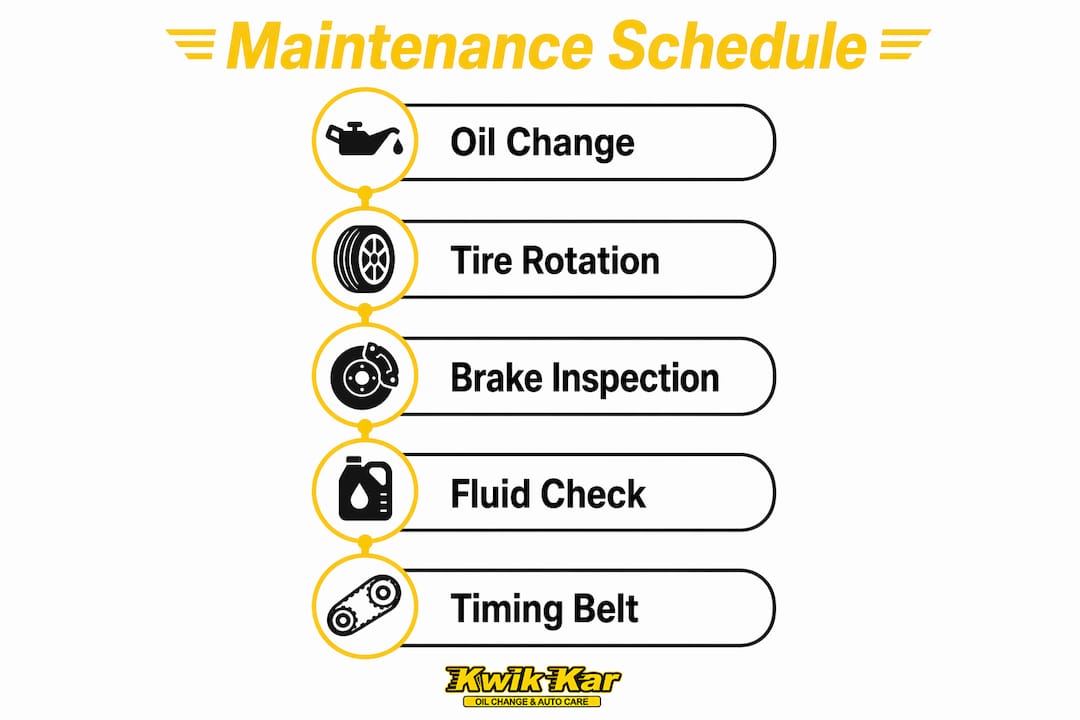
Understanding how a car maintenance schedule works means knowing that your owner’s manual, not a generic rule of thumb, is the definitive authority. Manufacturer engineers design these schedules based on real-world testing for your specific engine, drivetrain, and materials. Following that schedule protects your warranty, prevents costly repairs, and keeps your car performing the way it was built to.
Here is a quick look at what a typical schedule covers:
- Oil and filter changes at intervals matched to your oil type and driving conditions
- Tire rotations to promote even wear and extend tire life
- Fluid checks and replacements including coolant, brake fluid, transmission fluid, and power steering fluid
- Filter replacements for both engine air and cabin air filters
- Brake inspections covering pads, rotors, and brake lines
- Belt and hose inspections, with replacements at higher mileage milestones
- Spark plug checks and replacements depending on plug type and mileage
- Suspension and steering inspections at major service intervals
How car maintenance schedules are organized by mileage and time
Most schedules cluster services into key mileage milestones. Light-duty vehicles typically see service at several-thousand-mile intervals, covering oil changes, tire rotations, and brake inspections. As mileage climbs, more involved services are added. The 30-60-90 rule is a widely used framework that groups major inspections and fluid replacements at significant mileage milestones.

| Mileage Interval | Key Services |
|---|---|
| Several-thousand-mile intervals | Oil and filter change, tire rotation, brake inspection, fluid top-off, lights check |
| Moderate mileage interval | Air filter inspection/replacement, brake pad check, tire pressure and rotation |
| Higher mileage interval | Engine air filter, brake fluid change, coolant check, belt and hose inspection, tire rotation |
| Higher mileage interval | Spark plug replacement (certain vehicles), transmission fluid, brake fluid flush, battery check, suspension inspection |
| Higher mileage interval | Timing belt replacement, coolant hose replacement, exhaust inspection, steering and suspension check, full drivetrain review |
Time-based intervals run alongside mileage triggers. Some fluids and components degrade with age regardless of how many miles you drive, so manufacturers often recommend service every 6 or 12 months for items like brake fluid and coolant. If you drive fewer miles than average, the time-based trigger will often come first.
Manufacturers also publish two parallel schedules: one for normal driving and one for severe driving conditions. Severe usage shortens intervals to roughly 50% of normal, so a driver who commutes in stop-and-go traffic or regularly tows a trailer needs service twice as often as someone putting steady highway miles on the same vehicle.
Pro Tip: Bookmark the service interval page in your owner’s manual and check it before every major mileage milestone. Dealer reminders are helpful, but as Consumer Reports notes, “ultimately it’s your responsibility” to know when service is due.
Why following your specific schedule protects your car and your wallet
Skipping scheduled maintenance rarely causes immediate, visible damage. The real cost shows up gradually: oil sludge builds up in the engine, coolant breaks down and causes overheating, brake fluid absorbs moisture and corrodes the system, and worn components fail earlier than they should. Ignoring fluid changes leads to reduced engine performance, increased fuel consumption, premature tire and brake wear, and eventually costly breakdowns.
Warranty compliance is another direct consequence. A
is a manufacturer-required list of services tied to your warranty terms. Missing documented service visits can give a manufacturer grounds to deny a warranty claim, even if the failure appears unrelated. Keeping dated service records is not optional if you want full warranty protection.
The benefits of staying on schedule are just as concrete:
- Extended vehicle life through consistent lubrication, cooling, and component care
- Better fuel economy from clean filters, fresh oil, and properly inflated tires
- Higher resale value because documented service history signals a well-maintained car to buyers and platforms like Carfax and CarGurus
- Fewer emergency repairs since inspections catch worn parts before they fail
- Warranty protection through verifiable, dated service records
Consumer Reports experts recommend treating the owner’s manual schedule as the baseline and adjusting only when your driving conditions clearly fall into the severe category. Dealer service departments may send reminders, but owner responsibility is primary. Relying entirely on dealer alerts can lead to both missed services and premature ones.
Common myths and what ASE Certified experts actually recommend
The 3,000-mile oil change rule is the most persistent myth in car ownership. It made sense decades ago when engines ran conventional oil with wider tolerances and less precise manufacturing. Modern vehicles, particularly those built after 2015 with normal driving habits, follow 7,500–10,000 mile intervals with synthetic oil. Some high-end vehicles stretch to 10,000–15,000 miles. Sticking to 3,000-mile changes on a modern car costs owners $180–$600 extra annually with no added protection.
The myth persists largely because of habit and shop business models, not because engines need it. Quick-lube shops have historically built their service cadence around the 3,000-mile interval, and windshield stickers reinforcing that number kept customers returning on a schedule that benefited the shop more than the car.
Severe driving conditions do shorten the safe interval, and that part of the old advice still holds. You fall into the severe category if two or more of these apply to your driving:
- Frequent short trips under 5 miles where the engine never fully warms up
- Stop-and-go city commuting most days
- Sustained extreme temperatures, above 90°F or below 0°F
- Regular trailer towing or heavy cargo hauling
- Driving on unpaved, dusty, or muddy roads
- High-speed driving for extended periods
If severe conditions describe your daily drive, follow the severe-duty schedule in your owner’s manual, which typically cuts intervals to roughly half of normal. If most of your miles are steady highway driving, the standard interval applies.
Pro Tip: If your vehicle has an oil-life monitoring system, trust it. These systems use engine RPM, temperature, idle time, and driving load to calculate oil degradation, and they are accurate to within 5–10% of laboratory analysis. Always reset the monitor after every oil change so it can track the new interval correctly.
How to read your owner’s manual and use modern tools to stay on track
Your owner’s manual contains the most accurate maintenance schedule for your specific vehicle. Most manuals organize the service section into two columns: Normal Duty and Severe Duty, each listing services by mileage and time. Finding your interval is straightforward: locate the maintenance schedule section, identify which column matches your driving pattern, and note the mileage and time triggers for each service item.
Reading the schedule correctly means paying attention to both triggers. If the manual says “change transmission fluid at 60,000 miles or 5 years, whichever comes first,” the time trigger applies even if you have not reached the mileage. Low-mileage drivers often miss this and delay services their car actually needs.
Best practices for tracking your schedule:
- Keep a maintenance log with the date, mileage, and service performed for every visit
- Set calendar reminders tied to both mileage estimates and time-based intervals
- Use a car maintenance app to store records, set alerts, and track multiple vehicles
- Reset your oil-life monitor after every oil change so the system recalculates from the correct baseline
- Photograph your odometer at each service visit and attach it to your digital or paper records
Pro Tip: Documenting maintenance with dated, itemized invoices is the single most protective habit you can build. Incomplete or missing records can lead to denied warranty claims even when the maintenance was actually performed. Store digital copies in a cloud folder so they are never lost.
Why ASE Certified technicians and Kwik Kar Oil Change & Auto Care make a difference
Not every shop interprets your maintenance schedule the same way. ASE Certified Master technicians hold the industry’s highest credential, earned through rigorous testing across all major vehicle systems. When an ASE Certified technician reviews your schedule, they are cross-referencing manufacturer specifications with the actual condition of your vehicle, not just running through a generic checklist.
Kwik Kar Oil Change & Auto Care takes that expertise further with personalized diagnostics and transparent communication before any work begins. You get a clear estimate upfront, so there are no surprises when the job is done. That approach matters especially at major mileage milestones like 30,000, 60,000, and 90,000 miles, where the service scope expands and the cost of missing a step goes up.
Services aligned with manufacturer recommendations at Kwik Kar Oil Change & Auto Care include:
- Full 30k, 60k, and 90k service packages matched to factory specifications
- Fast oil changes and filter replacements with the correct oil type for your engine
- Brake inspections, tire rotations, and complete fluid replacements
- Belt and hose inspections at appropriate mileage intervals
- Battery checks and charging system evaluations
Kwik Kar Oil Change & Auto Care holds certifications from both RepairPal and NAPA AutoCare, two of the most recognized quality standards in the independent repair industry. Those credentials mean your service records carry weight with warranty administrators and future buyers. The shop also provides maintenance checklists and scheduling guidance so you leave each visit knowing exactly what was done and what is coming next.
How to verify maintenance history when buying a used car
A used car’s maintenance history tells you more about its future reliability than almost any other factor. Start with a Carfax vehicle history report, which compiles service records from dealerships, repair shops, and state inspection stations. Gaps in the Carfax timeline do not always mean neglect, but they warrant a closer look.
Ask the seller for physical service records. Dated, itemized invoices from a shop or dealership are the gold standard. If the seller has records showing consistent oil changes, fluid services, and inspections at appropriate intervals, that documentation directly supports the car’s asking price and your confidence in buying it.
A pre-purchase inspection by an ASE Certified technician is worth every dollar. A trained technician can spot deferred maintenance, worn components, and signs of neglect that no history report captures. Look specifically for:
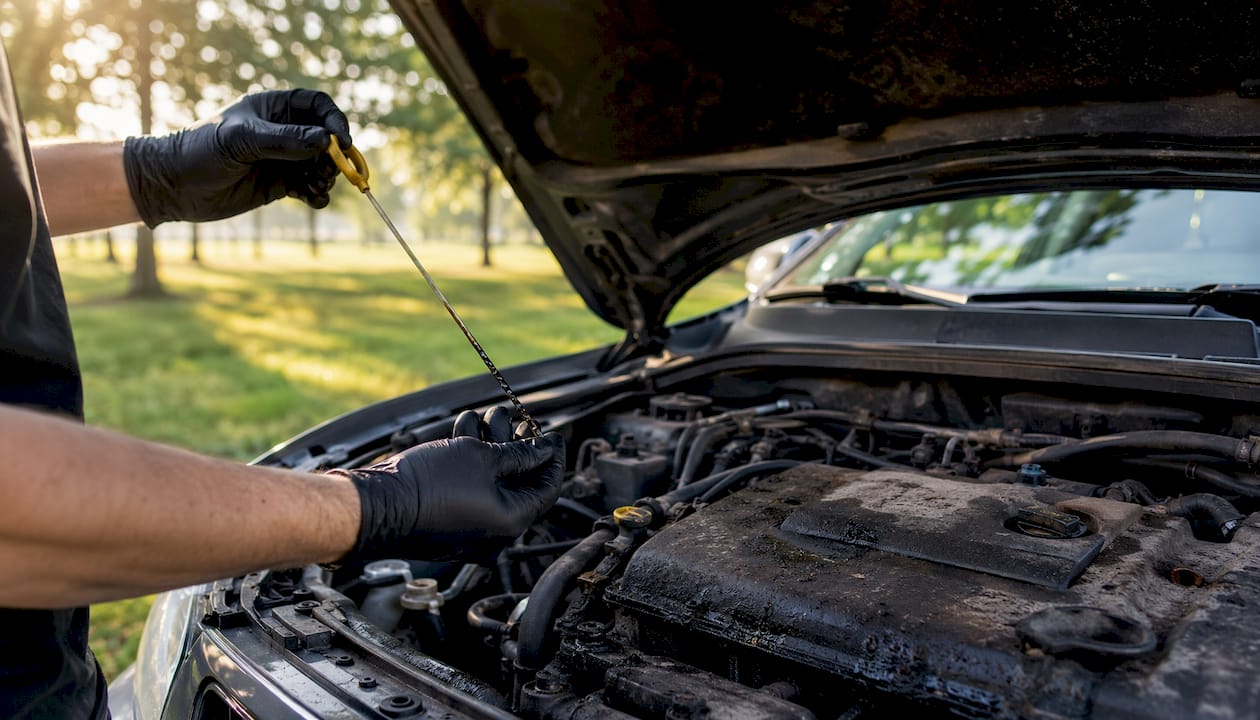
- Oil condition and level on the dipstick (dark, gritty oil suggests overdue changes)
- Brake pad thickness and rotor condition
- Coolant color and condition (brown or rusty coolant signals a neglected cooling system)
- Belt and hose condition for cracks or brittleness
- Tire wear patterns that reveal alignment or suspension issues
Cross-reference the odometer reading with the service records to confirm the intervals make sense. A car with 80,000 miles and only two oil change records on file has a story worth questioning. Consumer Reports recommends treating the 30-60-90 rule as a baseline template for evaluating used vehicles, particularly older models where the manufacturer’s original schedule may be harder to reconstruct.
Key Takeaways
A car maintenance schedule works by grouping manufacturer-required services at defined mileage and time intervals, and following it consistently is the most reliable way to protect your vehicle’s performance, safety, and resale value.
| Point | Details |
|---|---|
| Owner’s manual is the authority | Your manual’s maintenance schedule overrides generic rules and covers both normal and severe driving intervals. |
| 3,000-mile rule is outdated | Most modern vehicles built after 2015 need oil changes every 7,500–10,000 miles; sticking to 3,000 miles costs $180–$600 extra per year. |
| Severe driving cuts intervals in half | Stop-and-go commuting, towing, extreme temperatures, and short trips all qualify as severe duty and shorten safe service intervals. |
| Documentation protects your warranty | Dated, itemized service records are required to support warranty claims; missing records can lead to denied coverage. |
| 30-60-90 rule guides major milestones | Key inspections and fluid replacements cluster at 30,000, 60,000, and 90,000 miles as a practical framework for long-term upkeep. |
FAQ
What is a typical maintenance schedule for a car?
A typical car maintenance schedule groups services at key mileage intervals: oil and filter changes every 7,500–10,000 miles, as is standard for most modern vehicles built after 2015, filter and brake inspections around 15,000 miles, and major fluid replacements and component inspections at 30,000, 60,000, and 90,000 miles. Your owner’s manual provides the exact schedule for your specific vehicle.
What is the 30-60-90 rule for car maintenance?
The 30-60-90 rule recommends specific inspections and replacements at 30,000, 60,000, and 90,000 miles, covering fluids, filters, spark plugs, belts, and suspension components at each milestone. It is a useful framework, but your owner’s manual schedule is the definitive guide for your vehicle.
Is the 3,000-mile oil change rule still valid?
No. Most modern vehicles built after 2015 follow 7,500–10,000 mile oil change intervals with synthetic oil, and some stretch further. The 3,000-mile rule is a holdover from older engine technology and costs drivers $180–$600 per year in unnecessary changes.
What counts as severe driving conditions?
Severe driving includes frequent short trips under 5 miles, daily stop-and-go traffic, sustained extreme temperatures, regular towing or heavy hauling, and driving on unpaved or dusty roads. If two or more of these describe your typical driving, follow the severe-duty schedule in your owner’s manual, which shortens service intervals to roughly half of normal.
How do you verify maintenance on a used car?
Start with a Carfax vehicle history report, then ask the seller for dated service invoices. A pre-purchase inspection by an ASE Certified technician will confirm the car’s actual condition and flag any deferred maintenance that the paperwork does not show.

Stay ahead of every service milestone with Kwik Kar Oil Change & Auto Care. Our ASE Certified technicians follow your manufacturer’s exact schedule, provide transparent estimates before any work begins, and give you the documentation you need to protect your warranty and resale value. Check our current oil change specials and book your next service today.