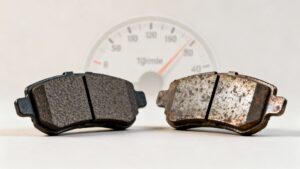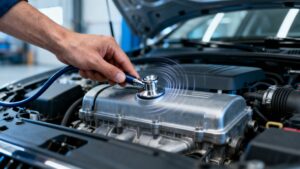




To drop off car efficiently, hand the advisor your keys, registration, a short written symptom list, and a clear statement of who can approve extra work, then request a written estimate and confirm your pickup time before you leave. Skip any of these and you risk a delayed diagnosis, a surprise charge, or a callback you can’t answer during your workday. Each item on this list closes a specific gap that slows technicians down or opens the door to miscommunication about cost.
Missing paperwork means the advisor has to track down your vehicle history instead of starting the inspection. A vague symptom description (“it makes a noise sometimes”) forces the technician to guess at conditions instead of testing for them directly. And an open-ended authorization, one where you just say “fix whatever’s wrong,” can turn a $200 estimate into a $900 invoice with no phone call in between.
Here’s the quick-reference version, worth saving to your phone before your next appointment:
- Keys, including any wheel-lock key
- Registration, insurance card, and warranty paperwork
- A written list of symptoms (what, when, how often)
- A clear statement of your authorization limit
- A request for a written, itemized estimate
- Your preferred contact method for updates
- A confirmed pickup time
- Valuables and garage openers removed from the car
Key Takeaways
An efficient car drop-off comes down to paperwork, a written symptom list, a clear authorization scope, and a written itemized estimate confirmed before you leave the lot.
| Point | Details |
|---|---|
| Bring documents ready | Registration, insurance, warranty paperwork, and service history speed check-in and prevent missed coverage. |
| Write specific symptom notes | Note what happens, when, and how often, plus a photo or video of any warning light or noise. |
| Set an authorization cap | State a dollar limit for extra work and name a backup approver if you’re unreachable. |
| Demand a written, itemized estimate | Parts and labor should be listed separately, with any diagnostic fee stated up front. |
| Verify before you drive off | Compare the final invoice to the estimate and test key functions during pickup. |
| Choose a shop with built-in transparency | Kwik Kar Oil Change & Auto Care uses ASE-certified technicians and written estimates as standard practice, not an add-on. |
Table of Contents
- What to Gather Before You Drop Off Your Car
- What to Say During the Handoff
- What to Remove From Your Car Before Drop-Off
- How to Lock In a Written Estimate and Clear Authorization
- What to Check When You Pick Up Your Car
- Red Flags That Should Make You Pause
- Technician Perspective: What Actually Slows Down a Drop-Off
- How Kwik Kar Oil Change & Auto Care Makes Drop-Off Faster
- Sources
- FAQ
What to Gather Before You Drop Off Your Car
The fastest drop-offs happen when the paperwork and the story are already assembled before you pull into the lot. Bring your vehicle registration, current insurance card, warranty documentation, and any past repair receipts. Technicians use warranty details to determine whether a part failure might be covered, and gathering these documents before your visit helps the shop avoid billing you for something that shouldn’t come out of your pocket.
Your symptom notes matter just as much as your paperwork. “Grinding noise” tells a technician almost nothing. “Grinding noise from the front left wheel, only when braking below 20 mph, started three days ago” tells them exactly where to look first. Noting the conditions under which a problem occurs (cold mornings, highway speeds, after the AC kicks on) lets a mechanic replicate the issue instead of hunting for it blind. A ten-second video of the noise or the dashboard warning light does more good than a paragraph of description.
Before you leave the house, run through this:
- Registration, insurance card, and warranty paperwork in one folder or a phone photo
- Service history or prior repair receipts, especially for anything related to your current complaint
- A written or typed symptom note with dates, frequency, and driving conditions
- Photos or short video of warning lights, leaks, or unusual noises
Vehicle prep matters too. Clear out personal items, keep the wheel-lock key and alarm fob accessible, and top off to at least a quarter tank of gas, since shops commonly need that fuel level to road-test your car after a repair. If you’re bringing an EV or hybrid, note your current charge percentage rather than assuming the shop will check it for you.
Scheduling has a bigger effect on wait time than most owners realize. Book a specific drop-off appointment instead of walking in cold, confirm the shop’s drop-off window, and ask up front whether a shuttle or loaner is available if you need to get to work. If you need the car back by a set time, say so at booking, not at drop-off.
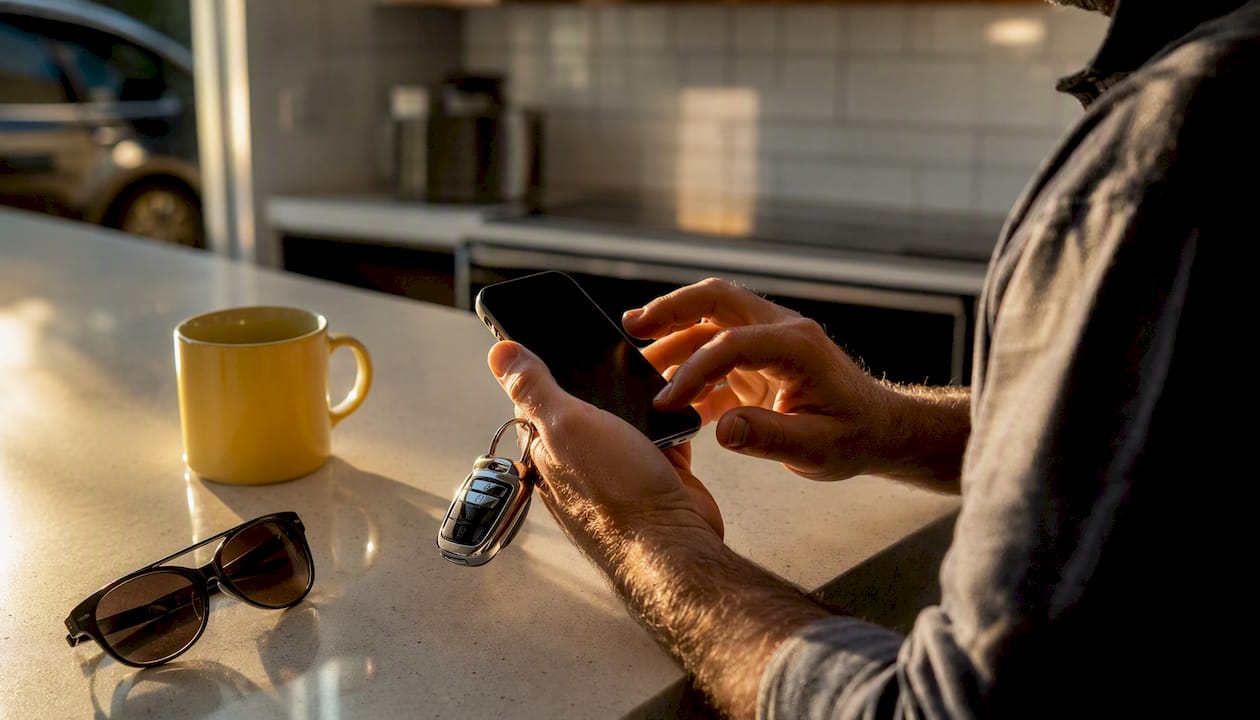
Pro Tip: If you’re using an after-hours drop box, put your keys, signed authorization form, and a note with your name and phone number in a labeled envelope. Staff can match your vehicle to your file the moment they open the shop, instead of waiting for you to call in.
What to Say During the Handoff
A good handoff takes under two minutes if you’ve prepped the details above. Use this as a starting script with your service advisor:
“Here’s my car for [symptom]. It happens [when/how often]. I’d like a written, itemized estimate before any work starts. I’m authorizing diagnostics only right now. If you find something else, please call or text me at [number] before doing any additional work over $[amount]. I can be reached by [call/text/email], and I’d like to pick up the car by [time].”
That single statement covers the four things a shop actually needs from you: what’s wrong, what you’re approving right now, who to contact, and when you need the car returned.
Run through this checklist with the advisor before you walk away:
- Confirm your appointment time and vehicle details match what’s on file
- Hand over documents and both sets of keys, pointing out the wheel-lock key
- State your symptom summary out loud, even if you also submitted it in writing
- Request a written, itemized estimate before any work begins
- Clarify whether your authorization covers diagnostics only or the full repair
- Confirm your preferred contact method and set a pickup expectation
On authorization specifically, be explicit. Tell the advisor you want a call or text for anything above a dollar amount you set, not a vague “let us know if it’s a lot.” Vague limits get interpreted generously.
Pro Tip: Set a firm approval cap, such as “call me before doing anything over $150 in additional parts or labor,” and name a backup approver if you’ll be unreachable during work hours. This single step prevents more billing disputes than almost anything else on this list.
What to Remove From Your Car Before Drop-Off
Technicians need clear access to the cabin filter, the OBD-II port, and often the trunk or wheel wells to retrieve locking lug nuts. A back seat full of gym bags, a trunk packed with tools, or a glovebox stuffed with paperwork slows down every one of those steps and puts your belongings at risk of being moved, damaged, or misplaced.
Before handoff, clear out:
- Wallets, electronics, and anything with financial or personal information
- Garage door openers and house keys on a separate ring
- Loose change, sunglasses, and dash cams (or leave a note if one stays mounted)
- Large toolbags, sports equipment, or child car seats
- Sensitive documents you don’t need the shop to see
Fuel and charge levels aren’t just about getting home. A technician verifying a repair often needs to road-test the vehicle, and keeping at least some fuel means that test doesn’t get skipped or delayed. For EVs and hybrids, note your charge level at drop-off so the shop can plan test drives without guessing.
If your car has an aftermarket alarm, immobilizer, or wheel locks, say so at handoff and hand over the specific key or fob needed to disable them. A mislabeled wheel-lock key is one of the most common reasons a simple tire job turns into an hour of searching through your glovebox for the right adapter.
How to Lock In a Written Estimate and Clear Authorization
Insist on a written, itemized estimate before any work begins, one that separates parts from labor and lists any diagnostic fee up front. This isn’t an unusual request. Industry guidance treats an itemized estimate as a standard baseline, and a shop that resists giving you one in writing is signaling something worth paying attention to.
Phrase your authorization carefully. Ask the advisor to repeat back exactly what they’re approved to do, and confirm whether your signature covers diagnostics only or the full repair job. This matters because a diagnostic often uncovers a second problem, and without a clear scope, some shops assume open authorization to fix everything they find.
According to the Motorist Assurance Program, effective authorization means asking the shop to repeat the repair being approved, stating the total cost estimate out loud, and confirming whether your approval is limited to diagnostics or extends to the full repair. This one exchange prevents most of the billing confusion that shows up in customer complaints.
Watch for warning signs in the estimate itself: vague one-line descriptions like “labor, misc.”, a refusal to break out parts costs, or pressure to sign before the estimate is finished. If you see any of these, ask for a service manager and request the shop’s written estimate policy. You can pause authorization at any point until you get clarity, and a shop with nothing to hide will have no problem walking you through it. For a deeper look at what a fair estimate should include, see this breakdown of repair estimate line items.
Pro Tip: Ask for an estimated completion time and your preferred contact window in the same conversation. Shops schedule technicians in blocks, and giving them your availability up front often gets your car back faster than a follow-up call later.
What to Check When You Pick Up Your Car
Before you drive off, run through a short verification pass:
- Compare the final invoice line by line against the original written estimate
- Ask to see any replaced parts if the invoice lists them and you want proof
- Test lights, horn, windows, and any system related to your original complaint
- Check the dashboard for warning lights and listen for the noise that brought you in
- Request a short test drive with the advisor, or ask for a supervised one if you’re short on time
- Collect the final itemized invoice, any warranty paperwork, and notes on upcoming maintenance
A five-minute check at pickup catches most problems before they turn into a second trip. If something on the invoice doesn’t match what was authorized, ask about it before you pay, not after. For repeat issues, this mechanic-repair verification checklist walks through what to look for in more detail.
Pro Tip: Photograph the odometer and the final invoice before you leave the lot. It takes ten seconds and gives you a timestamped record if a warranty question ever comes up.
Red Flags That Should Make You Pause
Most drop-offs go smoothly, but certain behaviors are worth stopping for. Refusal to provide a written, itemized estimate tops the list, since that document is a baseline expectation, not a favor. Pressure to sign a blank or vague authorization form is another. So is any hedging when you ask whether your approval covers diagnostics only or the full repair job.
Operational red flags matter too: a shop that can’t tell you whether its technicians are ASE-certified, no stated policy on how they’ll contact you about extra work, or no willingness to put warranty terms in writing on parts and labor.
If a shop won’t answer a direct question about authorization scope or won’t itemize an estimate, that’s not a communication gap. It’s a decision they’ve made about how they want to handle your money. Pause, ask for a manager, and get their written policy before you leave your keys.
Technician Perspective: What Actually Slows Down a Drop-Off
From the service bay, the most common bottleneck isn’t a hard diagnosis. It’s missing information. A car arrives with no symptom notes, no service history, and a wheel-lock key that’s “somewhere at home,” and the technician loses twenty minutes just figuring out where to start, before any actual repair work begins.
Clear symptom notes and prior service records let a technician skip redundant tests and go straight to the likely cause. This also surfaces related wear items during the same visit, which often means bundling repairs instead of a second appointment weeks later. A written authorization with a clear dollar cap and a named backup contact removes the single biggest source of shop-side delay: waiting on hold for an owner who’s in a meeting.
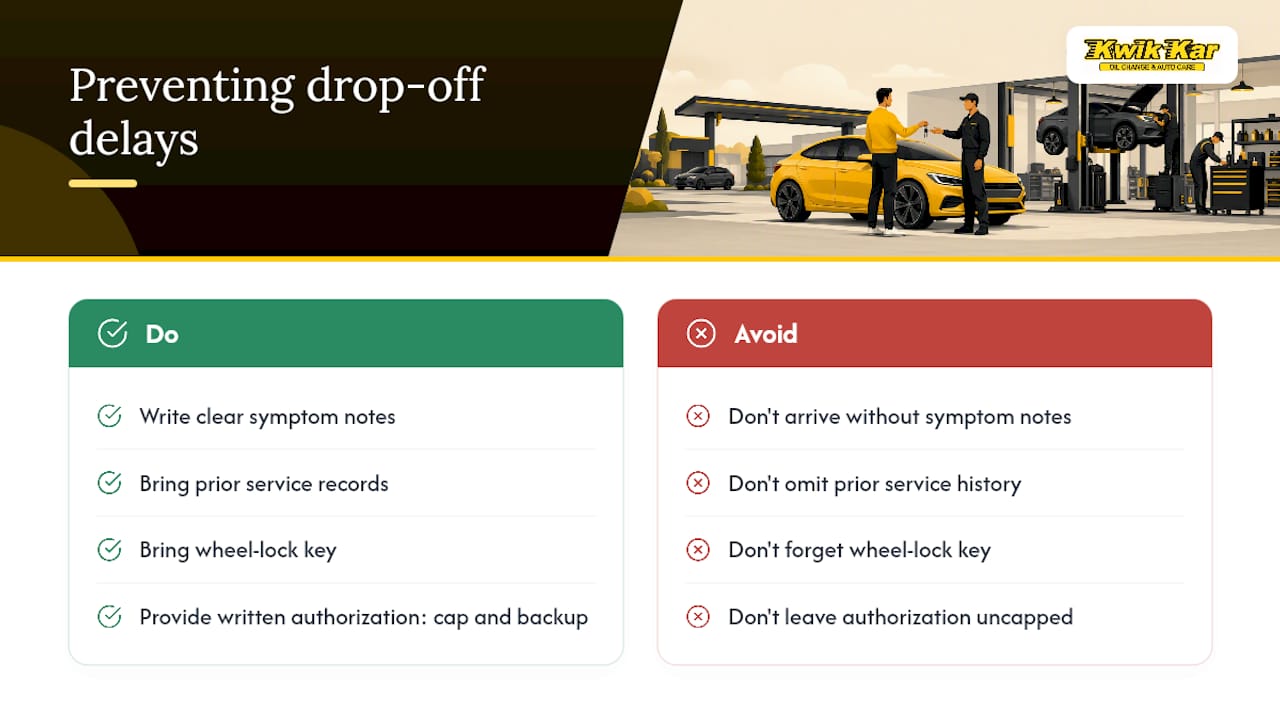
None of this is complicated. It’s the difference between a shop guessing at your intentions and a shop executing a plan you’ve already approved.
How Kwik Kar Oil Change & Auto Care Makes Drop-Off Faster
Every practice in this checklist, written estimates, clear authorization scope, documented history, is standard operating procedure at Kwik Kar Oil Change & Auto Care, not an exception you have to request.
Technicians here are ASE-certified, and every job starts with a transparent, itemized estimate that separates parts from labor before any work begins. You set your authorization scope at drop-off, diagnostics only or full repair, and the shop confirms your preferred contact method so you’re never surprised by a charge you didn’t approve. Warranty documentation and receipts come standard, and the shop’s RepairPal and NAPA AutoCare recognition reflects the same standards this article recommends you demand from any shop.
Booking ahead confirms your drop-off window and technician availability, and after-hours key drop is available for owners who can’t make it during business hours; label your envelope clearly and staff can process your vehicle the moment the shop opens. If your drop-off involves fleet vehicles or coordinated logistics, resources like this vehicle courier guide offer useful context for planning multi-vehicle handoffs.
Ready to put this checklist into practice? Book an appointment or explore full-service options and mention your preferred authorization cap when you schedule.
Sources
The guidance in this checklist draws on established shop-prep and consumer-protection resources. The Motorist Assurance Program’s authorization guidance covers exactly what to confirm before approving repair work. AAA’s shop-selection questions explain why itemized estimates are a baseline expectation, not a bonus.
For vehicle-prep specifics like fuel levels and personal item removal, the Gustafson Brothers customer checklist and DeBoer’s Auto documentation guide both offer practical starting points. If you want to understand how estimates differ shop to shop, this comparison guide breaks down the cost factors worth watching. For after-hours drop-off logistics, this drop-off guide offers useful envelope-labeling practices that transfer well to repair shop key drops. Policies not covered by any of these sources are worth confirming directly with your shop before your appointment.
- Questions to ask before authorizing any car repair | Motorist Assurance Program
- Questions to ask when picking an auto repair shop | AAA
FAQ
What Should I Bring When I Drop Off My Car?
Bring your keys (including any wheel-lock key), registration, insurance card, warranty paperwork, service history, and a written list of symptoms with dates and conditions.
How Do I Avoid Surprise Charges at Pickup?
Request a written, itemized estimate before work starts and clearly state whether your authorization covers diagnostics only or the full repair, with a dollar cap for anything beyond that.
What Should I Remove From My Car Before Drop-Off?
Remove valuables, electronics, garage openers, loose items, and large toolbags so technicians have clear access to the cabin, trunk, and wheel wells.
Does Kwik Kar Oil Change & Auto Care Provide Written Estimates?
Yes, Kwik Kar Oil Change & Auto Care provides transparent, itemized estimates before work begins and confirms your authorization scope, whether that’s diagnostics only or a full repair.
What Should I Check Before Driving Away After Service?
Compare the final invoice to your original estimate, test basic functions like lights and windows, and confirm the original symptom is resolved before you leave the lot.