



A sulfur or rotten-egg smell from your car usually points to a failing catalytic converter, a venting battery, a fuel system problem, or a dirty cabin air filter. If the odor is strong and comes with a hot or swollen battery, pull over, shut off the engine, and get the vehicle checked immediately. For milder smells, ventilate the cabin and schedule a diagnostic soon.
TL;DR:
- A hot or swollen battery producing a rotten-egg smell requires immediate inspection due to fire or explosion risks.
- Sulfur odors from the exhaust indicate a failing catalytic converter that struggles to convert hydrogen sulfide into odorless gases.
- A sulfur smell that appears mainly during acceleration is often linked to the exhaust system or fuel contamination.
- A persistent sulfur odor inside the cabin or at idle typically points to a dirty cabin air filter or HVAC system issue.
- Visual checks of the battery, exhaust, and cabin filters can help determine if a professional diagnosis is necessary.
Table of Contents
- Common causes of a sulfur or rotten-egg smell
- How to diagnose where the smell is coming from
- Is it safe to drive with a sulfur smell?
- What mechanics check and how they fix each cause
- Preventing sulfur smells before they start
- How our certified technicians diagnose a sulfur smell
- When to check it yourself and when to call a professional
- Get your sulfur smell diagnosed in Spring Valley
- FAQ
- Sources
Common causes of a sulfur or rotten-egg smell
Your car’s sulfur smell almost always traces back to one of a handful of sources, and where you notice it, inside the cabin or outside near the tailpipe, narrows things down fast.
A failing or clogged catalytic converter struggles to convert hydrogen sulfide into odorless sulfur dioxide, letting the rotten-egg smell escape through the exhaust. A battery that overheats or vents can release hydrogen sulfide too, and that smell often shows up near the engine bay or even inside the car if fumes seep through the ventilation system. Contaminated or low-quality fuel can also produce sulfuric exhaust odors, especially under load. Cabin sources are simpler but easy to overlook: a soaked or dirty cabin air filter, a clogged A/C drain, or trapped mold can all smell musty or sulfur-like without any connection to your engine at all.
- Exhaust system: a struggling catalytic converter lets unconverted hydrogen sulfide pass through, often worse during acceleration.
- Battery: overheating or venting produces a rotten-egg odor near the engine bay, according to AAA’s guide on battery and alternator problems.
- Fuel system: contaminated fuel or injector issues can create sulfuric smells under load.
- Cabin and A/C: a dirty filter or clogged drain creates musty, sulfur-like smells unrelated to the engine, as AAA Club Alliance notes.
Timing matters: a smell that appears only when you accelerate usually points to the exhaust or fuel system, while a constant odor that lingers at idle or shows up inside the cabin leans toward the battery or HVAC system.
How to diagnose where the smell is coming from
Before you assume the worst, a few safe checks can tell you a lot about what’s going on.
- Note the details. Write down where the smell is strongest, when it appears (idle, acceleration, or after a long drive), and whether you notice any other symptoms like smoke or warning lights.
- Check the cabin air filter. A black, soaked, or moldy filter is a common and easy-to-fix source of musty or sulfur-like odors, as explained in our guide to car AC smells.
- Look at the battery. Check for a swollen case, corrosion on the terminals, or a warm feel to the housing. These are signs covered in our guide to checking car battery health.
- Sniff near the tailpipe from a safe distance. A strong sulfur smell here usually points to the exhaust or catalytic converter.
- Check under the car for leaks or stains, which can indicate a fuel or fluid problem worth a closer look.
Pro Tip: Take a short video or photo of anything unusual, like battery swelling or fluid stains, so a technician can see exactly what you noticed.
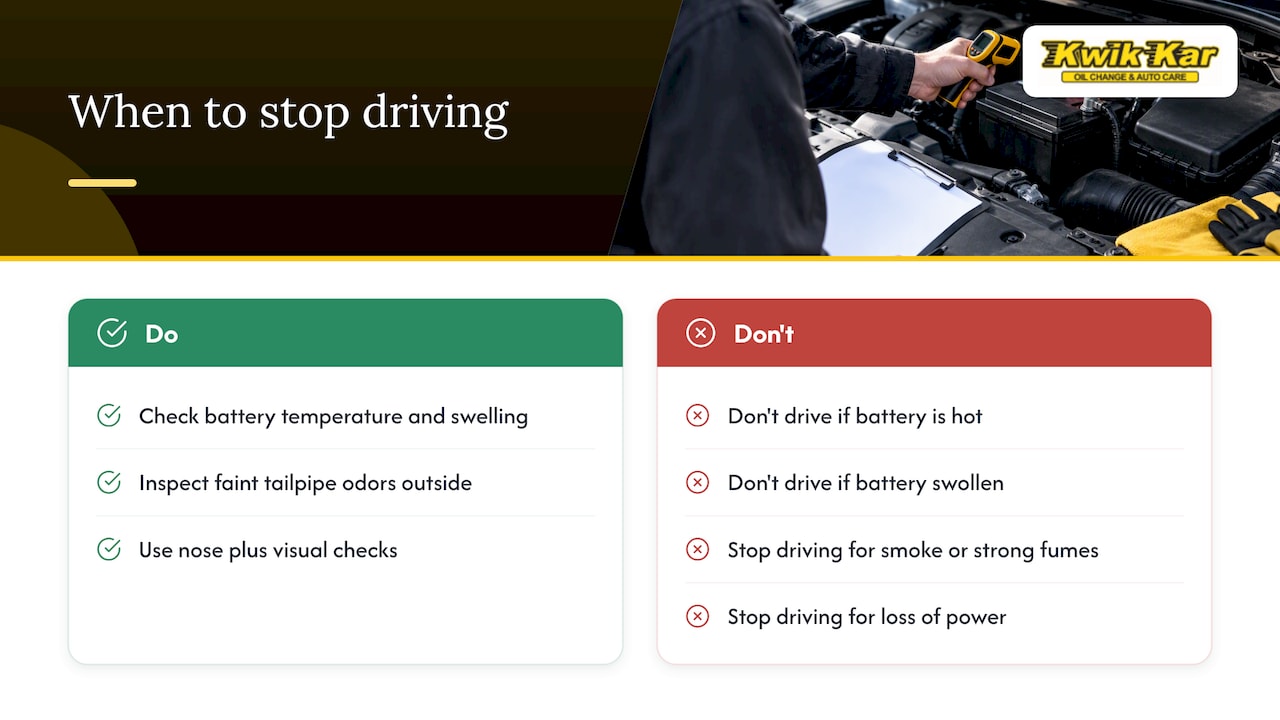
Stop driving and call for help if you see smoke, smell fumes strongly inside the cabin, or notice sudden power loss.
Is it safe to drive with a sulfur smell?
It depends on the source, and that’s why diagnosis matters before you decide. A venting or overheating battery can release hydrogen gas, which carries a real risk of fire or explosion, so don’t drive if the battery feels hot or looks swollen.
Hydrogen sulfide has a distinct rotten-egg odor, but detection thresholds vary widely between individuals, which means a smell you find overwhelming might barely register for someone else, according to a federal review of hydrogen sulfide exposure. That variability is exactly why you should pair your nose with the visual checks above rather than relying on smell alone.
A faint sulfur odor noticeable only outside the car near the tailpipe is often a nuisance that still needs inspection, but it’s not an emergency. Smoke, strong fumes inside the cabin, or a loss of power mean you should stop driving right away.
What mechanics check and how they fix each cause
Once your vehicle is on a lift, a technician works through a logical sequence rather than guessing at parts.
- Battery: voltage and load testing confirm whether it’s failing, along with a visual check for swelling or corrosion before replacement.
- Exhaust and catalytic converter: an OBD-II scan reads oxygen sensor data, and exhaust-gas and backpressure checks confirm whether the converter needs replacing.
- Fuel system: fuel-quality testing along with injector and filter inspection catches contamination or clogging issues that cause sulfuric exhaust odors.
- Cabin and A/C: a filter swap, drain clearing, and interior cleaning resolve musty or mold-related smells, a service we explain further in our engine diagnostics page.
Diagnostic time is typically short, often under an hour for a scan and visual inspection, while repair time depends on the part involved. A battery swap is usually same-day, but a catalytic converter replacement can take longer depending on parts availability. The more specific your notes from the checks above, the faster a shop can narrow things down.
Preventing sulfur smells before they start
A little routine maintenance keeps most of these odors from ever showing up.
- Have your battery tested periodically and replace it proactively as it nears the end of its service life, since a failing battery is a common source of rotten-egg smells.
- Keep battery terminals clean and free of corrosion.
- Replace your cabin air filter and clear A/C drains after heavy rain or any water intrusion, a habit we cover in our guide to car AC smells.
- Address a check-engine light promptly and schedule emissions-related service to catch oxygen sensor or catalytic converter issues early.
- Use fresh, quality fuel and avoid letting a tank sit for long stretches without use.
Pro Tip: If your battery is more than three or four years old, have it load-tested at your next oil change instead of waiting for a warning sign.
How our certified technicians diagnose a sulfur smell
Our technicians use advanced diagnostic tools to track down the source of a sulfur smell quickly, rather than guessing at parts. Our process includes voltage and load testing for battery concerns, OBD-II scanner checks for exhaust and emissions issues, and a physical exhaust inspection.
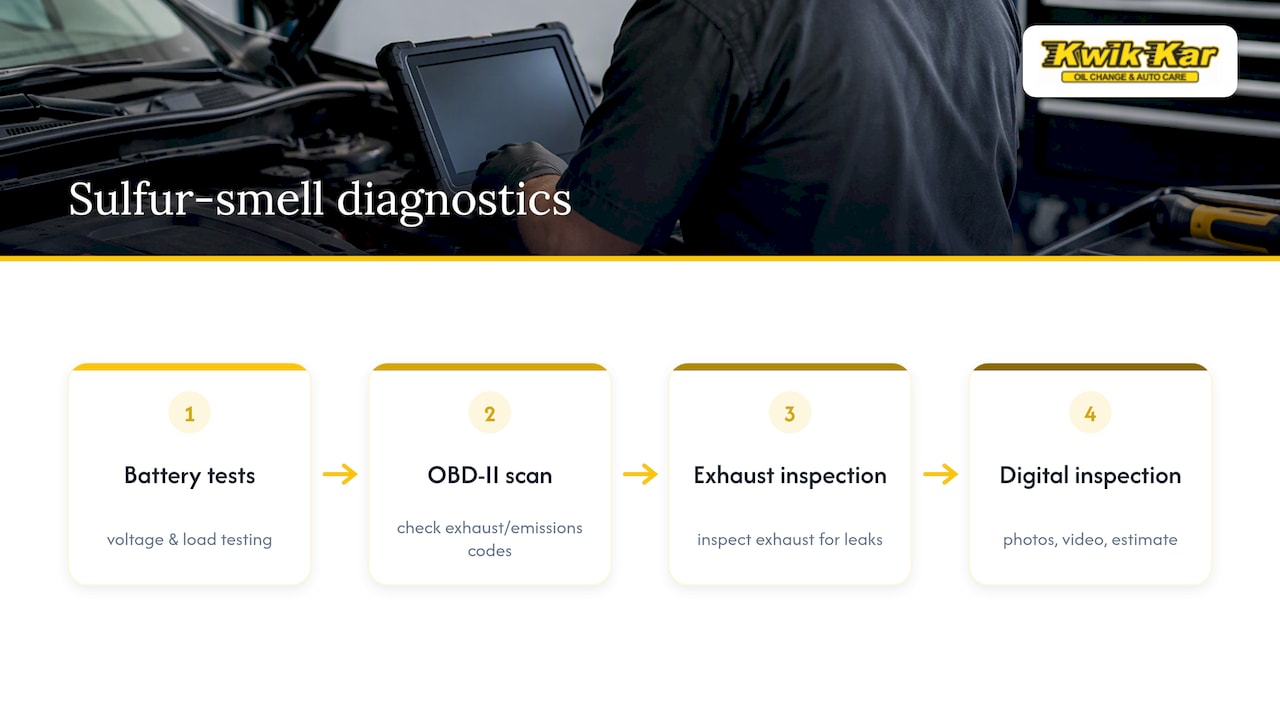
Every visit includes a digital vehicle inspection with photos and video, so you can see exactly what was found, along with an estimate before any work begins. If a battery shows signs of venting or an exhaust leak raises cabin-fume concerns, the issue is flagged immediately and the safest next step is explained at check-in.
When to check it yourself and when to call a professional
A quick cabin air filter swap or a visual look at your battery terminals is safe to handle yourself, and noting when and where the smell occurs helps any technician down the line. Battery venting, strong exhaust fumes inside the cabin, smoke, or a sudden loss of power call for professional help right away, not a wait-and-see approach.
— Kwik Kar
Get your sulfur smell diagnosed in Spring Valley
A sulfur smell deserves a real answer, not a guess, and that’s exactly what a same-day diagnostic gives you. Technicians run voltage, scanner, and exhaust checks as outlined above, then provide a clear estimate before any work starts.

- ASE-certified diagnostics for battery, exhaust, and fuel-system causes of odor.
- Battery testing and replacement when your battery is the culprit.
- Cabin and A/C service for musty or sulfur-like interior smells.
Bring your vehicle in with a note of when and where the smell happens, and we’ll handle the rest. Explore our full auto repair services or call your nearest Spring Valley location to book a diagnostic today.
FAQ
Is it safe to drive a car that smells like sulfur?
It depends on the source: a faint smell near the tailpipe is often a lower-priority issue, but a strong smell linked to a hot or swollen battery is not safe to drive with. Get it checked as soon as possible rather than waiting for symptoms to worsen.
Does a sulfur smell always mean repairs?
Not always. A dirty cabin air filter or clogged A/C drain can cause a sulfur-like smell with a simple, low-cost fix, while exhaust or battery-related causes typically need professional repair, as AAA Club Alliance outlines.
Should I be worried if I smell sulfur?
A mild, occasional smell is worth monitoring and checking soon, while a strong or persistent smell, especially with a hot battery or fumes inside the cabin, should be treated as urgent. When in doubt, have a technician run a quick diagnostic.
Do car batteries smell like rotten eggs when they go bad?
Yes. A battery that’s overheating or venting can produce a distinct rotten-egg odor from hydrogen sulfide, and this is considered a safety concern that needs prompt attention, according to AAA. Don’t attempt to jump-start or charge a battery that’s hot or swollen.
Sources
- Bad Alternator vs. Bad Battery: A Quick Guide | AAA Automotive
- Low Level Exposure to Hydrogen Sulfide: A Review of Emissions, Community Exposure, Health Effects, and Exposure Guidelines
- Why does my car smell? Finding the source of vehicle odors | AAA Club Alliance