



If your engine idles rough, hesitates under acceleration, stalls unexpectedly, or burns more fuel than usual with the check engine light on, a mass air flow sensor problem is a common culprit, but not the only one. The first move is checking for intake leaks and pulling trouble codes or live MAF data before replacing any part. Diagnosing the real cause saves you from guessing.
TL;DR:
- P0171 or P0174 often point to unmetered air from cracked boots or loose clamps, so inspect intake integrity before condemning the MAF sensor.
- Compare live MAF readings with short fuel trim and throttle position; a scan tool check can distinguish faulty metering from an intake leak.
- Use only cleaner labeled for mass air flow sensors, let the element air dry fully, and never wipe or blow compressed air across the wires.
- If symptoms return within days or weeks after cleaning, or testing finds damaged wires or an electrical fault, replace the sensor rather than cleaning again.
- Severe stalling or major power loss makes driving risky; have the car towed or drive it only as little as necessary.
Table of Contents
- Common symptoms of a failing or dirty MAF sensor
- What commonly causes these symptoms
- How to diagnose a MAF issue step by step
- Cleaning vs replacement: what actually fixes the problem
- Next steps: DIY checks vs a shop visit
- How certified technicians approach MAF problems
- Why diagnosis matters more than the parts counter
- Get a professional engine diagnostic at Kwik Kar
- FAQ
- Sources
Common symptoms of a failing or dirty MAF sensor
The mass air flow sensor measures the air entering your engine so the computer can calculate the right amount of fuel to inject. When its readings are off, the symptoms show up in how your car runs, not just on a scan tool.
Poor fuel economy is a common complaint. When the sensor reports inaccurate airflow numbers, the engine control module adjusts fuel delivery based on bad information, which often means burning more gas than necessary. Rough idle and surging are also typical, since an unstable air and fuel mixture at low RPM makes the engine hunt for a steady idle speed.
Stalling and hard starting point toward a sensor whose sensing element has picked up oil or dirt. A heavily contaminated sensor can cause what technicians call a “start but no run” condition, where the engine fires briefly and then dies, a pattern tied directly to MAF contamination.
Other signs to watch for include:
- Hesitation or sluggish acceleration, especially when merging or climbing a grade
- A check engine light paired with codes in the P0100 to P0104 range, or P0171/P0174 for a lean fuel condition
- Noticeable loss of power under load, even though the engine seems fine at idle
Some of these symptoms overlap with vacuum leaks, misfires, or a failing oxygen sensor, which is exactly why a code reader alone rarely tells the whole story.
What commonly causes these symptoms
A few root causes show up again and again when a car exhibits MAF-related symptoms, and not all of them involve the sensor itself.
Contamination is the most frequent cause. Oil residue from an aftermarket air filter, dirt that slips past a damaged filter element, or general grime can coat the hot-wire or hot-film sensing element, throwing off its readings. Unmetered air is another major factor: a cracked intake boot, a loose clamp, or a leaking intake gasket lets air into the engine that never passes across the sensor, which the computer has no way to measure.
Electrical issues also mimic sensor failure. Corroded connector pins, a weak ground, or incorrect reference voltage at the sensor can produce readings that look like a bad MAF even when the sensor itself is fine. On the engine side, misfires or a restricted exhaust can distort airflow patterns enough to confuse the sensor’s readings, even though the part is functioning correctly.
- Oil or dirt coating the sensing wires reduces accuracy over time
- Loose clamps or cracked boots let unmetered air bypass the sensor
- Corroded wiring or poor grounds send false voltage signals
- Misfires or exhaust restrictions distort normal airflow readings
A key diagnostic insight: unmetered air leaks commonly cause lean codes that get misdiagnosed as sensor failure, since the engine compensates by running lean, which the computer may flag as P0171 or P0174 even though the sensor is reading correctly. Checking intake integrity before assuming the sensor has failed avoids unnecessary part swaps.
How to diagnose a MAF issue step by step
A methodical check separates a true sensor failure from an intake leak, wiring fault, or unrelated engine problem. Here’s the order that gets you to an answer fastest.
- Read the trouble codes first. Note any codes in the P010x range along with P0171 or P0174, since lean codes often point to unmetered air rather than the sensor itself.
- Inspect the intake system visually. Check the air filter for oil or debris, and look over the intake piping, clamps, and electrical connector for cracks, looseness, or corrosion.
- Pull live PID data with a scan tool. Watch MAF grams per second or Hz alongside short fuel trim and throttle position. ASE diagnostic guidance recommends comparing these values against expected ranges to confirm whether the sensor or the fuel system is compensating for an unrelated problem.
- Check reference voltage and ground with a multimeter. A sensor that is receiving the wrong voltage or has a poor ground connection can produce faulty readings even when the sensing element itself is clean.
- Run a snap-throttle test. Quickly open and close the throttle while watching the live MAF value. A sluggish or delayed response can indicate a sensor that reads correctly at steady state but fails under quick changes.
- Escalate when results are inconclusive. A smoke test reveals hidden vacuum leaks, an oscilloscope captures voltage transitions a multimeter can miss, and bench-testing the sensor on a reference harness confirms whether it meets specification outside the vehicle.
Pro Tip: Review short fuel trim alongside the live MAF reading. If the engine is adding a lot of fuel to compensate for a lean condition, the problem is often an intake leak, not the sensor itself.
Cleaning vs replacement: what actually fixes the problem
Cleaning a dirty MAF sensor can restore accurate readings, but only when done correctly and only when contamination, not a damaged circuit, is the issue.
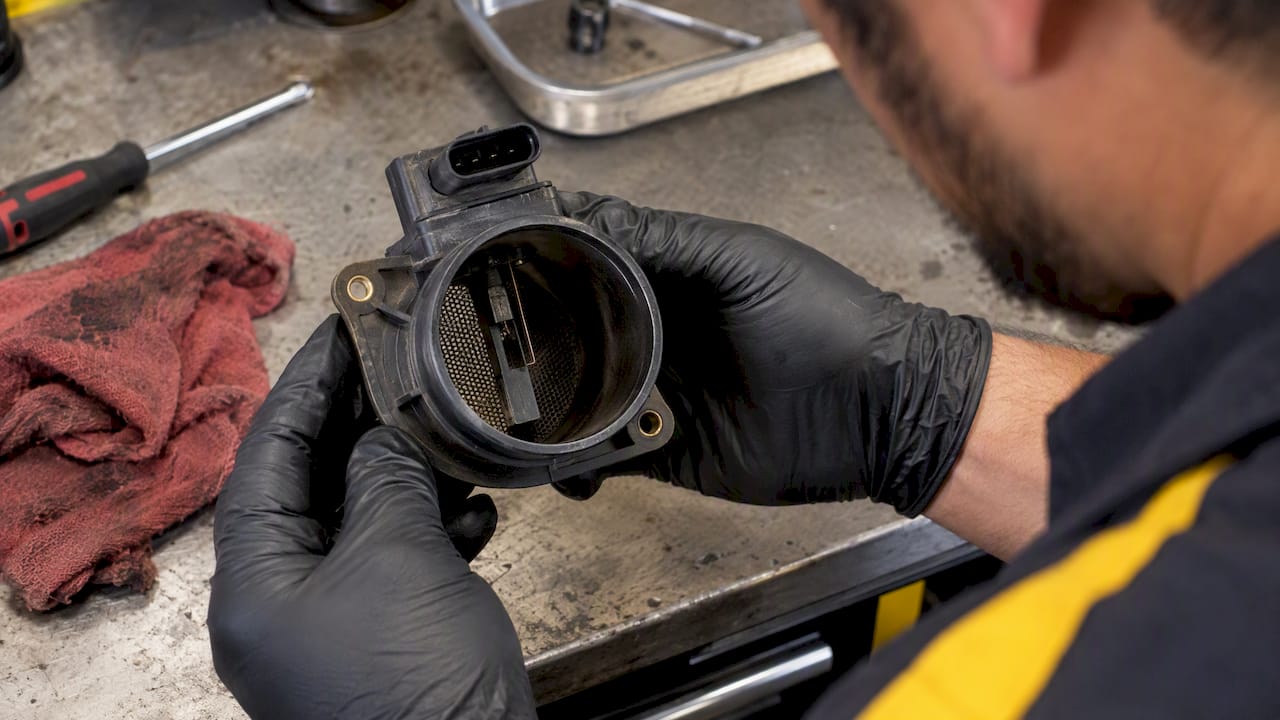
Use a cleaner labeled specifically for mass air flow sensors. Brake cleaner, carburetor cleaner, and compressed air can damage the delicate sensing wires or leave a residue that makes the problem worse. The correct process is straightforward:
- Remove the sensor from the intake housing per the manufacturer’s procedure
- Spray the sensing element with MAF-specific cleaner, covering the wires evenly
- Let it air-dry completely before reinstalling, since any mechanical wiping can break the wires
Pro Tip: Expect a few minutes of rough idle right after reinstalling a freshly cleaned sensor. That settles out once the sensing wires fully stabilize.
Cleaning sometimes brings an immediate improvement, but if the symptoms return within days or weeks, that usually means the sensing element is damaged rather than just dirty. Physical damage, such as bent or broken wires, or an electrical fault that shows up on voltage testing, both point to replacement rather than another cleaning attempt.
Next steps: DIY checks vs a shop visit
Some MAF diagnostics are well within reach for a car owner with basic tools, while others call for shop-grade equipment.
You can safely handle a few things yourself: a visual check of the air filter and intake boots with the engine off, tightening any loose clamps you find, swapping a dirty air filter, and reading codes with a basic OBD-II scanner. These steps rule out the simplest causes before you spend money on parts.
- Replace a visibly dirty or damaged air filter before assuming sensor failure
- Tighten or replace cracked intake clamps and boots you can access safely
- Pull codes with an OBD-II reader to narrow down the likely cause
A shop visit makes sense when multiple trouble codes point in different directions, when a smoke test is needed to find a hidden vacuum leak, or when electrical bench testing is required to confirm a sensor fault, including necessary procedures like ADAS calibration essential for your vehicle’s safety and performance following windshield or sensor work. A professional diagnostic appointment typically includes live-PID review, a smoke test if warranted, and oscilloscope testing when a sensor’s response time is in question, which together give a far more reliable answer than guesswork with a single code reader. If you’re experiencing severe stalling or a noticeable loss of power, it’s safer to have the car towed or driven minimally rather than risk a stall in traffic.
How certified technicians approach MAF problems
When a vehicle comes in with MAF-like symptoms, our technicians start with live PID analysis and documented inspections, often including photos and video, rather than jumping straight to a part swap. That process catches intake leaks, wiring faults, and misfires that would otherwise look like a sensor failure. We provide a transparent estimate before any work begins and work to turn diagnostic appointments around quickly, which matters whether you’re a daily commuter or managing a fleet.
Why diagnosis matters more than the parts counter
The biggest mistake we see with MAF complaints is skipping straight to a replacement sensor because it’s the easiest part to order and swap. That habit gets reinforced by how often cleaning or replacing a MAF does seem to fix things, since contamination is genuinely common. But treating every rough idle or lean code as an automatic MAF failure means paying for parts that don’t address intake leaks, bad grounds, or misfires driving the same symptoms.
The diagnostic step that gets skipped most often isn’t exotic. It’s simply comparing short fuel trim against the live MAF reading before touching anything. That single comparison tells you whether the engine computer is compensating for bad air metering or for an air leak the sensor never saw. If you take one thing from this guide, let it be that a five-minute scan-tool check before buying a part will save you more money than any cleaning kit or guesswork swap ever will.
— Kwik Kar
Get a professional engine diagnostic at Kwik Kar
If your symptoms point to a possible MAF issue, or you’d rather skip the guesswork entirely, our engine diagnostic service covers the live-PID review, intake inspection, and electrical checks outlined above, performed by ASE-certified technicians with the scan tools to tell a true sensor failure from an intake leak or wiring fault.

We provide a transparent estimate before any work begins, so you know what you’re paying for and why. Every diagnostic comes with documentation you can keep, and most appointments turn around the same day. If you’re noticing rough idling, stalling, reduced power, or a stubborn check engine light, schedule a visit at our Spring Valley Road location in Dallas and let us pinpoint the cause before you spend money on parts you may not need.
FAQ
How do I reset a mass air flow sensor?
Disconnecting the vehicle’s battery for a short time can clear stored codes and reset the engine computer’s adaptive values, but this doesn’t fix an underlying MAF problem. If the sensor is dirty or faulty, the same symptoms and codes typically return once the computer relearns its baseline.
Where is the MAF sensor located in a Chevy Colorado?
On most Chevy Colorado models, the mass air flow sensor sits in the intake tubing between the air filter housing and the throttle body, usually secured with a small electrical connector on top. The exact position can vary slightly by model year and engine size, so checking a repair manual for your specific engine is the most reliable way to locate it.
Why does my car run worse after getting a new MAF sensor?
A new sensor that makes things worse often means the original symptoms weren’t caused by the sensor at all, with an intake leak, wiring fault, or misfire still present. It can also mean the replacement sensor needs the engine computer to relearn its fuel trim values, which sometimes causes temporary rough running.
Where is the MAF sensor located?
In most vehicles, the mass air flow sensor is mounted in the air intake tract, between the air filter box and the throttle body, so it can measure incoming air before it reaches the engine. It’s typically a small cylindrical or rectangular unit with an electrical connector and is accessible without removing major engine components.
Sources
- Motor
- What you need to know about the mass air flow sensor (Underhoodservice)
- ASE L1 study guide (Las Positas College PDF)