




Healthy automatic transmission fluid is bright red or pink. As it ages it turns reddish-amber and then medium brown, which is normal. Dark brown or black fluid, a burnt smell, or a milky look means the fluid has broken down or been contaminated, and the car should be inspected soon. AAA says the same: a gradual shift from red to amber to brown is expected, while the darker end of the scale is a warning.
Color is a useful first clue, not a verdict. Below you will find a color guide, the right way to check the fluid, what else to watch for, and how to decide when to bring the car to us on Spring Valley Road in Dallas.
TL;DR
- Bright red or pink is new, healthy fluid. Reddish-amber to medium brown is normal for fluid that has been in service a while.
- Dark brown, black, milky or burnt-smelling fluid needs a professional inspection. A red or pink puddle under the car means a leak.
- Color alone can mislead. Fluid can look acceptable and still carry fine debris, so follow your owner’s manual for the change interval.
- Many newer cars have a sealed transmission with no dipstick. Don’t pry anything open; have a shop check it.
- Not sure what you are seeing? We can inspect it and give you an estimate before any work begins.
Table of Contents
- What color transmission fluid should be
- How to check your transmission fluid
- What else to watch for besides color
- When to change transmission fluid
- Our perspective: color is the start of the conversation
- Have your transmission checked in Dallas
- Frequently asked questions
- Sources
What color transmission fluid should be
Automatic transmission fluid (ATF) is dyed red so you can tell it apart from engine oil and spot a leak quickly. New fluid is translucent and bright red or pink. Over thousands of miles of heat and friction it darkens.
Here is how to read what you see:
| Color and look | What it usually means | What to do |
|---|---|---|
| Bright red or pink, clear | New or healthy fluid | Nothing. Keep to your maintenance schedule. |
| Reddish-amber to medium brown | Fluid has been in service for some time. AAA calls this change normal | Check your manual for the next change interval. |
| Dark brown or black | Degraded fluid, likely time for a change | Schedule an inspection soon. |
| Black with a burnt smell | Overheating and worn friction material | Stop heavy driving and have it inspected promptly. |
| Milky or pink and cloudy | Possible coolant contamination | Treat as urgent. Don’t keep driving the car. |
The milky case is the one to take seriously. Per the AAA guidance on fluid service, milky or burnt-smelling fluid points to major internal trouble such as coolant contamination or overheating.
Why the fluid changes color
Transmission fluid lubricates internal parts, helps regulate temperature, and maintains the hydraulic pressure that makes gears engage. Consumer Reports explains that when fluid degrades it loses those abilities, which leads to friction, heat and eventually wear that can destroy the transmission.
Heat is the main driver. Stop-and-go traffic on the Dallas North Tollway or I-635, summer afternoons, and towing all add heat, so the color of your fluid is worth a look more often than you might think.
How to check your transmission fluid
Checking is simple on a car that has a dipstick. The exact steps differ by vehicle, so follow your owner’s manual first. Toyota, for one, tells owners to consult the manual for the right level-checking procedure because it varies between vehicles.
- Park on level ground. A slope gives a false level reading.
- Follow the manual’s engine state. Some vehicles want the engine warm and running, others off. Don’t assume.
- Pull the dipstick and wipe it on a clean white paper towel or lint-free cloth.
- Reinsert it fully, pull it again and read the level against the marks.
- Look at the color on the towel. A white towel shows the shade honestly. Rub a drop between your fingers for grit.
- Smell it. A burnt odor is a warning on its own.
If your car has no dipstick
Many newer transmissions are sealed. AAA Northway notes that on some cars you can’t check the fluid yourself. Prying open access points can cause contamination or improper sealing. In that case the onboard systems or a service center should do the inspection. That is a quick job for a shop with the right tools.
Don’t top off with just any fluid
Modern transmissions are sensitive to fluid properties, and Consumer Reports warns that the wrong specification can cause rapid performance loss or gear damage. Use only the type listed in your owner’s manual.
What else to watch for besides color
The fluid you see is only part of the picture. AAA lists several symptoms of low, dirty or failing fluid:
- Delayed or hesitant shifting
- Grinding or whining noises
- Slipping gears, where the engine revs but the car doesn’t respond
- Puddles under the vehicle
- A dashboard warning light tied to transmission temperature or performance
If you notice slipping, our guide on transmission slipping and the diagnosis that comes first explains what to expect.
A puddle is a leak, not a color question
Unlike engine oil, transmission fluid doesn’t burn off during normal operation. Consumer Reports notes that a puddle of red liquid, usually under the middle or front of the car, is the telltale sign of a leak. Even a small leak can lead to fluid starvation, overheating and serious damage over time. Brown spots count too.
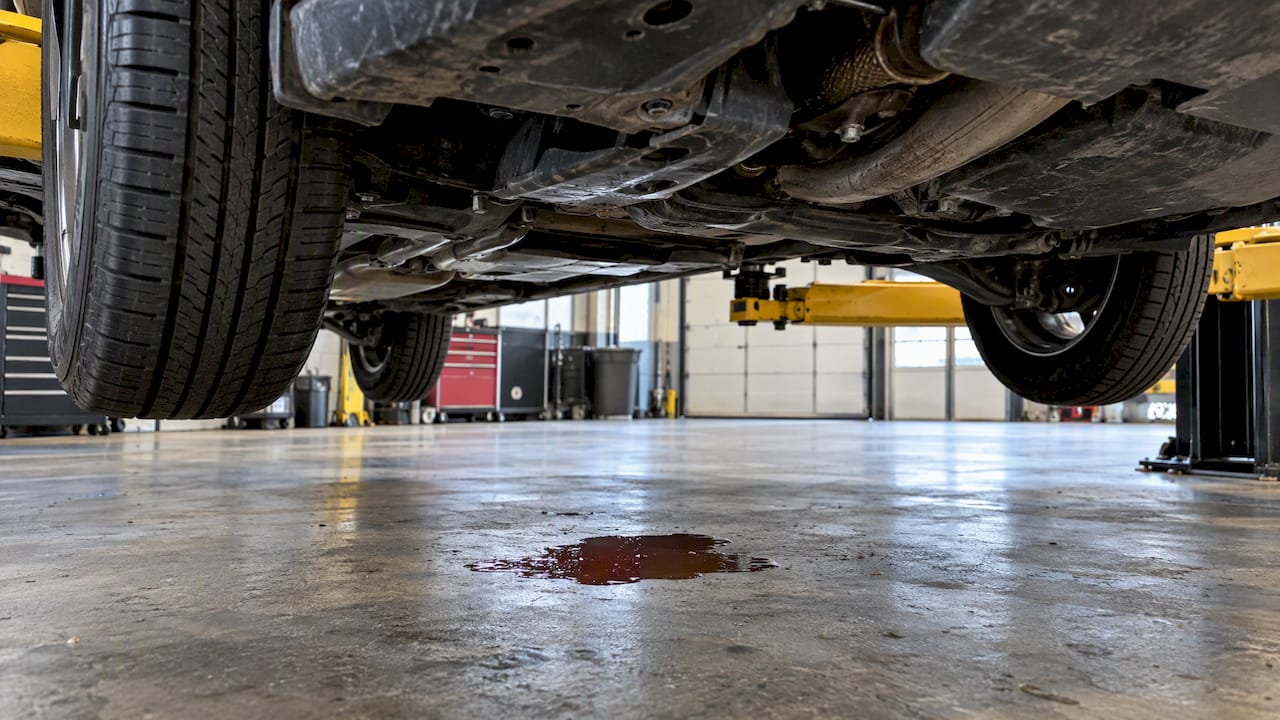
Read our page on transmission fluid leak symptoms to learn the early signs, and have the car looked at rather than topping it off week after week.
It may not be the fluid at all
Many modern cars are, in the words of Consumer Reports, rolling computers. Poor shifting can sometimes come from software or a module rather than worn fluid. That needs a proper scan with the right equipment, which is why we begin with diagnostics instead of guessing. See also why early diagnostics save money and keep you safe.
When to change transmission fluid
Many manufacturers suggest an interval around every 30,000 miles or two years, according to AAA’s maintenance checklist, but this varies a lot by make and model. Some vehicles call for much longer intervals, and some severe-duty schedules call for shorter ones. Your owner’s manual is the authority, and if you are unsure, an ASE-certified technician can confirm it.
A few situations justify asking sooner:
- Your fluid is dark brown or black
- You tow, haul heavy loads, or drive mostly in heavy stop-and-go traffic
- You’ve noticed shifting changes
- You bought a used car with no service records
We cover the timing in more depth in when to change transmission fluid. If cost is on your mind, see what U.S. drivers pay for a transmission fluid change.
Why you shouldn’t wait for black fluid
It’s tempting to wait until the fluid looks terrible. That can backfire. Consumer Reports warns about the flush trap: if you’ve followed the recommended intervals, a scheduled flush is fine, but don’t start flushing after ignoring them, because the grime in old fluid can end up acting as friction material in a worn transmission.
That’s the reason to judge by the schedule and a proper inspection, not by color alone. If your fluid is already very dark and the car is high-mileage, a technician should look at it before deciding between a simple fluid service and leaving it alone. Learn how the service works in automatic transmission fluid exchange.
Our perspective: color is the start of the conversation
We have served Dallas drivers as a family-owned shop for nearly 30 years, and the pattern is familiar. Someone pulls the dipstick, sees brown, and wonders if they’ve been scammed or neglected. Most of the time brown is just age. The more important questions are how many miles are on the fluid, whether the level is right, whether there is a leak, and how the car shifts.
That is why we don’t sell on color. Our ASE Certified Master technicians use advanced diagnostic tools, and we send a digital vehicle inspection with photo and video so you can see what we see. You get an estimate before work begins, and you decide. Our work carries a 24-month/24,000-mile warranty.
If your fluid is fine, we’ll tell you so. If it isn’t, we’ll show you why.
— Kwik Kar
Have your transmission checked in Dallas
If your fluid looks dark, smells burnt, or you’re seeing drips, bring the car to Kwik Kar on Spring Valley Road. We handle transmission and clutch repair along with the rest of our full auto repair services for domestic and import vehicles, and we also maintain local fleets. Visit our home page to find coupons and book your appointment.
Frequently asked questions
What color is transmission fluid supposed to be?
New automatic transmission fluid is bright red or pink and translucent. Over time it becomes reddish-amber and then medium brown, which AAA considers normal. Dark brown or black fluid points to degradation.
What does it mean if transmission fluid is black or smells burnt?
It usually means the fluid has overheated or worn out, and it can no longer protect internal parts well. Have a qualified technician inspect the transmission soon, before wear turns into a larger repair.
What does milky or pink transmission fluid mean?
Milky fluid can mean coolant is mixing with the fluid, which is a serious internal problem. AAA lists it as a critical warning sign. Avoid driving and have the car inspected right away.
Is it a problem if my transmission fluid is low but looks red?
Yes. Transmission fluid doesn’t burn off like engine oil, so low fluid usually points to a leak even if the color looks good. Check for red or pink puddles and have the source found rather than just topping it off.
Can I check transmission fluid if my car has no dipstick?
Not safely at home. Sealed transmissions are designed for a shop to check, and opening access points yourself risks contamination or a poor seal. Ask us to inspect it with the right tools.
Sources
- Automatic Transmission Fluid Service, AAA Automotive
- Time-Stamped Car Maintenance Checklist, AAA Automotive
- How to Check and Maintain Your Transmission Fluid, AAA
- Checking Engine Oil + Transmission Fluid, AAA Northway
- Maintain Your Car’s Transmission and Avoid Costly Repairs, Consumer Reports
- Consumer Reports’ Guide to Car Maintenance
- 5 Auto Repair Shop Scams Your Mechanic Might Try, Consumer Reports
- How Often Should You Change Your Transmission Fluid?, Toyota