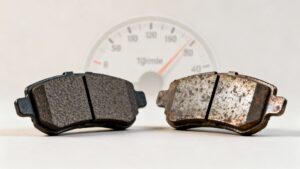



In the U.S., a transmission drain-and-fill typically runs $120 to $260, averaging around $180. A full machine flush costs more, landing between $200 and $450, with most drivers paying near $325. Which one you need depends on your situation:
- Choose a drain-and-fill for routine maintenance on a vehicle with no warning signs and a clean service history.
- Choose a full flush if you’re catching up on overdue service, buying a used vehicle with an unknown maintenance record, or seeing early symptoms like rough shifting.
We’ll break down exactly why those numbers move, what drives the price on your specific vehicle, and how to make sure a quote isn’t padded with extras you don’t need.
Key Takeaways
Matching the right transmission service to your vehicle’s actual condition, rather than defaulting to the most expensive option, is what keeps both your budget and your transmission healthy.
| Point | Details |
|---|---|
| Know your price range | Drain-and-fill runs $120 to $260; a full flush runs $200 to $450 nationally. |
| Match service to vehicle | Routine maintenance calls for a drain-and-fill; overdue or symptomatic vehicles often need a flush. |
| Watch the fluid spec | Using the wrong fluid, especially in CVTs, risks damage that costs far more than the service. |
| Get itemized quotes | Ask for labor, fluid, filter, and disposal listed separately across 2 to 3 shops. |
| Choose certified technicians | Kwik Kar Oil Change & Auto Care uses ASE Certified Master technicians with RepairPal and NAPA AutoCare accreditation. |
Table of Contents
- Transmission Fluid Change Cost vs Flush: What’s the Difference?
- What Should a Transmission Fluid Change Cost You?
- What Actually Moves Your Transmission Service Price?
- Should You Change Your Own Transmission Fluid?
- How Do You Get a Transmission Service Quote You Can Trust?
- Why Kwik Kar for Your Transmission Fluid Service
- What Should You Actually Do About Your Transmission Fluid?
- Book a Transmission Fluid Service That Fits Your Budget
- Sources
- FAQ
Transmission Fluid Change Cost vs Flush: What’s the Difference?
A drain-and-fill only reaches what gravity can get to. A technician removes the pan, drains the fluid pooled there, replaces the filter if your transmission has a serviceable one, and refills with fresh fluid. That process typically replaces about 30 to 40 percent of the total fluid in the system, since the torque converter and cooler lines still hold old fluid that never drains out.
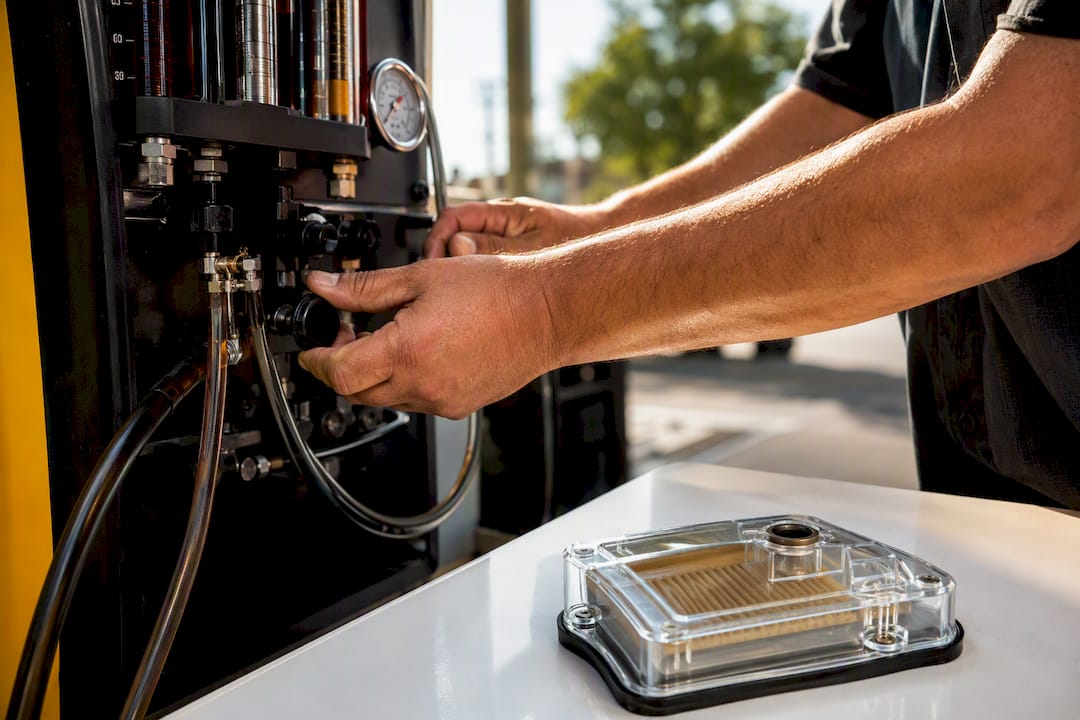
A full flush uses a machine that connects to the cooling lines and pushes new fluid through the entire system under pressure, forcing out nearly all the old fluid, including what’s trapped in the torque converter. That’s a meaningfully different job, and it shows up in both the time and the equipment involved.
- Drain-and-fill: 30 to 45 minutes of labor, basic tools, filter and pan gasket often included.
- Full flush: 45 to 90 minutes, specialized flush machine, no filter access unless combined with a service.
- Combo service: some shops offer a drain-and-fill plus a partial flush to get closer to full fluid replacement without the added machine time.
Most manufacturers specify drain-and-fill intervals in the owner’s manual, while flushes tend to get recommended by technicians when a vehicle has skipped scheduled service or shows symptoms.
Pro Tip: Ask your shop whether their flush machine also cleans or replaces the filter. Some flush-only services skip filter service entirely, which means debris trapped in an old filter stays in the system.
What Should a Transmission Fluid Change Cost You?
Here’s what real budgeting looks like once you break the job into its parts instead of treating “transmission service” as one flat number.
These ranges track closely with what independent research shows nationally: professional fluid services commonly run $200 to $450, while shop drain-and-fills cluster around $120 to $250.
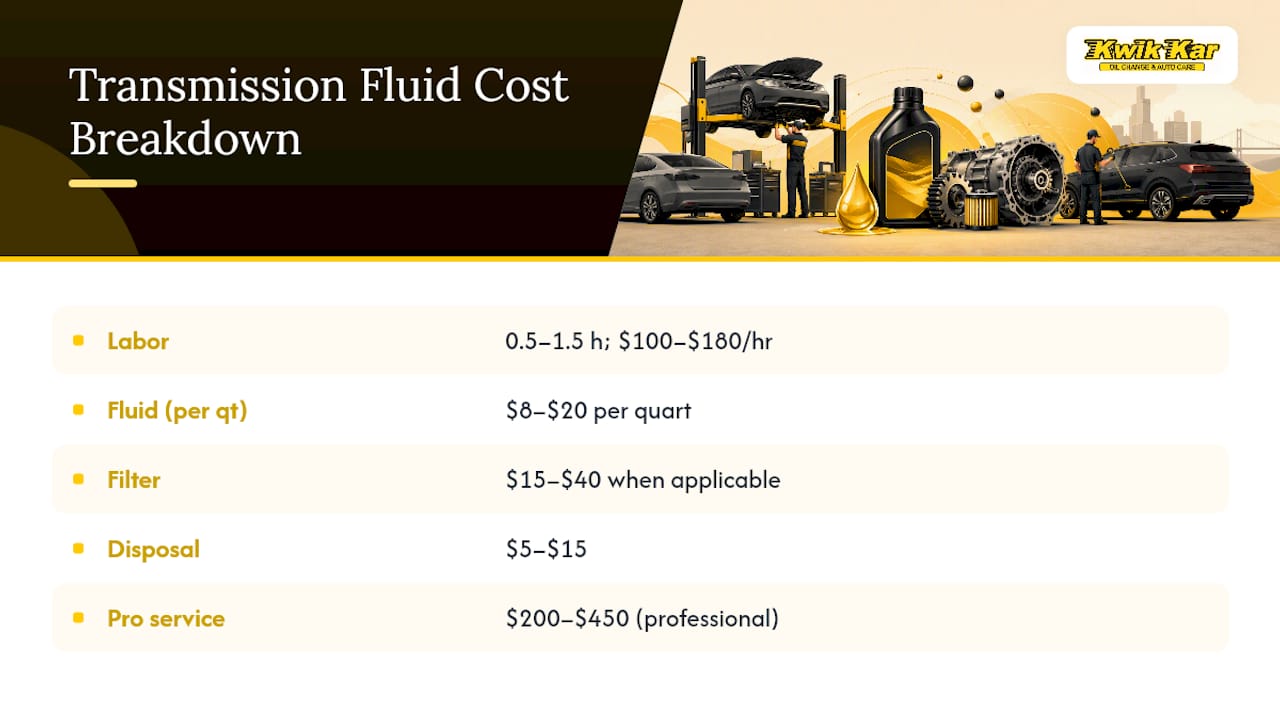
The line items behind those totals usually break down like this: labor runs 0.5 to 1.5 hours at shop rates between $100 and $180 per hour, fluid costs $8 to $20 per quart depending on whether it’s conventional ATF, full synthetic, or a CVT-specific formula, filters run $15 to $40 when applicable, and disposal fees add $5 to $15.
Dealership pricing tends to sit at the higher end of these bands, and independent shops with ASE-certified technicians often price 20 to 40 percent lower while still using OEM-spec fluid.
A quick way to sanity-check any quote: a deferred transmission repair typically runs $2,000 to $5,000 or more, so even a $450 flush is a fraction of what a rebuild costs down the road.
What Actually Moves Your Transmission Service Price?
Four variables explain almost every dollar of variation you’ll see between shops.
- Fluid type: standard Dexron VI or Mercon ULV runs $8 to $12 per quart, while CVT-specific or full synthetic OEM fluid can run $15 to $25 per quart.
- Fluid capacity: most automatics hold 9 to 13 quarts, but some larger trucks and SUVs need more, which raises the fluid line item directly.
- Labor rate and time: shop rates vary by region and range from $100 to $180 per hour, and flushes take longer than a basic drain-and-fill.
- Sealed or “lifetime” transmissions: some designs require scan-tool procedures to verify fluid level and temperature, which adds diagnostic time and cost.
Sealed transmissions deserve a second look, since some manufacturers label these units “filled for life.” In practice, many transmission specialists still recommend service at extended intervals, and skipping it entirely can shorten the unit’s life on a high-mileage vehicle. If your car falls into this category, it’s worth asking an ASE-certified technician rather than assuming no service is ever needed.
Should You Change Your Own Transmission Fluid?
DIY parts alone cost about $30 to $80 for fluid and a filter kit, which looks like real savings against a $180 shop average. That math only works out if your vehicle has an accessible drain plug and a straightforward pan design.
- Check for a drain plug first. Many older automatics have one; a growing number of newer transmissions and most CVTs don’t, which makes DIY draining impractical or impossible.
- Verify your fluid spec before buying anything. Using the wrong fluid, like generic ATF in a CVT, can cause severe transmission damage that costs far more than any labor you saved.
- Skip DIY entirely on a vehicle still under warranty. Improper fill levels or the wrong fluid can void coverage, and dealerships can usually tell.
Pro Tip: If you notice slipping, delayed engagement, or a burnt smell from your transmission, don’t attempt a DIY fix. Those are symptoms worth a professional inspection before any fluid service, since fluid alone may not solve the underlying issue.
How Do You Get a Transmission Service Quote You Can Trust?
A vague quote is how upsells happen. Bring this list with you or read it over the phone before you approve any work.
- Ask for the exact service name (drain-and-fill vs full flush) and the exact fluid spec required for your make and model.
- Request the estimated quart count and whether the price includes filter or pan gasket replacement.
- Get line-item pricing: labor hours, fluid cost per quart, filter cost, and disposal fee, not just one lump number.
- Ask whether the shop will use customer-supplied fluid if you’ve already bought OEM-spec fluid.
- Confirm what warranty covers the work, and get 2 to 3 quotes in writing before deciding.
| What to Ask | Why It Matters |
|---|---|
| Exact fluid spec | Wrong fluid can damage CVTs and some sealed transmissions |
| Line-item breakdown | Lets you compare labor, fluid, and disposal separately across shops |
| Warranty on the work | Protects you if a leak or issue appears after service |
Why Kwik Kar for Your Transmission Fluid Service
Every Kwik Kar Oil Change & Auto Care technician working on your transmission is ASE Certified Master, backed by accreditation from RepairPal and NAPA AutoCare. That matters most on jobs where the wrong fluid or a skipped filter check can cause real damage.
Here’s what a visit typically includes:
- A full inspection of your transmission fluid condition and level
- A recommendation based on your mileage, driving conditions, and manufacturer guidance
- Filter replacement when your transmission design allows it
- A test drive and an itemized invoice before you pay
Transparent, upfront estimates aren’t a courtesy add-on at Kwik Kar Oil Change & Auto Care. They’re the standard for every transmission service we perform, so you know the exact fluid spec, labor, and cost before a technician starts.
Ask about current coupons or bundled transmission and clutch service discounts when you book.
What Should You Actually Do About Your Transmission Fluid?
The industry has spent years pushing flushes as a default upsell, and that’s backward for most drivers. A drain-and-fill on schedule does more for your transmission’s long-term health than an occasional flush after years of neglect, because consistent partial changes keep contamination levels lower over time rather than trying to reverse damage all at once.
Where conventional advice falls short is treating “flush vs. change” as a universal choice instead of a vehicle-specific one. A CVT with 80,000 miles and no service history needs a different answer than a well-maintained sedan on a 30,000-mile schedule. The fluid spec matters more than the service name; getting Dexron VI into a transmission that needs Mercon ULV causes real problems no matter how thorough the flush was.
If you take one thing from this guide, prioritize checking your owner’s manual for the recommended interval before you compare prices. Cost matters, but matching the right service to your actual transmission matters more, and it’s what keeps a $180 fluid change from turning into a $3,000 repair.
— Kwik Kar
Book a Transmission Fluid Service That Fits Your Budget
Quick-lube chains often push a flush regardless of what your vehicle actually needs, and dealership service departments routinely charge 20 to 40 percent more for the identical fluid spec. Kwik Kar Oil Change & Auto Care gives you the middle ground: ASE Certified Master technicians who diagnose what your transmission actually needs, then quote it line by line before any work starts.

That means you’re not paying dealer labor rates for a drain-and-fill, and you’re not getting talked into a flush your vehicle doesn’t need yet. Every visit includes a fluid inspection, a written estimate, and the option to ask about current coupons on full auto repair services. If your transmission is due, schedule a visit and get an itemized quote before any work begins.
Sources
- Transmission Fluid Change Prices — KBB
- Transmission flushes: When they help and when they hurt — HowToGeek
- Transmission fluid change — GetGarageHub
- Transmission fluid change versus flush cost — CostInsider
FAQ
Is a transmission fluid flush worth it?
A flush is worth it when your vehicle is overdue for service, has an unknown maintenance history, or shows early shifting symptoms, since it removes far more contaminated fluid than a drain-and-fill.
Will Jiffy Lube do a transmission fluid change?
Many quick-lube chains, including Jiffy Lube locations, offer transmission fluid exchange services, though pricing and the specific fluid used can vary by location, so confirm the exact fluid spec before booking.
How much does a transmission filter change cost at a quick-lube shop?
Filter replacement typically adds $15 to $40 on top of a drain-and-fill, bringing a combined service closer to $150 to $300 depending on the shop and vehicle.
Is a drain-and-fill cheaper than a flush?
Yes, a drain-and-fill is almost always cheaper, typically $120 to $250 versus $200 to $450 for a full flush, since it replaces less fluid and takes less labor time.