



An illuminated ABS light means your vehicle’s anti-lock braking system has detected a fault and anti-lock assistance may be disabled. Your primary brakes usually still work, but the extra skid-prevention and stability aids may be reduced. Avoid hard braking, wet or icy roads, and high speeds, and get the car checked promptly.
TL;DR:
- Faulty wheel speed sensors, wiring issues, or low brake fluid are the most common reasons for an ABS warning light to stay on or appear during driving.
- A persistent ABS light generally disables anti-lock assistance, which increases skidding risk especially on wet, icy, or uneven surfaces.
- Basic checks like topping off brake fluid, inspecting fuses, and visually examining sensors can confirm simple causes before professional diagnosis.
- Short trips to a shop are safe if no additional warning lights or braking problems are present; avoid driving in bad weather or at high speeds.
- Proper diagnosis involves scanning the module for codes, checking sensor voltages, and inspecting wiring, with repairs usually limited to sensor or wiring replacement.
Table of Contents
- How ABS works and what the warning light is telling you
- Common causes behind an ABS light
- Is it safe to drive with the ABS light on?
- Quick checks you can safely try at home
- What to expect when you bring it to a shop
- Preventing future ABS faults
- Our take on ABS diagnostics
- Get your ABS light checked at Kwik Kar Spring Valley
- FAQ
- Sources
- Official tools and authoritative guidance
How ABS works and what the warning light is telling you
Your anti-lock braking system helps keep your wheels from locking up during hard stops, which helps you maintain steering control instead of skidding straight ahead. Every time you start your car, the ABS light typically flashes briefly, then turns off. That is a normal self-check, not a problem.
A light that stays on after startup, or one that comes on while you are driving, means the ABS module found a fault and shut off anti-lock assistance. According to AAA’s guide to dashboard warning lights, this is a confirmed sign the system is no longer functioning as designed.
ABS often shares wheel-speed sensor data with traction control and electronic stability control. AAA notes that a single sensor fault can knock out all three systems at once, so an ABS light is really a signal that several safety features may be compromised.
Common causes behind an ABS light
Most ABS faults trace back to a handful of usual suspects. A shop visit narrows it down quickly, but it helps to know what you’re likely dealing with before you go in.
- A dirty, damaged, or disconnected wheel speed sensor at one of the hubs.
- A damaged tone ring or worn wheel bearing that disrupts the sensor’s reading.
- Low brake fluid or another hydraulic issue in the brake lines.
- A blown fuse, corroded connector, or damaged wiring harness.
- A failing ABS control module or hydraulic unit, which is less common but more involved to repair.
Cars and other repair guides consistently point to sensor faults, low fluid, and wiring issues as the most frequent culprits, with module or hydraulic unit failures showing up far less often.
Is it safe to drive with the ABS light on?
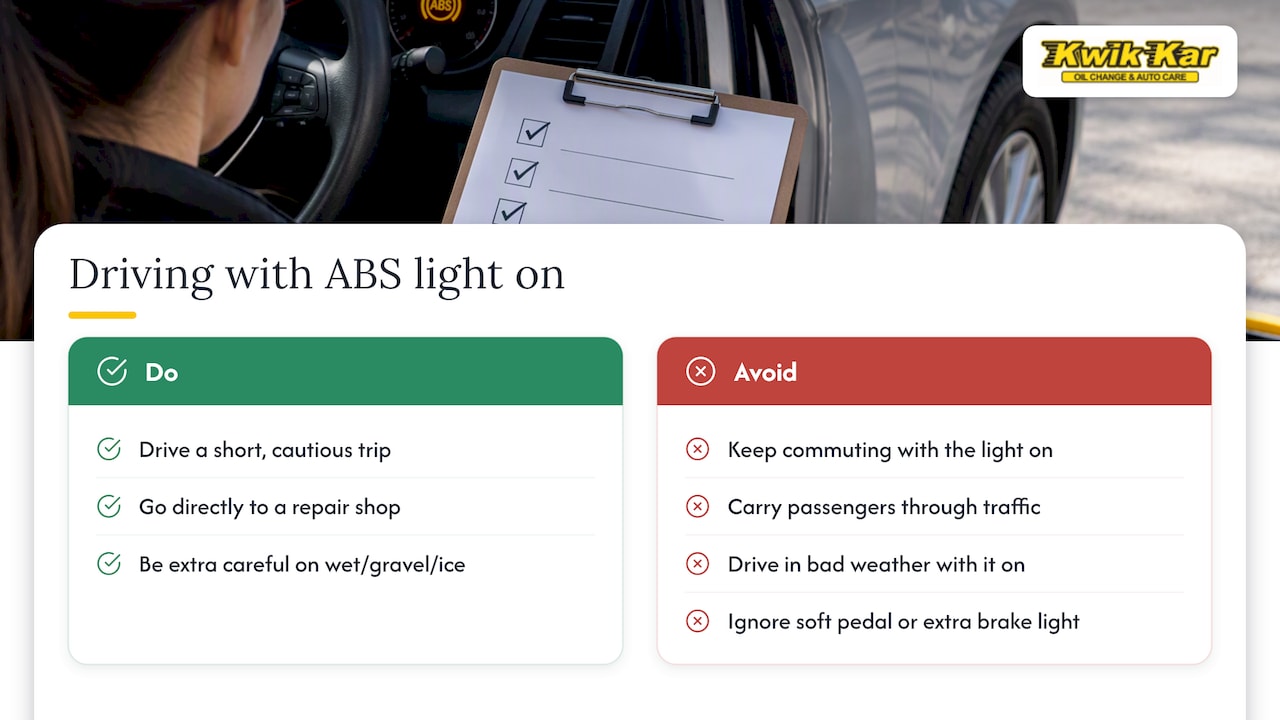
In most cases, yes, for a short, cautious trip. Your conventional brakes typically still stop the car, but you lose the extra help ABS and related stability systems provide. That matters most on wet pavement, gravel, ice, or during sudden stops at higher speeds, where skidding becomes more likely.
A short drive directly to a shop is generally recommended. What is not reasonable is continuing to commute, carrying passengers through traffic, or driving in bad weather while the light stays on.
Stop driving immediately and call for help if you notice anything beyond the ABS light alone: a soft or sinking brake pedal, the separate brake warning light coming on at the same time, grinding, or any change in how the car actually stops. Those signs point to a braking problem, not just an assist system, and that is a different level of risk entirely.
Quick checks you can safely try at home
Before heading to a shop, a few low-risk checks can save time and help the technician narrow things down faster.
- Check your brake fluid reservoir and top it off with the fluid type listed in your owner’s manual if it’s low, since a low level alone can trigger the light.
- Locate your fuse box using the owner’s manual and look for ABS-related fuses or relays that may be blown or loose.
- Visually inspect the wiring and sensor area at each wheel for mud, corrosion, or obvious damage, since a heavily contaminated sensor is a common and fixable cause.
- Write down exactly when the light came on, whether after hitting a pothole, changing a tire, or driving through deep water, since that detail speeds up diagnosis.
Skip anything involving the hydraulic unit or ABS module. As the AAA Club Alliance guide on when to pull over points out, basic fluid and fuse checks are reasonable for most owners, but hydraulic work belongs with a professional.
Pro Tip: If the light appeared right after a tire rotation or brake job, mention that detail first. A sensor wire pinched during routine service is one of the easiest ABS faults to find and fix.
What to expect when you bring it to a shop
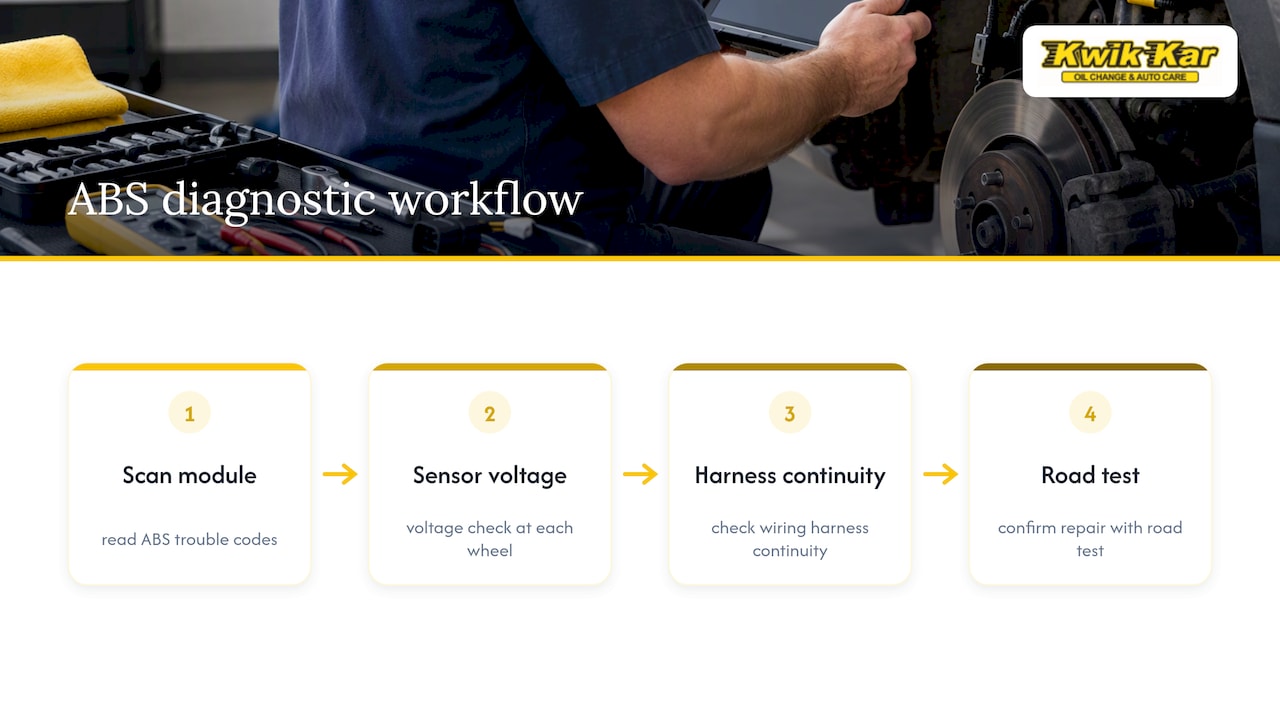
A proper diagnosis starts with an ABS-capable scan tool pulling the specific trouble codes stored in the module, followed by voltage checks at each wheel speed sensor and a continuity check on the wiring harness. From there, a targeted road test confirms whether the fix resolved the fault. This sequence matches the typical shop diagnostic workflow AAA describes, moving from the easiest, most common causes to the more involved ones.
Typical repairs include replacing a sensor, repairing a damaged wiring section, servicing a worn wheel bearing, or addressing a damaged tone ring. Module or hydraulic unit repairs happen, but far less often than the simpler fixes.
Before you approve any work, ask for a written estimate, the actual scanned code readout, and photos or video of the failed part. That kind of documentation turns a vague “ABS problem” into something you can actually see and understand, which is worth asking for at any shop you visit, including ours.
Preventing future ABS faults
A little routine maintenance goes a long way toward keeping your ABS system quiet.
- Keep up with regular brake inspections and fluid changes on the schedule your manufacturer recommends.
- Ask your technician to clean sensors and hub areas during tire rotations or brake jobs, since built-up grime is a common trigger.
- Address wheel bearing or suspension noise early, before it damages the tone ring the sensor reads.
- Check your vehicle’s recall status through the NHTSA VIN lookup if an ABS issue shows up, since some faults trace back to a manufacturer recall rather than wear and tear.
Our take on ABS diagnostics
We treat an ABS light as a safety signal, not a nuisance. We run a full scan-tool diagnosis before touching anything, then walk you through a written estimate and a digital inspection with photos and video of the actual part at fault. You get a fast answer and a clear next step, not guesswork.
— Kwik Kar
Get your ABS light checked at Kwik Kar Spring Valley
A fault code on a scan tool only tells half the story. Pairing that reading with a hands-on inspection of the sensor, wiring, and hub is how we turn an ABS light into an actual answer instead of a guess.
When you bring your car to us for an ABS or brake concern, here’s what that looks like in practice:
- A full ABS scan paired with a hands-on check of sensors, wiring, and wheel bearings.
- A written estimate before any repair work begins, so there are no surprises.
- A digital inspection with photos and video showing exactly what’s wrong.
If your ABS light is on, schedule an auto brake repair service with our Spring Valley Road team in Dallas, or call us directly to get on the schedule this week.
FAQ
Is it safe to drive with the ABS light on?
For a short, careful trip to a shop, yes, your regular brakes usually still work. Avoid highway speeds, wet or icy roads, and hard stops until a technician checks it, and treat any added warning light or soft pedal as a reason to stop immediately.
How do I fix my ABS light?
The fix depends on the cause: a low fluid top-off, a blown fuse, or a cleaned and reseated sensor connector resolves many cases. More involved issues, like a damaged tone ring or a faulty module, need a shop diagnosis with an ABS scan tool to pinpoint the fault before any parts are replaced.
What is the most common cause of the ABS light coming on?
Wheel speed sensor problems, whether from dirt, damage, or a loose connection, are among the most frequently cited causes in repair industry guides. Low brake fluid and blown fuses are the other common, easy-to-check causes.
Should I check for a recall if my ABS light comes on?
Yes, it’s worth checking. You can search your vehicle identification number through the NHTSA recall lookup to see if your ABS fault matches an open safety recall that would be repaired by the manufacturer.
Sources
Official tools and authoritative guidance
For anyone who wants to dig deeper or verify a recall before a repair visit, these resources back up the guidance above.
Recommended
- Engine Diagnostics in Spring Valley, TX | Advanced Check Engine Light Service
- Auto Electrical Repair in Spring Valley, TX | Expert Electrical Diagnostics
- Alternators & Starters Repair in Spring Valley, TX | Expert Auto Electrical Service
- Shocks & Struts Repair in Spring Valley, TX | Suspension Service & Replacement