



You turn the key, tap the throttle, and hear a sharp pop from under the hood. That sound gets your attention fast, especially when it’s followed by a stumble, rough idle, or the feeling that the engine doesn’t trust itself.
For Dallas drivers with older carbureted cars, trucks, and weekend classics, backfiring through carb usually means combustion is happening at the wrong moment and in the wrong direction. Instead of burning cleanly inside the cylinder, the fuel-air charge ignites back into the intake side. The result is a pop through the carburetor, sometimes with smoke, sometimes with a visible spit of flame, and always with a reason behind it.
Most owners get pointed in the wrong direction right away. Someone says the carb is dirty. Someone else says it’s running lean. Both can matter. A lasting fix comes from a systematic diagnostic sequence, not guesswork. That matters even more in Dallas, where many drivers need a reliable daily vehicle and can’t afford to swap parts blindly before a state inspection.
That Sudden Pop Why Your Engine Is Backfiring Through the Carb
That carb pop isn’t random. It’s your engine telling you that spark, fuel, air, and valve action aren’t lining up the way they should.
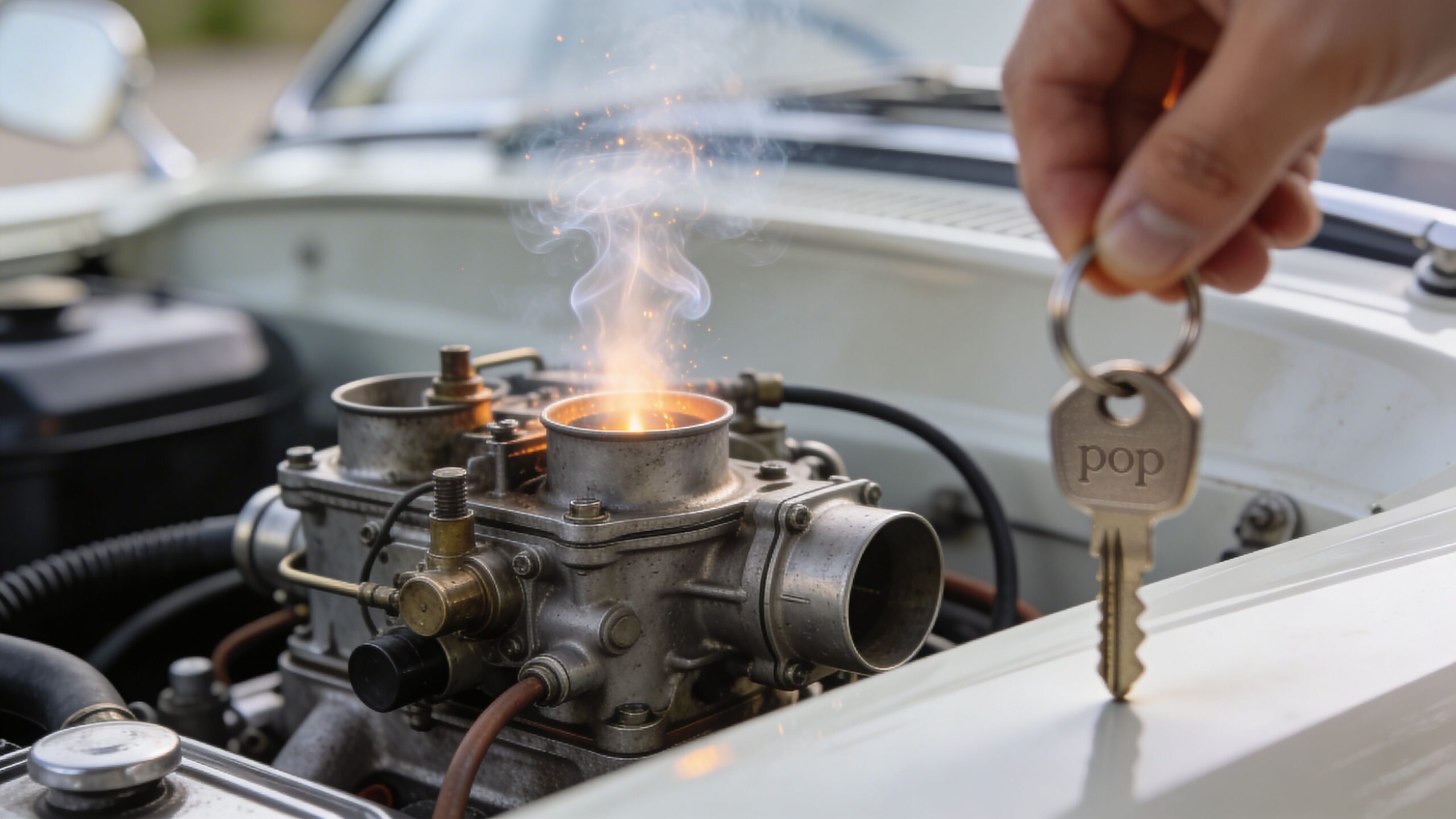
In a healthy carbureted engine, the intake valve opens, the cylinder fills with the fuel-air mixture, the intake valve closes, and then the spark plug fires at the proper moment. When backfiring happens through the carburetor, that sequence gets interrupted. Spark reaches the mixture while the intake side is still exposed, or unburned mixture lights off where it shouldn’t.
What’s happening inside the engine
On classic carbureted engines, the most direct explanation is simple. The spark ignites unburnt fuel-air mixture in the intake manifold because the intake valve remains open during ignition firing. That’s why timing matters so much on older V8s, flatheads, Mini engines, and carbureted light trucks.
A lot of owners describe this as “the carb sneezed.” That’s a fair description. But it’s more than a noise issue.
Practical rule: A carb backfire is a symptom, not a diagnosis.
Why it matters right away
A single pop after a long sit can happen. Repeated backfiring is different. It can point to bad timing, a vacuum leak, a lean transition, cross-fire in the ignition system, or valve-train trouble.
What concerns me most is when the owner keeps revving it to “clear it out.” That usually makes the problem louder, not better. Every extra pop means more stress on gaskets, ignition parts, and intake components.
If your vehicle starts, idles rough, and pops through the carb when you crack the throttle, you’re not looking at a mystery. You’re looking at a sequence problem. The fix comes from checking things in order, starting with ignition timing before chasing carb settings.
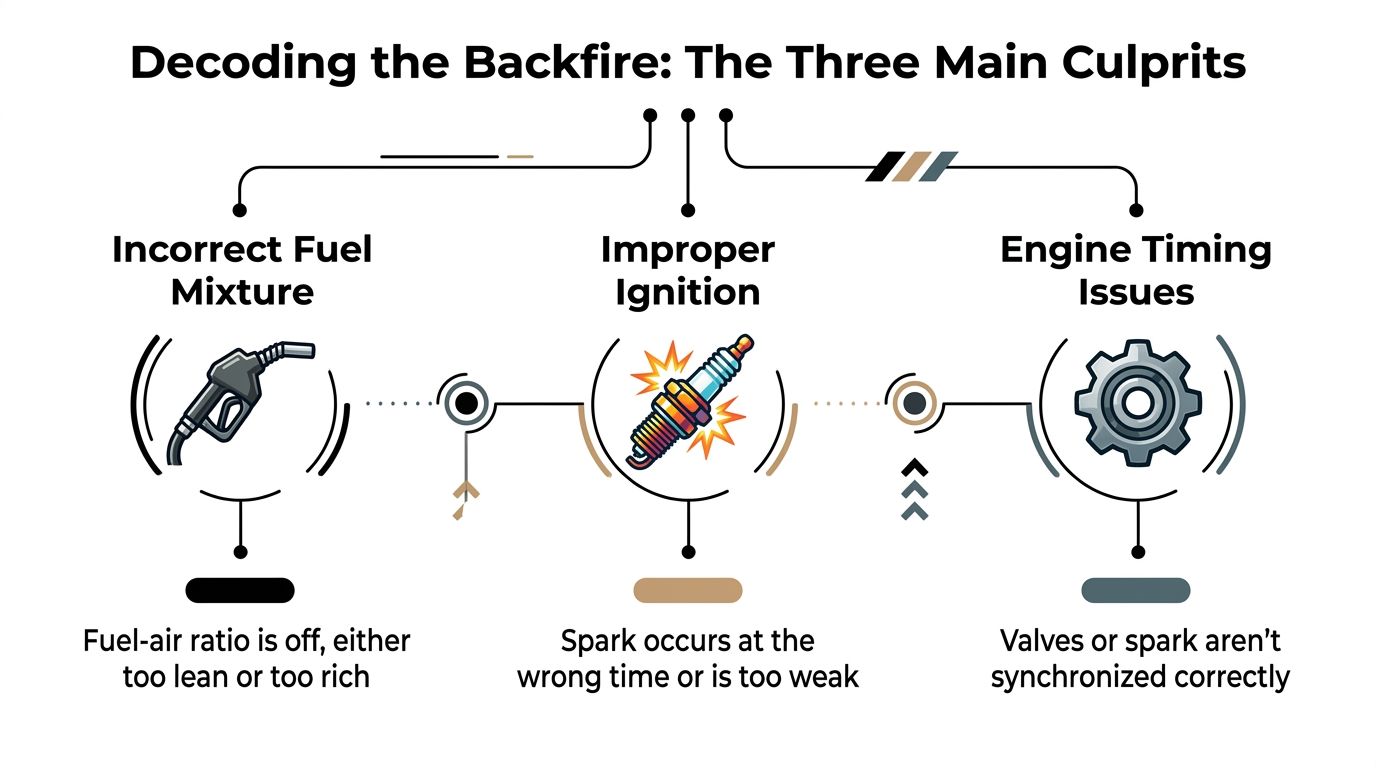
Decoding the Backfire The Three Main Culprits
Three problems cause most backfiring through carb complaints. Improper ignition timing, a lean or unstable fuel mixture, and vacuum leaks. They overlap, which is why owners often fix one symptom while the actual cause stays in place.
Ignition timing that’s too far advanced
This is the one I’d check first on most classic carbureted engines. If spark arrives too early, the mixture starts burning while the intake side hasn’t fully closed off. On many vintage V8 and flathead setups, a proper timing-light check starts with base timing at idle in the 6 to 10° BTDC range with the vacuum advance disconnected, then verifying total timing at 3000 RPM. When total advance climbs past 34 to 38°, it causes 80 to 90% of intake backfires in high-mileage engines, and 70% of these cases are initially misdiagnosed as carburetor problems according to the MTFCA discussion summarized here: https://www.mtfca.com/phpBB3/viewtopic.php?t=21249
That’s why I don’t start by turning mixture screws just because the carb is visible and easy to blame.
A lean mixture that stumbles on transition
Lean engines backfire because the burn is unstable. The engine wants a balanced charge, and when it gets too much air or not enough fuel, combustion can lag or fail in a way that lights off in the intake.
On SU-carbureted engines, there’s a very specific version of this. Lean spots during throttle changes show up in 40% of rebuild cases, and switching from factory SU dashpot oil to generic 10W-30 engine oil with proper idle mixture adjustment eliminates backfiring in 85% of lean-induced cases in the MiniForum thread here: https://www.theminiforum.co.uk/forums/topic/353846-backfiring-through-the-carb/
That doesn’t apply to every carburetor on the road, but the lesson does. A backfire that happens right as you tip into the throttle often points to a transition problem, not just a dirty carb.
Vacuum leaks that fake a carburetor problem
Vacuum leaks make diagnosis messy because they mimic fuel issues. Air slips in around a carb base gasket, intake gasket, hose, or fitting. The carb meters fuel for one amount of air, but the engine gets more than that, so the mixture goes lean.
Forums are full of owners who replace jets, accelerator pumps, and even whole carburetors before finding a cracked hose or leaking base gasket. One practical method that gets overlooked is smoke testing. A smoke machine can identify the source in 80 to 90% of lean misfire cases according to the discussion summarized here: https://www.boatered.com/threads/back-fire-through-carb.48571/
If you want a shop-side breakdown of how technicians solve backfiring through carburetor issues, that guide is useful because it frames the problem as a diagnosis sequence instead of a one-part fix. If the engine also has a weak or inconsistent spark, a bad coil can complicate the picture, and this overview on a bad ignition coil is worth checking before you assume the carb is the whole story.
Your Diagnostic Roadmap Finding the True Cause
Random adjustments waste time. A good diagnosis starts with what you can verify safely, then moves to the tests that separate timing problems from air leaks and fuel issues.
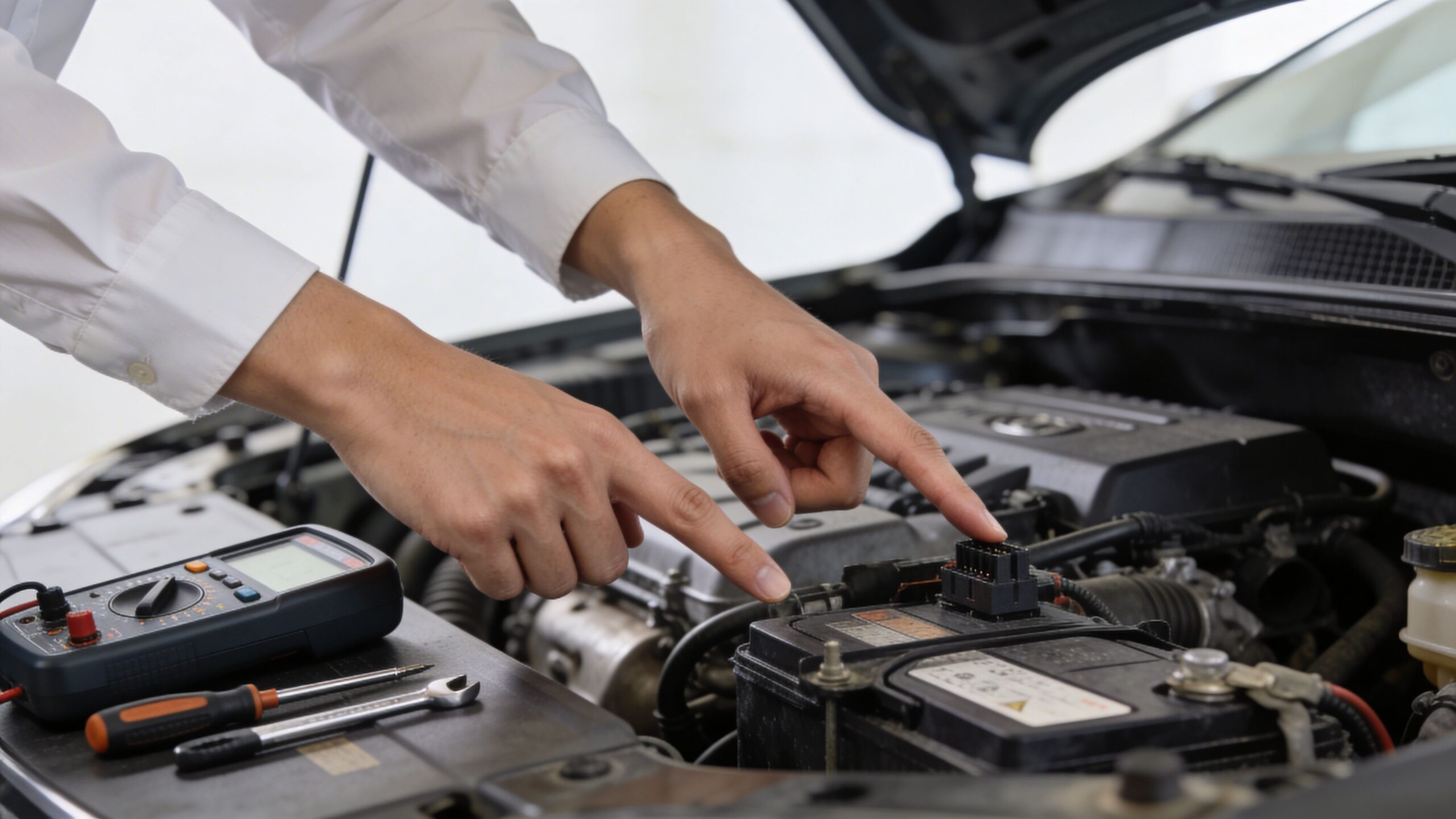
Start with a cold visual inspection
Before the engine runs, open the hood and slow down. Look for the obvious first.
- Check hoses: Brittle vacuum hoses, split ends, and missing caps create lean conditions fast.
- Look at plug wires: Loose boots, rubbed insulation, and wires touching each other can cause cross-fire.
- Inspect the distributor area: A cracked cap, carbon tracking, or a loose hold-down changes timing and spark quality.
- Look for fuel stains: Dampness around the carb base or fittings can signal a sealing problem.
- Watch linkage movement: A sticky throttle or choke can create strange off-idle behavior that feels like a carb fault.
If you find a hose hanging open or a wire half off the plug, you may already have your answer. Don’t skip this part because it seems too simple.
Check for vacuum leaks before changing carb settings
A leak makes every carb adjustment lie to you. If unmetered air is entering the engine, the mixture screws stop telling the truth.
A basic driveway method is to warm the engine, let it idle, and carefully spray carb cleaner around the carb base, intake gasket areas, and suspect hoses. If RPM changes, you’ve likely found where air is entering. If you want a practical overview of leak-check methods, this guide on how to check for vacuum leaks is a helpful starting point.
A smoke machine is cleaner and more precise when one is available. It’s one of the best ways to isolate a leak without guessing.
If the engine only pops after you adjusted the carb, back up and verify there isn’t a vacuum leak first.
Verify base timing the right way
Verifying base timing is often key to resolving backfiring through carb issues. Use a timing light, not your ear.
For classic carbureted engines, the step-by-step method is clear. Verify base timing at idle, often in the 6 to 10° BTDC range for many V8s, with the vacuum advance disconnected and plugged. Then check total timing at 3000 RPM. On most setups, once total advance goes beyond the normal range covered earlier, intake backfire risk rises sharply.
Use this sequence:
- Warm the engine fully: An engine on fast idle or partial choke can fool you.
- Disconnect and plug vacuum advance: This isolates base timing.
- Hook up the timing light: Use the number one wire and confirm timing marks are clean and readable.
- Set initial timing to spec: Don’t guess by “best idle.”
- Raise engine speed to 3000 RPM: Watch where total advance lands.
- Tighten the distributor and recheck: Even a small distributor movement changes the result.
If timing is moving around instead of staying stable, suspect distributor wear, advance mechanism trouble, or related ignition issues.
Check for cross-fire and ignition arcing
Not every intake pop is caused by carburetion. Cross-fire can trigger two cylinders at the wrong time, and that sends combustion back where it shouldn’t go.
One old-school but effective test is to run the engine in total darkness or lightly mist the leads with water and watch for visible arcing. On certain electronic ignition retrofits, that kind of cross-fire shows up often enough to deserve a serious look before tearing into the carb.
Here’s a visual walkthrough that can help you think through the process before you start wrenching:
Don’t ignore valve-train clues
If timing checks out, vacuum leaks are ruled out, and the carb still pops, pay attention to engine behavior that feels mechanical rather than tune-related.
Watch for these clues:
- Intermittent pop at steady idle: Can point to a valve not closing consistently.
- Low power with correct timing: May suggest deeper valve-train or cam timing trouble.
- Sharp pop after adjustment attempts: Sometimes means the tune issue is covering a mechanical one.
At this point, confident DIY work should start giving way to measured caution. A carburetor can only deliver what the engine is able to use.
Safe and Simple DIY Fixes You Can Do Today
Once you’ve pinned down the likely cause, a few fixes are realistic in a home garage. The key is to make one change at a time and test after each one.
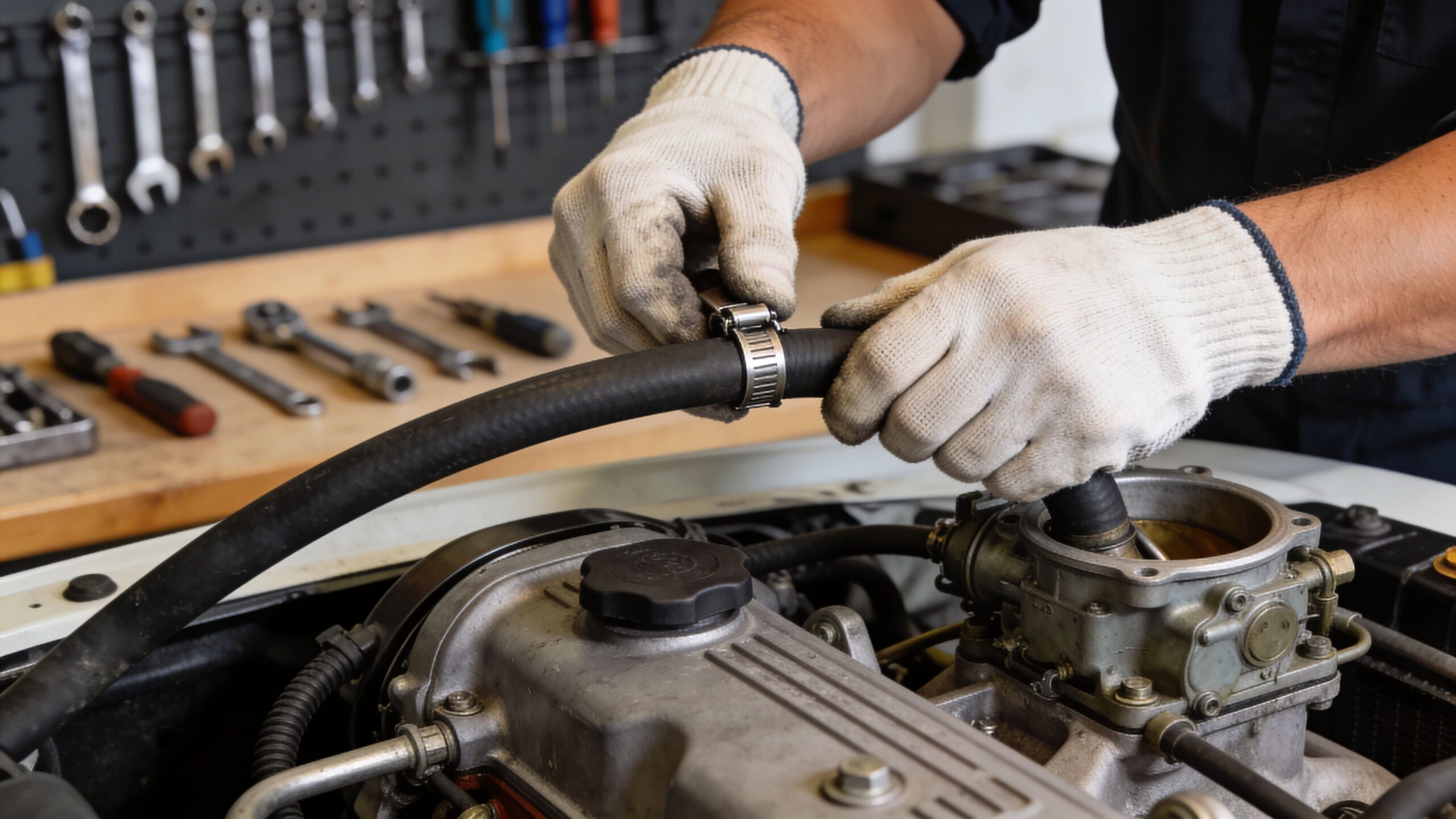
Replace cracked vacuum hoses and simple gaskets
This is usually the cleanest DIY win. If you found split hoses, hardened elbows, or a leaking carb base gasket, replace those first.
Tools are basic:
- Screwdrivers and nut drivers: For clamps and hose connections.
- Scraper or gasket remover: To clean mating surfaces gently.
- Correct replacement hose: Match size and routing.
- New base gasket: Use the right shape and thickness for your carb setup.
Don’t stack old and new gaskets together to “make it seal.” That creates new problems.
Make a small timing correction
If your timing check showed minor over-advance and the distributor is otherwise healthy, you can make a careful adjustment.
Loosen the distributor hold-down just enough that the body can move with light resistance. Make a small correction, tighten it, then recheck with the timing light. Never adjust blindly by revving the engine and listening for what sounds good. That’s how a mild pop becomes a recurring problem.
Shop habit worth copying: Mark the distributor’s starting position before moving it, so you can return to baseline if the engine gets worse.
Adjust idle mixture carefully
This fix helps only after leaks are handled and timing is in range. On a typical carburetor, you’re making small changes and watching for the smoothest idle, strongest response, and clean return to idle.
A few rules matter:
- Work with a fully warmed engine: Choke operation changes the result.
- Use small adjustments: Quarter-turn changes are easier to track.
- Balance response with stability: A setting that revs cleanly but idles rough isn’t finished.
- Test the transition: Crack the throttle from idle and listen for improvement.
If the engine still sneezes through the carb after careful mixture adjustment, stop turning screws. That usually means the carb is being blamed for something upstream.
SU carburetor fix that often works
On SU-carbureted engines, one repair is unusually practical. Backfiring on throttle transition often comes from dashpot damping that lets the piston rise too quickly and create a lean spot. In rebuild discussions, that issue is confirmed in 40% of cases, and replacing the factory SU dashpot oil with generic 10W-30 engine oil, paired with proper idle mixture adjustment, eliminates backfiring in 85% of lean-induced cases in the MiniForum thread: https://www.theminiforum.co.uk/forums/topic/353846-backfiring-through-the-carb/
That’s a good reminder that not every “carb backfire” needs a full carb replacement. Sometimes the fix is specific, cheap, and mechanical.
If the throttle plate and surrounding passages are dirty, cleaning related intake hardware can help restore stable response, and this explainer on what is throttle body cleaning gives useful context even though a throttle body and a carburetor aren’t the same component.
When to See the Pros at Kwik Kar
Some carb backfires are garage-fix problems. Some aren’t. The trick is knowing when you’ve crossed that line.
If the engine still pops after you’ve checked for simple leaks, verified timing correctly, and inspected obvious ignition parts, stop buying random carb pieces. At that point, you’re more likely to spend money twice than solve the problem once.
Red flags that push this beyond DIY
A few symptoms change the job from tune-up work to diagnostic work:
- Backfire plus power loss: That can point to distributor wear, valve-train trouble, or incorrect advance operation.
- Metallic noise or unstable timing marks: That suggests internal wear or distributor problems.
- Repeated popping under load: A road-load issue often needs equipment and experience to isolate.
- No improvement after basic repairs: That’s the classic sign the first diagnosis was incomplete.
One reason to take this seriously is safety. Backfiring through the carb can ignite fuel in the intake path, and it can also create emissions trouble. The jalopyjournal discussion summarized in the verified data notes that carb backfiring can lead to failing a Texas state inspection due to emissions non-compliance when hydrocarbons exceed 220 ppm HC, and that 40% of backfire repairs in fleet light trucks stemmed from worn distributors, not carburetors: https://www.jalopyjournal.com/forum/threads/carb-backfire.724933/
Why professional diagnosis saves money
Shops with the right tools don’t have to guess. They can verify timing advance behavior, inspect distributor condition, check ignition output, and look for vacuum leaks in a more controlled way than most driveway setups allow.
That matters because a worn distributor can imitate a carb issue almost perfectly. So can a valve that isn’t closing consistently. The owner hears a pop through the carb and replaces carb parts. The engine keeps popping because the carb wasn’t the primary fault.
For a Dallas driver who needs dependable transportation and a clean inspection result, professional help makes sense when:
| Situation | Best move |
|---|---|
| You found a cracked hose or obvious small leak | DIY repair is reasonable |
| Timing is off slightly and stays stable | Careful DIY adjustment may work |
| Timing jumps around or won’t hold | Professional diagnosis |
| Backfire continues after basic fixes | Professional diagnosis |
| Vehicle is due for inspection soon | Professional diagnosis |
If you’re at that point, Kwik Kar Oil Change and Auto Care is one practical option for diagnostic work on sedans, SUVs, and light trucks, especially when the concern includes inspection readiness as well as drivability.
Preventive Maintenance to Avoid Future Backfires
The easiest carb backfire to fix is the one that never starts. Older engines stay happier when small tune issues get handled before they grow into a pop through the intake.
A maintenance routine that helps
Keep the routine simple and repeatable.
- Inspect ignition parts during regular service: Plug wires, cap, rotor, and coil connections deserve a look before they become a misfire.
- Watch vacuum hoses and soft rubber parts: Heat and age harden them long before they completely fail.
- Verify timing during tune-ups: Older distributors drift. What ran fine last season may not be right now.
- Don’t ignore throttle response changes: A slight stumble often shows up before a loud backfire.
- Use the right fluids and parts for your carb setup: SU carbs are a good example. Small specification details matter.
Pay attention to storage and seasonal use
A lot of carbureted vehicles in Dallas aren’t daily drivers. They sit, then get started for a weekend drive or inspection appointment. That pattern is hard on fuel systems, seals, and ignition parts.
If you maintain an RV, classic truck, or another vehicle that spends time parked, broad preventive habits matter just as much as tune specifics. This list of essential motorhome maintenance tips is useful because it reinforces the same principle technicians see every day. Systems that sit need regular checks before they’re asked to work hard.
Small maintenance items often fail imperceptibly at first. The carb pop comes later.
Frequently Asked Questions About Carb Backfiring
Here are the quick answers owners usually want first.
FAQ on Carb Backfiring
| [object Object] | [object Object] |
|---|---|
| Is it safe to keep driving with backfiring through carb? | If it’s occasional and the vehicle otherwise runs cleanly, you may be able to move it carefully. If the popping is frequent, accompanied by power loss, rough running, or fuel smell, don’t keep driving it until the cause is checked. |
| Does a carb backfire always mean the carburetor is bad? | No. Timing, ignition cross-fire, vacuum leaks, and distributor wear can all create the same symptom. |
| Will adjusting the carburetor fix it? | Only if mixture is the cause. If timing or a vacuum leak is the problem, carb adjustments can make diagnosis harder. |
| Can backfiring make me fail inspection in Texas? | It can if the condition causes emissions non-compliance. That matters most when the engine is running rough and leaving unburned fuel. |
| What if it only backfires when I hit the gas? | That often points to a transition issue such as a lean stumble, vacuum leak, or carb-specific damping problem on SU setups. |
| When should I stop DIY work? | Stop when timing won’t stay steady, simple leak repairs don’t help, or the engine shows signs of deeper mechanical trouble. |
A good rule is this: if the engine gives you one clear symptom and one clear cause, DIY makes sense. If it gives you several overlapping symptoms, diagnosis becomes the repair.
If your vehicle is popping through the carb, struggling to idle, or coming up on a Texas inspection, Kwik Kar Oil Change and Auto Care can help you sort out whether the problem is timing, ignition, a vacuum leak, or a deeper mechanical issue. A proper diagnosis is usually cheaper than replacing parts that were never bad.