


You usually notice brake caliper sticking in a frustrating moment, not on a quiet afternoon with tools laid out and time to spare. You pull into the driveway and catch a hot, sharp smell from one wheel. Or the car starts tugging to one side at a stoplight. Or you go in for brakes and find one pad is nearly gone while the one on the other side still has life left.
That is the right time to slow down and diagnose before replacing parts. A sticking caliper is not one single failure. Sometimes the slide pins are binding and the fix is straightforward. Sometimes the piston has corroded internally and the smart move is replacement, instead of another temporary patch. The difference matters for safety, cost, and whether the repair lasts.
Recognizing the Telltale Signs of a Sticking Caliper
A sticking caliper usually announces itself in ways drivers can feel, smell, or see. The common thread is simple. The brake on one corner of the vehicle isn't releasing the way it should, so the pad keeps dragging on the rotor after you've let off the pedal.
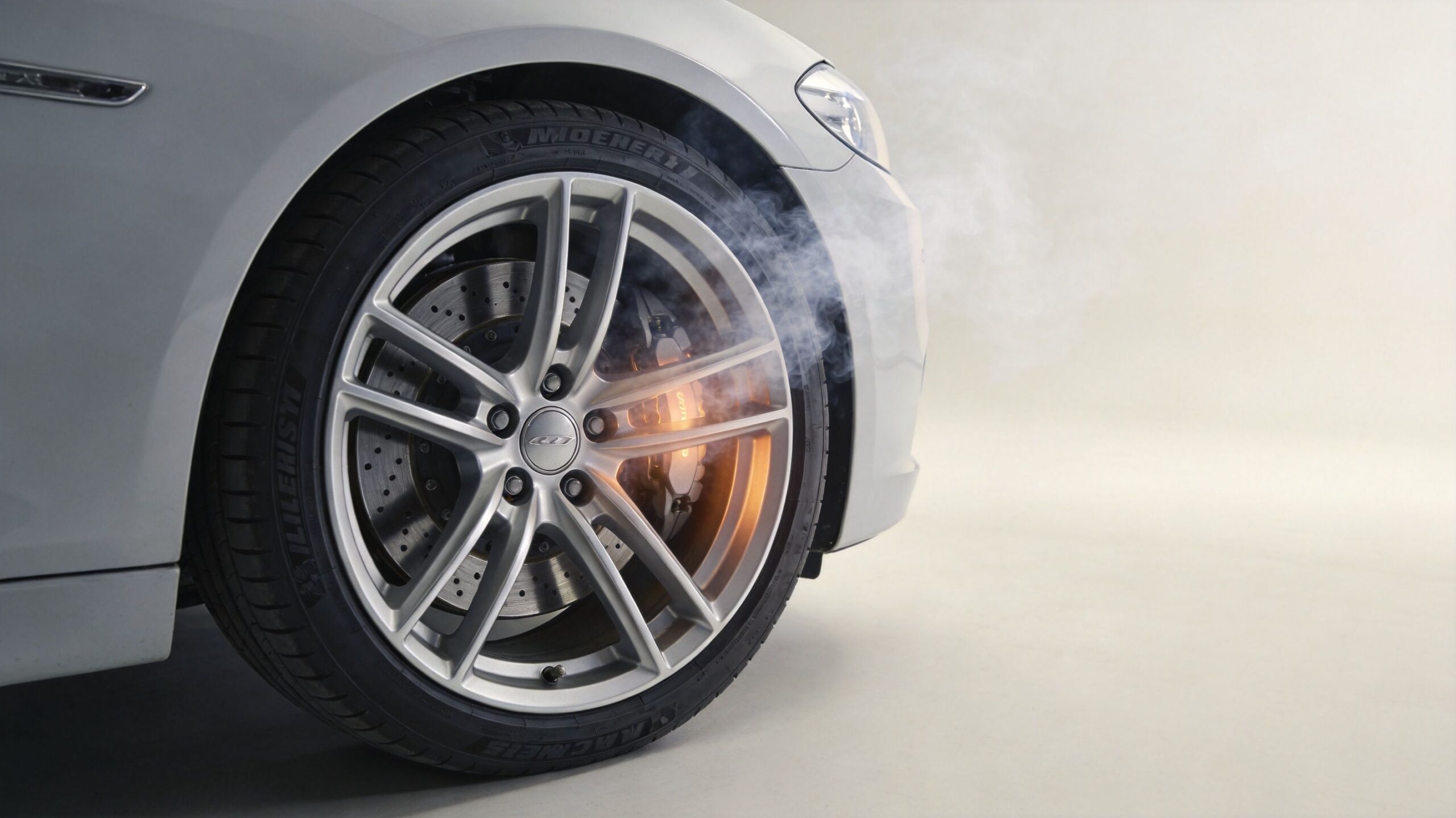
One of the most common stories goes like this. The vehicle seems normal at first, then after a short drive there's a burning smell from one side. The wheel may feel hotter than the others. The car may also feel sluggish, as if it's working harder than usual.
What drivers usually notice first
Some symptoms show up only when braking. Others stay with the car all the time.
- Pulling during braking means one side is applying more force than the other.
- A hot wheel or hot brake smell points to friction that's continuing after the stop.
- Rapid wear on one pad often shows up during a tire rotation or brake inspection.
- A dragging feeling can make the vehicle seem heavy or resistant.
Practical rule: If one corner smells hot and the vehicle pulls, don't assume it's “just brake dust.” Excess heat always deserves a close look.
Uneven pad wear is one of the clearest warning signs. Texas DPS data from 2023 indicates 12% of failed state inspections stem from uneven pad wear linked to calipers, while the 2024 CarMD Vehicle Health Index found caliper faults caused 18% of premature brake pad replacements (Fact 2). That's why a caliper problem often gets discovered during an inspection even when the driver came in for something else.
Why these symptoms matter
A sticking caliper doesn't just wear out a brake pad. It puts heat into the whole corner. That can glaze pads, stress the rotor, and create an inconsistent brake feel that makes the car harder to control in traffic.
If you're trying to sort out whether your symptoms fit a brake issue, this overview of common car brake problems helps connect what you're feeling behind the wheel with what may be happening at the brake assembly.
The key point is this. A smell, a pull, or uneven wear isn't the diagnosis by itself. It's the clue that tells you the caliper may not be releasing, and that you need to find out why before choosing a repair.
Why Brake Calipers Actually Stick in the First Place
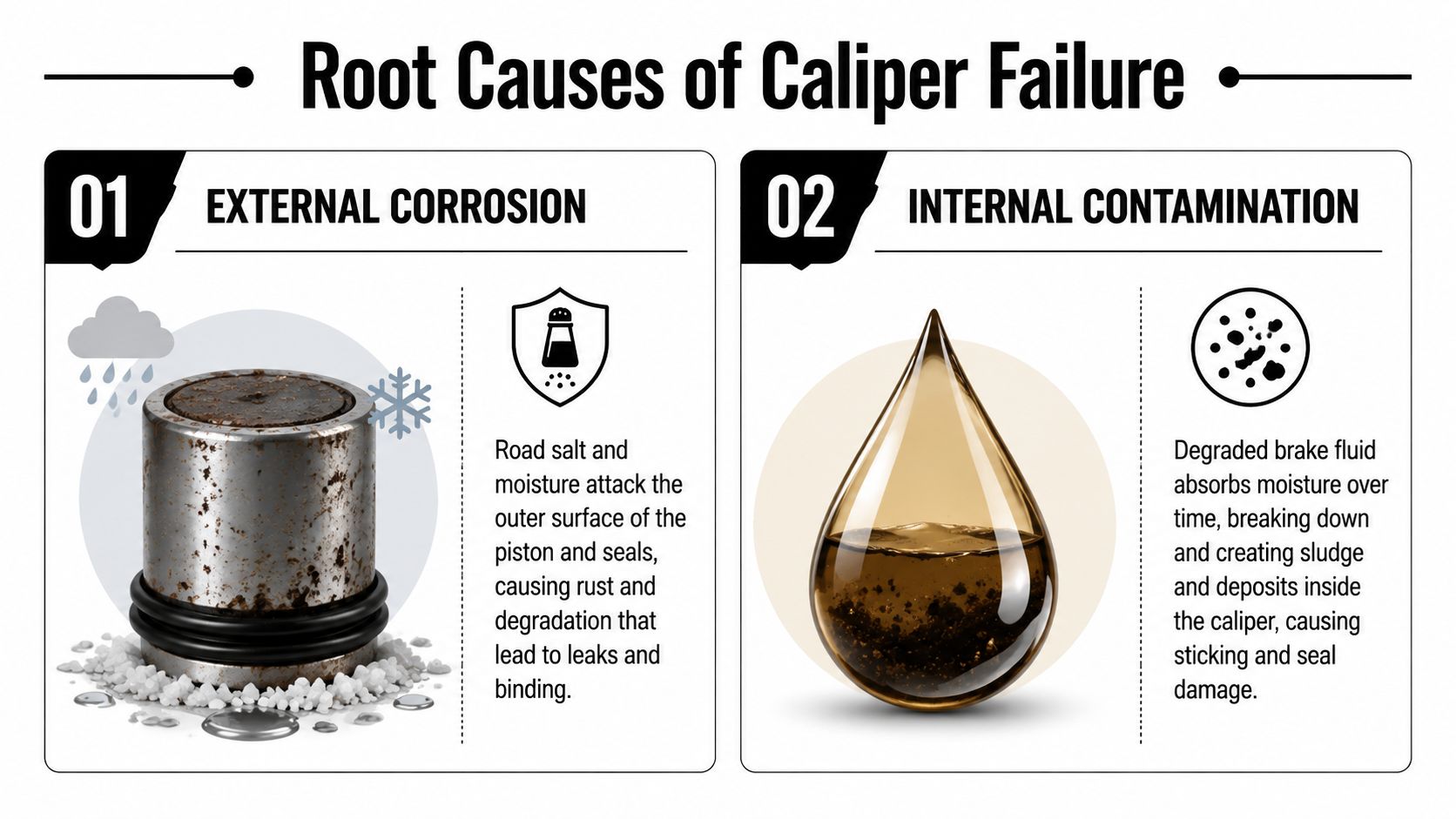
Most brake caliper sticking comes from one of two problems. The caliper can't slide the way it should, or the piston can't retract the way it should. Those sound similar from the driver's seat, but they're different failures with different fixes.
Seized slide pins
On many floating calipers, the body of the caliper has to move smoothly on guide pins. Those pins let the brake apply evenly across both pads. When the grease dries out, moisture gets in, or debris and corrosion build up, the caliper stops centering itself properly.
That leaves one pad doing more work than the other. It's a common reason you'll see one side worn far more than its mate, even though the rest of the brake hardware doesn't look catastrophic.
Corroded piston inside the caliper
The other failure happens inside the hydraulic side of the caliper. Moisture infiltration into brake fluid is the primary cause of piston corrosion, and that corrosion can make the piston seize in its bore instead of retracting normally. Brake caliper sticking is a prevalent brake system failure, with corrosion-induced sticking affecting up to 40% of vehicles over 5 years old (Fact 1).
The outside symptoms may look the same, but a stuck pin and a seized piston are not the same repair.
What makes one vehicle more vulnerable than another
Age matters. So does environment. Vehicles exposed to moisture, road grime, and winter chemicals tend to suffer more hardware corrosion. Even in areas without severe winter conditions, old brake fluid collects moisture over time, and the internal damage starts where you can't see it.
That's why guessing can get expensive. If someone treats every sticking caliper like it just needs grease, they may miss an internally corroded piston. If they replace the whole caliper when the real issue is a dry guide pin, they may spend more than necessary.
A diagnosis-first approach works better because it separates external binding from internal hydraulic corrosion. Once you know which one you're dealing with, the repair path gets much clearer.
Safely Diagnosing a Sticking Caliper at Home
You can do a useful first check at home if you work carefully. The goal isn't to prove every possible brake fault. The goal is to decide whether the wheel is dragging, whether the caliper appears to move correctly, and whether the problem looks more like a slide pin issue or a seized piston.
Start with safety
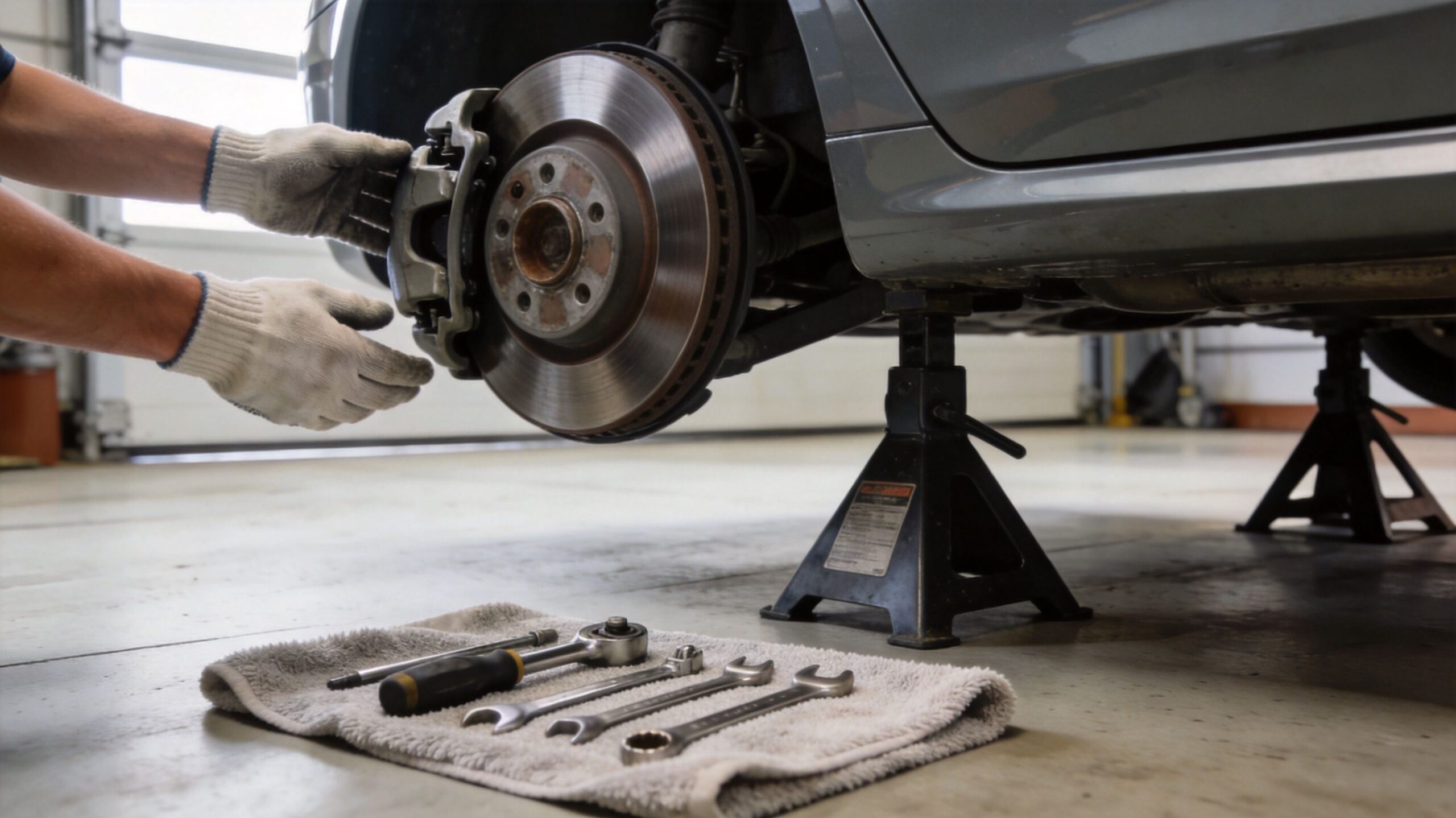
Never trust a jack alone. Use level ground, wheel chocks, and proper jack stands before you put any part of your body near the wheel or brake assembly. If you're not comfortable lifting the vehicle and securing it correctly, stop there and have a shop inspect it.
Before lifting the vehicle, pay attention to what happened on the road:
- Notice the pull and whether it happens every time you brake.
- Check for heat after a normal drive by cautiously comparing one wheel area to the others.
- Listen for drag when rolling slowly in a quiet area.
- Look through the wheel for obvious uneven pad thickness if the design allows it.
Check wheel drag by hand
With the wheel off the ground, rotate it by hand. A brake assembly in good shape may have a light brushing sound, but the wheel should still turn freely. If it feels heavily resisted or nearly locked, you've confirmed there's more than normal brake drag.
Now compare that corner to the matching wheel on the other side of the same axle. Side-to-side comparison helps because “normal” drag can vary slightly by vehicle, but one bad corner usually stands out.
If one front wheel spins freely and the other fights you, that's useful diagnostic information. It means you should stop guessing and inspect the caliper hardware closely.
Watch caliper behavior
If you have a helper, have them apply and release the brake pedal while you observe from a safe position. You're looking for signs that the caliper isn't returning the way it should after pressure is released.
Here's the practical distinction:
- The wheel drags, but the caliper hardware looks serviceable. That often points toward the slide pins.
- The wheel stays badly bound after release. That raises concern about piston seizure.
- The pads show one-sided wear. That supports the slide pin theory on a floating caliper.
Slide pins are the most common failure point in floating calipers. Successful repair involves removing the pins, cleaning them with a wire brush, and applying high-temperature silicone-based brake grease. This pin-focused repair has a 95% success rate if done before piston corrosion develops (Fact 4).
A visual walk-through can help if you want to see the parts before picking up tools:
Know when to stop
Home diagnosis is useful. Home overconfidence is expensive.
Stop and hand it off if any of these apply:
- The wheel is effectively locked and you can't identify a simple hardware bind.
- Brake fluid service is overdue and the piston may be corroded internally.
- You don't have the right grease or brake tools. General-purpose grease is not the right product for caliper pins.
- You're unsure whether the caliper can be safely reused.
Brake work rewards precision. If the problem is only at the pin stage, a careful repair can work well. If corrosion has moved into the piston and seals, cleaning the outside won't solve the actual failure.
Repair or Replace Deciding on the Best Option
Once you know what's sticking, the decision gets simpler. The question isn't whether you can force the caliper to move today. The question is whether the repair you choose will stay reliable after heat, weather, and daily driving.
When cleaning and lubricating makes sense
If the diagnosis points to seized slide pins, cleaning and lubricating them is often the right move. The parts are accessible, the failure is mechanical rather than hydraulic, and the repair directly addresses the cause.
This works best when the pins clean up well, the boots still seal properly, and the pads and rotor haven't already been damaged beyond reuse.
A pin problem is one of the few brake caliper sticking repairs where a modest fix can still be the correct fix.
When rebuilding becomes a judgment call
A seized piston changes the conversation. Rebuilding can be done, but it takes disassembly, careful cleaning, fresh seals, and a realistic assessment of the piston and bore condition. If corrosion is advanced, rebuilding can turn into extra labor followed by a short-lived result.
Rebuild kits are attractive because the parts cost is low. The trade-off is time, cleanliness, and the skill required to judge whether the caliper body is worth saving.
When replacement is the smarter path
Replacement makes more sense when the piston is seized, the dust boot has failed, the bore is corroded, or the vehicle needs to get back on the road without uncertainty. You'll spend more on the front end, but you reduce the odds of repeat labor and uneven braking later.
That decision also ties into pad condition. If one pad has worn much faster than the other, it's worth understanding how brake pads wear before deciding whether only the caliper needs attention or whether the whole corner needs to be refreshed.
Here's the plain-language version:
| Diagnosis | Usually works | Usually doesn't |
|---|---|---|
| Stuck slide pins | Clean, inspect boots, apply proper brake grease | Replacing pads only and ignoring the pins |
| Seized piston | Replace caliper or rebuild only if condition supports it | Forcing piston movement and hoping it frees up long term |
| Unclear cause | Full inspection with brake hardware evaluation | Buying parts first and diagnosing second |
A shop can also be the practical middle ground. One option is Kwik Kar Oil Change and Auto Care, which inspects, repairs, and replaces brake components and can determine whether the issue is in the pins, piston, or related brake hardware.
Estimating Your Brake Caliper Repair Costs
Most drivers ask the same question after the symptoms sink in. Is this a small service, or did it just turn into a major brake job?
The answer depends on when the problem gets caught. A sticky guide pin is much cheaper to deal with than a caliper that's been dragging long enough to damage the rotor and consume a pad early.
The real financial trade-off
There is a significant financial gap between prevention and emergency repair. A simple caliper inspection and lubrication during routine service costs a fraction of an emergency repair, which can run $300 to $600 per wheel and may also require rotor replacement costing $400 to $800 (Fact 5).
That's why diagnosis matters so much. The repair bill is driven less by the word “caliper” and more by how far the heat and wear have spread.
Brake caliper service cost comparison
| Service Option | DIY Parts Cost | Estimated Professional Cost (Parts & Labor) |
|---|---|---|
| Slide pin cleaning and lubrication | Qualitatively low, mostly grease and small hardware if needed | $60 to $120 |
| Brake fluid replacement for prevention | N/A | $100 to $150 |
| Caliper rebuild kit | $10 to $50 per rebuild kit | Qualitatively depends on labor and caliper condition |
| Emergency caliper repair per wheel | N/A | $300 to $600 per wheel |
| Rotor replacement if damaged | N/A | $400 to $800 |
The table shows why temporary fixes can be deceptive. If you free up a sticking assembly without addressing the root cause, you may only postpone the larger bill.
Cheap brake work often becomes expensive brake work when the first repair doesn't solve the failure.
There's also a convenience factor. A professional repair estimate usually includes diagnosis, hardware inspection, and a clear view of whether you're dealing with a serviceable pin problem or a failing caliper assembly. If you're comparing shop pricing, checking current brake service specials and coupons can help narrow the gap between preventive service and delayed repair.
For most drivers, the smartest money move is catching the problem before heat takes out the rotor. Once the rotor surface is affected, the repair usually stops being “just a caliper issue.”
How to Prevent Brake Calipers from Sticking Again
Prevention comes down to two habits. Keep moisture out of the hydraulic side as much as possible, and keep the moving hardware serviced before it binds.
Moisture infiltration into brake fluid is the primary cause of caliper piston corrosion. Industry standards recommend brake fluid replacement every 24 months, and that preventive service costs about $100 to $150 versus $500+ for an emergency caliper replacement (AutoZone brake caliper sticking guidance). That's one of the clearest cost comparisons in brake maintenance.
A practical prevention plan
- Replace brake fluid on schedule. Old fluid absorbs moisture, and that internal contamination is what turns into piston corrosion.
- Service slide pins during brake work. Clean them, inspect the boots, and use the correct high-temperature brake grease.
- Take uneven pad wear seriously. It's often the first visible clue that the caliper isn't moving correctly.
- Watch fleet vehicles closely. For operators responsible for inspections and uptime, understanding the brake side of maintaining fleet safety and compliance helps connect routine maintenance to larger operational risk.
The big takeaway is simple. Brake caliper sticking rarely starts as a dramatic failure. It usually starts as neglected fluid, dry pins, or a small drag that gets ignored. If you diagnose early and maintain the system on schedule, you avoid a lot of heat, downtime, and parts replacement later.
If your car is pulling, overheating a wheel, or wearing one pad faster than the other, Kwik Kar Oil Change and Auto Care can inspect the brake system, identify whether the issue is in the slide pins or caliper piston, and help you choose a repair that fits your budget and safety needs.