
The fastest way to build a relationship with a trusted auto shop comes down to three steps: choose a shop with clear trust signals, start with routine maintenance as a low-risk test, and keep transparent communication with consistent records. On your first visit, the single most important thing to check is whether the shop provides a written estimate before any work begins and whether the staff answers your questions in plain, direct language.
Your pre-visit checklist:
- Confirm the shop offers written, itemized estimates before work starts
- Look for ASE certification or RepairPal/NAPA AutoCare recognition
- Start with a low-stakes job (oil change or inspection) to evaluate the experience firsthand
Table of Contents
- Why having one trusted auto shop pays off
- How do you find a trustworthy auto shop?
- What should you do to build and maintain trust with your mechanic?
- What are the red flags of a bad mechanic?
- What’s a realistic timeline and cost range for building trust?
- What do trust signals like ASE and RepairPal actually mean?
- How does Kwik Kar Oil Change & Auto Care demonstrate these trust-building practices?
- Key Takeaways
- Why trust beats the cheapest price every time
- Kwik Kar Oil Change & Auto Care: a low-risk way to start
- Where to verify certifications and check reviews
- FAQ
Why having one trusted auto shop pays off
Sticking with one shop over time delivers concrete advantages that bargain-hunting across multiple shops simply cannot match.
- Consistent diagnostics: A shop that knows your vehicle’s history spots developing problems faster. When a technician has seen your car three times, a subtle change in brake wear or fluid condition stands out immediately.
- Cost savings over time: Repeat diagnostics cost money. When a shop already has your service records on file, you avoid paying for redundant inspections every time something feels off.
- Warranty continuity: Many shops offer warranties on parts and labor. Returning to the same shop keeps those warranties intact and prevents disputes over who did what.
- Priority scheduling: Regular customers often get faster appointment slots, especially during busy seasons.
- Fewer unknowns: A shop familiar with your car’s quirks gives you more accurate repair timelines and cost estimates.
Local independent shops often deliver more personalized service and transparent communication because their business depends on long-term reputation, while dealerships can offer manufacturer-specific tools and same-day convenience. Both have trade-offs, but the relationship benefit applies to either type once you commit consistently.
How do you find a trustworthy auto shop?
Finding a reliable shop takes a short but deliberate process. Rushing it usually leads to the exact frustrations you’re trying to avoid.
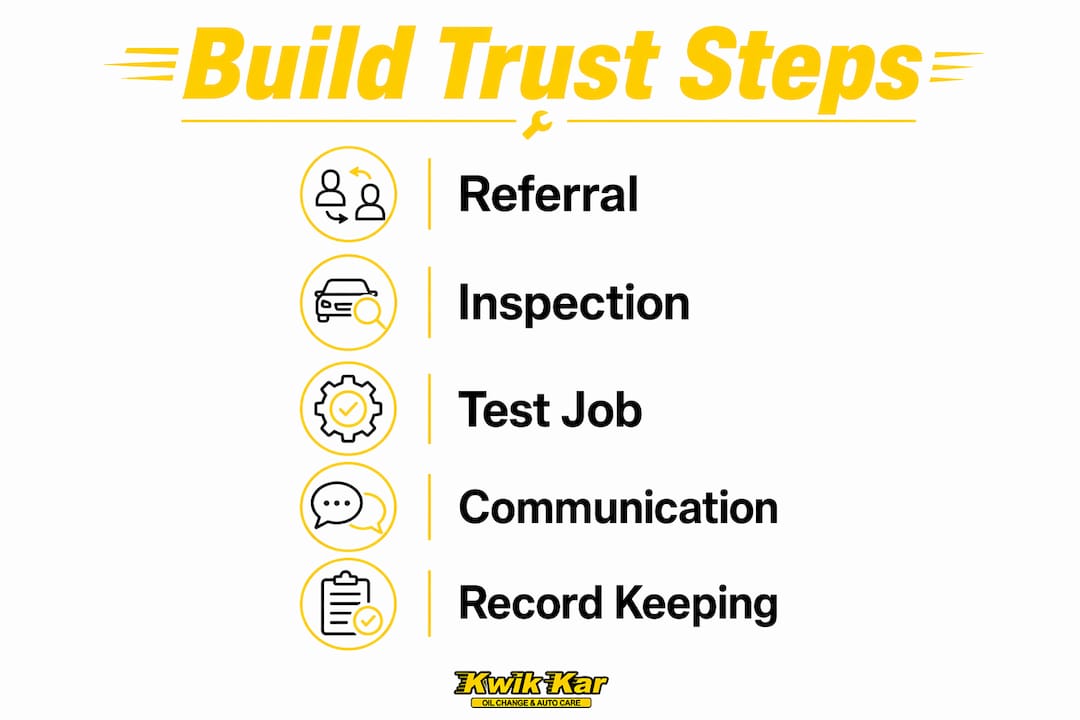
Start with referrals and review patterns
The best starting point is a personal referral from someone with a similar vehicle. Ask friends or family who drive the same make or model; their experience is more relevant than a generic five-star rating. When you turn to online reviews, look for patterns across many entries rather than reacting to a single glowing or angry review. Consistent language around honesty, clear communication, and fair pricing is a stronger signal than a high average score with few reviews.
Also check the shop’s standing with the Better Business Bureau and look for ASE or RepairPal certification, which indicate both technical competence and a commitment to customer-facing standards.
Run in-person checks on the first visit
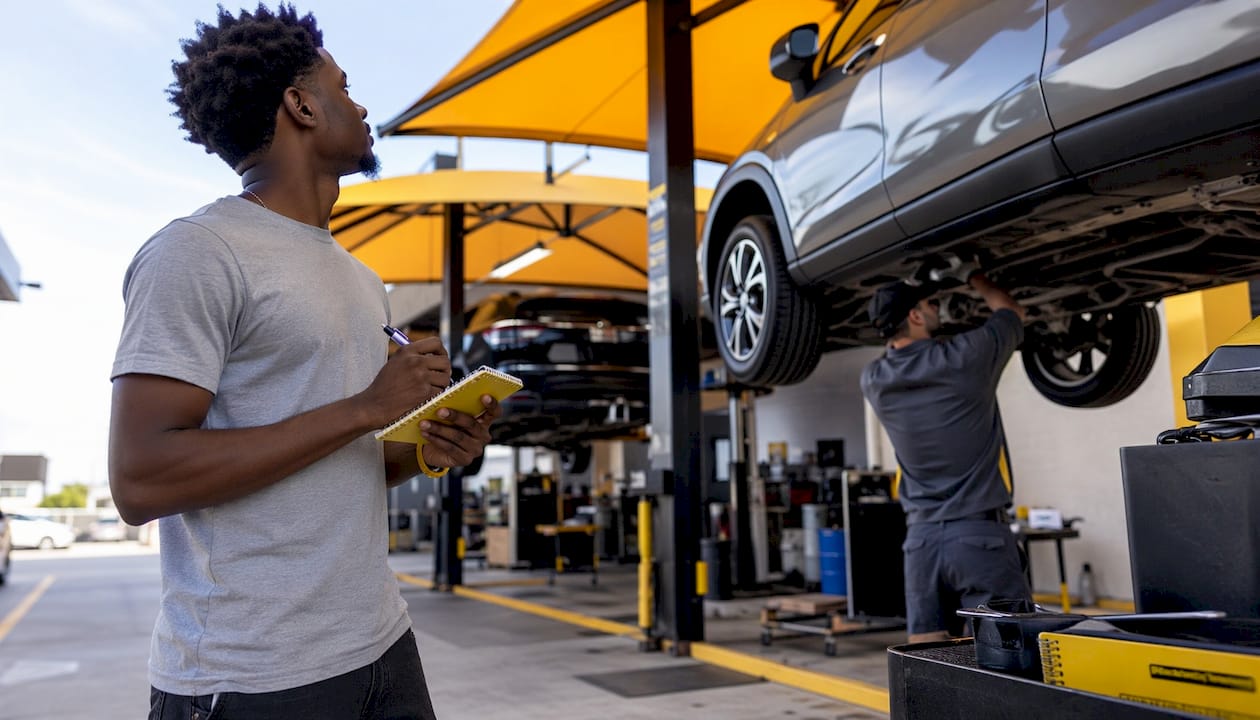
Visit the facility before committing to any work. A clean, organized shop with a calm waiting area signals that the staff takes their work seriously. Watch how the service advisor interacts with other customers. Are they patient? Do they explain things clearly? Ask directly whether the shop provides written estimates and warranties on parts and labor.
Pro Tip: Before you walk in, call ahead with three quick questions: “Do you provide written estimates before starting work?”, “What warranty do you offer on parts and labor?”, and “Do you have ASE-certified technicians on staff?” A shop that answers all three confidently is worth a visit.
Use a low-risk test job first
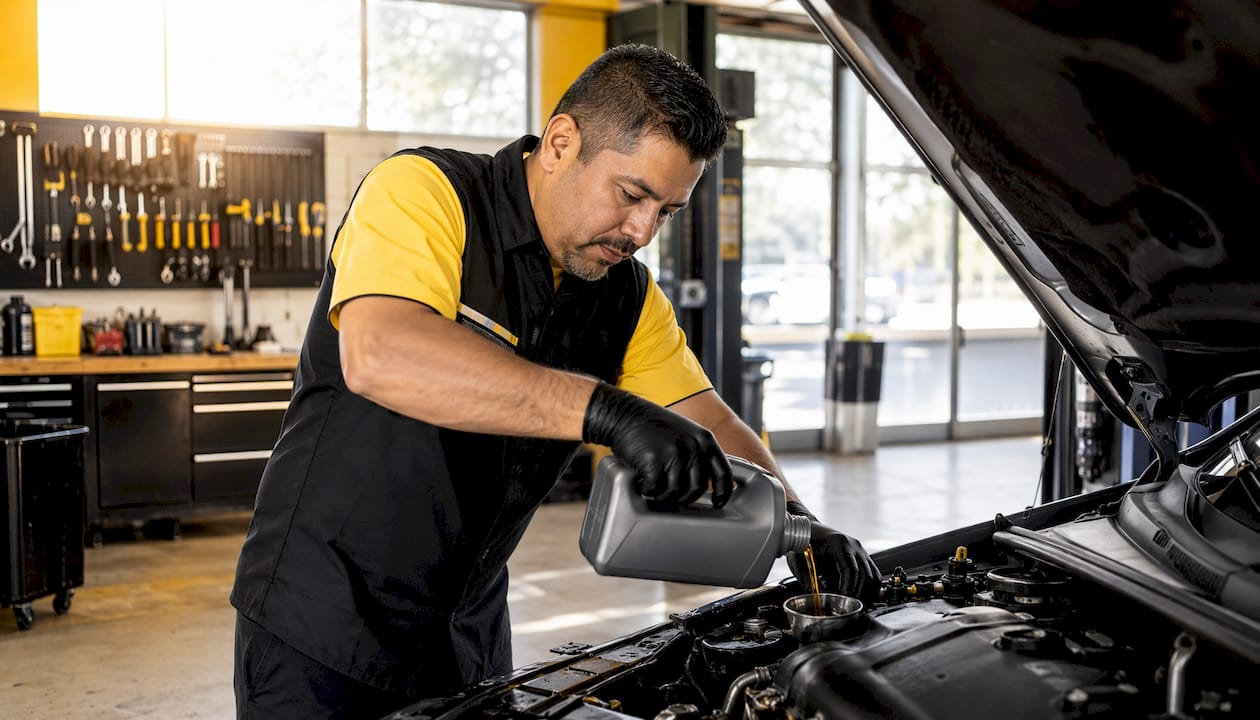
Start the relationship with routine maintenance, such as an oil change or a multi-point inspection, before you need a major repair; this approach is explained in detail in Why Choose Specialized Repair Shops for Your Car. This gives you a low-cost, low-pressure way to evaluate the shop’s communication, turnaround time, and paperwork practices. Watch whether the technician notes anything beyond the immediate service and whether those observations come with a written explanation rather than a verbal upsell.
For a broader checklist of what to look for when vetting a shop, choosing a reliable auto shop involves evaluating both credentials and day-to-day behavior.
What should you do to build and maintain trust with your mechanic?
The owner’s side of the relationship matters just as much as the shop’s. These specific behaviors make a real difference.
Owner actions that build mutual respect
- Describe symptoms in full detail: noises, smells, when they occur, and under what conditions. Honest, detailed symptom reporting leads to more accurate initial diagnostics and reduces repeat visits.
- Share your service records at every visit so the technician has context.
- Follow the manufacturer’s recommended maintenance schedule. It shows you’re a responsible owner and gives the shop a predictable baseline.
- Pay promptly and give honest budget parameters upfront. Mechanics appreciate knowing your limits before they recommend repairs.
Communication practices that protect you
Always request a written estimate before authorizing work, and ask for a written authorization form before the shop proceeds with any additional repairs discovered mid-job. BBB guidance recommends written estimates and guarantees on parts and labor as the clearest way to prevent disputes. Ask to see replaced parts when the job is done; a trustworthy shop will have no hesitation showing them to you.
Transparent pricing, vehicle health checks, and educational communication are among the practices that build customer trust and loyalty over time.
Keep records that actually help
Pro Tip: Photograph your dashboard warning lights before every visit and keep a simple folder, paper or digital, with dated receipts and odometer readings. That file becomes invaluable when a dispute arises or when a new technician needs your car’s history fast.
A realistic first-year timeline
- 0–3 months: Complete one or two routine visits. Evaluate communication, paperwork, and turnaround time. No major commitments yet.
- 3–6 months: The shop now has a service baseline for your vehicle. You should notice faster check-ins and more specific observations from the technician.
- 6–12 months: Trust is forming. The shop recognizes your car, anticipates your schedule, and can flag developing issues before they become emergencies.
What are the red flags of a bad mechanic?
Spotting a problem early saves you money and protects your vehicle. Watch for these warning signs.
Red flags to watch for:
- Vague answers when you ask what specifically is wrong
- Pressure to approve large repairs immediately, before any diagnostic work
- Refusal to provide a written estimate or itemized invoice
- No paper trail: no work order, no receipt, no warranty documentation
- High-pressure upsells on services you didn’t ask about and can’t verify are needed
- The same problem returning after multiple repair attempts with no clear explanation
Escalation checklist if something goes wrong
- Ask the service advisor to explain the issue in writing, including what was found and what was done.
- Request the replaced parts or before/after photos as proof of the repair.
- Get a second opinion on auto repair for any repair estimate over a threshold you’re uncomfortable with.
- Document every interaction: dates, names, what was said, and what was charged.
- If the dispute isn’t resolved at the shop level, file a complaint with the BBB or your state’s consumer protection office.
- When you decide to leave, request a complete copy of your service records. You’re entitled to them, and a new shop will need that history.
What’s a realistic timeline and cost range for building trust?
Trust with a shop typically starts forming after a few routine visits and deepens meaningfully over a full year of consistent service. That timeline assumes you’re visiting for scheduled maintenance rather than waiting for emergencies.
For low-stakes test jobs, broad cost ranges across the U.S. look like this (these are illustrative ranges, not quotes, since prices vary significantly by region, vehicle type, and shop):
- Oil change: roughly $40–$100 depending on oil type and vehicle
- Brake inspection: often complimentary or included in a multi-point check
- Basic diagnostic scan: typically $50–$150 before labor
Regional variation is real. Urban markets and dealerships generally run higher; independent shops in smaller markets often come in lower. For a detailed breakdown of what drives repair costs, common car repair cost factors explains the variables worth understanding before you approve any estimate.
How to interpret and negotiate estimates
Always ask for an itemized invoice that separates parts from labor. Avoid open-ended authorizations (“fix whatever you find”) and ask the shop to list both OEM and aftermarket part options with their respective costs. If a price feels off, ask the service advisor to walk through the line items. A shop confident in its pricing will do this without hesitation.
If a pricing dispute arises after the work is done, document the discrepancy in writing, request a manager review, and ask for the replaced parts or photos as supporting evidence.
What do trust signals like ASE and RepairPal actually mean?
Certifications and ratings are useful, but they’re most valuable when you understand what each one actually covers.
| Trust Signal | What It Typically Indicates | Follow-Up Question to Ask |
|---|---|---|
| ASE Certification | Baseline technical competency for the certified technician; does not guarantee service quality or model-specific experience | “Which ASE certifications do your technicians hold, and do any specialize in my vehicle’s make?” |
| RepairPal Certification | Shop meets RepairPal’s standards for fair pricing, quality work, and customer service; includes a repair guarantee | “Is my repair covered under the RepairPal guarantee, and for how long?” |
| NAPA AutoCare | Participation in NAPA’s network, which requires meeting service standards and offers a nationwide parts/labor warranty | “Does the NAPA warranty transfer if I need warranty work done in another city?” |
| Written Estimate | Protects you legally and makes disputes easier to resolve; required by law in many states | “Will you call me before adding any work not listed on this estimate?” |
| Written Labor/Parts Warranty | Indicates the shop stands behind its work; terms vary widely | “What exactly is covered, and what voids the warranty?” |
Reading reviews well means looking at sample size and language consistency. A shop with 200 reviews that consistently mention honest communication and clear explanations is more reliable than one with 20 perfect scores. Treat outlier reviews, both very positive and very negative, as data points rather than verdicts.
For a deeper look at what certified auto technicians actually bring to a repair, the credentials matter most when paired with model-specific experience.
How does Kwik Kar Oil Change & Auto Care demonstrate these trust-building practices?
Kwik Kar Oil Change & Auto Care maps directly to the trust checklist covered throughout this article. The following points are company-provided and documented on the brand pages linked below. This section references Kwik Kar as a client example.
- ASE Certified Master Technicians on staff: Kwik Kar employs ASE-certified technicians who use current diagnostic tools, meeting the baseline competency standard the FTC and AAA both recommend verifying.
- Written estimates before work begins: Kwik Kar provides estimates prior to starting any repair, the single practice BBB guidance identifies as the clearest protection for vehicle owners.
- RepairPal and NAPA AutoCare recognition: Kwik Kar holds recognition from both organizations, meaning it meets their respective standards for pricing transparency and service quality.
- Transparent communication: The shop explains findings in plain language and supports customers in understanding what work is needed and why, which is the communication behavior that reduces repeat visits.
- Service warranties: Kwik Kar offers warranties on parts and labor, giving customers the continuity protection described in the benefits section above.
- Full-service capabilities: From oil changes to engine diagnostics, Kwik Kar’s full auto repair services cover the range of routine and complex work that lets you build a complete service history in one place.
Key Takeaways
Building a trusted relationship with an auto shop requires choosing a shop with verifiable credentials, starting with routine maintenance, and maintaining clear, documented communication from the first visit forward.
| Point | Details |
|---|---|
| Start with low-stakes work | An oil change or inspection lets you evaluate the shop before committing to major repairs. |
| Verify credentials before you commit | Check for ASE certification, RepairPal or NAPA AutoCare recognition, and written estimate practices. |
| Document everything | Keep dated receipts, odometer readings, and photos of dashboard warnings to support accurate diagnostics. |
| Know the red flags | Vague answers, no written estimate, and repeated fixes for the same problem are clear signals to leave. |
| Kwik Kar Oil Change & Auto Care | Employs ASE Certified Master Technicians, provides written estimates, and holds RepairPal and NAPA AutoCare recognition. |
Why trust beats the cheapest price every time
The cheapest shop in your area is rarely the best value over a full year of ownership. Here’s the honest case for prioritizing reliability over the lowest upfront quote.
Consider a straightforward scenario: you take your car to a shop that skips a written estimate and gives vague answers about what they found. They fix one thing, you pay, and the same symptom returns two weeks later. Now you’re paying for a second diagnostic, possibly at a different shop, and you have no paper trail to support a dispute. That second round of diagnostics alone can cost more than the premium you would have paid at a shop with a clear process from the start.
Trust-building is an investment with a measurable return. A shop that knows your vehicle’s history catches developing problems earlier, which means smaller repairs instead of emergency ones. Written warranties mean you’re not absorbing the cost of a part that fails within 90 days. Consistent service records mean any future mechanic, or a potential car buyer, has a clear picture of how the vehicle was maintained.
The shops that charge a fair, transparent rate and back their work in writing are not the most expensive option in the long run. They’re the most predictable one, and predictability is what keeps repair costs manageable.
Kwik Kar Oil Change & Auto Care: a low-risk way to start
If you’ve been putting off finding a shop you can count on, a single oil change is the lowest-risk way to test the experience. Kwik Kar Oil Change & Auto Care provides written estimates before any work begins, employs ASE Certified Master Technicians, and carries both RepairPal and NAPA AutoCare recognition, covering the core trust signals this article outlines.
The shop handles everything from routine oil changes and multi-point inspections to full diagnostics and complex repairs, so you can build a complete service history in one place rather than splitting your records across multiple shops. Current oil change specials and a $30 off maintenance coupon make the first visit an easy, affordable test. Schedule your oil change or request a free multi-point inspection at Kwik Kar Oil Change & Auto Care to see the process firsthand.
This section references Kwik Kar Oil Change & Auto Care as a client. All claims are company-provided and verified on the brand pages linked above.
Where to verify certifications and check reviews
Use these resources together rather than relying on any single badge or rating.
- ASE (Automotive Service Excellence): Verify a technician’s certification status directly. Look for the specific certification categories relevant to your vehicle’s needs, not just a general ASE logo in the window.
- RepairPal: Search for certified shops by ZIP code. RepairPal’s certification requires shops to meet pricing and quality standards, and certified repairs carry a guarantee. Check the benefits of RepairPal certified shops for what the program actually covers.
- NAPA AutoCare: The NAPA network requires member shops to meet service standards and offers a nationwide parts and labor warranty, useful if you travel frequently.
- Better Business Bureau (BBB): Check complaint history and resolution patterns, not just the letter grade. A shop with a few resolved complaints handled professionally is often more trustworthy than one with zero reviews and no history.
- State consumer protection offices: Most states have an auto repair consumer protection division. If a dispute escalates, this is where you file a formal complaint and access mediation resources.
- Review platforms (Google, Yelp): Look for volume and language consistency. Patterns around communication, honesty, and follow-through matter more than the star average alone.
Combining at least three of these signals gives you a much clearer picture than any single certification or review count can provide on its own.
FAQ
What are the red flags of a bad mechanic?
The clearest red flags are refusal to provide a written estimate, vague explanations of what’s wrong, high-pressure upsells without diagnostic evidence, and the same problem recurring after multiple repair attempts. A shop that won’t show you replaced parts or provide an itemized invoice is also a warning sign worth taking seriously.
How can a mechanic build trust with customers?
Trust builds through transparent pricing, written estimates before work begins, plain-language explanations of repairs, and consistent follow-through on warranties. Showing replaced parts and providing before/after documentation are among the practices that reinforce customer confidence over time.
What are the 3 C’s in mechanics?
The three C’s in automotive repair documentation are Condition (what the customer reports), Cause (what the technician diagnoses), and Correction (what repair was performed). Shops that document all three on every work order give you a clear, defensible record of every service interaction.
How long does it take to build trust with an auto shop?
A trust foundation typically starts forming after 1–4 routine visits and deepens over a full year of consistent service. Starting with low-stakes maintenance, like an oil change or inspection, accelerates the process by giving the shop a service baseline for your vehicle early on.
Does ASE certification guarantee quality service?
ASE certification indicates baseline technical competency for the certified technician but does not guarantee consistent customer service or model-specific expertise. Use it alongside review patterns, RepairPal or NAPA AutoCare recognition, and your own in-person evaluation for a complete picture. Kwik Kar Oil Change & Auto Care employs ASE Certified Master Technicians and pairs that credential with RepairPal and NAPA AutoCare recognition.