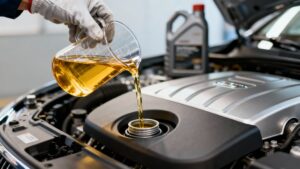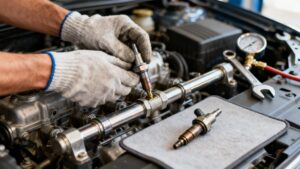




A puddle of coolant under your car almost always points to a leak somewhere in the cooling system, and that can lead to overheating fast. The usual suspects are the radiator, a hose or clamp, the reservoir, the water pump, or, in worse cases, the head gasket. Never open a hot radiator cap, watch your temperature gauge closely, check the oil for a milky tint, and if the leak looks serious, arrange a tow rather than risk driving it.
TL;DR:
- Most coolant leaks originate from the radiator, hoses, reservoir, or water pump, requiring different levels of repair complexity and urgency.
- Identifying the leak involves checking fluid color and location, inspecting hoses for damage, and possibly conducting pressure tests for slow leaks.
- Driving with a minor coolant leak can be safe temporarily if the engine temperature remains normal, but high temperatures or milky oil demand immediate professional inspection.
- Repair costs vary widely, from quick fixes like clamp tightening to extensive internal engine work such as head gasket replacements, influenced by vehicle make and local labor rates.
- Professional diagnostics with pressure testers and documentation are essential to accurately locate internal failures and avoid costly guessing or misdiagnosis.
Table of Contents
- Is That Really Coolant? How to Confirm a Coolant Leak
- Where Coolant Leaks Usually Start
- How to Track Down the Source of a Leak Yourself
- Can You Still Drive With a Coolant Leak?
- What to Expect From a Coolant Leak Repair
- Why Professional Diagnostics Beat Guesswork
- Get Your Cooling System Checked at Kwik Kar Spring Valley
- Sources
- FAQ
Is That Really Coolant? How to Confirm a Coolant Leak
Coolant is the easiest automotive fluid to identify once you know what to look for. It’s typically dyed green, orange, blue, or pink, and it carries a distinct sweet smell that’s hard to mistake for anything else under the hood. Motor oil, by contrast, is dark and slick. Transmission fluid runs reddish and thinner. A/C condensation is just clear water pooling near the middle of the car after you park, and it’s completely normal.
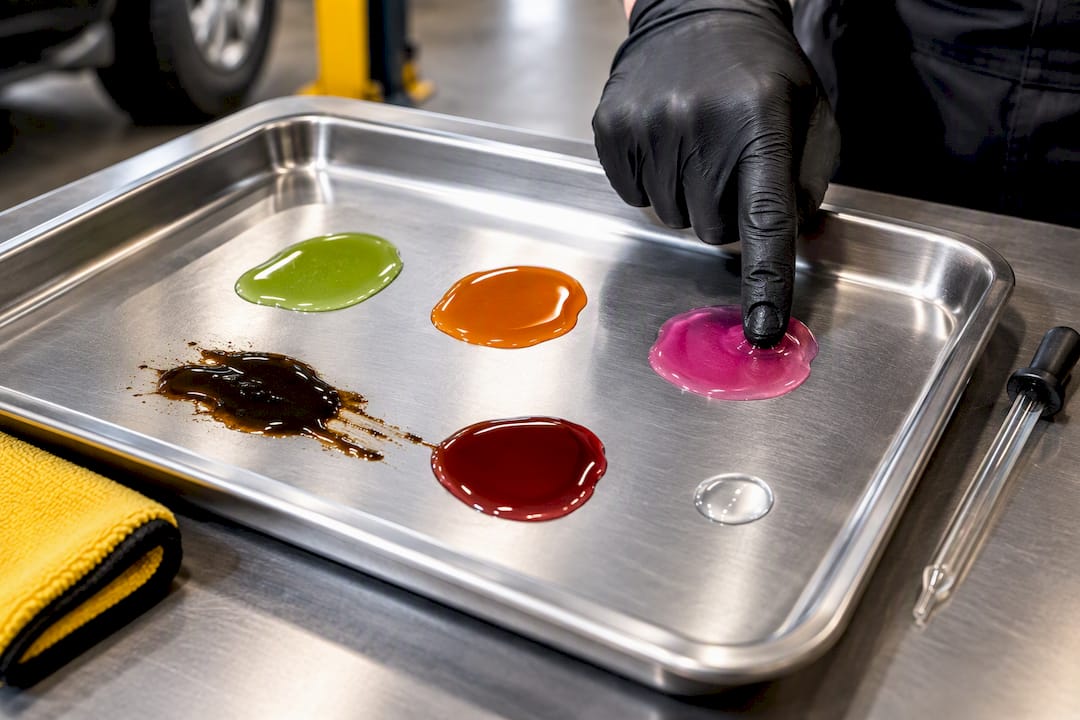
Where the puddle sits matters, too. Fluid pooling near the front center often traces back to the radiator. A leak closer to a wheel well or along the length of the engine bay usually means a hose connection has failed.
Start with these quick checks before anything else:
- Look at the coolant reservoir only when the engine is cool. Check the level against the fill lines and look for cracks or colored residue around the cap.
- Pop the hood and glance at the radiator cap for corrosion or a loose seal.
- Pull the oil dipstick and check the color. A milky or frothy appearance signals coolant mixing with your oil, which points to a much more serious internal problem.
Pro Tip: Snap a photo of the puddle’s color and location on your phone before it dries or gets tracked around the garage. It gives your technician a head start and helps you compare notes if you get more than one estimate.
Where Coolant Leaks Usually Start
Not every coolant leak is the same size of problem. Some are a five-minute fix. Others mean the engine shouldn’t run again until a shop looks at it. Here’s how the most common failure points typically show up under the car.
-
Radiator. A leaking radiator often shows fluid dripping straight down from the front of the engine bay, sometimes with visible corrosion or a small stress crack in the aluminum or plastic tank. Minor seam leaks can occasionally be patched, but most radiator failures call for a full replacement.
-
Hoses and clamps. Hoses are considered among the weakest points in the cooling system, since constant heat and ozone exposure break down the rubber from the inside out through a process called electrochemical degradation. You’ll usually spot a damp connector point or a chalky, dried residue trail along the hose. Sometimes the fix is as simple as tightening a loose clamp. Other times the hose itself needs replacing, and often these jobs are relatively quick and affordable compared to other cooling-system repairs.
-
Reservoir tank or cap. Plastic reservoirs get brittle with age and can crack, especially near the seams. A failed cap can also let coolant push out under normal pressure. Both are straightforward, low-cost replacements.
-
Water pump. A failing water pump sometimes drips from a small weep hole on its housing, and you may also hear grinding or whining noises from a worn bearing. This isn’t a spot fix. The pump has to come out and be replaced.
-
Thermostat and cap issues. A stuck thermostat or a cap that won’t hold pressure can cause the system to boil over or overflow even without an obvious external leak, which is one reason your reservoir might keep emptying with no visible drip anywhere.
-
Head gasket or internal leaks. Milky oil, white smoke from the tailpipe, or bubbles in the overflow tank are the warning signs here, and none of them are DIY territory. This calls for an immediate tow and professional repair before you turn the key again.
Even a small, steady drip deserves attention. A leak of just one drop per minute adds up to roughly a gallon of coolant lost every six weeks, and government cooling system data attributes at least half of all coolant loss to leaking components rather than simple overflow. Treat a reservoir that keeps emptying as a real leak, not evaporation.
How to Track Down the Source of a Leak Yourself
Before you call a shop, a few careful checks at home can save diagnostic time and help you describe the problem accurately.
- Start safe. Work on level ground with the engine fully cool, and wear gloves and eye protection. Coolant is toxic and pressurized systems can spray when disturbed.
- Check the reservoir marks. Compare the current level to the “full” and “low” lines, and look for dried, colored streaks running down the tank or engine block.
- Squeeze the hoses. With the engine cool, gently squeeze each visible hose near its clamp. A soft, mushy, or collapsed section usually means the rubber is failing internally.
- Run the engine briefly. With the hood open and the car stationary, let it idle for a minute or two while you watch for drips forming at a specific spot. Keep an eye on the temperature gauge the entire time, and shut it down immediately if it climbs.
- Consider a shop pressure test. If nothing is visibly damp, a pressure test or UV dye check can find slow or intermittent leaks that never show up during a cold inspection. This is standard equipment at most repair shops and far more reliable than guessing.
- Know when to stop. If you see steam, smell coolant burning off the engine, or the gauge needle moves toward the red zone at any point, shut the engine off and stop the DIY inspection. Arrange a tow instead.
Pro Tip: Keep a rag and a flashlight in the trunk. A quick under car look with a light angled upward often reveals a drip point that’s invisible from a standing position.
Can You Still Drive With a Coolant Leak?
If the temperature gauge stays in the normal range and the leak looks minor, a short, low-speed drive to a shop is often reasonable. That’s the exception, not the rule.
Do not drive if any of the following show up:
- The temperature gauge climbs or enters the red zone.
- Steam or white smoke appears from under the hood.
- The engine oil looks milky or frothy on the dipstick.
- The coolant reservoir level drops significantly in a short time.
If you must move the car a short distance, top off the reservoir with a mixture of coolant and water, typically half and half, but only once the engine has cooled, then drive gently while watching the gauge. Overheating risk climbs on hot days and in stop-and-go traffic, so give yourself margin. Pushing a low-coolant engine further than it should go risks warping the head, blowing the gasket, or seizing the engine entirely, and none of those are cheap fixes.
What to Expect From a Coolant Leak Repair
Repair complexity varies enormously depending on what actually failed, and that’s worth knowing before you call around for quotes.
- Quick fixes. A loose clamp, a worn hose, or a cracked reservoir cap are often same-day repairs with relatively low parts and labor costs.
- Mid-level repairs. A full radiator or water pump replacement generally takes more labor time, often several hours to a full day, since the pump usually sits behind belts and pulleys that have to come off first.
- Major repairs. Head gasket work or other internal engine repair is usually the most involved and time-consuming repair, often spanning multiple days.
- What moves the estimate. Vehicle make and model, local labor rates, how long diagnosis takes, and whether parts are in stock all affect the final number.
- What to ask for. Request a written estimate before work begins, ask whether the shop can show photos or video of the failed part, and confirm what warranty covers the repair.
If you’re also seeing symptoms elsewhere, like a transmission fluid leak or general low coolant warning signs, it’s worth mentioning both issues when you book service so the technician checks everything in one visit.
Why Professional Diagnostics Beat Guesswork
Cosmetic leaks and internal failures can look confusingly similar from the driveway, which is exactly why proper diagnostics matter more than a guess. ASE certified technicians use pressure testers and digital vehicle inspections, complete with photos and video, to pinpoint the real source before recommending a fix. That kind of documentation separates a simple clamp job from a head gasket problem that needs a tow, and it means you see exactly what’s wrong before agreeing to any repair. Clear, upfront pricing and warranty coverage on the work performed round out the picture, so you’re not left guessing what you paid for.
— Kwik Kar
Get Your Cooling System Checked at Kwik Kar Spring Valley
A coolant leak rarely fixes itself, and driving on a hunch instead of a diagnosis is how a $40 hose becomes a $2,000 engine. A local auto care center on Spring Valley Road offers Dallas drivers diagnostics, documentation of findings with photos and video, and provides a written estimate before work begins.
Book a cooling-system inspection or engine diagnostic online, or call ahead if your car is already overheating and you need towing advice. Bring whatever service history you have and any photos of the leak you’ve already taken. For the full range of auto repair services available at the Spring Valley location, from cooling system work to brakes and batteries, the technicians can typically get you a same-day estimate once your vehicle is on the lift.
Sources
The safety and diagnostic guidance in this article draws on government cooling system documentation, Consumer Reports’ testing and repair guides, and AAA’s roadside overheating resources. Each is linked at the point it supports a specific claim above, covering leak rates, hose degradation, oil contamination, and overheating response.
- Government cooling system guidance (excerpt)
- How to check engine oil the right way — Consumer Reports
- Car overheating causes and solutions — AAA
FAQ
How much does it cost to fix a coolant leak under my car?
Cost depends entirely on what failed. A clamp or hose repair is typically quick and affordable, while a radiator or water pump replacement runs higher due to parts and labor time, and head gasket work is the most expensive category. Current pricing for any specific repair is available on the Kwik Kar Spring Valley site.
Why is coolant leaking from the bottom of my car?
Coolant under the car usually means a failure in the radiator, a hose or clamp, the reservoir, the water pump, or the head gasket. The puddle’s exact location, front center versus a wheel well, often hints at which component is involved.
Can I still drive my car with a coolant leak?
You can sometimes drive a short distance at low speed if the temperature gauge stays normal and the leak is minor. Stop immediately and arrange a tow if the gauge climbs, you see steam, or the oil looks milky, since that signals internal engine damage.
Is a coolant leak a big job?
It depends on the source. A loose clamp or worn hose is usually a small, same-day job, while a water pump or radiator replacement takes longer, and a head gasket repair is a major undertaking that requires professional diagnosis first.