

You merge onto US-75, settle into the lane, and within a few seconds your hands tell you something’s off. The steering wheel isn’t centered. The car drifts a little right. You correct it, then correct it again. By the time you reach the next exit, driving straight has turned into a small wrestling match.
That’s usually when people start searching for firestone front end alignment. They’re not looking for theory. They want to know why the car suddenly feels wrong, whether it’s dangerous, what an alignment fixes, and whether a national chain or a local shop makes more sense for a Dallas vehicle.
That concern is valid. Alignment problems often show up after everyday stuff you barely notice at the time, like clipping a curb in a tight parking lot, crossing rough pavement, or hitting one ugly pothole harder than you meant to. And because alignment angles are measured so precisely, a small change at the wheel can create a very noticeable change behind the steering wheel.
That Unsettling Pull on Your Steering Wheel
You are driving across Dallas on a road you know well, and the car keeps asking for extra attention. Your hands stay on the wheel, but you keep making small corrections just to hold a straight line. That gets tiring fast, and it usually means something in the front end deserves a closer look.
Dallas roads can be hard on alignment. Expansion joints, potholes, patched pavement, sharp driveway entrances, and the occasional curb tap can nudge suspension angles out of place. It does not take a dramatic impact. A small shift in the wrong spot can change how the car tracks, the same way a shopping cart starts drifting when one wheel is slightly off.
Why it feels worse than it looks
An alignment problem often shows up before the car feels "bad enough" to seem urgent. The engine runs fine. The brakes feel normal. But the steering never settles down, and a simple drive across town starts to feel like constant course correction.
That is a useful clue.
If the steering wheel will not stay relaxed on a straight, level road, the car is telling you something has changed. Sometimes the cause is low tire pressure or an uneven road surface. If the pull keeps showing up on different roads, alignment moves higher on the list.
Tire wear is often the other early warning sign. One shoulder of a tire may start wearing down faster because that tire is not meeting the road at the right angle. If you want a plain-English explanation of those patterns, this guide on what causes uneven tire wear is a helpful next read.
This is also where local experience matters. A national chain may follow the same process in every market, but a trusted Dallas shop sees the same road conditions your car sees every week. At Kwik Kar, that means the conversation is usually more practical. What road did it happen on. Did the pull start after a pothole. Are the tires wearing evenly. That kind of context helps drivers make a better call, instead of just hearing a generic recommendation.
What Is a Front-End Alignment Anyway
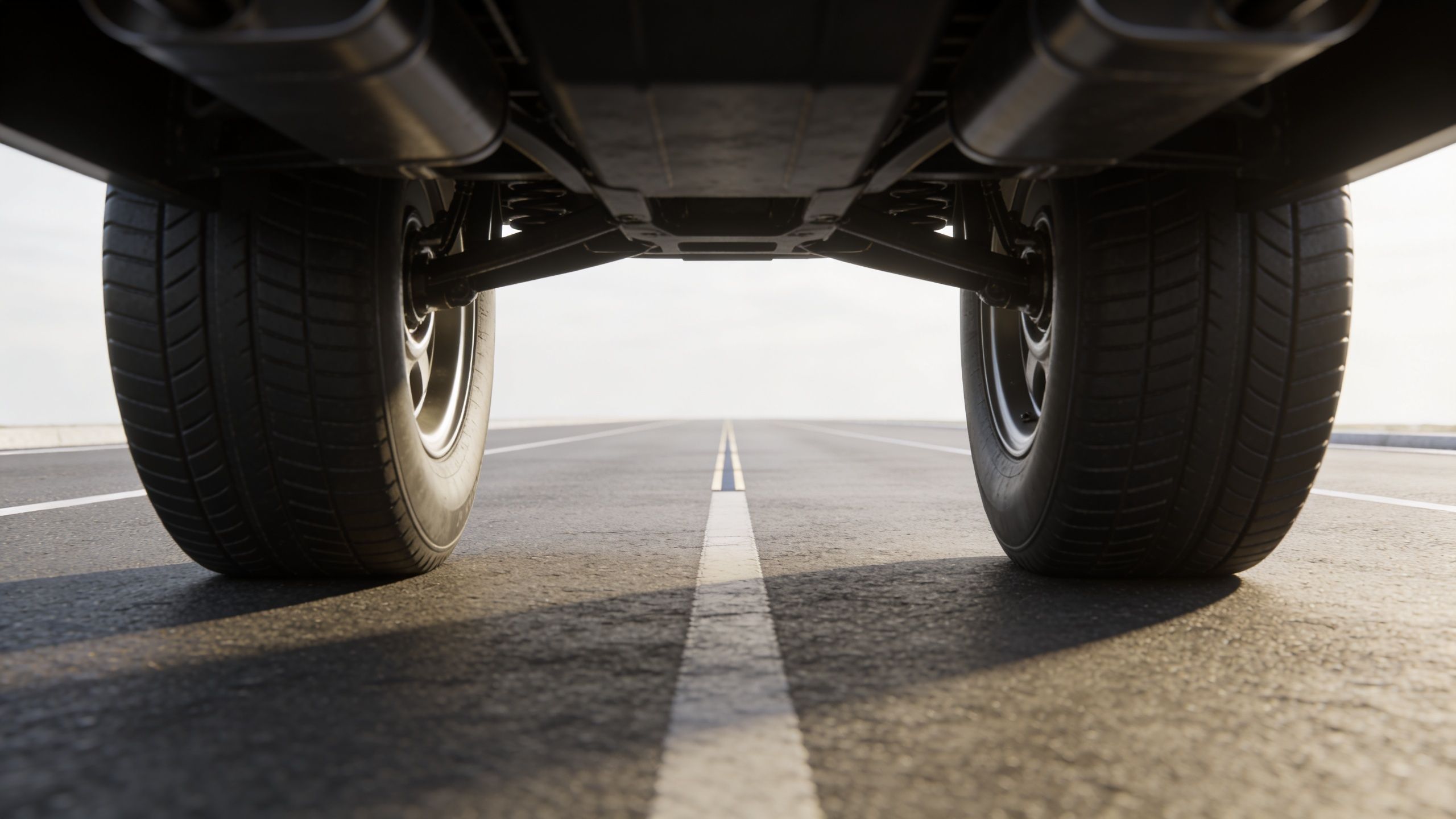
A front-end alignment adjusts the suspension angles that control how your front wheels sit on the road. The tires are part of the symptom. The suspension settings are the underlying issue.
A simple way to picture it is a grocery cart with one wheel pointed a little off-center. It still rolls, but it never tracks cleanly. Your car behaves the same way when the front wheels are not set to the proper angles.
The three angles technicians adjust
These alignment terms sound more complicated than they are. Once you translate them into everyday language, they make a lot more sense.
- Toe is the direction the front tires point compared with each other, similar to whether your feet point slightly inward or outward.
- Camber is the inward or outward tilt of the wheel when you face the front of the car.
- Caster affects straight-line stability and how the steering wheel returns after you finish a turn.
Technicians use alignment equipment to measure each angle in very small amounts, then compare those readings to your vehicle manufacturer’s specifications. That precision matters because a slight change can affect steering feel, tire wear, and how settled the car feels at highway speed.
Dallas drivers run into a practical wrinkle here. Rough pavement, potholes, concrete lane joints, and curb strikes can knock those settings off just enough to create problems you feel every day, even if nothing looks obviously broken. A national chain may explain the readings correctly, but a local shop can often connect those numbers to the roads you drive, from Central Expressway to neighborhood streets with patched pavement.
Why a front-end alignment matters in daily driving
When the front wheels are set correctly, the car tracks straighter, the steering wheel sits where it should, and the tires roll instead of scrubbing sideways across the pavement. That last part is what saves tire life.
Alignment also overlaps with other tire services, which is why many drivers ask about both at the same visit. This guide on tire rotation and alignment explains how those services work together. If your steering concern comes with a shake or vibration, this article on preventing truck vibration issues gives helpful background on how wheel and tire irregularities can feel different from a pure alignment problem.
At a shop like Kwik Kar, the useful part is not just getting a printout. It is having someone explain what changed, why it matters for your driving, and whether the fix is as simple as an adjustment or points to worn suspension parts that need attention first.
Telltale Signs Your Car Is Out of Alignment
You usually notice alignment trouble in small, annoying ways before it turns into a bigger tire bill. The car may stop feeling calm and predictable. On Dallas roads with patched asphalt, potholes, and concrete joints, those clues can show up sooner than many drivers expect.
What you can feel from the driver’s seat
Start with your normal commute. If the car drifts left or right on a fairly level road, or the steering wheel sits a little crooked while the vehicle is going straight, alignment is high on the suspect list.
Another clue is how the steering feels in your hands. A car with proper alignment usually feels settled, like a shopping cart rolling straight with all four wheels pointed the same way. When alignment is off, the steering can feel nervous, reluctant to return to center, or like you are making small corrections all the time.
Vibration can muddy the picture. Alignment problems and wheel or tire problems can feel similar from the driver’s seat, which is why a careful inspection matters. For a technical look at how those symptoms can overlap, this resource on preventing truck vibration issues explains how wheel and tire irregularities may create a shake that is different from a true alignment problem.
What to inspect on the tires
Your tires often tell the story more clearly than the steering wheel.
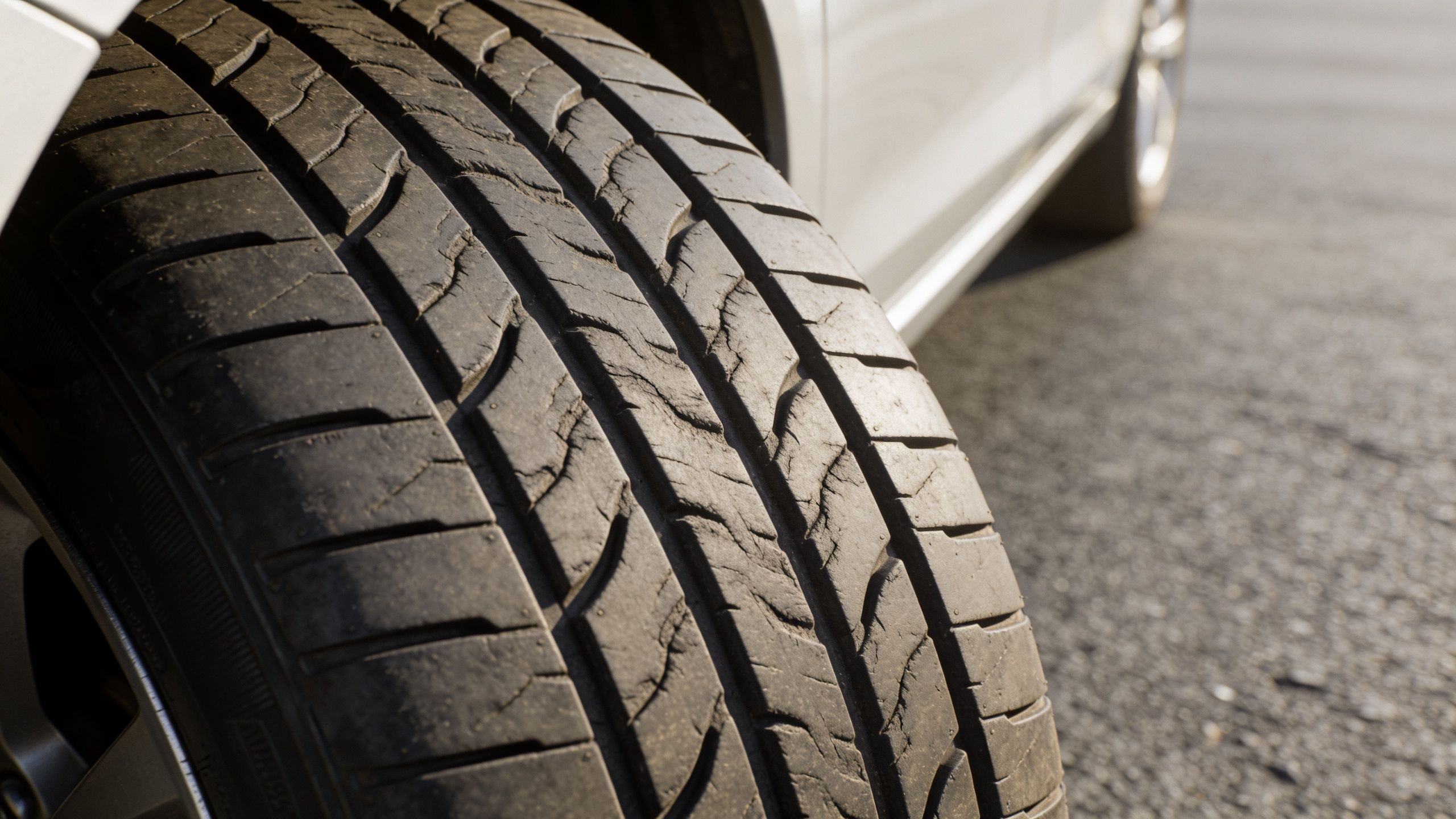
Walk around the car and compare each tire side to side. If one edge is wearing faster than the other, the tire is not meeting the road evenly. It is a little like wearing shoes that are tilted inward or outward. One side gets used up long before the rest.
Look for:
- Inner or outer edge wear that is noticeably heavier on one side
- Feathering where the tread feels smooth one direction and sharp the other
- Patchy or irregular wear that makes one tire look more worn than its match on the opposite side
- A crooked steering wheel that stays off-center even after tire pressure was corrected
These patterns matter because they often show up before the car feels dramatically harder to drive. A chain store may hand you the measurements. A trusted local shop should also explain what those wear marks mean for the roads you drive every week in Dallas.
If one shoulder of the tire is doing more work than the rest, your alignment may already be shortening tire life.
A quick visual can help if you want to see the kinds of wear technicians look for during an inspection.
When not to assume it’s alignment alone
Alignment angles are only part of the story. Loose or worn tie rods, ball joints, control arm bushings, or other suspension parts can create the same pull, crooked wheel, or uneven tire wear.
That is why the best service is not just an adjustment on a machine. A good technician checks whether the parts holding those angles are still tight enough to keep the settings in place. At a local shop like Kwik Kar, that conversation is usually more personal and easier to follow. You are less likely to get a one-size-fits-all answer and more likely to hear whether your car needs a simple correction or repair work first.
Front-End vs Four-Wheel Alignment Which Do You Need
A lot of Dallas drivers hear these two terms and assume one is the “basic” version and the other is the “better” version. A simpler question arises: Which one matches the way your vehicle is built?
A front-end alignment adjusts the angles that control how the front tires point and track. A four-wheel alignment checks the relationship between the front and rear wheels, then adjusts the angles your vehicle allows. It works a lot like setting up a shopping cart. If only the front wheels are out, you correct the front. If the whole cart is tracking sideways, you look at all four corners.
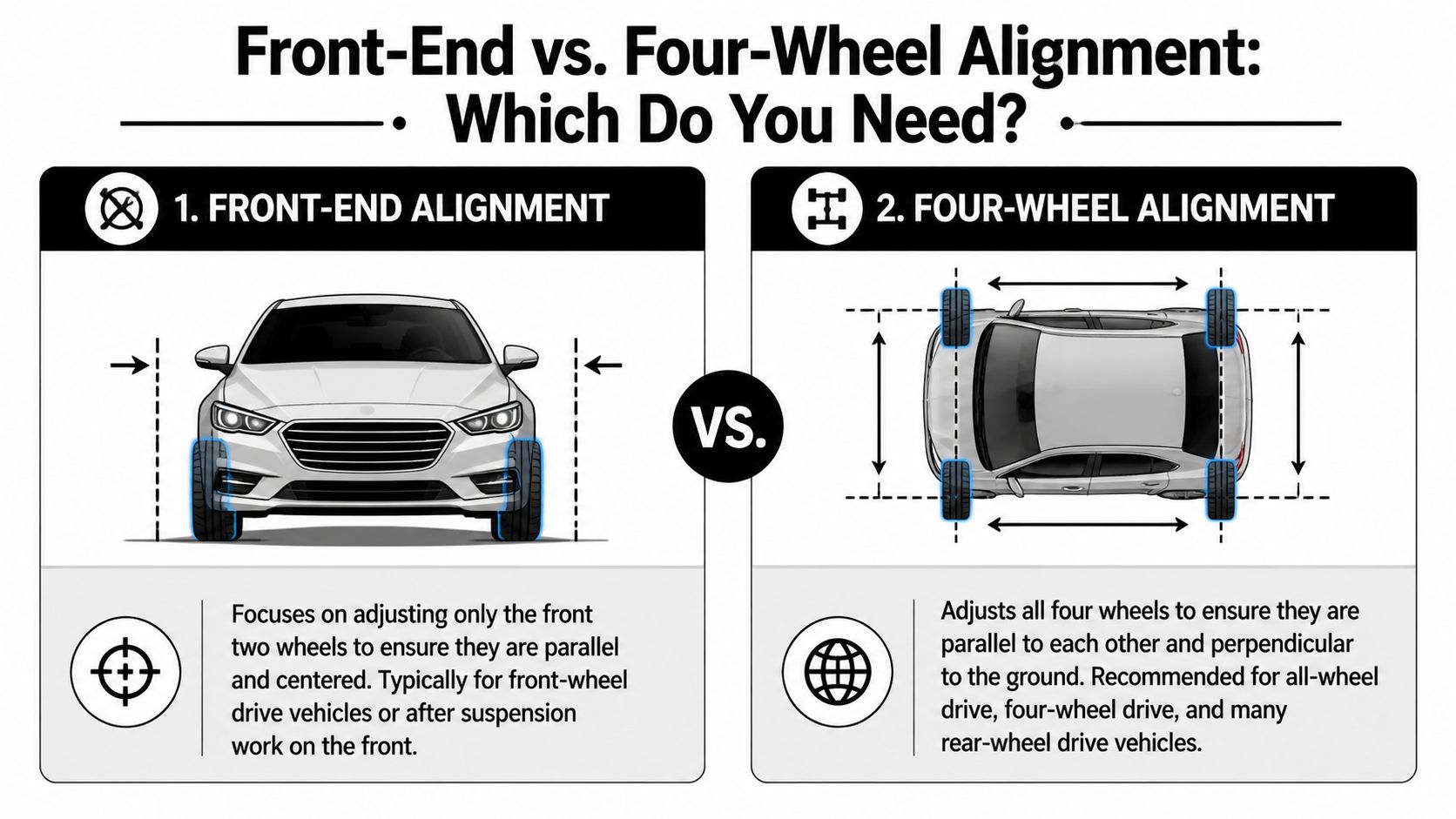
Alignment Service Comparison
| Attribute | Front-End Alignment | Four-Wheel Alignment |
|---|---|---|
| Main focus | Front wheel angles | Front and rear wheel angles |
| Best fit | Vehicles where the front setup is the main adjustment point | Many all-wheel drive, four-wheel drive, and vehicles with adjustable rear geometry |
| Primary goal | Help the steering track straight and reduce front tire scrub | Make sure all four wheels relate correctly to each other |
| When it’s often recommended | After front suspension work or when front-end symptoms are obvious | When rear alignment affects tracking or the vehicle design calls for it |
| Typical pricing context | Varies by shop and vehicle | Usually costs more than a front-end alignment because it involves measuring and adjusting more angles |
A simple way to decide
Start with your vehicle, not the menu board.
If your car or SUV has adjustable rear suspension angles, a four-wheel alignment is usually the correct service because the rear wheels help determine whether the vehicle tracks straight. Many all-wheel-drive and newer independent-suspension vehicles fall into this group. If the rear is out of spec, the front can be pointed straight and the car can still feel off on the road.
Some older vehicles, trucks, or simpler suspension setups may only need front-end adjustments, especially after work on steering or front suspension parts. That is why a good shop checks the suspension design first instead of selling the same alignment to every driver who comes through the door.
An outside discussion from technicians and experienced drivers makes this point well. On some all-wheel-drive vehicles, a four-wheel alignment can have a bigger effect on tire life and handling than a front-only adjustment would (alignment discussion with service comparisons).
Why this matters more on Dallas roads
Dallas roads are not gentle on alignment. Potholes, concrete expansion joints, curb strikes, and rough transitions at construction zones can shift things in ways that are not always obvious from the driver’s seat.
A national chain may follow a standard process, and that can be fine for many vehicles. A local shop usually has more room to explain why your specific car needs front-only service or a full four-wheel check. If you want a clearer picture of the price side before you book, this guide to Firestone wheel alignment cost can help you compare the chain-store model with what local drivers often look for instead.
The best answer is the one that fits your suspension design, tire wear pattern, and the roads you drive every week. At a local shop like Kwik Kar, that conversation tends to be more specific and easier to follow.
Understanding the Firestone Alignment Service
You type in firestone front end alignment because you want a straight answer before you hand over your keys. What will the shop do, how much will it cost, and will the service fit your car or just fit the menu?
For many stock daily drivers, Firestone’s process is familiar and easy to understand. The shop uses computerized equipment to compare your alignment angles to factory specifications, then the technician adjusts what your vehicle allows. That works a lot like setting a picture frame back to level after it gets bumped on the wall. If nothing else is wrong, returning it to the original position solves the problem.
That big-chain model appeals to drivers who want predictability. You know the brand, you can find another location if you are out of town, and the service process tends to be standardized from store to store.
There is a tradeoff.
A national chain usually follows a tighter script. If your vehicle is stock and in good shape, that can be perfectly fine. If your truck has been lifted, your suspension has changed, or you want handling tuned for something other than factory feel, a factory-spec alignment may not match the way the vehicle sits now. The screen can show acceptable numbers while the car still feels off to you on Dallas roads.
That matters because an alignment is only part measurement and part diagnosis. The machine measures angles. The technician still has to interpret what those angles mean for your specific vehicle, your tire wear, and the way you drive around construction zones, patched pavement, and concrete joints across Dallas.
There is another point drivers sometimes miss. An alignment adjustment cannot fix worn or bent parts. If tie rods, ball joints, control arms, or other steering and suspension pieces have play in them, the settings may not hold. It is like straightening a crooked door when the hinge is loose. You can line it up for a moment, but it will drift again until the hardware problem is addressed.
Cost is where many Dallas drivers slow down and read the fine print. Chain stores often present a standard one-time alignment and a lifetime package. That can be a good value for some people, but only if the return requirements fit how long you keep the car, how often you come back, and whether you will use the follow-up checks.
If you want a clearer side-by-side view before you book, this guide to Firestone wheel alignment cost and package details can help you compare the chain approach with the questions a local shop should answer clearly.
For Dallas drivers, the difference is often not the machine. It is the conversation around the machine. A large chain may be set up to deliver a repeatable service. A local shop like Kwik Kar usually has more room to explain why your numbers changed, whether a suspension part is starting to wear, and whether a front-end adjustment alone is the right call for your car. That kind of clarity helps you make a better decision, not just buy the next item on the service menu.
The Kwik Kar Advantage for Dallas Drivers
Dallas drivers don’t drive in a generic market. They drive in heat, on patched pavement, over expansion joints, around construction, and through the kind of road damage that can turn a small suspension issue into a tire problem before the next service reminder pops up.
That’s why local context matters. One reviewed source notes that while national chains offer standardized services, Dallas drivers and fleet operators deal with challenges like aggressive Texas heat and seasonal road damage, and that creates a need for maintenance schedules and return-on-investment thinking suited to local conditions rather than generic alignment advice (discussion of local alignment planning gaps).
Why local service often feels different
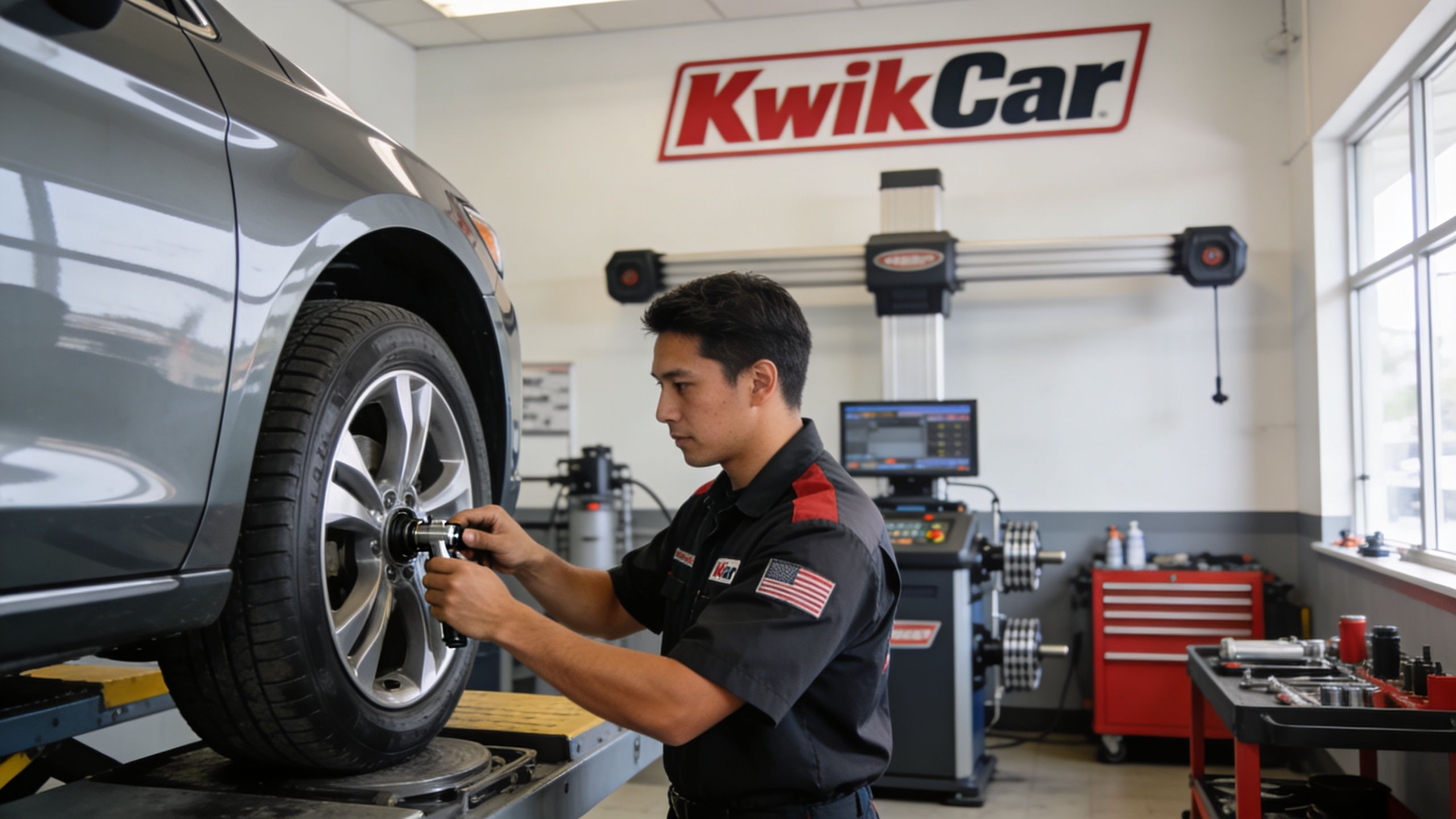
A trusted local shop usually gives you something a chain process can’t always match. Conversation. Context. Memory.
That means a technician can look at your vehicle history, how you use the car, the roads you drive most, and whether the issue started after a curb strike, a suspension repair, or a tire replacement. Instead of fitting your situation into a preset script, they can explain whether you need an adjustment, a part repair first, or a watch-and-monitor approach.
Better fit for Dallas driving habits
This matters even more for drivers with unusual use cases:
- Daily commuters who rack up miles on freeways and frontage roads
- Families with SUVs that spend time on rough parking lots, school pickup lanes, and weekend errands
- Light trucks and fleet vehicles that carry loads and see more suspension stress
- Modified vehicles that may not belong in a strict factory-spec-only workflow
A local expert can also be more direct about whether a package makes financial sense for your car, your mileage, and how long you plan to keep the vehicle. That kind of advice is hard to reduce to one national offer.
The best alignment service isn’t just about getting green numbers on a screen. It’s about making the vehicle drive right on the roads you actually use.
If your car is pulling, your steering wheel is off-center, or your tires are wearing unevenly, don’t wait for the problem to get louder.
If you want clear answers and practical help from a local team, schedule a visit with Kwik Kar Oil Change and Auto Care. They can inspect your steering and suspension, explain what your vehicle needs, and help you stay ahead of alignment-related tire wear before it turns into a bigger repair.