



Yes, symptoms like hard starts, stalling, sputtering at highway speed, and a whining noise from the fuel tank commonly point to a failing fuel pump, though bad fuel, a clogged filter, or a faulty relay can look identical. If your car stalls while driving, pull over safely and stop driving until it’s checked to avoid discomfort from persistent car odours that can sometimes accompany fuel system issues, as explained in Remove car odour | Diamond Brite. The checklist and diagnostic tests below help you tell the difference before you pay for a repair.
TL;DR:
- Fuel pumps often show warning signs such as difficulty starting, sputtering at highway speeds, or whining noises from the fuel tank before complete failure.
- Diagnostics should include pressure, flow, and electrical testing to accurately identify pump failure rather than relying solely on symptoms unless the vehicle stalls suddenly.
- Fuel filter clogging, contaminated fuel, faulty relays, or leaking fuel regulators can mimic pump issues and must be ruled out with proper testing.
- Keeping the fuel tank above a quarter and following maintenance intervals can significantly extend fuel pump lifespan and prevent early failure.
- A professional diagnostic at a trusted shop involves measuring actual PSI, flow rate, and voltage, and not just replacing the pump based on symptoms alone.
Table of Contents
- Key symptoms of fuel pump failure to watch for
- How mechanics diagnose fuel pump problems
- Common causes and confounders that mimic pump failure
- What to do now: safe checks and temporary troubleshooting
- Prevention and maintenance tips to reduce pump wear
- What to expect from a professional diagnostic appointment at Kwik Kar
- What a technician wants you to ask before agreeing to a repair
- Book a fuel system diagnostic at Kwik Kar Spring Valley
- Sources
- FAQ
Key symptoms of fuel pump failure to watch for
A weak or dying fuel pump rarely fails without warning. Most drivers notice a pattern building over days or weeks before the car finally leaves them stranded. Matching your symptoms to this list helps you gauge how urgent the problem is.
- Hard or long cranking, especially when the tank is low, often signals the pump struggling to build pressure before the engine catches.
- Sputtering or hesitation at highway speed happens when the pump can’t keep up with the fuel demand of sustained high RPM.
- Loss of power while climbing hills or accelerating shows up when the engine needs more fuel volume than a weakening pump can deliver.
- Stalling or sudden shutdowns while driving are the most serious sign and mean you should stop driving immediately.
- A whining or humming noise from the fuel tank area, heard at key ON or while driving, often points to a pump motor working harder than it should.
- A drop in fuel economy paired with unexplained surges or hesitation suggests inconsistent fuel delivery.
- A Check Engine Light with a lean-running code, commonly P0171 or P0174, can be a clue but never confirms that the pump is at fault on its own.
According to AAA, common fuel pump failure symptoms include difficulty starting when the tank runs low, sputtering or surging at highway speeds, sudden power loss on acceleration or hills, reduced fuel economy, and a check engine light with pressure-related codes. AAA also notes that driving with a failing pump can cause the engine to run lean and overheat, which risks permanent engine damage or a stall in traffic.
If you’re prioritizing, stalling ranks above repeated long cranks, which ranks above mild hesitation. A car that dies at speed needs attention today. A car that just cranks a little longer than usual can often wait for a scheduled diagnostic, but not for long.
How mechanics diagnose fuel pump problems
A trustworthy shop never replaces a pump on symptoms alone. The diagnosis relies on a sequence of measurements that isolate exactly where fuel delivery breaks down.
- A key-on static pressure test checks fuel pressure at the rail before the engine starts, and a reading well below the manufacturer’s spec points toward a weak pump or a failing regulator.
- A hold or bleed-down test watches how quickly pressure drops after the engine shuts off, which exposes a leaking check valve or a leaking injector.
- A volume or flow test measures how much fuel the pump actually delivers over time, since a pump can hold correct pressure at idle yet fail once the engine demands more volume under load, a failure mode confirmed by ASE-aligned diagnostic guidance.
- Electrical checks on the relay, fuse, and voltage at the pump connector separate a wiring fault from a worn pump, since both can produce the same intermittent stalling.
Pro Tip: Ask for the measured PSI, the flow reading in ounces or quarts over time, and the voltage at the pump connector. A verbal “it’s weak” without numbers isn’t a diagnosis.
A complete report should show all three: pressure, flow, and voltage, not just a pass or fail.
Common causes and confounders that mimic pump failure
Plenty of problems produce the exact same symptoms as a dying pump, which is why testing matters more than guessing.
- Bad or contaminated fuel causes hard starts and multi-cylinder misfire that look identical to pump wear; checking your recent fuel source and gas cap seal is a fast first step, as AAA points out.
- A clogged fuel filter or in-tank strainer can allow normal idle pressure while flow collapses under load, which only a volume test reveals.
- A failed relay, damaged wiring, or blown fuse can cause intermittent operation, especially when the engine is hot, and AAA’s guide to no-start problems notes that swapping in a like-for-like relay can help confirm this.
- A failing pressure regulator or leaking fuel injector can produce the same lean-running codes as a weak pump.
What to do now: safe checks and temporary troubleshooting
- Pull over if the car stalls, and arrange a tow if the stall repeats rather than risk driving it further.
- Listen for the pump priming for a second or two when you turn the key to ON but before starting; silence there is worth noting for your mechanic.
- Check your gas cap seal and recent fuel source, since contaminated fuel is a common, low-cost explanation for pump-like symptoms.
- Inspect fuses if you’re comfortable doing so, but leave relay swaps to a professional if you’re unsure which relay is which.
- Insist on pressure and flow testing before authorizing a pump replacement, since FCP Euro’s diagnostic guidance warns that many shops skip measurement and replace pumps that were never the problem.
Pro Tip: Write down when the symptom happens (cold start, highway speed, after refueling). That detail alone often shortens a diagnostic visit.
Prevention and maintenance tips to reduce pump wear
Small habits extend pump life more than most drivers realize.
- Keep the tank above a quarter full, since fuel cools and lubricates an in-tank pump, and running low regularly can force it to draw in air.
- Follow your manufacturer’s fuel filter service interval, or have the in-tank strainer inspected if your vehicle uses a sealed module.
- Avoid fueling at stations you suspect have contaminated fuel, and replace a cracked or worn gas cap seal.
- Schedule periodic diagnostics on higher-mileage vehicles, since components like the dirty fuel filter and pump wear together over time.
Fuel pumps rely on submersion in fuel for cooling and lubrication, so consistently low tank levels are one of the more preventable causes of early failure.
What to expect from a professional diagnostic appointment at Kwik Kar
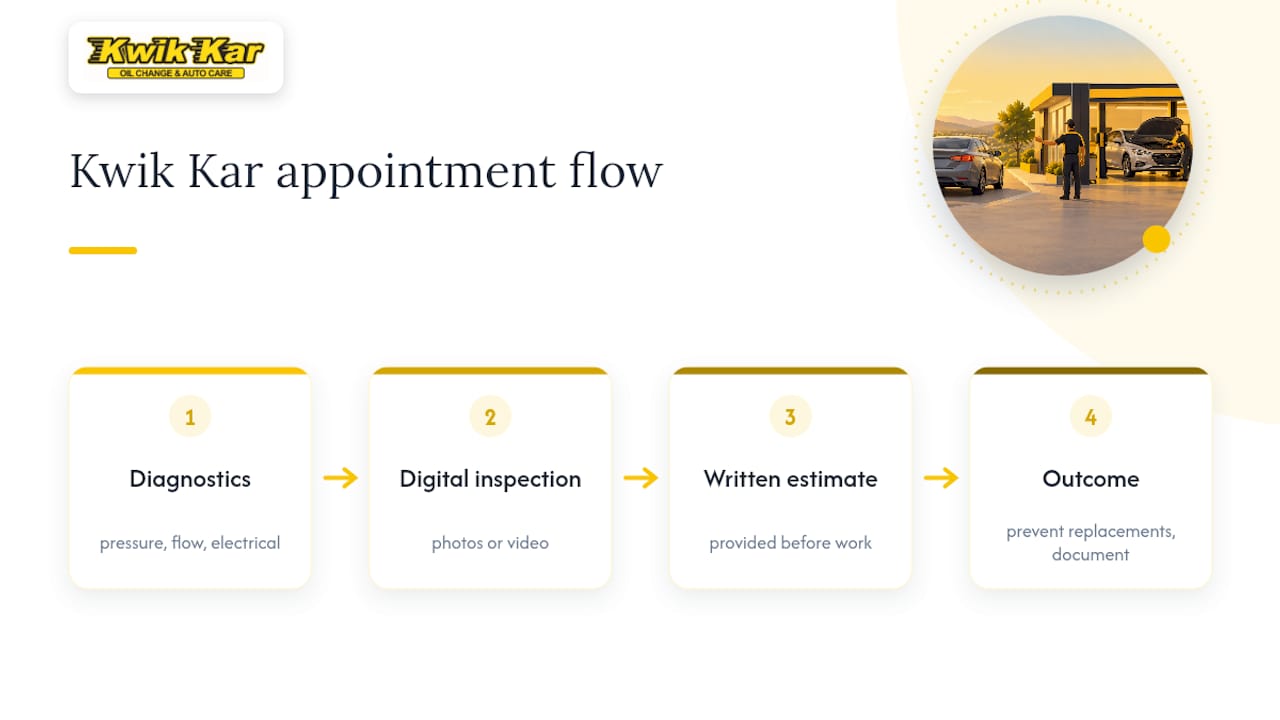
Experienced technicians run pressure, flow, and electrical tests rather than guessing from symptoms alone. Every appointment includes a digital inspection with photos or video and a written estimate before any work begins, so you see the measured numbers behind the diagnosis. That approach helps prevent unnecessary pump replacements and gives you documentation to reference if a related issue comes up later.
What a technician wants you to ask before agreeing to a repair
Too many shops swap parts on a hunch. Before you approve a fuel pump replacement, ask three things: did they measure pressure, flow, and voltage, or just guess?
— Kwik Kar
Book a fuel system diagnostic at Kwik Kar Spring Valley
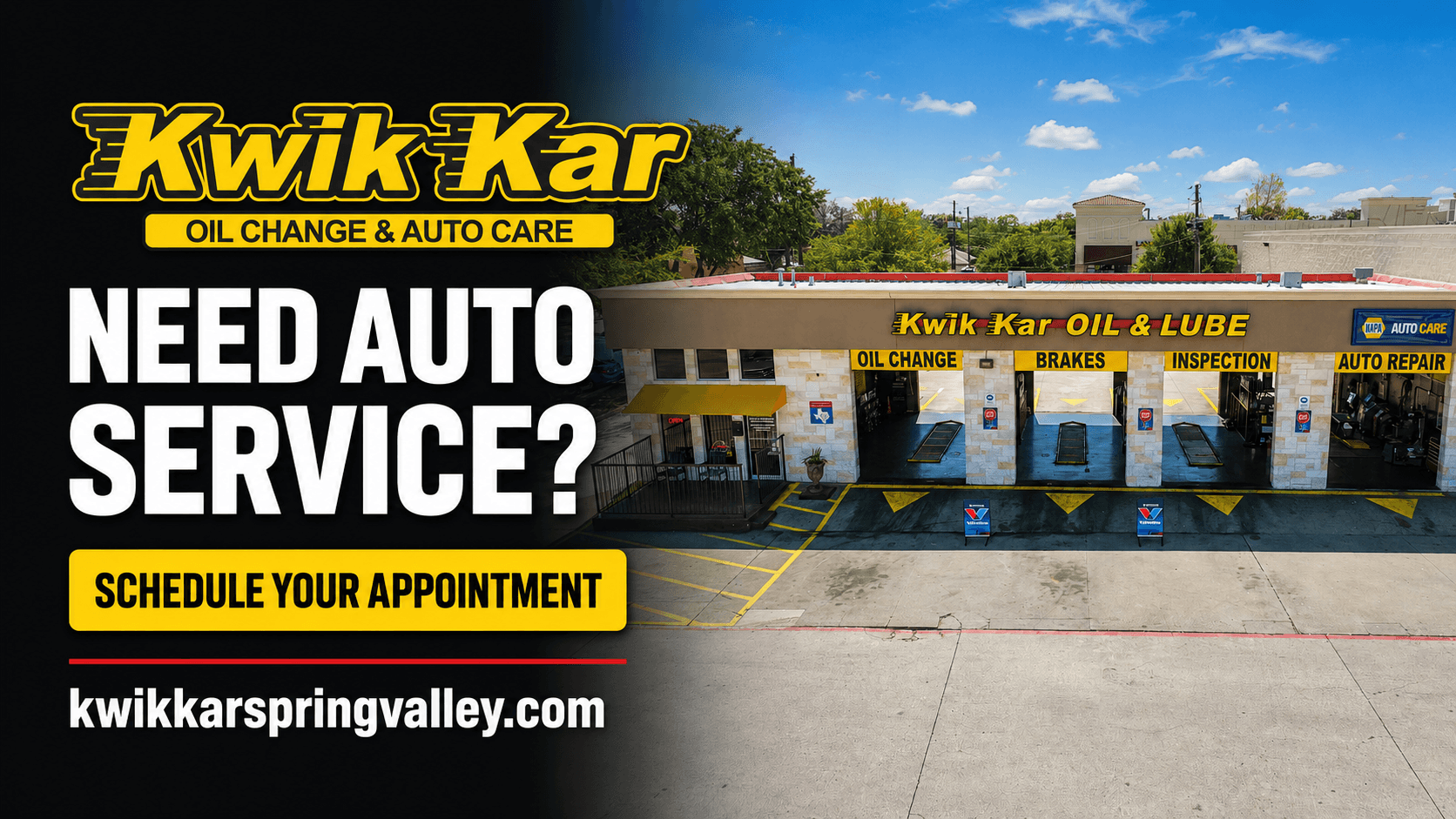
If your car is showing hard starts, stalling, or that telltale whine from the fuel tank, a measurement-based diagnostic tells you what’s actually wrong before you spend a dollar on parts. Expert technicians run pressure and flow testing on your fuel system, back it with a digital inspection you can see photos and video from, and give you a written estimate before any work starts.
- Same-day diagnostic options are available in many cases, so you’re not left waiting to find out what’s wrong.
- Coupons and service discounts are regularly available to help offset the cost of diagnostics and repairs.
- Every repair is backed by warranty coverage, so you know the fix is documented and supported.
Schedule your engine diagnostic appointment at Kwik Kar Spring Valley Road and get a clear answer instead of a guess.
Sources
- How much does a fuel pump replacement cost | AAA
- Fuel delivery systems & pressure testing | OpenExamPrep
- How to diagnose a bad fuel pump | FCP Euro
FAQ
How does a car act when a fuel pump is going out?
A car with a failing fuel pump often struggles to start, sputters or loses power at highway speed, and may stall unexpectedly while driving. You might also hear a whining noise from the fuel tank and notice a drop in fuel economy, according to AAA.
How do you temporarily fix a fuel pump?
There’s no reliable temporary fix for a genuinely failing pump, but keeping the tank above a quarter full can reduce strain in the short term. If a relay or fuse is the actual cause rather than the pump itself, replacing that part can restore normal operation without touching the pump.
Does the fuel pump give warning before going out?
Yes, most pumps show warning signs like hard starts, hesitation under load, or a whining noise before failing completely, based on symptoms AAA associates with pump wear. Ignoring these signs raises the risk of a sudden stall rather than a gradual decline.
Can a fuel pump run but still be bad?
Yes, a pump can hold normal pressure at idle yet fail to deliver enough fuel volume once the engine is under load, which is why volume flow testing is necessary to catch this failure mode. A pressure reading alone can miss a pump that’s already failing.