
Your registration renewal notice shows up, you open it, and there it is. Smog check required. For a lot of Manteca drivers, that one line creates the same questions right away. Do I need a STAR station? Will my car pass? How long is this going to take? What if the check engine light came on last week and then turned off?
That stress usually comes from not knowing what the state is looking for. Most smog checks are a lot less mysterious once you understand the rules and do a little prep first. If your vehicle runs fine, the dash is clear, and the emissions equipment is intact, you're already in much better shape than you think.
Around Manteca, drivers often try to stack several car tasks together at renewal time. They handle registration, make sure the car is road-ready, and review basics like coverage and paperwork. If you're doing that same cleanup, this overview of California auto insurance is a useful companion read while you're getting your documents in order.
Your Guide to a Stress-Free Smog Check in Manteca
A typical local scenario goes like this. You check your DMV paperwork, realize the deadline is close, and start searching smog check manteca ca on your phone during lunch. Then you see terms like STAR, test-only, OBD, certificate fees, and re-tests, and suddenly a simple inspection feels more complicated than it needs to be.
It helps to think of the smog check as two things. First, it's a legal requirement for many California vehicles. Second, it's a snapshot of whether your engine and emissions system are working the way they should.
Most drivers don't fail because the state is trying to trick them. They fail because something small was ignored, like a loose gas cap, a check engine light, an incomplete repair, or a modification that shouldn't be there. Those are fixable problems, and knowing that upfront takes a lot of pressure off.
A calm smog check usually starts days before the appointment, not when you pull into the bay.
In Manteca, local conditions matter too. People drive a mix of commuters, work trucks, family SUVs, diesel vehicles, and older high-mileage cars. That means the smartest approach isn't generic advice from a statewide article. It's practical preparation for the kind of driving, heat, dust, and stop-and-go use your vehicle sees here.
Understanding Manteca's Smog Check Requirements
Smog rules feel confusing until you sort them into three simple questions. Does your vehicle need a test right now? Does your DMV notice require a STAR station? And is your car configured the way California expects it to be on test day?
For Manteca drivers, that matters more than people think. A commuter sedan, a family SUV, and a work truck can all be subject to different inspection paths depending on model year, fuel type, registration status, and DMV instructions. The fastest way to avoid a wasted trip is to read the renewal notice first, then confirm the station type before you head out.
Which vehicles usually need a smog check
In plain language, many vehicles in California need emissions testing during registration renewal. Drivers in Manteca also run into smog requirements during ownership transfers and in certain compliance cases flagged by the state.
Local shops commonly see:
- Gasoline vehicles in the state inspection program
- Diesel vehicles, including some work-use models
- SUVs, trucks, and vans that still have emissions obligations
- Commercial vehicles and fleet units that need current records for registration and operation
Your DMV notice is the best guide. It tells you more than local guesswork ever will.
If you want to check the rest of your car before your appointment, a good vehicle inspection checklist for basic pre-test issues can help you catch small problems early.
STAR station versus standard station
This part trips up a lot of drivers, so here is the plain version. A STAR station is a smog station that meets California's higher performance and oversight standards. If your DMV paperwork says STAR, you need to go to a STAR-certified location.
A standard station may still perform smog checks, but it will not help if the notice specifically requires STAR. That is where people lose time. They show up at the wrong shop, wait in line, and still have to start over somewhere else.
A test-only station handles the inspection itself and does not operate like a repair shop that can diagnose and fix the problem on the same visit. A repair-capable smog station can be more convenient if your vehicle has a warning light, a suspected emissions issue, or a history of failing for the same item.
For Manteca drivers, local knowledge is particularly useful. If you drive in from Lathrop, Ripon, or the north side of town during lunch or late afternoon, wait times can build quickly. Calling ahead to confirm STAR status and current bay availability can save you a second trip.
Practical rule: If the DMV notice says STAR, book a STAR-certified station first.
What the technician actually checks
The inspection has more than one layer. For many newer vehicles, the technician connects to the car's onboard computer to check emissions-related data. California also requires a visual inspection of emissions equipment, and some older vehicles may need a tailpipe test, as explained on the California BAR smog check program page.
That visual check is where confusion starts. A car can run fine and still fail if a required emissions part is missing, disconnected, modified, or replaced with the wrong component. The easiest comparison is a home wiring inspection. A lamp may turn on, but if the wiring behind the wall is wrong, it still does not pass.
Technicians commonly look at:
- Catalytic converter presence and condition
- Exhaust gas recirculation system
- Evaporative emissions components
- Gas cap sealing ability
- Signs of tampering or non-approved tuning
- Visible hoses, wiring, and emissions connections
This is why Manteca drivers should be careful with used-car purchases and aftermarket parts. A vehicle can drive normally for months, then fail smog because of a modified exhaust part, a missing label, or a repair that was done with the wrong emissions component.
At Kwik Kar, we see that kind of surprise more often than drivers expect. The state test is not judging whether your car feels okay on Yosemite Avenue or Highway 99. It is checking whether the emissions system is complete, reporting correctly, and working the way California requires.
How to Prepare Your Vehicle for a Smog Test
Most smog failures don't surprise a technician. The clues are often there beforehand. A warning light, rough idle, poor fuel economy, hard starts, or a gas cap that doesn't click properly can all point to trouble.
The good news is that a little prep can make a big difference in how smoothly your visit goes.
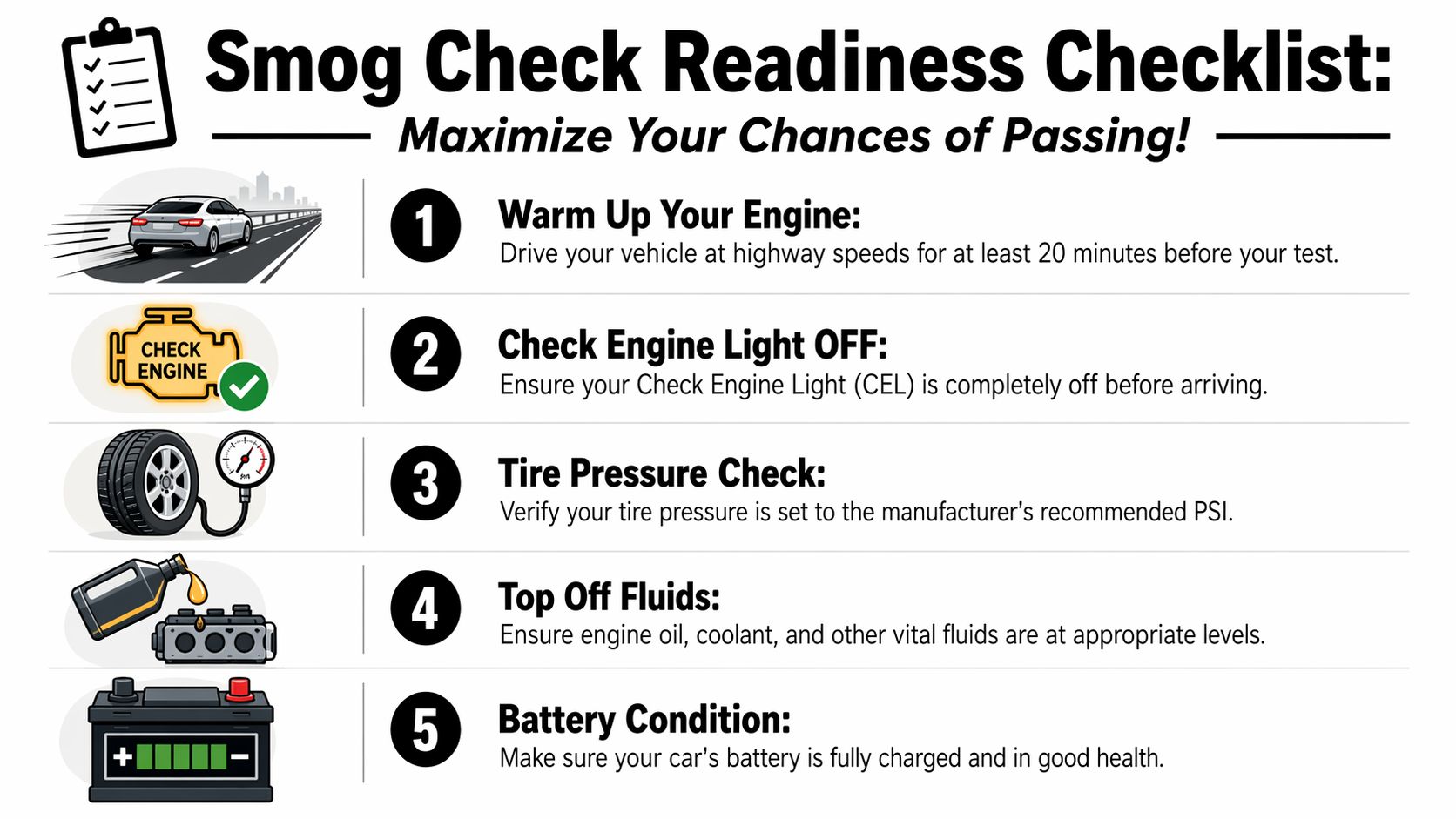
Your pre-test checklist
Start with the basics you can handle in your driveway or parking space:
- Warm the engine up: Drive at highway speed before the test if you can. A fully warmed engine and exhaust system usually test more consistently than a cold car.
- Make sure the check engine light is off: If the light is on, don't roll the dice. Get the code read and the root problem diagnosed first.
- Look under the hood: Check for disconnected vacuum lines, obvious broken hoses, or loose intake tubing.
- Check your gas cap: If it's cracked, loose, or won't seal correctly, replace it.
- Top off fluids and verify battery condition: Weak electrical performance can create problems after recent repairs or battery disconnects.
- Don't go in right after clearing codes: If someone just erased a fault code, the car may not be ready for inspection yet.
If you want a broader maintenance walkthrough before your appointment, this vehicle inspection checklist is a good way to catch easy issues before they become expensive ones.
What drivers often miss
A lot of people focus only on the dashboard light. That's important, but it isn't the whole story. You can also run into trouble if someone installed a non-approved part, removed emissions equipment, or left a sensor unplugged after unrelated repair work.
Another common mistake is testing the car after it's been sitting for days. If your vehicle is used mostly for short errands around Manteca, give it a proper drive first. A fully warmed engine is generally in a better state for emissions testing than one that just left the driveway.
If the car is running noticeably worse than normal, don't use the smog station as your diagnostic tool. Fix the drivability problem first.
Common Reasons for Smog Check Failures and Fixes
Drivers usually want one question answered first. Why do vehicles fail? In Manteca, the answer is often a mix of age, maintenance history, and emissions component condition.
Statewide pass patterns show that newer vehicles do better overall. Cars from the 2010s and 2020s pass at over 90%, 2000s vehicles pass around 80%, and pre-1999 vehicles pass over 70%, based on the statewide model-year smog pass breakdown. That doesn't mean an older car is doomed. It means maintenance matters more as the years and miles add up.
Check engine light problems
This is the big one. If the check engine light is on, your car is telling you the engine management or emissions system has a fault that needs attention.
Sometimes it's something simple, like an evaporative leak tied to the gas cap. Other times it's a sensor fault, misfire, or catalyst efficiency issue. What matters is getting the code diagnosed correctly instead of replacing parts based on guesses.
Typical signs you may notice include:
- Rough idle
- Hard starting
- Reduced fuel economy
- Hesitation during acceleration
- A light that comes on, goes off, then returns
Catalytic converter and oxygen sensor issues
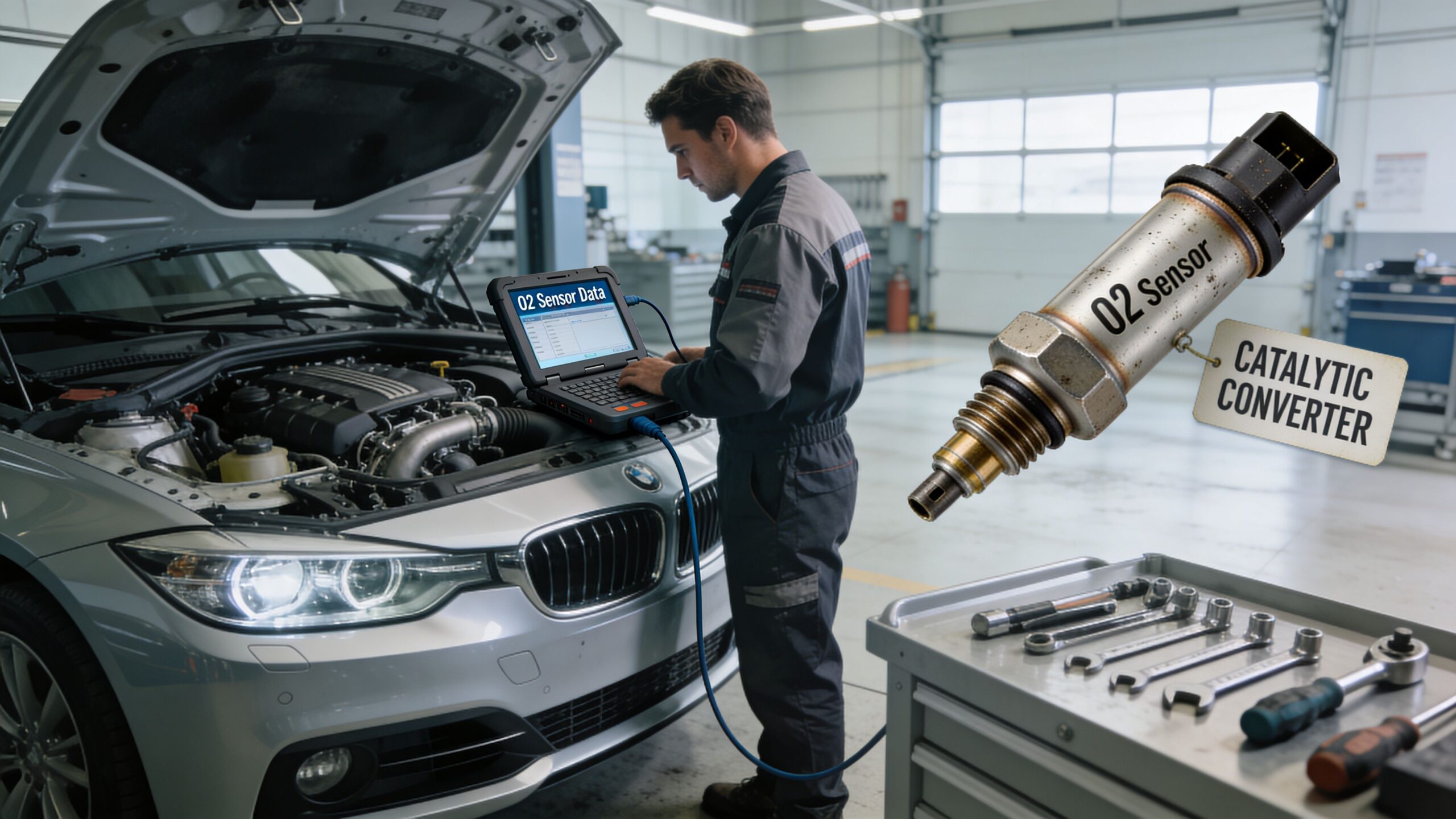
The catalytic converter cleans up exhaust gases before they leave the tailpipe. Oxygen sensors help the engine computer decide how much fuel to deliver. When either one stops doing its job well, emissions can climb and the vehicle may fail.
Drivers often notice sluggish performance, poor mileage, or a sulfur-like exhaust smell. The fix depends on testing, not assumptions. A bad oxygen sensor can mimic other problems, and a catalytic converter can fail because another issue damaged it first.
That's why diagnosis matters. If you replace the converter without fixing the root cause, you can end up paying twice.
A closer look at common emissions trouble spots can help if you've already had a failure. This guide on a failed emission test breaks down what shops typically look for after an unsuccessful inspection.
Tampering and visual inspection failures
This category catches people off guard. A vehicle can run fine and still fail if required emissions components are missing, disconnected, or modified.
That includes situations like:
- Aftermarket parts that aren't approved for the application
- Removed or altered emissions hardware
- Disconnected vacuum lines
- Modified software that affects emissions compliance
Here's a practical visual explainer for drivers who want to understand how these parts affect the inspection process:
Spark plugs, maintenance neglect, and simple wear
Not every failure comes from a major component. Worn spark plugs, neglected tune-up items, dirty filters, and unresolved minor misfires can all push a vehicle in the wrong direction.
You might not notice a dramatic problem while driving. The car still starts, still moves, and still gets you to work. But the engine may not be burning fuel as cleanly as it should.
Older, high-mileage vehicles can still pass. They just don't tolerate neglected maintenance as well as newer cars.
The Kwik Kar Smog Check Experience in Manteca
What most drivers want from a smog visit is simple. They want clear answers, fair treatment, and no wasted time. That's especially true when registration deadlines are close or a work vehicle can't sit around waiting on the next step.
For local drivers, the best smog-check experience usually comes down to three things. First, the shop should confirm what your vehicle needs before the test starts. Second, the technician should communicate in plain language. Third, if there's a problem, you should leave knowing what failed and what to do next.
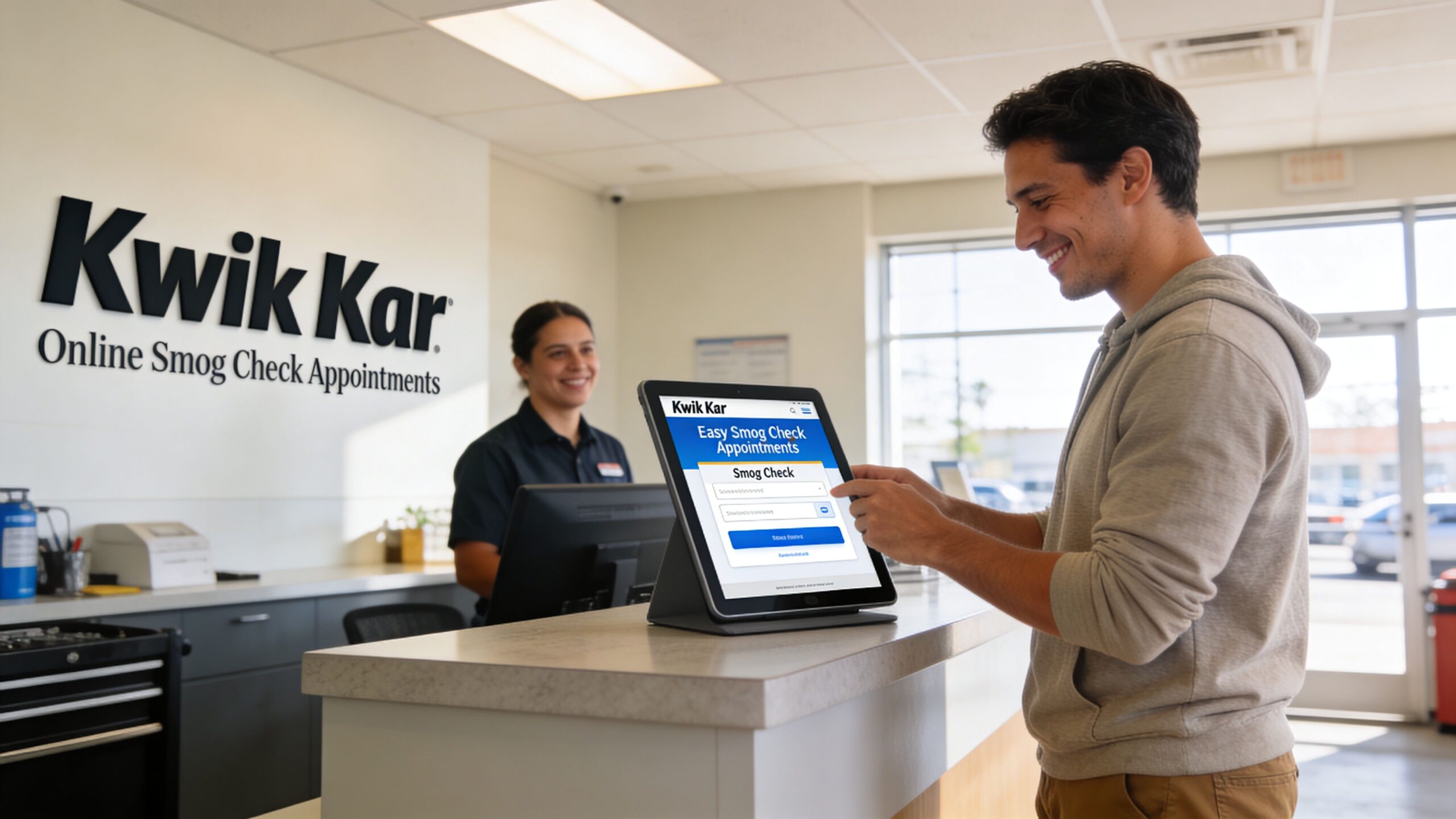
What makes the process easier
A smoother visit usually starts before you arrive. Having your registration notice ready, knowing whether your car requires STAR service, and showing up with a warmed-up vehicle all help prevent delays.
Shops that handle inspections well also tend to do these things consistently:
- Verify the vehicle requirement first so you're not in the wrong lane or at the wrong type of station
- Use proper diagnostic equipment to avoid vague answers
- Explain failures in plain English instead of handing you a printout with no context
- Work efficiently with commuters and families who don't have a half day to spare
This matters even more for business vehicles.
Why fleet operators need a tighter process
Fleet managers don't look at smog checks the same way individual drivers do. One failed unit doesn't just create a repair bill. It can disrupt route planning, scheduling, and revenue-producing work.
California clean truck compliance brings that into sharper focus. When a vehicle fails, operators have a 90-day window to complete repairs and re-test before penalties apply, as outlined by Manteca Clean Truck Check compliance guidance. For fleet maintenance, that creates a clear trigger. Diagnose fast, repair correctly, and get the vehicle back through inspection without wasting days.
For a fleet account, a useful shop isn't just one that can run the test. It's one that can support documentation, downtime control, repeat scheduling, and fast communication when a unit needs attention.
Commercial vehicles need a process, not just a pass-or-fail result.
Navigating Smog Check Costs and Timelines in Manteca
You get the renewal notice, glance at the calendar, and the first two questions hit fast. What will this cost, and how long am I going to be here? Those are smart questions, especially if you are trying to fit a smog check between work, school pickup, or a busy shop schedule.
In Manteca, the final price can change from one vehicle to the next. The posted test fee is only part of the story. Your total often depends on the kind of vehicle you drive, whether the DMV sent you to a STAR station, and whether certificate fees apply. That is why two drivers can call around town and hear different numbers for what sounds like the same service.
A good way to look at it is like ordering tires. The headline price gets your attention, but the total depends on what your vehicle needs.
What can change the cost
Before you book, ask the shop these questions so you know the full price instead of just the advertised one:
- Is my vehicle required to go to a STAR station?
- Is the quoted price for my exact vehicle type, not just a base passenger car?
- Does the quote include the certificate fee, if one applies?
- Is this a regular price or a coupon price with restrictions?
- Will I owe another fee if the vehicle needs a retest after repairs?
That last question matters more than drivers expect. A low upfront price can lose its appeal if the process is unclear, the wait is long, or no one explains what to do next after a problem shows up.
How much time should you set aside
For many passenger vehicles, the inspection itself is fairly quick if the car is ready and the line is short. The bigger variable in Manteca is usually the wait, not the test.
Local timing often comes down to traffic flow at the shop. Early weekday slots are usually easier than lunch hour, late afternoon, or the end of the month when registration deadlines start catching up with people. If you walk in during a busy stretch, your visit can take longer because several drivers had the same idea.
If your check engine light has been on recently, deal with that before you show up. A quick check engine light diagnostic service can save you from paying for a test your vehicle was not ready to pass.
How Manteca drivers can avoid wasted time
A little prep cuts down on both waiting and repeat visits.
- Come with your registration or renewal notice
- Drive the car long enough to fully warm it up before arrival
- Avoid testing right after a battery disconnect
- Call ahead if you have a diesel, commercial vehicle, van, or SUV and want the correct quote
- Book ahead if you need a tighter time window
At Kwik Kar in Manteca, that planning matters because local drivers are often balancing more than one errand. The goal is simple. Get you in, run the test correctly, and give you a clear answer without turning a basic smog check into a half-day project.
Smog Check FAQs for Manteca Drivers
Some smog questions don't come up until you're already close to the appointment. These are the ones I hear most often from local drivers.
Quick answers to your smog check questions
| Question | Answer |
|---|---|
| My check engine light turned off by itself. Can I still test? | Maybe, but don't assume you're safe. Intermittent faults can return, and readiness problems can still keep a vehicle from passing. |
| Do I need to keep my smog paperwork? | Yes. Keep copies of your records because compliance documentation matters if questions come up later. |
| My car runs fine. Can it still fail? | Yes. A vehicle can fail for missing, altered, or tampered emissions components even if it seems to drive normally. |
| What if I drive an older high-mileage car? | Age and mileage don't automatically mean failure. Maintenance quality matters a lot more than many drivers think. |
| Are diesel and work vehicles treated the same as a family sedan? | Not always. Commercial and heavier-duty vehicles can have added compliance concerns, especially if they operate across routes and deadlines. |
A few edge cases drivers ask about
If your battery was recently disconnected, be careful about rushing into a test. Some vehicles need normal driving time before all systems are ready again. That's one reason a car can look fixed but still not be ready for inspection.
If your check engine light is on and you don't know why, get it diagnosed before you schedule the test. This engine light diagnostic guide can help you understand what that warning usually means and why guessing rarely saves money.
Bring your paperwork, arrive with the engine warmed up, and don't ignore a warning light just because the car still feels drivable.
If you're searching for smog check manteca ca, the smartest move isn't to hunt for the fastest possible stop. It's to go in prepared, understand what your vehicle needs, and handle problems before they become failed tests, rushed repairs, or registration headaches.
If you'd like help with inspections, diagnostics, preventive maintenance, or fleet service, Kwik Kar Oil Change and Auto Care is a solid local resource. Their team handles everyday driver needs and work-vehicle upkeep with clear communication, convenient scheduling, and practical repair support that helps keep cars compliant and dependable.