
Your registration renewal notice shows up, and the first question is usually simple: “Do I still need a state inspection in Houston, or did Texas get rid of that?”
That confusion is normal in 2026. A lot of drivers heard that inspections ended, then found out that doesn’t quite apply the same way in Houston. The result is wasted trips, bad advice from outdated websites, and people showing up unsure whether they need a full inspection or only an emissions test.
If you’re searching for state inspection houston, the short version is this: Houston drivers still need to pay attention to inspection rules, but the rule that matters now is narrower than it used to be. Once you understand what still applies, the process is straightforward, and avoiding a fail usually comes down to a few basic checks before you leave home.
Your Guide to the New Houston Vehicle Inspection Rules
Most drivers remember the old routine. Renew registration, swing by an inspection station, get the car checked, move on with your week. What changed is that Texas split the old process apart, and a lot of online advice still hasn’t caught up.
That’s why drivers in Houston keep running into mixed messages. Someone in a rural county may no longer need the same inspection they needed before, while someone in the Houston area still has to meet emissions requirements. Those are two different situations, and mixing them up can delay your registration.
A good starting point is understanding the law change in plain English. If you want the broader background on the Texas update, this overview of Texas car inspection laws helps explain why the process feels different now.
Practical rule: In Houston, stop asking “Do I need the old state inspection?” and start asking “Does my vehicle still need an emissions test for registration?”
That shift matters because it changes what the shop is checking, what can cause a failure, and what you should inspect yourself before you go. For most drivers here, the biggest headaches in 2026 don’t come from the old statewide safety checklist. They come from emissions-related issues, especially warning lights and readiness problems that aren’t obvious until the car gets tested.
The good news is that this is easier to handle than people think. When you know whether your vehicle falls under Houston’s emissions rules, and you do a quick pre-check before your visit, the whole errand gets much more predictable.
Understanding Houston's 2026 Inspection Requirements
Texas changed the rules, but Houston didn’t become inspection-free. That’s the part many drivers miss.
As of 2025, Texas ended mandatory annual safety inspections for most noncommercial vehicles through House Bill 3291, but drivers in the Houston metro area still need annual emissions testing for gasoline-powered vehicles less than 25 years old in Harris, Fort Bend, Galveston, Montgomery, and Brazoria counties. The state also added a $7.50 inspection program replacement fee to registration renewals, as reported by ABC13’s coverage of the Texas inspection law change.
Who still needs testing in Houston
If your vehicle is registered in the Houston metro counties listed above, your registration requirements still depend on emissions compliance. That’s the key difference between Houston and many other parts of Texas.
In practice, this means a lot of drivers who heard “Texas got rid of inspections” only heard half the story. For Houston-area registration, emissions still matters. If your vehicle falls into the covered age and fuel category, skipping the test can hold up renewal.
What kind of test your vehicle gets
The exact test depends on the vehicle.
According to Motor’s report on the status of vehicle state inspection, vehicles in the Houston metro area that are 2 to 24 model years old must undergo specific emissions testing. Pre-OBDII vehicles use an accelerated simulation mode (ASM) test, while certain heavier vehicles such as some light trucks and SUVs over 8,500 GVW use a two-speed idle test. That same report notes that enforcement is taken seriously, and Texas DPS has suspended multiple Houston-area stations for non-compliance.
Here’s the simple version:
| Vehicle situation | What usually matters |
|---|---|
| Gasoline vehicle in a Houston emissions county | Annual emissions compliance for registration |
| Pre-OBDII vehicle | ASM testing |
| Certain heavier light trucks and SUVs | Two-speed idle testing |
| Vehicle over the age cutoff noted above | Different requirements may apply |
What the replacement fee does and doesn’t mean
A lot of people see the $7.50 fee on registration and assume that means they’ve already paid for everything inspection-related. That’s not how to think about it.
That fee is tied to the state’s program change. It doesn’t mean every Houston driver is exempt from emissions testing. It also doesn’t mean every vehicle gets treated the same. Registration and testing are still connected, but the old safety-inspection model is no longer the right mental model for most personal vehicles.
Houston drivers don’t need outdated advice. They need the current rule for their county, their vehicle type, and their registration.
The easiest way to avoid confusion
Before you go anywhere, answer three questions:
Where is the vehicle registered?
Houston-area county registration is what triggers the local emissions rule.What fuel type and model year is it?
That determines whether emissions testing applies and what method may be used.Is the vehicle personal or commercial?
Commercial vehicles can follow a different path, which matters a lot for fleets.
Once you know those three things, the process gets much clearer. Most mistakes happen when drivers assume Houston follows the same rule as every other Texas county. It doesn’t.
A Pre-Inspection Checklist to Guarantee a Pass
Most failed inspections aren’t dramatic. They’re the kind of small problems drivers don’t notice until the car is already in the bay.
That’s why a short driveway check saves so much frustration. The first-time failure rate for Texas vehicle inspections can be as high as 12.5%, and the most common preventable failures include worn tires, burnt-out bulbs, and an illuminated check engine light, which can account for 15-25% of all failures, according to the Auto Care Association report on Texas safety inspection outcomes.
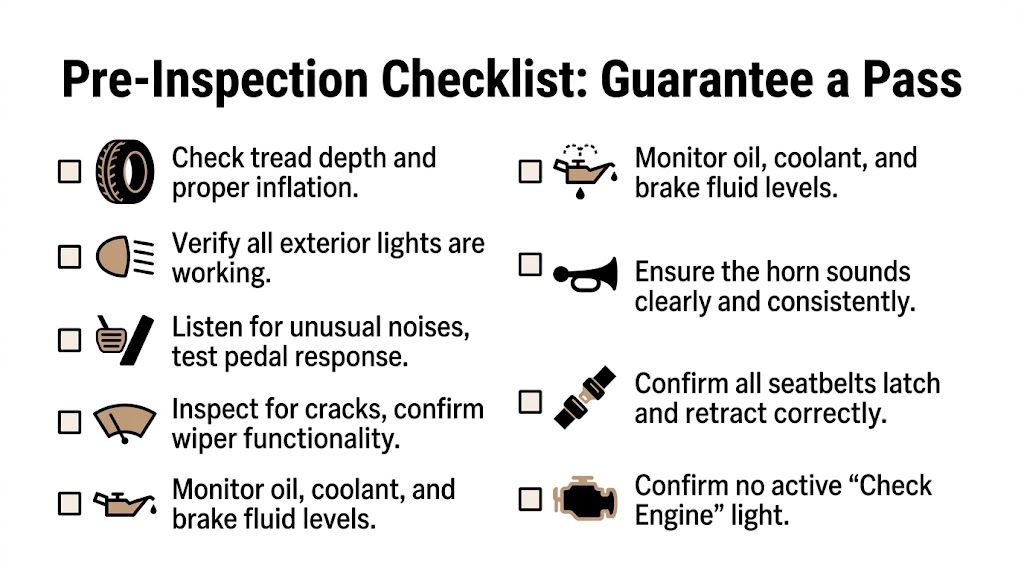
If you want a fuller version to keep handy, this vehicle inspection checklist is a useful reference before your visit.
Start with the items that fail most often
Don’t overcomplicate this. Check the things that commonly create avoidable failures.
- Tires first: Look at tread and sidewall condition. Tires below 2/32 inch tread depth are a known failure point. If the tread is very shallow, uneven, or the tire looks worn on one edge, handle that before inspection.
- Every exterior light: Turn on headlights, brake lights, turn signals, taillights, and the license plate light. Burnt-out bulbs are one of the easiest reasons to fail.
- Check engine light: If it’s on, assume there’s a problem that needs diagnosis before testing. Don’t count on it “maybe passing anyway.”
- Wipers and windshield condition: Make sure you can clear the glass properly and that the windshield doesn’t have damage that creates visibility issues.
- Horn and seatbelts: These are easy to overlook because drivers rarely test them.
Why the check engine light matters so much
This one causes more trouble than almost anything else because drivers often think the car “feels fine,” so the light must not matter. For emissions testing, that logic doesn’t help.
If the light is on, the vehicle’s computer is already telling you there’s an emissions or engine-management issue that needs attention. Common causes can include oxygen sensor faults or EVAP-related problems, both of which are exactly the sort of issues that can stop a pass.
If your dash has a warning light on, don’t guess. Scan it before inspection and fix the cause, not just the symptom.
A smarter driveway routine
A good pre-check doesn’t need fancy equipment, but it should be systematic. Walk around the car once with the lights on, then sit in the driver’s seat and check what the dashboard is telling you.
A simple routine looks like this:
Walk the tires
Look for low tread, cracking, obvious punctures, or unusually low pressure.Cycle the lights
Use the parking lights, brake pedal, hazards, and turn signals. If you’re alone, back up near a reflective surface or ask someone to help.Start the engine and watch the dash
Warning lights should come on briefly and then go out. If the check engine light stays on, deal with it before test day.Test the basics
Hit the horn, buckle each seatbelt, run the wipers, and make sure nothing obvious is broken.
What doesn’t work
Drivers lose time when they try shortcuts that don’t solve the actual issue.
| What people try | Why it backfires |
|---|---|
| Clearing codes right before inspection | The issue may still be present, and the system may not be ready |
| Ignoring one dead bulb | Small electrical issues still matter |
| Assuming “it drives normal” means it will pass | Emissions faults often don’t feel dramatic from behind the wheel |
| Waiting until registration is due | Any repair or retest becomes more stressful under a deadline |
One more practical point. If you’ve recently disconnected the battery or cleared a code, give yourself time before inspection. A car that hasn’t completed its normal drive cycle can create unnecessary trouble even after a repair.
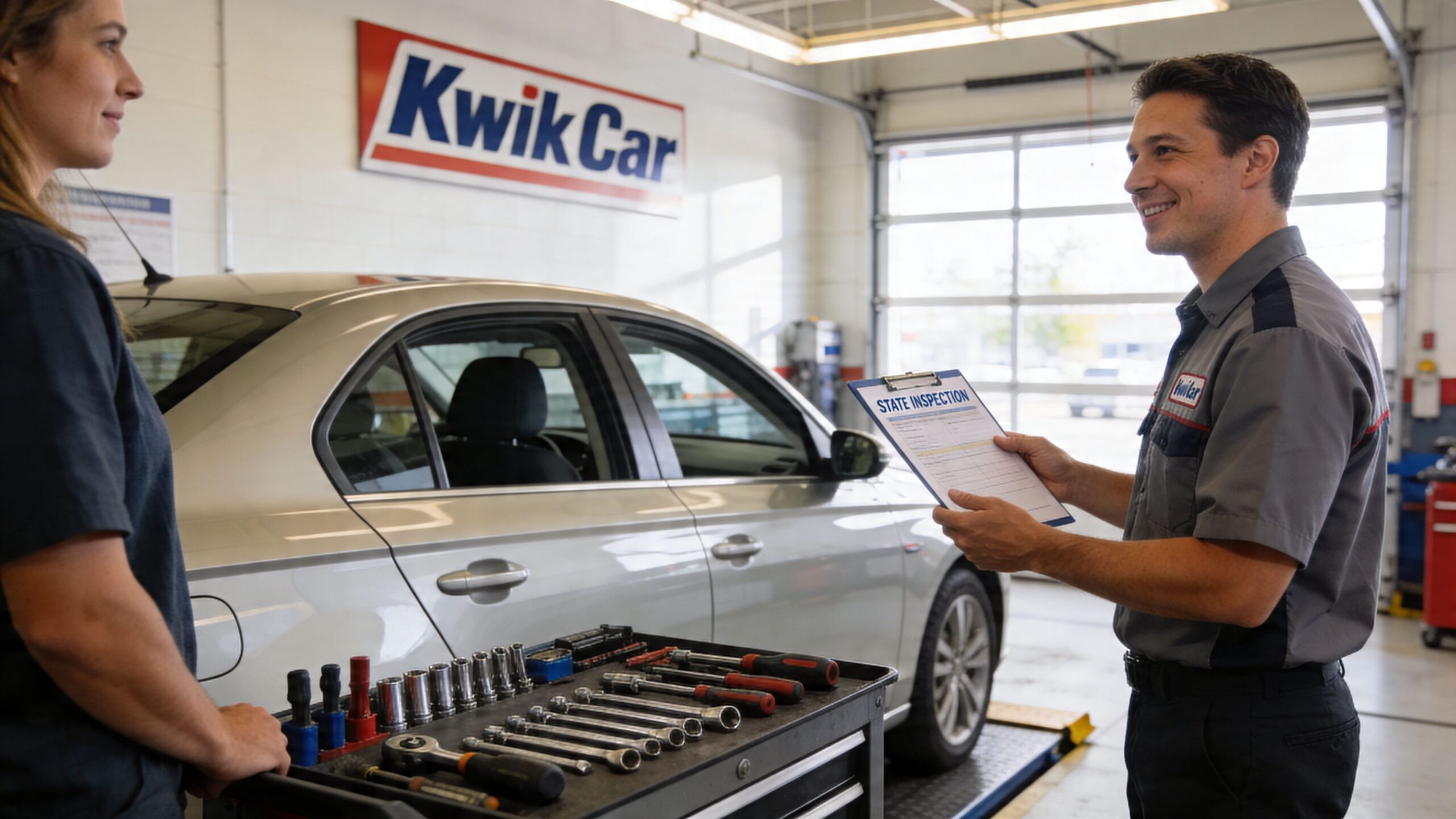
What to Expect During Your Visit to Kwik Kar
A lot of inspection anxiety comes from not knowing what happens once you pull in. The visit is usually much simpler than people expect.
You arrive, check in, and the technician confirms the vehicle information needed to run the inspection process correctly. Having your proof of insurance and valid ID ready helps keep the check-in smooth.
What the technician is actually looking at
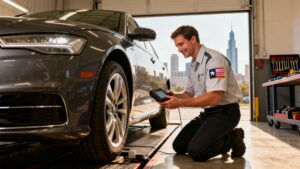
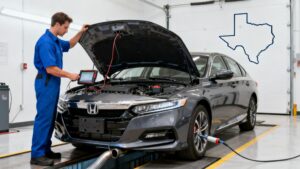
For most Houston-area personal vehicles, the visit centers on emissions compliance rather than the old full safety routine many drivers remember from past years. The technician connects the appropriate testing equipment based on the vehicle’s age and category, then verifies that the emissions-related systems respond the way they should.
That process is one reason station compliance matters so much. The state expects the testing to be performed correctly, and shops that cut corners can face enforcement action. For drivers, that’s a good reason to use a station that follows the current rules instead of relying on outdated habits.
A practical point that often gets overlooked is communication. Good shops explain whether the car is being checked through the onboard system or through another test method tied to the vehicle type, and they’ll tell you plainly if a readiness or warning-light issue is going to block a pass. For repair shops trying to make that communication clearer online, resources like Auto Repair Reputation Management are useful because they focus on how shops present accurate service information and set customer expectations.
The visit step by step
Here’s the usual flow:
- Check-in: Confirm vehicle details and required documents.
- Vehicle setup: The technician positions the car and prepares the testing equipment.
- Emissions portion: The system reads the car or performs the applicable emissions procedure for that vehicle.
- Basic confirmation items: The technician verifies the condition of required items related to the inspection process, such as making sure the vehicle is testable and complete.
- Results: You get a clear pass or fail result, along with the reason if something needs attention.
This short video gives helpful visual context on the inspection process and what technicians are checking:
What helps the appointment go faster
Three habits make a noticeable difference:
- Bring the right documents
- Don’t wait until the last possible day
- Handle warning lights before arrival
If the vehicle has an active issue, the inspection lane is the wrong place to discover it for the first time. The smoothest visits happen when the car arrives with no dash surprises and the owner already knows the basic registration requirement.
How to Handle a Failed Inspection Without the Stress
A failed inspection feels frustrating, but it’s usually a repair-and-retest problem, not a disaster. The key is reading the result correctly and taking the next step without guessing.
One reason people get tripped up is that many websites still describe the old Texas process in broad terms. That creates confusion for Houston drivers who still need an emissions test while other drivers elsewhere are dealing with different rules. As noted by Down Auto’s discussion of outdated inspection information after the 2025 law change, current guidance matters because drivers can otherwise pay for unnecessary services or miss the one test they still need.
Read the failure report carefully
The Vehicle Inspection Report tells you why the car didn’t pass. Start there.
If the issue is emissions-related, the report points you toward the system that needs attention. In practice, common causes often include a check engine light, an EVAP fault, or another problem tied to the emissions controls. Don’t replace parts blindly. Diagnose the exact cause first.
A fail result is only useful if you treat it like a diagnosis starting point, not a verdict on the whole car.
Use the retest window wisely
If your vehicle fails, act quickly while the reason is still fresh and the repair plan is clear. Waiting too long usually turns a simple fix into a stressful registration scramble.
A sensible approach looks like this:
Confirm the exact failure item
Don’t rely on memory. Read the report line by line.Fix the actual cause
If the check engine light triggered the fail, solve the fault that turned the light on. Resetting the light without repairing the issue usually wastes time.Drive the vehicle as needed after repair
Some repairs need normal driving afterward so the vehicle can complete its system checks.Return promptly for the recheck
The faster you come back after a proper repair, the easier the whole process feels.
Common mistakes after a fail
Drivers often make the same few errors:
- They chase symptoms instead of codes
- They replace the cheapest part first and hope
- They keep driving with the light on and delay the retest
- They rely on outdated online advice that no longer fits Houston rules
If you fail because of an emissions issue, the best move is a clear diagnostic path and a shop that can explain what the report means in plain language. That keeps the problem small and gets you back to registration as quickly as possible.
Streamline Your Fleet Inspections and Schedule Online
Fleet inspections are a different animal from personal vehicle visits. A passenger car owner can shrug off an extra errand. A fleet manager can’t. One failed work vehicle affects routes, drivers, scheduling, and revenue all at once.
That’s why inspection planning works better than inspection reacting. Commercial vehicles often face stricter requirements than personal vehicles, and high-mileage units tend to reveal the same weak spots over and over if nobody addresses them before inspection day.

Where fleet programs save real time
For commercial fleets, an active check engine light is a primary cause for failure, affecting up to 35% of urban fleet vehicles. Fleet programs can reduce re-inspections by 40% through predictive maintenance and bundled services, while cutting operating costs by 15-25% compared to ad-hoc inspections, according to Wilhite Law Firm’s summary of Texas inspection and fleet maintenance issues.
Those numbers line up with what experienced fleet managers already know. The expensive part usually isn’t the inspection itself. The expensive part is unplanned downtime, repeat visits, and sending drivers back out in vehicles that should’ve been scanned and serviced earlier.
What a workable fleet process looks like
A fleet inspection plan should be boring in the best possible way. No surprises, no guessing, no units showing up with obvious faults.
Good operators usually build around a few habits:
Pre-scan vehicles before inspection dates
Catch warning lights and system faults before the truck or van reaches the lane.Group service and inspection work together
Tires, brakes, warning lights, and scheduled maintenance should be coordinated instead of handled as separate emergencies.Track repeat failure patterns by unit type
If one subset of vehicles keeps failing for the same reason, that’s a maintenance planning issue.Schedule in batches
That keeps drivers and dispatch from losing time to scattered appointments.
For fleet managers comparing broader compliance options, especially for larger commercial operations, it can also help to understand how other providers structure specialized DOT and FHWA inspection services for regulated vehicles.
Choosing a shop for state inspection houston fleet work
The right shop for fleet work doesn’t just perform the inspection. It helps remove repeat friction.
Look for these signs:
| What matters | Why it matters |
|---|---|
| Consistent scheduling | Fleet managers need predictable turnaround |
| Diagnostic capability | Warning-light issues should be identified quickly |
| Preventive maintenance support | Fewer repeat failures and less downtime |
| Clear communication | Managers need simple pass/fail and repair decisions |
For businesses managing multiple vehicles, a structured fleet preventive maintenance program is often the difference between a controlled inspection calendar and constant catch-up work.
Among local options, Kwik Kar Oil Change and Auto Care handles inspections, diagnostics, and preventive maintenance in one place, which is practical for drivers and fleet managers who want fewer separate stops.
For everyday drivers, online scheduling still helps
Even if you only need one vehicle tested, the same principle applies. Don’t leave inspection to chance.
Booking ahead helps you avoid unnecessary waiting, gives you time to handle a warning light if one shows up, and makes it easier to pair the visit with routine maintenance. That’s especially helpful when your registration deadline is close and you don’t want inspection to become a multi-trip problem.
If your goal is simple, current guidance on state inspection houston, the smartest move is the same for fleets and individual drivers. Confirm what your vehicle needs, fix the obvious issues before the visit, and get on the schedule before the deadline gets tight.
When you need current inspection guidance, emissions testing, diagnostics, or preventive maintenance, Kwik Kar Oil Change and Auto Care is a straightforward place to start. Schedule your visit, bring your documents, and let the team help you handle Houston registration requirements without the usual confusion.