


A car diagnostic scan reads your vehicle’s onboard computer to surface stored fault codes, live sensor data, and system warnings before a small problem becomes an expensive repair or a safety risk.
TL;DR:
- Catch problems early, often before a warning light even appears
- Avoid costly downstream repairs by fixing the root cause first
- Verify a used car’s condition or confirm a repair was done correctly
The scan connects to your car’s OBD-II port and pulls data from the Engine Control Unit (ECU) and other modules. Standards for that port are set by the EPA, and the technicians who interpret the results are credentialed through ASE. Shops like Kwik Kar Oil Change & Auto Care combine both to give you a clear picture of your vehicle’s health.
Table of Contents
- Why a diagnostic scan matters: what OBD-II actually reads
- What a scan can detect across your vehicle’s systems
- When to get a scan and what it costs
- DIY vs. professional scans: which one do you actually need?
- The real financial case for regular diagnostics
- What a scan cannot tell you: real limitations to know
- How to choose a trustworthy diagnostic service
- What a professional diagnostic actually looks like at Kwik Kar
- Key Takeaways
- The scan is only half the story
- Ready for a professional diagnostic? Here’s what Kwik Kar offers
- Useful sources for further reading
- FAQ
Why a diagnostic scan matters: what OBD-II actually reads
Every car sold in the U.S. since 1996 has an OBD-II port, usually located under the dashboard on the driver’s side. Plug in a scanner and it talks directly to the ECU, pulling three types of data that each tell a different part of the story.
Diagnostic Trouble Codes (DTCs) are the most familiar output. They come in three states:
- Stored codes — a fault has been confirmed and logged
- Pending codes — a potential fault detected on one drive cycle but not yet confirmed
- Historic codes — a fault that occurred but cleared itself
Live data streams real-time sensor readings: engine RPM, coolant temperature, fuel trim, oxygen sensor voltage, and dozens more. Freeze-frame data captures a snapshot of those same readings at the exact moment a fault was logged, giving a technician context that a code alone cannot provide.
The scan is a data-gathering step, not a final verdict. J.D. Power notes that codes narrow the search but technicians still use hands-on tests and inspection to confirm root causes. Think of it as the scan pointing to the right neighborhood; the technician finds the exact address.
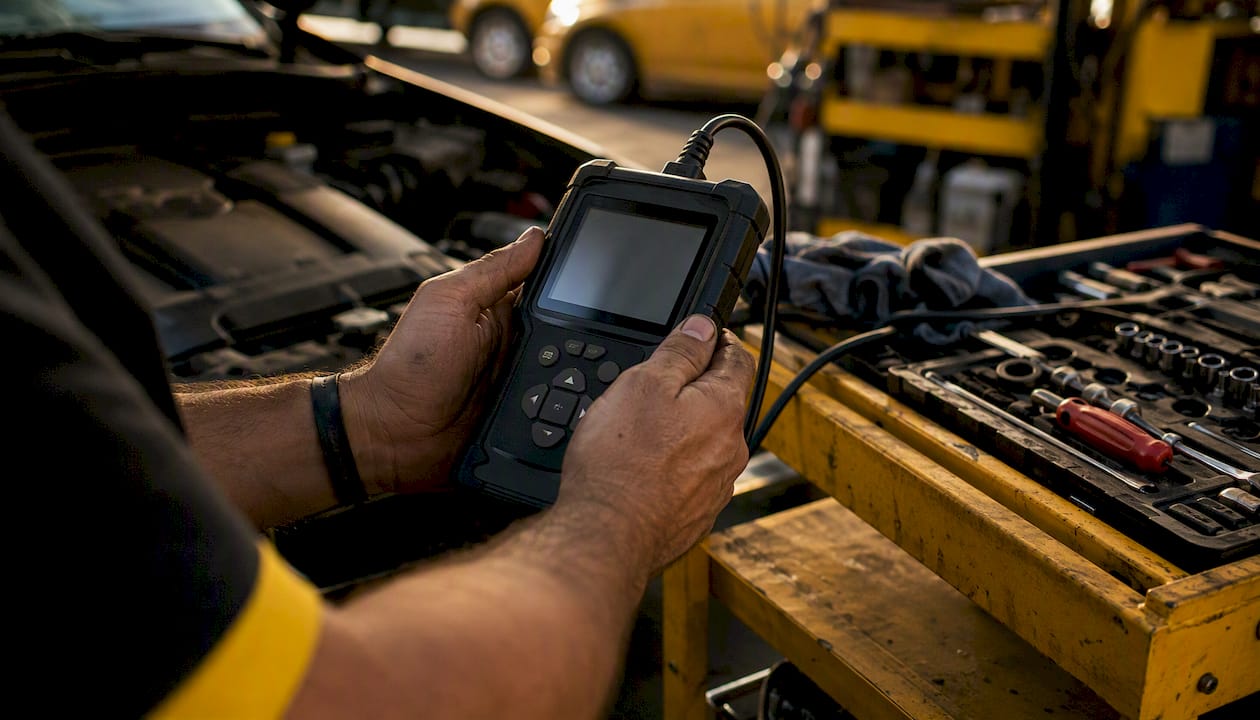
Pro Tip: Capture live data under three conditions — at idle, under light load, and during a road test. Intermittent faults that don’t show up at idle often reveal themselves when the engine is working harder.
What a scan can detect across your vehicle’s systems
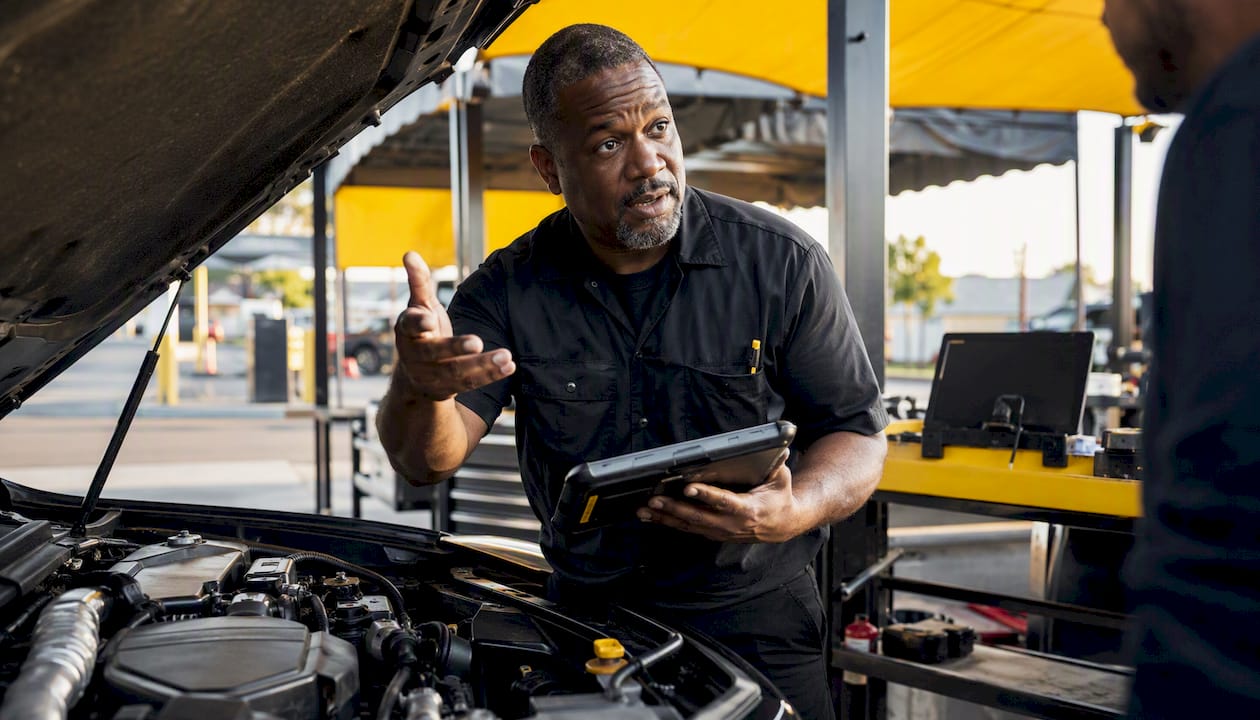
Modern vehicles contain roughly 300 million lines of code, and a professional scanner can access most of the modules managing that code. Here are the major systems and common faults a scan surfaces:
| System | Example Problem | Typical Next-Step Test |
|---|---|---|
| Engine (Powertrain) | Misfire — P0300 | Compression test, ignition coil check |
| Fuel/Emissions | Catalyst efficiency low — P0420 | Oxygen sensor test, exhaust inspection |
| Transmission | Shift solenoid fault | Fluid check, solenoid resistance test |
| ABS/Brakes | Wheel speed sensor fault | Sensor gap check, wiring inspection |
| Airbag/SRS | Clockspring fault | Clockspring resistance test |
| Electrical/Body | Door module fault | CAN bus voltage check |
| HVAC | Blend door actuator | Actuator sweep test |
| Battery/Charging | Voltage low | Load test, alternator output check |
A few important clarifications on those codes:
- P0300 (random misfire) can stem from spark plugs, ignition coils, fuel injectors, or even a vacuum leak. The code identifies the symptom, not the part.
- P0420 (catalyst efficiency below threshold) is one of the most misdiagnosed codes. Many shops replace the catalytic converter when the actual fault is a failing upstream oxygen sensor.
- Safety-system codes (ABS, SRS/airbag) always warrant immediate professional attention, regardless of how the car feels to drive.
Codes narrow the search, but a trained technician uses the code as a starting point for targeted testing, not as a parts-replacement checklist.
When to get a scan and what it costs
Some triggers call for a scan right away; others fit into a routine schedule.
Scan immediately when you see:
- Check engine light (solid or flashing)
- Transmission warning light
- ABS or traction control warning
- Airbag/SRS indicator
- Sudden drop in fuel economy
- Rough idle, hesitation, or stalling
Schedule a scan soon when you notice:
- Unusual noises that appeared gradually
- Before purchasing a used vehicle
- After a repair, to confirm the fix cleared all codes
- Before a Texas state inspection, to check emissions readiness
Regular OBD-II checks can also be part of a seasonal maintenance routine, catching trends in fuel trim or battery voltage before they escalate into a breakdown.
Time and cost: The scan itself takes roughly 15–30 minutes. When a technician adds a road test and targeted follow-up testing, expect 30–90 minutes total. Diagnostic fees at U.S. shops typically range from $75 to $150, though many shops apply that fee toward the repair cost if you proceed with the work. Always ask upfront whether the diagnostic charge is separate or credited.
Booking flow:
- Call or book online and describe your symptoms
- Drop off the vehicle; technician performs the scan and road test
- Receive a written summary of codes and recommended tests
- Approve the repair estimate before any work begins
- Confirmatory scan after repair to verify codes are cleared
DIY vs. professional scans: which one do you actually need?
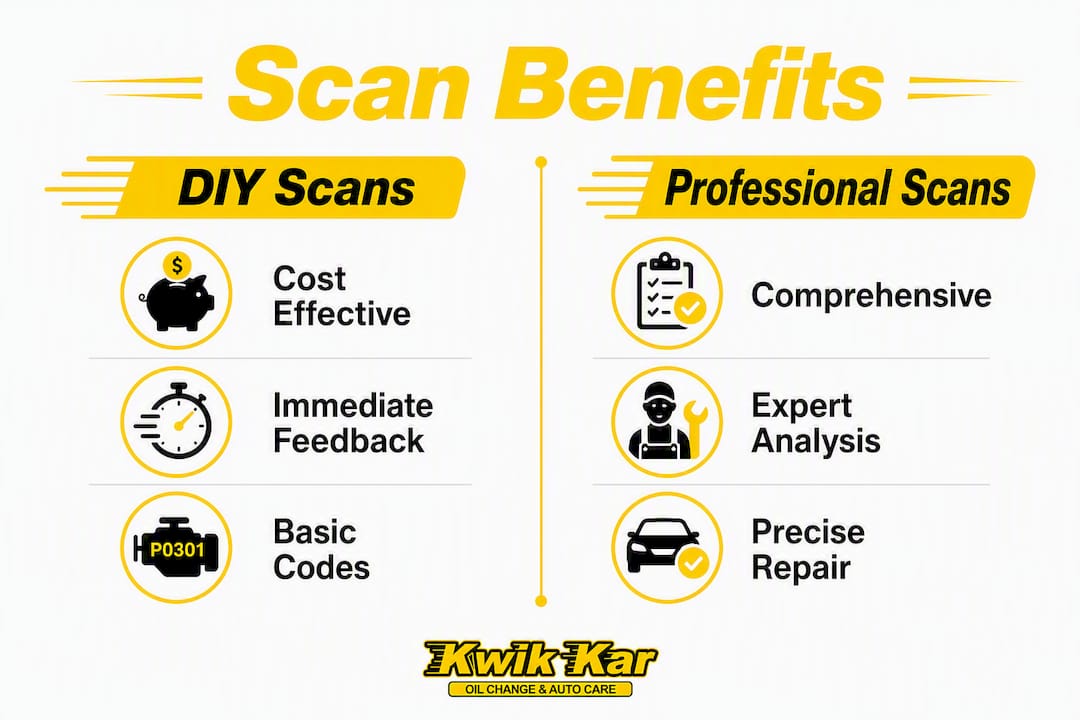
A basic OBD-II reader costs $20–$80 and gives you stored DTCs and basic freeze-frame data. Bluetooth OBD-II adapters paired with smartphone apps like Torque Pro or Car Scanner ELM OBD2 add live PID monitoring and can be genuinely useful for a mechanically inclined owner. These wireless tools are growing in popularity, but OEM-level functions — module programming, ADAS calibration, bi-directional controls — still require professional-grade equipment.
DIY scan: quick steps
- Locate the OBD-II port (under the dash, driver’s side)
- Plug in your reader or Bluetooth adapter
- Turn the ignition to “on” without starting the engine
- Read and screenshot all stored and pending codes
- Note freeze-frame data (RPM, load, coolant temp at fault)
- Bring that information to a shop for interpretation
DIY vs. professional: honest comparison
| Factor | DIY Scanner | Professional Diagnostic |
|---|---|---|
| Cost | $20–$80 (one-time) | $75–$150 per visit |
| Code access | Generic OBD-II codes | OEM + manufacturer-specific codes |
| Live data | Basic PIDs | Full sensor suite, bi-directional tests |
| ADAS/EV systems | Limited or none | Full module access |
| Root-cause confirmation | No | Yes, with hands-on testing |
| Repair verification | Code clear only | Confirmatory scan + road test |
The honest answer: a DIY scan is a smart first step that tells you whether to drive to a shop or call a tow truck. It does not replace a technician’s ability to combine scan data with a physical inspection. For anything involving safety systems, transmission faults, or codes you cannot interpret, bring the car in. You can also pair a DIY scan with car maintenance apps that track your vehicle’s history and flag patterns over time.
The real financial case for regular diagnostics
Diagnostic scanners catch issues early in a way that directly protects your wallet. A failing oxygen sensor, for example, costs roughly $150–$300 to replace. Left unaddressed, it degrades fuel economy and forces the catalytic converter to work harder until it fails — a repair that can run $1,000–$2,500 or more.
The U.S. automotive diagnostic scan tools market reflects the increasing importance of electronic diagnostics in modern vehicle maintenance.
That growth is driven by vehicle complexity. With hundreds of ECUs managing everything from fuel delivery to lane-keeping assist, a scan is no longer optional for thorough maintenance — it’s the starting point.
Direct benefits for you as a car owner:
- Lower repair bills — fix a $150 sensor before it destroys a $2,000 component
- Fuel economy — correcting fuel trim faults and misfires restores MPG
- Safety — ABS, airbag, and traction control faults surface before they matter in an emergency
- Emissions readiness — confirm your vehicle will pass a state inspection before you show up
- Used-car transparency — a pre-purchase scan reveals hidden codes a seller may not disclose
- Repair verification — a post-repair scan confirms the fix actually cleared the fault
For Texas drivers, emissions readiness monitors must be set before a state inspection will pass. A scan tells you exactly which monitors are ready and which need more drive cycles.
What a scan cannot tell you: real limitations to know
A clean scan result is good news, but it does not mean your car is problem-free. The ECU only logs a code when a sensor reading crosses a programmed threshold. Many real problems never trigger a code at all.
What scans routinely miss:
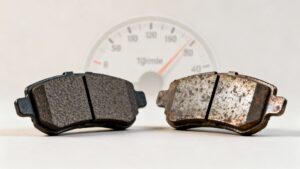
- Brake pad wear (no sensor on most vehicles)
- Suspension noise and worn bushings
- Early-stage fluid leaks
- Clutch wear
- Physical damage to wiring or connectors
- Intermittent faults that haven’t repeated enough to log
Red flags that always need a hands-on inspection, regardless of scan results:
- Low oil pressure warning
- Smoke from the engine bay or exhaust
- Sudden, significant loss of power
- Persistent airbag or traction control warnings
- Grinding or clunking noises under braking
A physical multi-point inspection catches what the scan misses. Brake pad thickness, suspension play, fluid condition, and belt wear all require eyes and hands, not just a scanner.
Pro Tip: Always ask your shop to combine the scan with a multi-point inspection and a road test. The three together give you a complete picture — scan data alone leaves gaps that can become expensive surprises.
How to choose a trustworthy diagnostic service
Not every shop that offers a “free diagnostic” is giving you a real one. Here’s how to tell the difference.
Trust signals to look for:
- ASE-certified technicians (ask to see credentials or check the shop’s certification page)
- Written estimate provided before any repair work begins
- Clear explanation of each code and what additional testing is needed
- Time estimate given upfront for the diagnostic process
- Warranty offered on parts and labor
Questions to ask when you call or drop off:
- “Will I receive a printout of the codes and live-data readings?”
- “Is the diagnostic fee billed separately, or does it apply toward the repair?”
- “Which systems will you scan — powertrain only, or all modules?”
- “Will you perform a road test as part of the diagnostic?”
- “What happens if the scan doesn’t find the cause of my symptom?”
Red flags to avoid:
- Vague diagnosis with no specific codes or test results shown
- Pressure to replace parts before any testing is done
- Refusal to show you the recorded scan data
- A “free diagnostic” that immediately leads to a large parts estimate with no explanation
- No written estimate before work begins
Shops accredited by RepairPal or NAPA AutoCare have agreed to pricing transparency and quality standards, which gives you an additional layer of protection when choosing where to go.
What a professional diagnostic actually looks like at Kwik Kar
Understanding the workflow helps you know what to expect and what questions to ask. At Kwik Kar Oil Change & Auto Care, the process follows a structured ASE-certified sequence:
- Customer intake — technician records your symptoms, recent repairs, and any warning lights
- Full scan — all accessible modules are scanned, not just the powertrain
- Live-data capture — real-time sensor readings are reviewed for out-of-range values
- Road test — the technician replicates your symptom under driving conditions
- Targeted testing — oscilloscope checks, pressure tests, and sensor inspections based on scan findings
- Written estimate — every recommended repair is documented with cost before you approve anything
- Confirmatory scan — after the repair, a second scan confirms all codes are cleared and monitors are set
Kwik Kar’s ASE-certified diagnostic service covers both domestic and import vehicles, and technicians explain findings in plain language before any work begins. The shop’s ASE and RepairPal credentials are publicly listed, so you can verify them before you book.
Shop transparency checklist:
- Scan printout provided to the customer
- Technician explains each code and what it means in plain language
- All recommended tests documented before work starts
- Written estimate signed before any repair begins
- Post-repair scan confirms resolution
Key Takeaways
A car diagnostic scan is the fastest, most cost-effective way to identify electronic faults, prioritize repairs, and protect your vehicle’s long-term safety and reliability.
| Point | Details |
|---|---|
| Scan at the first warning sign | Any warning light, driveability change, or pre-purchase check warrants an immediate scan. |
| Codes guide, not conclude | DTCs narrow the search; a technician’s hands-on testing confirms the actual root cause. |
| DIY has real limits | Consumer OBD-II readers show generic codes but cannot access safety modules or run bi-directional tests. |
| Early detection saves money | Fixing a sensor fault early prevents expensive downstream failures like catalytic converter replacement. |
| Kwik Kar Oil Change & Auto Care | ASE-certified technicians perform full-module scans, road tests, and written estimates before any repair begins. |
The scan is only half the story
Here’s something most owners don’t hear often enough: a diagnostic scan is a starting point, not a finish line. The shops that serve you best are the ones that treat the scan as a question, not an answer.
The most common misconception we see is the assumption that a clean scan means a healthy car. Brake pads don’t send codes. A leaking valve cover gasket won’t trigger a DTC until oil gets somewhere it shouldn’t. Suspension wear is silent until it isn’t. A scan that shows no stored codes is genuinely useful information, but it tells you nothing about the mechanical condition of your brakes, your tires, or your steering components.
The flip side is also true: a car with three stored codes isn’t necessarily in worse shape than one with none. Context matters. A pending P0420 on a vehicle with 180,000 miles and a recent oxygen sensor replacement is a very different situation than the same code on a 40,000-mile car. That’s why the technician’s interpretation, backed by a road test and a physical inspection, is where the real value lives. The scan gets you to the right conversation. The technician gets you to the right repair.
Ready for a professional diagnostic? Here’s what Kwik Kar offers
Skipping the guesswork on your check engine light is a smart decision, and Kwik Kar Oil Change & Auto Care makes the process straightforward. ASE-certified technicians perform a full-module scan, capture live data, road-test your vehicle, and hand you a written estimate before touching anything. You leave knowing exactly what was found, what it means, and what it will cost to fix.
Bring your vehicle history, a description of your symptoms, and any screenshots from a DIY scan if you have them. That information helps the technician get to the root cause faster. Current promotions, including $30 off maintenance service with a free inspection, can offset the diagnostic cost significantly.
Book your engine diagnostic appointment at Kwik Kar Oil Change & Auto Care in Spring Valley, TX, or visit the full-service auto care center page to see everything covered under one roof.
Useful sources for further reading
These authoritative sources back the claims in this article and offer additional depth for owners who want to dig further:
- What Is a Car Diagnostic Test? (J.D. Power) — plain-language explanation of how scans work and what codes mean
- EPA Regulations for Emissions, Vehicles, and Engines — primary source for OBD-II emissions standards and compliance requirements
- Can an OBD2 Scanner Help with Preventive Maintenance? (UDIAG) — practical guide to using OBD-II tools for routine maintenance monitoring
- U.S. Automotive Diagnostic Scan Tools Market Outlook 2031 (TechSci Research) — market data on diagnostic tool adoption and vehicle complexity trends
- What Is a Car Diagnostic Test? A Complete Guide (Kwik Kar) — Kwik Kar’s owner-focused explainer on scan outputs and engine light interpretation
FAQ
Is getting a car diagnostic worth it?
Yes. A diagnostic scan typically costs $75–$150 and can prevent repairs that run into the thousands by catching faults early. Many shops credit the diagnostic fee toward the repair if you proceed.
Does a diagnostic tell you exactly what’s wrong?
It identifies fault codes and live-data anomalies, which point technicians toward the likely cause. Confirming the root cause still requires hands-on testing and inspection, since codes describe symptoms rather than specific failed parts.
Why is a diagnostic scan important for vehicle safety?
Safety-critical systems like ABS, airbags, and traction control store their own fault codes that only a scan can surface. A warning light on those systems should never be ignored, and a scan is the only way to know which component triggered it.
How often should you get a car diagnostic scan?
Scan immediately when any warning light appears. For preventive maintenance, seasonal or pre-trip scans help catch trends in fuel trim, battery voltage, and emissions readiness before they become problems.
Can Kwik Kar Oil Change & Auto Care run a full diagnostic?
Yes. Kwik Kar Oil Change & Auto Care’s ASE-certified technicians perform full-module scans, road tests, and targeted follow-up testing, and provide a written estimate before any repair begins. Book at kwikkarspringvalley.com.