

That unsettling rattle from under the hood when you hit the gas can definitely be nerve-wracking. It’s not just a random noise; think of it as your car trying to tell you something is wrong. Just like a cough signals a cold, your engine makes noises to communicate that a part is under stress, failing, or not getting the lubrication it needs.
An engine rattle when accelerating is one of the most common complaints we hear because it points directly to a problem that surfaces when the engine is working its hardest. These sounds should never be ignored.
Why Your Car Rattles When You Accelerate

Some rattles are fairly minor warnings, but others can signal imminent and very expensive engine damage. The real key is to figure out what you’re hearing and understand why it’s happening specifically when you put your foot down on the accelerator.
Understanding the Forces at Play
When you step on the gas, you’re placing the engine under a significant load. Internal parts start moving much faster, temperatures climb, and the demand for fuel and oil increases dramatically.
This stress is great at exposing underlying issues that might not be obvious when your car is just idling or cruising along at a steady speed. It's like finding a leak in a garden hose—it might only be a small drip at low pressure, but it becomes a spray when you turn the water on full blast.
A rattle under acceleration points to a breakdown in the precise harmony your engine needs to generate power smoothly and efficiently. It’s a direct symptom that something in that complex system is out of sync.
This is an especially common noise in higher-mileage vehicles. In fact, one study found that 18% of vehicles with over 100,000 miles on the odometer exhibit this symptom. The culprits can range from using the wrong fuel to failing sensors. If you're curious, you can explore more about these common engine noises to see the data behind them.
Common Reasons for Rattling Under Load
While we'll dive deeper into each of these causes later, it helps to have a quick overview of the usual suspects. Here are the most frequent reasons you might hear that metallic rattling sound:
- Engine Knock (Detonation): This is a sharp, metallic "pinging" sound. It happens when the air-fuel mixture inside the cylinders ignites too early, creating a shockwave. This is often caused by using low-octane fuel in a car that’s designed for premium.
- Low Oil Pressure: When there isn't enough oil, metal parts can't be properly lubricated. They start to grind and rattle against each other, which is extremely serious and can quickly lead to catastrophic engine failure.
- Worn Timing Chain or Belt: A timing chain that has stretched or a tensioner that has failed can slap against its housing. This creates a distinct rattle that’s usually most obvious on a cold start and during acceleration.
To help you make sense of what you might be hearing, we’ve put together a quick reference table. This guide summarizes the different rattles, what they likely mean, and how urgently you need to address them.
Quick Guide to Engine Rattles During Acceleration
| Type of Rattle | Likely Cause | Severity / Urgency |
|---|---|---|
| Sharp, metallic "pinging" that gets faster with RPMs. | Engine knock (detonation), often from low-octane fuel or carbon buildup. | Moderate. Stop if severe. Can cause long-term piston and cylinder damage. |
| Deeper, clattering or ticking that gets louder and faster as you accelerate. | Low oil pressure, worn lifters, or failing rod bearings. | CRITICAL. Stop driving immediately and check oil level. Potential for total engine failure. |
| Rattle from the front of the engine, especially on startup or when revving. | Loose or worn timing chain, failing tensioner, or a bad serpentine belt tensioner. | High. A failed timing chain can destroy your engine. Get it inspected right away. |
| Loud, metallic rattle from underneath the car. | Loose heat shield on the exhaust system or a failing catalytic converter. | Low to Moderate. Usually not an engine danger, but a loose part could fall off or cause a blockage. |
This table is a great starting point, but keep in mind that diagnosing a noise without seeing the car is tricky. If you hear a persistent rattle, especially one that sounds like grinding or deep knocking, the safest bet is always to have a professional technician take a look.
Learning to Decode Your Engine's Noises

When your engine makes a strange noise, it's not just random clatter; it’s communicating a specific problem. Think of it like a person's tone of voice—you can tell if they're happy or upset. In the same way, the unique sound of an engine rattle when accelerating provides vital clues about its health. Learning to distinguish between different sounds turns you into an automotive detective, helping you narrow down the potential causes.
Not all rattles are created equal. The most important step you can take is to listen closely and try to characterize the noise. Is it a light, high-pitched sound, or a deep, heavy one? Does it happen only on cold starts, or is it persistent?
Spark Knock vs Rod Knock
Two of the most common—and critically different—noises are spark knock and rod knock. Telling them apart is key.
Spark knock, also called detonation or pinging, is a light, tinny sound. Imagine shaking a handful of tiny marbles inside a metal can. This noise happens when fuel in the engine's cylinders ignites too early, creating small, out-of-sync explosions that fight against the engine’s natural rhythm. It often gets faster as your engine RPMs increase.
On the other hand, rod knock is a much more serious and ominous sound. This is a deep, heavy, and loud knocking that you can almost feel as well as hear. It’s caused by excessive space around the connecting rod bearings, which means metal is forcefully smacking against metal with every engine rotation. This sound indicates severe internal engine wear.
A light pinging noise is a problem that needs attention, but a deep, rhythmic knocking is a red alert that signals you should stop driving immediately to prevent catastrophic engine failure.
Other Distinguishing Sounds
Beyond the two major "knocks," other components create their own signature rattles that can help you or your mechanic pinpoint the issue. Understanding these can be incredibly useful.
For instance, a failing timing chain often creates a sound that is frequently described as similar to a bicycle chain slapping against its plastic guard. You'll typically hear this rattle coming from the front of the engine, and it's often loudest for a few seconds right after a cold start before quieting down.
Another sound you might notice is not from the engine itself but related to acceleration. Sometimes, a clicking or popping noise from the front of the car when accelerating and turning can point to issues with the drivetrain. You can learn more about these specific symptoms by checking out our guide on the signs of worn CV joints. Being able to describe the sound accurately is the first step toward a quick and effective repair.
The Most Common Culprits Behind Engine Rattle
Now that you’ve got an ear for the different kinds of rattles, let's pop the hood and dig into what’s actually happening. An engine rattle when accelerating is a direct cry for help—a symptom of a mechanical problem that almost always gets worse when you put the engine under load.
Understanding what might be going wrong helps you appreciate just how serious that noise can be. It's why ignoring it is never a winning strategy. The culprits can be anything from a simple maintenance miss to severe internal engine wear. Each one puts on its own mechanical drama when you hit the gas, and knowing the cast of characters is the first step to a real diagnosis.
Low Oil Level and Pressure
Think of your engine oil as its lifeblood. It’s the only thing standing between dozens of metal parts moving at incredible speeds. When the oil level drops too low, the oil pump can start sucking up air instead of oil, causing a dangerous drop in pressure.
Without proper lubrication, critical parts like the valvetrain lifters or rod bearings begin to make direct metal-on-metal contact. The sound you hear is a clattering or ticking rattle that gets louder and faster as you accelerate, because the engine is literally starving for oil. This is a critical warning. Running an engine with low oil pressure can lead to catastrophic failure in just a few minutes.
A rattle from low oil is your engine's desperate scream for lubrication. If you hear this, the very first thing you should do is pull over safely and check your oil level right away.
Incorrect Fuel Octane and Spark Knock
Another frequent offender is spark knock, which you might also hear called detonation. This is that light, metallic "pinging" sound we talked about earlier. It happens when you use a lower octane fuel than your car's manufacturer recommends, a problem especially common in modern, high-compression engines.
Low-octane fuel can ignite too early under the intense heat and pressure inside the cylinder. This premature ignition creates a shockwave that rattles the pistons—it's like a series of tiny, uncontrolled explosions fighting against the engine's natural rhythm. Over time, this can seriously damage your pistons and cylinder walls. The fix is often as simple as switching back to the right fuel octane listed in your owner's manual.
This issue can also be made worse by things like heavy carbon buildup on the pistons or a faulty sensor. Even a clogged fuel filter or a failing fuel injector can throw off the air-fuel mixture enough to cause a knock. If you want to dive deeper into that system, check out our guide on when to change a fuel injector.
Failing Timing Chain or Tensioner
A very distinct—and very serious—rattle comes from your engine’s timing system. The timing chain is responsible for synchronizing the crankshaft and camshafts, making sure the engine's valves open and close at the perfect moment. It’s an absolutely critical job, and when something goes wrong here, the resulting noise is a major red flag.
Many modern engines use long timing chains kept tight by a hydraulic tensioner. With time and mileage, these chains can stretch, and the plastic guides they run along can wear down. When the guides are shot or the tensioner fails, the chain goes slack.
As you accelerate, this loose chain gets whipped around, slapping against the inside of the timing chain cover. This creates that classic metallic rattle that’s often most obvious when you rev the engine. Ignoring this sound is a huge gamble. If that chain breaks, the pistons will slam into the valves, leading to complete and catastrophic engine destruction.
Simple DIY Checks You Can Safely Perform
Hearing an engine rattle when you accelerate doesn’t always mean you need to rush straight to the shop. A few safe, easy checks can help you play detective and start narrowing down the possible culprits. Think of it as doing a little triage right in your own driveway—no special tools necessary.
First things first: safety. Before you pop the hood, always make sure your car is in Park (or in gear for a manual with the handbrake pulled tight), parked on a level surface, and the engine is completely cool. Never, ever try to check fluids or touch engine parts when they're hot.
Check Your Engine Oil
The very first and easiest thing to check is your engine oil. It’s the single most common reason for engine rattles and, thankfully, the simplest to fix.
- Locate the Dipstick: Open the hood and look for the engine oil dipstick. It typically has a brightly colored handle, often yellow or orange, with a little oil can symbol on it.
- Check the Level: Pull the dipstick out, wipe it clean with a rag, and push it all the way back in. Pull it out a second time and look at where the oil level sits. It needs to be between the "MIN" and "MAX" or "ADD" and "FULL" marks.
- Inspect the Condition: Now, look closely at the oil itself on the dipstick. Healthy oil is usually a clean amber color and feels smooth. If it's pitch black, gritty, or looks like milky coffee, that’s a big red flag for old, contaminated oil that needs to be changed right away.
When oil is low or dirty, it can't properly lubricate all your engine's moving parts, leading directly to that rattling noise when the engine is working harder. If the level is low, simply adding the correct type of oil might quiet things down.
Verify Your Fuel Type
Using the wrong fuel is another frequent offender, causing a specific light, metallic "pinging" sound called spark knock. Your car is designed for a specific octane rating, like 87, 89, 91, or 93. Check your owner’s manual or look for a sticker inside your fuel door to see what it recommends.
If you’ve accidentally been filling up with a lower octane than your car needs, the rattle might just be the engine complaining. Switching to the correct grade on your next fill-up could make the noise disappear entirely.
This flowchart can help you visualize your next steps based on what you find.

As you can see, simple things like low oil or the wrong gas can cause rattles, but the chart also points toward more serious worn parts if those basic checks don't solve it. While these DIY steps are a great start, some rattles come from less obvious places, like a small air leak. You can learn more by reading our guide on how to check for vacuum leaks, which is another common source of strange engine noises.
When to Call a Professional Mechanic
While doing a few of your own DIY checks can be empowering, it's crucial to know your limits. Knowing when to put down the wrench is key for both your safety and your car’s long-term health. Some sounds aren't just warnings; they're clear red flags telling you to stop driving and call a professional right away.
Ignoring these serious noises can quickly turn what might have been a manageable repair into a catastrophic, and very expensive, engine failure.
Think of it this way: a light pinging is like a nagging cough you should get checked out soon. But a deep, loud knocking sound? That's a full-blown emergency requiring a trip to the ER. If your car is making that kind of noise, it's time to pull over safely and call for a tow.
Red Flags That Demand Immediate Attention
Certain symptoms, especially when they show up with an engine rattle when accelerating, just aren't worth the risk of driving any further. If you notice any of these, it's a clear signal to visit a trusted technician.
- A Loud, Deep Knocking Sound: This is often the dreaded "rod knock," a sign of severe internal engine damage. If you keep driving, a connecting rod could break and literally punch a hole through the side of your engine block.
- A Flashing Check Engine Light: A solid check engine light means "get this checked out when you can." But a flashing light is your car's way of screaming for help. It signals a severe misfire or another critical issue that is actively damaging expensive parts like your catalytic converter.
- Noticeable Loss of Power: If the rattle comes with a sudden or major drop in your car's get-up-and-go, it points to a serious problem with the fuel system, ignition, or the engine's internal mechanics.
- Smoke from the Exhaust or Engine Bay: Any visible smoke—whether it's blue, white, or black—paired with a rattle suggests a serious internal issue, like burning oil or a major problem with the fuel mixture.
What to Expect During a Professional Diagnostic
When you bring your vehicle to a shop like Kwik Kar, our technicians don't just guess. They follow a methodical process to accurately pinpoint the source of that rattle.
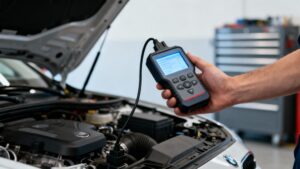
First, they will connect an advanced diagnostic scanner to your car’s OBD-II port. This tool acts like a digital roadmap, reading the error codes stored by your car's computer to point them toward the problem area.
Next, a technician will perform a thorough physical inspection. This often involves using a mechanic's stethoscope—yes, it works just like a doctor's! This specialized tool lets them listen intently to specific parts of the engine, amplifying sounds to isolate the rattle's exact origin. It's how a pro can tell the difference between a noisy fuel injector and a failing lifter.
The trend toward smaller, more powerful engines has actually made certain rattles more common. In major markets, an estimated 25% of vehicles built after 2010 have reported transmission rattles, which can be mistaken for engine noise, due to amplified vibrations from fewer cylinders. You can read more about the engineering challenges behind modern engine rattles and how the industry is addressing them.
Ultimately, this expert diagnostic process ensures the problem is fixed correctly the first time. It saves you from the headache and expense of chasing down the wrong repair.
Typical Repair Costs for Engine Rattle Causes
Understanding potential repair costs can help you make an informed decision without any surprises. The final price tag for fixing an engine rattle depends entirely on what's causing it. A simple fix might be quite affordable, while a major internal engine problem will be more of an investment.
Here's a breakdown of some common repair jobs and their typical cost ranges to give you an idea of what to expect.
Typical Repair Costs for Engine Rattle Causes
| Repair Job | Estimated Parts Cost | Estimated Labor Cost | Total Estimated Cost |
|---|---|---|---|
| Belt Tensioner Replacement | $50 – $150 | $100 – $200 | $150 – $350 |
| Heat Shield Repair/Replacement | $20 – $100 | $75 – $150 | $95 – $250 |
| Spark Plug Replacement (Set) | $40 – $120 | $100 – $250 | $140 – $370 |
| Catalytic Converter Replacement | $500 – $1,500+ | $200 – $400 | $700 – $1,900+ |
| Timing Chain/Belt Replacement | $300 – $800 | $500 – $1,200 | $800 – $2,000 |
| Rod Bearing Replacement | $200 – $500 | $1,500 – $3,000+ | $1,700 – $3,500+ |
Keep in mind that these are just estimates. Costs can vary based on your vehicle's make and model, the specific parts needed, and local labor rates. The best way to get an accurate price is to have a professional technician diagnose the issue first.
So, you've done your homework and realized that rattling engine isn't something you can fix with a socket wrench and a YouTube video. The next move is the most important one: finding a trustworthy auto repair shop. Making the right choice here is just as crucial as getting the diagnosis right in the first place. A good mechanic will solve that engine rattle when accelerating for good and give you back your confidence on the road.
The search can feel like a real chore, but if you know what to look for, you can steer clear of the bad apples. This isn't the time to just pick the closest or cheapest option; you're looking for a shop that's built on real professionalism and expertise.
Look for Signs of Quality
Your number one goal is to find technicians who are certified professionals, not just hobbyists. The absolute best sign of this is an ASE (Automotive Service Excellence) certification.
When you see that blue and white ASE seal, it means the mechanics have passed some seriously tough tests and have proven, hands-on experience. It’s the gold standard for skill and professionalism in our industry.
On top of that, a top-tier shop will have modern diagnostic equipment. Cars today are rolling computers, and you need advanced scanners to properly read trouble codes and figure out what’s wrong. It takes all the guesswork out of the repair process.
Prioritize Transparency and Communication
A reliable shop has nothing to hide. They should be able to walk you through the problem in plain English, without trying to confuse you with a bunch of technical jargon.
Here’s what you should expect from a service center you can trust:
- Detailed Written Estimates: You should always get a clear, itemized estimate breaking down parts and labor costs before any work starts. This is how you avoid nasty surprises on the final bill.
- Clear Communication: The service advisor should keep you in the loop. If they find anything else that needs fixing, they should be calling you for approval, not just adding it to the invoice.
- Positive Customer Reviews: Take a minute to check them out on Google or Yelp. A solid history of positive feedback about honesty, quality work, and fair prices is a huge green flag for a reputable business.
For our neighbors here in the Dallas area, Kwik Kar is committed to providing exactly this level of service. Our ASE-certified technicians are geared up and ready to get to the bottom of that engine rattle. Don't let a small noise turn into a massive headache—schedule your diagnostic appointment with us today and get back to driving with confidence.
Frequently Asked Questions About Engine Rattles
Even after digging into the most common causes, it’s completely natural to have a few more questions about that specific engine rattle when accelerating. We get it. Here are some quick, straightforward answers to the concerns we hear most often from Dallas drivers.
Can I Drive My Car If It's Rattling?
This all comes down to what you’re hearing. A faint, sporadic pinging noise (often spark knock) usually isn't an emergency, and you can probably drive to the shop. Just take it easy and avoid gunning the engine.
But if that rattle sounds more like a loud, deep, and rhythmic knocking, pull over as soon as it's safe. Continuing to drive with what could be a severe internal problem, like a failing rod bearing, might lead to catastrophic engine failure in a matter of minutes.
Is an Engine Rattle Always Expensive to Fix?
Not at all. In fact, sometimes the solution is surprisingly cheap and simple. The noise might be coming from something as minor as a loose exhaust heat shield, which a mechanic can often tighten up or re-secure for under $200. Another classic cause is just using the wrong octane fuel, which you can fix yourself by switching to the right grade at your next fill-up.
Never assume the worst. A professional diagnosis is crucial because the sound you're worried about might be a simple fix, not a major overhaul. It’s always better to know for sure.
Will a Thicker Oil Stop the Rattle?
You might find that using a slightly thicker oil temporarily quiets a rattle, especially in an older, high-mileage engine with some minor wear. However, this is not a permanent solution. Think of it like putting a small bandage on a deep cut that really needs stitches.
The underlying wear and tear will continue, and the rattle will inevitably return—often louder than before. It’s a stop-gap measure at best and can dangerously mask a serious issue that needs a proper repair.
If that engine rattle has you on edge, don't wait for the problem to get worse. The ASE-certified technicians at Kwik Kar Oil Change and Auto Care have the advanced diagnostic tools and hands-on expertise to pinpoint the exact cause and get you safely back on the road. Schedule your diagnostic appointment online today and drive with confidence again.