

Transmission slipping happens when your engine revs higher than normal but the car doesn’t accelerate to match, or a gear engages late or drops out entirely. Mild, intermittent slipping with no burning smell usually means you can drive carefully to a shop soon. Heavy slipping, a burning smell, or a transmission that won’t hold gear means stop driving and arrange for towing.
TL;DR:
- Most transmission slipping issues stem from fluid problems, which are relatively inexpensive and often fixable with a fluid change or top-off.
- Electronic faults like faulty solenoids or sensors are common causes for slipping in specific gears and can usually be repaired without a full transmission rebuild.
- Mechanical wear, such as clutch pack or torque converter damage, is costly and typically requires a full rebuild if fluid issues are ruled out.
- Driving on a slipping transmission can worsen damage and increase costs, especially if overheating or fluid contamination occurs.
- A proper diagnosis costing $100 to $200, including pressure tests and scans, is essential to identify the exact issue before costly repairs.
Table of Contents
- What Are the Symptoms of Transmission Slipping?
- Why Is My Transmission Slipping? Common Causes
- How to Check for Transmission Problems Before Calling a Shop
- Is It Safe to Drive With a Slipping Transmission?
- Transmission Repair Costs: A Staged Approach That Saves Money
- How to Prevent Transmission Slipping
- Why Professional Diagnosis Catches What DIY Checks Miss
- How Transmission Slipping Affects Performance and Fuel Economy
- Automatic vs. Manual Transmission Slipping: What’s Different
- Does Transmission Slipping Affect Your Warranty or Insurance?
- What Happens If You Ignore a Slipping Transmission?
- The Diagnosis-First Mindset Most Drivers Skip
- Get Your Transmission Checked at Kwik Kar Oil Change & Auto Care
- Sources
- FAQ
What Are the Symptoms of Transmission Slipping?
You’ll usually feel it before you understand it. The engine sounds like it’s working harder than it should, and the speedometer doesn’t agree with the tachometer.
The most common automatic transmission slipping symptoms include:
- RPM flare: the engine revs up sharply but the car gains speed slowly or not at all.
- Delayed engagement: a noticeable pause after shifting from Park or Neutral into Drive or Reverse.
- Gear hunting or hesitation: the transmission shifts up and down erratically, especially on hills or under light acceleration.
- Burning smell: often the clearest sign of overheated or degraded fluid.
- Dark or burnt-smelling fluid, visible leaks, or clunking noises when a gear finally catches.
Write down when it happens. Slipping that only shows up cold, only under load, or only in third gear tells a mechanic something specific. That single detail can cut diagnostic time significantly.
Why Is My Transmission Slipping? Common Causes
Transmission slipping causes fall into three general buckets, and knowing which one you’re dealing with changes the entire cost conversation.
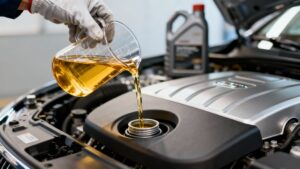
Fluid problems are the most frequent and cheapest to fix. Low fluid, a leak, or fluid that’s burnt or simply the wrong type for your vehicle robs the transmission of the hydraulic pressure it needs to hold gears. Replacing degraded fluid resolves many slipping cases outright when there’s no internal damage yet.
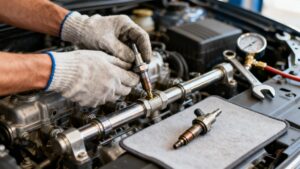
Electronic and control issues come next. Faulty shift solenoids, a failing valve body, or bad sensors feeding the transmission control module can cause slipping that’s specific to certain gears. These parts are often repairable without pulling the whole transmission.
Mechanical wear is the expensive category: worn clutch packs, a failing torque converter, or damaged gears. This usually follows years of neglect or prolonged overheating.
- Fluid issues tend to cause slipping across all gears and often improve after a service.
- Solenoid or valve body faults often slip in one or two specific gears.
- Clutch pack or torque converter wear causes persistent slipping that doesn’t improve after a fluid change.
Overheating and contamination accelerate all three categories, which is why heat management matters more than most drivers realize.
How to Check for Transmission Problems Before Calling a Shop
A few minutes in your driveway can save you a diagnostic fee, or at least tell you exactly what to say when you call for one.
- Park on level ground, set the parking brake, and let the engine reach normal operating temperature. Never check fluid on a cold engine unless your owner’s manual says otherwise.
- Locate the dipstick (if your vehicle has one) and check the fluid level against the marked range. Many newer vehicles use sealed transmissions with no dipstick, which means a shop-level check is the only option.
- Check color and smell. Healthy fluid is pink to red and smells faintly sweet. Brown, black, or burnt-smelling fluid points to heat damage or age.
- Look under the car for fresh spots on the driveway, especially near the pan or cooler lines.
- Note exactly when slipping occurs: cold or hot, under load, specific gears, or only after highway driving.
- Get an OBD-II scan if a warning light is on, or if you can’t pin down a pattern. Persistent codes usually mean it’s time for transmission and clutch repair from a shop with the right tools.
Pro Tip: Take a short video of your dashboard while driving (safely, with a passenger holding the phone) showing the RPM spike when it slips. That clip tells a technician more in ten seconds than a verbal description does in ten minutes.
Is It Safe to Drive With a Slipping Transmission?
It depends entirely on how it’s slipping. Mild, intermittent lag with no smell and no visible leak is usually safe for a short, gentle drive straight to a shop.
Stop driving and arrange a tow if you notice any of the following: a burning smell, the transmission falling out of gear while moving, heavy slipping when you press the accelerator, or fluid visibly leaking under the car. These are signs that continuing to drive risks turning a cheap fix into an expensive one.
Every mile driven on damaged fluid or a slipping clutch pack adds wear that a rebuild can’t always undo cheaply. What starts as a simple fluid service can become a costly rebuild if you keep driving through the warning signs.
Transmission Repair Costs: A Staged Approach That Saves Money
The smartest way to approach a slipping transmission is to fix the cheapest likely cause first, then move up only if the problem persists. Jumping straight to “rebuild” without a diagnosis wastes money more often than people expect.
- Fluid top-off or service: roughly $50 on the low end for a simple top-off, more for a full fluid and filter exchange.
- Solenoid or valve body repair: a mid-range fix once fluid is confirmed healthy and codes point to an electronic fault.
- Torque converter repair or replacement: a bigger job, usually pursued once mechanical wear is confirmed.
- Full rebuild or replacement: the top of the range, reaching $8,000 or more for full replacement on some vehicles.
Spending $100 to $200 on a proper diagnosis before authorizing any repair is nearly always worth it. A pressure test and scan tool reading can rule out expensive causes before you spend a dollar on parts.
DIY drivers can usually handle checking and topping off fluid themselves. Everything past that, solenoid replacement, valve body work, torque converter service, belongs with a shop that has a lift, scan tools, and the parts on hand. Fluid services typically turn around same day; solenoid or valve body repairs often take one to two days depending on parts availability.
How to Prevent Transmission Slipping
Most slipping problems are preventable with a handful of habits that cost far less than any repair on the list above.
- Follow your manufacturer’s fluid-change interval and use the exact ATF type specified. The wrong fluid can cause slipping on its own.
- Fix leaks early. A small drip at the pan gasket or cooler line today is a low-fluid slip next month.
- Respect your towing limits. Heat is what kills transmissions, and towing beyond the rated capacity is one of the fastest ways to overheat one.
- Replace the filter and pan gasket during fluid service instead of just draining and refilling; it prevents the same leak from recurring.
- Keep service records. They help a technician spot patterns and matter if you ever need warranty support.
Pro Tip: If you tow regularly or drive in stop-and-go Dallas traffic all summer, an auxiliary transmission cooler is one of the cheapest insurance policies you can add to a vehicle.
Why Professional Diagnosis Catches What DIY Checks Miss
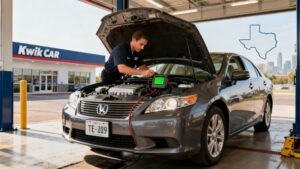
A fluid check tells you a lot, but it doesn’t tell you everything. ASE Certified Master technicians run pressure tests, scan tool diagnostics, and road tests to separate a hydraulic issue from a mechanical one before recommending anything. Customers receive a transparent, written estimate before work starts.
How Transmission Slipping Affects Performance and Fuel Economy
A slipping transmission doesn’t just feel wrong, it costs you money every time you drive. When the transmission can’t hold a gear properly, the engine has to spin faster to compensate for lost power getting to the wheels. That extra RPM burns more fuel to cover the same distance.
Acceleration suffers too. A car that should merge onto the highway smoothly instead hesitates, surges, or lags, which is both frustrating and genuinely unsafe in fast-moving traffic. Hill climbing gets worse as the transmission hunts between gears trying to find one that holds.
Over time, the inefficiency compounds. The engine works harder than it’s designed to for routine driving, which raises operating temperatures throughout the drivetrain. Higher heat degrades fluid faster, which worsens the slipping, which forces the engine to work even harder. It’s a cycle that gets worse the longer it runs unaddressed.
Fleet managers notice this fastest, since fuel costs across multiple vehicles make small efficiency losses obvious on a monthly statement. A single vehicle slipping in second and third gear might not seem dramatic, but multiply that fuel penalty across a dozen work trucks and the number becomes hard to ignore. That’s one more reason a quick diagnostic visit pays for itself faster than most owners expect.
Automatic vs. Manual Transmission Slipping: What’s Different
The symptoms overlap, but the causes and fixes diverge sharply between the two systems.
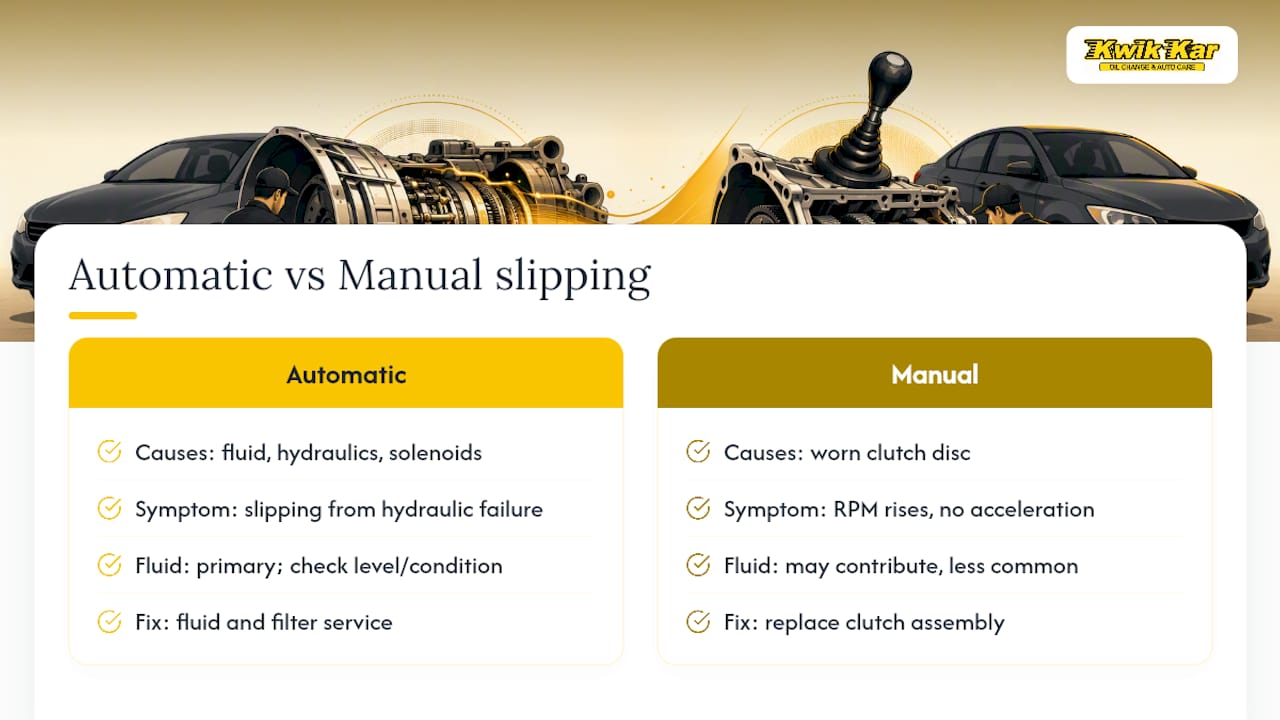
In an automatic, slipping almost always traces back to hydraulic pressure, fluid, solenoids, valve body, or torque converter, since the whole system relies on fluid pressure to engage clutch packs and bands. That’s why checking fluid level and condition is the first move covered earlier in this guide.
A manual transmission slips for a completely different reason in most cases: a worn clutch disc. When the clutch can’t grip the flywheel fully, you’ll notice RPM climbing without matching acceleration, particularly under load like climbing a hill or accelerating from a stop. Manual transmission fluid problems can contribute, but a worn clutch is the more common culprit.
The fix path differs too. An automatic’s fluid-related slip often resolves with a fluid and filter service, no disassembly required. A manual transmission slipping from clutch wear almost always needs the clutch assembly replaced, which means dropping the transmission, a bigger labor job regardless of parts cost. Manual transmissions do still develop internal gear or synchro wear, but that’s less common than clutch-related slipping.
If you drive a manual and notice slipping specifically under acceleration or when climbing grades, get the clutch inspected before assuming it’s a transmission fluid issue. The diagnostic path is different enough that guessing wrong wastes both time and money.
Does Transmission Slipping Affect Your Warranty or Insurance?
Warranty coverage for transmission slipping depends heavily on cause and maintenance history. If your vehicle is under a manufacturer’s original warranty or an extended service contract, transmission failure from a manufacturing defect is typically covered. But slipping caused by neglected fluid changes, running low on fluid, or towing beyond rated limits can be classified as a maintenance failure, and most warranties exclude those.
This is exactly why keeping service records matters as much as it does. If you ever need to file a warranty claim, proof that you followed the manufacturer’s fluid-change schedule can be the difference between a covered repair and a denied one.
Insurance works differently. Standard auto insurance policies don’t cover mechanical breakdowns like transmission slipping, since that falls under wear and maintenance rather than an insurable event like a collision. The exception is mechanical breakdown insurance, an optional add-on some insurers offer, which functions closer to an extended warranty than traditional coverage.
The practical takeaway: don’t assume either warranty or insurance will absorb the cost of a slipping transmission. Check your specific warranty terms for maintenance requirements, and if you’re shopping for extra protection, look specifically for mechanical breakdown coverage rather than assuming your existing policy includes it.
What Happens If You Ignore a Slipping Transmission?
Ignoring transmission slipping rarely makes it go away, and it almost never stays at the same severity for long. What starts as an occasional hesitation when accelerating tends to progress into more frequent and more severe slipping over weeks or months.
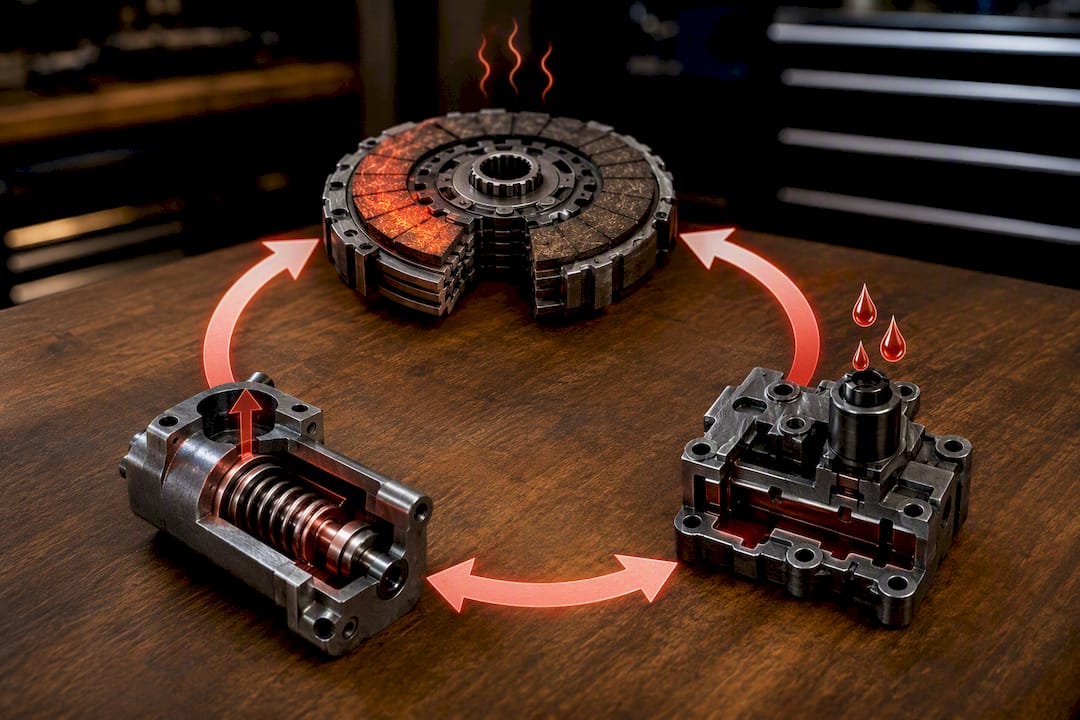
The mechanical reason is straightforward: slipping clutch packs and torque converter components generate friction and heat every time they slip instead of gripping cleanly. That heat degrades the fluid faster, which reduces the hydraulic pressure holding everything together, which causes more slipping, which generates more heat. It’s a feedback loop that accelerates its own damage.
Financially, this is where the staged-repair math from earlier in this guide really matters. A problem that could have been a fluid service if caught early can progress into solenoid damage, then into worn clutch packs, then into a transmission that needs a full rebuild or replacement. Each stage you skip past by continuing to drive moves you closer to the most expensive end of the repair range.
There’s also a real safety dimension. A transmission that slips out of gear unexpectedly, especially at highway speed or while merging, creates a genuine hazard for you and everyone around you. Sudden loss of power during a merge or an uphill pass isn’t just inconvenient, it’s dangerous.
The consistent pattern across nearly every case is the same: the earlier you address slipping, the cheaper and simpler the fix.
The Diagnosis-First Mindset Most Drivers Skip
Most guides tell you to “check your fluid” and stop there, and that advice isn’t wrong, it’s just incomplete. Fluid problems explain a lot of slipping cases, but treating every slip as a fluid issue leads to a cycle of topping off fluid every few months while the real problem, a failing solenoid or an early-stage clutch pack wear, keeps getting worse underneath.
The conventional wisdom undersells how much a $100 to $200 diagnosis actually protects your wallet. Drivers skip it because it feels like an extra expense before the “real” repair, but a pressure test and scan tool read is what tells you whether you’re looking at a $60 fluid service or the first sign of a $3,000 problem. Skipping that step means you’re guessing, and guessing with a transmission is expensive.
What we’d prioritize differently than most advice out there: document the pattern before you call anyone. Cold or hot, specific gear, under load or not, this single habit turns a vague complaint into a useful diagnostic starting point, and it’s the one step almost nobody does consistently.
Prevention gets treated as an afterthought in most articles on this topic, when it should be the headline. A fluid change on schedule and a towing habit that respects your vehicle’s rating prevent more transmission failures than any repair advice ever will.
— Kwik Kar
Get Your Transmission Checked at Kwik Kar Oil Change & Auto Care
If you’re noticing RPM flare, delayed shifts, or a burning smell, Kwik Kar Oil Change & Auto Care on Spring Valley Road in Dallas can run the same pressure tests, scan diagnostics, and road tests described throughout this guide to find the real cause before you pay for a repair. Our ASE Certified Master technicians provide a transparent, written estimate before any work begins, so you know exactly what you’re paying for and why.
Bring what you’ve documented: when the slipping happens, whether it’s cold or hot, which gears are affected, and your recent maintenance history if you have it. That information speeds up diagnosis considerably. Schedule an engine and transmission diagnostic or explore our full transmission and clutch repair services to get a clear answer and a straightforward next step for your vehicle.
Sources
- 5 early signs of car transmission problems | Capital One
- What is transmission slipping? | AutoZone DIY
- Transmission Repair Cost 2026: $50 to $8,000 (Real Ranges) · Fixxr
- Transmission slipping causes, symptoms and possible fixes — Ricks Free Auto Repair Advice
FAQ
How do you fix a slipping transmission?
Start with a fluid check and service if the fluid is low, dark, or burnt smelling. If slipping continues, a shop will scan for codes and test solenoids, the valve body, and the torque converter before recommending a rebuild.
Is it okay to drive with a slipping transmission?
Mild, intermittent slipping with no burning smell or leak is generally safe for a short, gentle drive to a shop. Stop driving immediately if you smell burning, see fluid leaking, or the transmission falls out of gear.
How do you tell if your transmission is slipping?
Watch for the engine revving without matching acceleration, a delayed pause shifting into Drive or Reverse, gear hunting, or a burning smell from dark, burnt-looking fluid.
How much does it usually cost to fix a slipping transmission?
Costs range widely depending on cause, from about $50 for a basic fluid top-off up to $8,000 or more for a full rebuild or replacement. A diagnostic visit, typically $100 to $200, identifies which end of that range applies before you commit to a repair.