



True metal warping of a brake rotor is rare. What drivers feel as a pulsing pedal or a shaking steering wheel almost always traces back to disc thickness variation, mounted lateral runout, or uneven pad-material transfer on the rotor face. The fix starts with measurement, not a reflexive parts swap. A technician who checks thickness and runout with the right tools can tell you exactly what’s happening before recommending a repair.
TL;DR:
- Most vibrations attributed to warped rotors actually result from disc thickness variation, lateral runout, or uneven pad transfer, not metal bending.
- Proper diagnosis requires measuring DTV and mounted LRO with calibrated tools, not just visual inspection or test driving.
- Rotors can only be machined if their thickness remains above the factory minimum after resurfacing, otherwise replacement is necessary.
- Avoid hard stops and keep hub surfaces clean to prevent uneven pad deposits that worsen rotor pulses over time.
- Repeated vibrations should be diagnosed within days, especially if pedal pulsation or steering shake occurs only under braking.
Table of Contents
- What Brake Rotor Warp Actually Means
- Common Causes Of Rotor Vibration
- Symptoms That Point To A Rotor Problem
- How A Technician Actually Diagnoses A Warped Rotor
- Should You Machine The Rotor Or Replace It?
- A Simple Maintenance Checklist To Prevent Judder
- Kwik Kar’s Take On Diagnosing Rotor Vibration
- Book A Brake Inspection At Kwik Kar
- Sources
- FAQ
What Brake Rotor Warp Actually Means
The term “brake rotor warp” gets used for almost any brake vibration, but cast-iron rotors on a street car rarely bend from heat alone. What actually happens is disc thickness variation (DTV), where the rotor’s thickness changes as it spins, or mounted lateral runout (LRO), where the disc face wobbles slightly relative to the hub. Either one creates a pulsing pedal because the caliper pistons have to push in and out slightly with every rotation.
Uneven pad-material transfer plays a bigger role than most drivers realize. When a hot pad sits against the rotor at a stop, it can deposit a thin, uneven layer of friction material onto the disc face. That patch changes the effective thickness at that spot, and every time it passes between the pads, you feel a pulse. Centric Parts’ technical bulletin on the “warped” brake disc backs this up directly: engineering data consistently points to uneven deposits and DTV as the real culprits, not bent metal. That’s a meaningful distinction, because the fix for pad transfer is different from the fix for a genuinely damaged rotor.
Common Causes Of Rotor Vibration
Several everyday habits and mechanical issues stack up to create the thickness and runout problems drivers mistake for warping. Most trace back to heat, contamination, or an installation shortcut.
- Skipping the bedding-in process. New pads need a controlled break-in period. Stopping and holding the brakes while they’re still hot right after installation imprints an uneven pad layer onto the rotor almost immediately.
- Repeated hard stops without cooldown. Riding the brakes down a long grade or braking hard in stop-and-go traffic, then sitting at a light, lets one pad section transfer material unevenly.
- A dirty or corroded hub flange. Rust or debris between the rotor and hub creates a gap that shows up as runout the moment the wheel is torqued down.
- Uneven lug torque. Tightening lug nuts out of sequence, or too tight in one spot, can pull the rotor slightly off-plane.
- Sticking calipers or worn slide pins. A caliper that doesn’t release fully drags one pad against the rotor longer than it should, building uneven deposits.
- Worn wheel bearings or suspension components. These can mimic rotor vibration even when the rotor itself is fine.
- Manufacturing defects. Rare, but a rotor that wasn’t machined evenly at the factory can show DTV from day one.
Symptoms That Point To A Rotor Problem
Pedal pulsation you feel through your foot every time you brake is the clearest sign of DTV or runout. A steering wheel that shakes specifically when you apply the brakes, but feels smooth otherwise, points the same direction. Some drivers also hear a light grinding or “chuck” noise as the affected spot passes through the caliper.
The easiest test is timing. If the shake only shows up under braking and disappears once you let off the pedal, it’s very likely brake-related. If the vibration is there at highway speed regardless of whether you’re braking, look at tire balance or wheel issues instead, which our guide on front-end shakes when braking covers in more depth. Either way, avoid repeated hard stops until it’s inspected. Light, gentle driving is usually fine in the short term, but hauling a trailer or riding the brakes down a hill with a compromised rotor isn’t worth the risk.
How A Technician Actually Diagnoses A Warped Rotor
Guessing at rotor condition by eye or feel doesn’t hold up. A proper diagnosis relies on two measurements taken with calibrated tools, not a test drive alone.
Technicians measure disc thickness variation by taking readings at a minimum of six equidistant points around the rotor, about a quarter inch from the outer edge, using a calibrated micrometer. The difference between the thickest and thinnest reading is the DTV number. Mounted lateral runout gets measured separately with a dial indicator while the rotor is torqued onto the hub through all lug positions, since clamp load changes the reading. Measuring a loose rotor gives a misleading number.
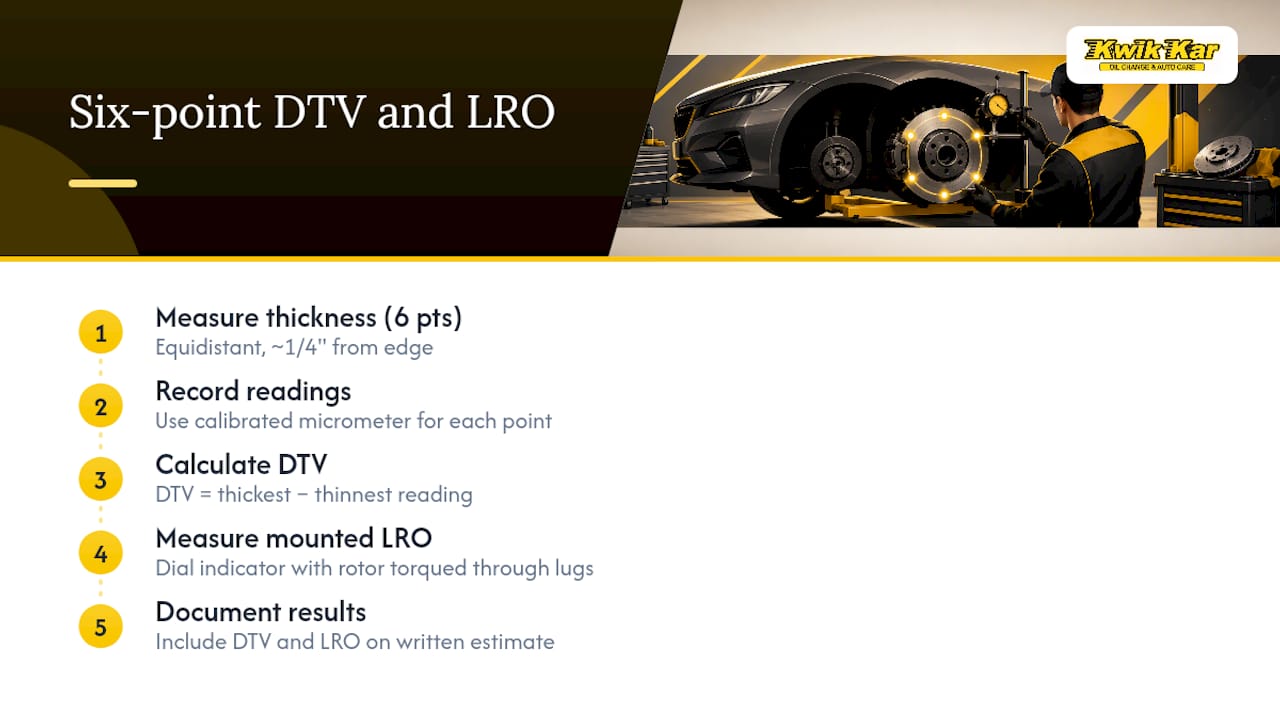
These thresholds come from BrakeTireGuide’s breakdown of the numbers behind rotor repair, and they matter because a shop that skips measurement is essentially guessing. Before you approve any brake work, ask for the documented DTV and LRO readings in your written estimate. A shop that can hand you actual numbers is diagnosing your car, not just replacing parts and hoping.
Should You Machine The Rotor Or Replace It?
The decision between resurfacing and full replacement comes down to one hard rule: a rotor can only be machined if its thickness after machining stays above the minimum thickness stamped on the rotor itself. That number exists for a safety reason. Go below it and the rotor can’t dissipate heat properly or hold up under hard braking.
- Check the stamped minimum thickness first. Every rotor has one cast or stamped into the hub area. If machining would take it below that line, replacement is the only safe option.
- Replace in axle pairs. Uneven rotor thickness side to side changes braking balance, so both rotors on an axle should be serviced together.
- Rule out replacement triggers. Severe DTV, visible heat damage, or LRO beyond what a shim can correct all point to new rotors rather than machining.
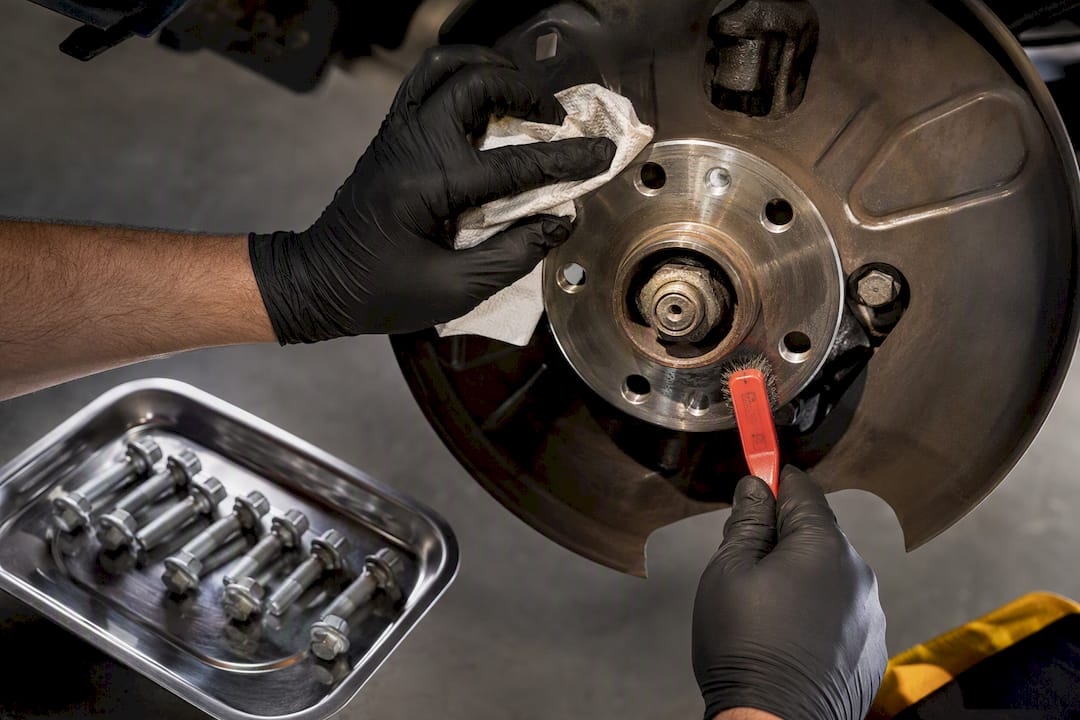
- Clean the hub flange to bare metal. Rust or debris left on the hub creates runout no amount of rotor machining will fix.
- Index the rotor and torque lugs in a star pattern to spec. Uneven clamp load is one of the most common reasons a freshly serviced brake still shudders.
- Bed the new pads properly before returning to normal driving habits.
Modern rotors on many vehicles run thinner than older designs, which means machining sometimes costs nearly as much as a new rotor once you factor in the labor. DBA Brakes’ technical resources note that many comeback repairs happen because the hub flange wasn’t cleaned, leaving contamination that stacks with any remaining runout.
Pro Tip: If a shop replaces your rotors and the shudder comes back within a few hundred miles, ask whether they cleaned the hub flange and measured mounted LRO after torquing the wheel down. A skipped step there is the single most common reason for a repeat vibration complaint.
A Simple Maintenance Checklist To Prevent Judder
Preventing rotor vibration is mostly about habits, not upgrades. A few consistent steps go a long way toward keeping DTV and pad transfer from building up in the first place.
- Bed new pads and rotors with a series of firm stops from moderate speed, avoiding a full stop each time, then let them cool with normal driving. On All Cylinders’ bedding-in guide walks through the full sequence.
- Ask that the hub flange be cleaned every time rotors are serviced, and insist on torque-wrench lug tightening in a star pattern.
- Keep an eye out for sticking caliper pins or worn bearings; our brake caliper sticking guide explains the warning signs. Contamination at the hub interface can also come from road grime and brake dust buildup, which proper cleaning techniques help control between services.
- If vibration returns soon after a repair, ask for proof the hub was cleaned and for the DTV/LRO numbers before paying for a second round of work.
Kwik Kar’s Take On Diagnosing Rotor Vibration
Too many brake jobs get sold as rotor replacements when the real problem is a dirty hub or an uneven pad deposit that measurement would have caught. Our ASE-certified technicians use calibrated micrometers and dial indicators on every brake diagnosis, document the DTV and LRO readings, and clean hub mating surfaces as a standard step, not an upsell. You’ll see the actual numbers on your estimate before we recommend machining, replacement, or nothing at all.
— Kwik Kar
Book A Brake Inspection At Kwik Kar
If your pedal pulses or your steering wheel shakes under braking, a proper measurement beats a guess every time. Kwik Kar Oil Change & Auto Care’s Spring Valley Road location runs full diagnostic brake inspections that include DTV and mounted LRO measurement, not just a visual check, so you know whether you actually need rotor resurfacing, replacement, or just a pad swap and proper bedding.

Our ASE-certified technicians walk you through the measurements on paper before any work begins, and we stand behind transparent, written estimates so there are no surprises when the job’s done. Ask about current coupons on brake service when you call. Whether it’s a set of rotors, a pad replacement, or a full brake system check, our team at Kwik Kar Oil Change & Auto Care handles it with the same measure-first approach across oil changes, diagnostics, and full auto repair services. Schedule your brake inspection today and get a documented answer instead of a guess.
Sources
- Pulsing / vibrating brake pedal (DTV) — Power Stop
- TECHNICAL BULLETIN — Centric Parts: The ‘Warped’ Brake Disc & Other Myths
- Warped brake rotor repair: The numbers that fix it — BrakeTireGuide
- A 5-step process to properly bedding-in your brake pads & rotors — On All Cylinders
FAQ
Is It OK To Drive On Warped Rotors?
Short trips at moderate speed are usually fine, but repeated hard braking on rotors with significant DTV or runout increases stopping distance and wears pads unevenly, so get it inspected soon rather than waiting.
How Do You Fix A Warped Brake Rotor?
A technician measures DTV and mounted lateral runout, then either machines the rotor if it stays above its stamped minimum thickness or replaces it in axle pairs if it doesn’t, followed by hub cleaning and proper pad bedding.
How Long Can You Drive With Warped Rotors?
There’s no fixed mileage limit, since it depends on how severe the DTV or runout is, but pulsation that’s noticeable every time you brake should be diagnosed within days, not months.
Can Warped Rotors Correct Themselves?
No. Uneven pad deposits and thickness variation don’t wear away evenly on their own and typically get worse with continued driving until the rotor is measured and serviced.
What Causes A Brake Pedal To Pulse When Stopping?
Pedal pulsation almost always comes from disc thickness variation or uneven pad-material transfer on the rotor face, not the rotor physically bending, according to engineering analysis from Centric Parts.