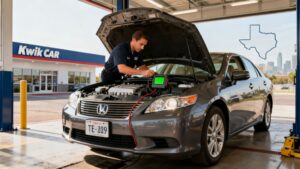




If the battery light is on, it usually means the charging system, often the alternator, isn’t charging the battery properly, and you should treat it as a serious warning. Reduce electrical load, find a safe place to stop, and arrange a tow or shop check if the light comes on while driving. If it flickers briefly at startup but stays lit, schedule charging-system diagnostics soon rather than waiting for a bigger failure.
TL;DR:
- The most common cause of the battery light on your dashboard is a failing alternator, broken serpentine belt, or corroded connections, not just a dead battery.
- If the light appears while driving, reduce electrical load, pull over safely, and avoid highway speeds to prevent a complete electrical failure.
- Visual checks for corrosion, loose connections, and belt condition can help identify issues, but a proper diagnostic with voltage testing is necessary for an accurate fix.
- Immediate towing is recommended if the vehicle stalls, headlights dim significantly, or there is a burning smell; mild symptoms near a shop may allow for cautious driving.
- Routine maintenance, including battery replacement every three to five years and keeping terminals clean, can prevent most charging system failures.
Table of Contents
- What causes the battery warning light to come on
- What to do right away when the battery light turns on
- Quick visual and low-risk checks you can safely perform
- How mechanics diagnose the root cause
- When to stop driving and call a tow
- Maintenance that helps prevent future battery light problems
- Kwik Kar: what our technicians check and how we help
- Reading the battery light alongside other dashboard warnings
- What repairs typically cost when the battery light comes on
- Clearing the battery light after a repair
- Why the battery light matters to your whole electrical system
- How hot and cold weather affect the battery light
- Our take: skip the guesswork, not the checks
- Get your charging system checked at Kwik Kar Spring Valley
- Sources
- FAQ
What causes the battery warning light to come on
The battery light on your dashboard almost always points to a problem in the charging system, not just the battery itself. Knowing the common culprits helps you describe the issue accurately when you call for service.
- Alternator not charging: worn brushes, a failing voltage regulator inside the unit, or internal damage can stop the alternator from generating enough power for the battery and electrical system.
- Battery age or internal failure: batteries lose the ability to hold a charge over time, and a weak battery can trip the warning light even when the alternator works fine.
- Loose or corroded cables and terminals: corroded or loose connections create resistance that disrupts charging-system voltage, which the dashboard reads as a fault.
- Worn or broken serpentine belt: this belt drives the alternator, so a slipping or snapped belt cuts off the alternator’s power supply immediately.
- Voltage regulator faults, wiring damage, or parasitic drains: damaged wiring or a component that draws power even when the car is off can pull the system below a safe charge level.
Any one of these can trigger the same warning light, which is why a proper diagnosis matters more than guessing. For a closer look at alternator-specific symptoms, see our guide on alternator going bad signs.
What to do right away when the battery light turns on
Your response depends on whether the light appears while you’re driving or right at startup. Acting quickly limits the risk of getting stranded or damaging the battery further.
- While driving: turn off nonessential electrical loads like the A/C, stereo, and heated seats to reduce demand on the system.
- Find a safe spot: pull over as soon as you reasonably can and avoid highway speeds while the light is on.
- Restart once, if safe: a single restart can tell you whether the issue is intermittent, but if the light returns, call for a tow instead of continuing.
- At startup, if the light stays lit: don’t delay. Schedule a shop diagnostic before your next long drive.
Continuing to drive on a failing charging system risks a sudden stall with no warning. According to Via, an AAA publication, a vehicle running purely on battery power after an alternator failure can lose electrical power in under 15 minutes in some cases, so treat any dashboard warning as urgent.
Quick visual and low-risk checks you can safely perform
Before calling for help, a few simple checks can tell you a lot without requiring tools or technical skill.
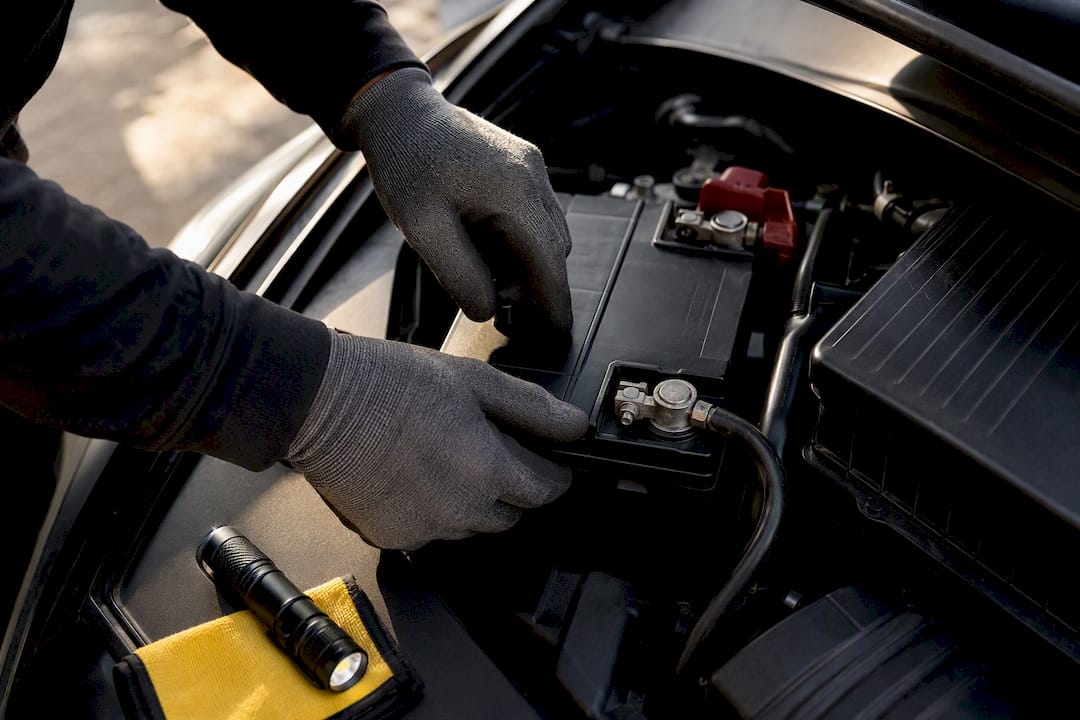
- Look at the battery terminals for heavy white or greenish corrosion, or clamps that look loose. Stop and call a professional if the battery case looks swollen, cracked, or is leaking fluid.
- Check the serpentine belt for visible cracks, fraying, or looseness around the pulleys.
- Watch for dim or flickering headlights, slow cranking when starting the engine, or other electrical glitches like power windows moving slower than normal.
- Note when the light appears: only at startup, only under load like A/C use, or constantly, since this detail helps a technician narrow down the cause faster.
Pro Tip: Never touch battery terminals or attempt cable repairs if you smell rotten eggs or see fluid leaking, since that can signal a hazardous battery condition.
For a step-by-step walkthrough of safe checks, our guide on checking car battery health covers the basics in more detail.
How mechanics diagnose the root cause
A shop visit starts with a visual inspection, then moves to measurements that pinpoint whether the alternator, battery, or wiring is at fault.
- Voltage readings: with the engine off, a healthy battery typically reads around 12.4 to 12.7 volts; with the engine running, the charging system should show roughly 13.5 to 14.8 volts. Readings outside these ranges point toward a battery or alternator problem.
- Charging-system and alternator output test: measures how much current the alternator produces under load to confirm it’s charging correctly.
- Battery load test: checks whether the battery holds voltage under a simulated load, revealing weak cells that a simple voltage check might miss.
- Parasitic drain test: identifies components pulling power when the car is off, which explains intermittent battery light issues that don’t show up during a quick test.
A digital inspection with photos gives you a clear picture of exactly what’s wrong before any repair begins.
When to stop driving and call a tow
Some symptoms mean you shouldn’t try to reach a shop under your own power at all.
- Immediate tow triggers: stalling, rapidly dimming headlights or dash lights, a burning or rotten-egg odor, visible battery leakage, or loss of power steering or other electrical systems.
- Permanent damage risk: running a vehicle on a failing charging system can permanently damage the battery and leave you stranded, since deep discharges shorten battery life significantly.
- Mild symptoms, short distance: if the light just appeared, symptoms are mild, and the shop is close, a slow, direct drive may be reasonable, but towing remains the safer choice.
AAA technicians treat a lit battery or charging light like a stoplight: get the vehicle to safety before it stalls rather than risk being stranded in traffic.
Maintenance that helps prevent future battery light problems
Routine care catches small charging-system issues before they become dashboard warnings.
- Track battery age and plan for replacement around three to five years, sooner if you live somewhere with extreme heat or cold or do a lot of short-trip driving.
- Keep terminals clean and clamps tight during every service visit to prevent corrosion-related resistance.
- Inspect belts at each oil change or service interval so a worn serpentine belt doesn’t fail without warning.
- Get a charging-system check as soon as you notice dimming lights, slow cranking, or odd electrical behavior, rather than waiting for the light to appear.
- Carry a portable jump-starter and have your battery’s health checked before long trips, since a portable jump-starter is a practical safeguard for drivers who travel alone or in extreme climates.
Kwik Kar: what our technicians check and how we help
Technicians run the same battery and charging-system tests described above. Every visit includes a visual inspection, voltage and load testing, and a digital inspection with photos so you see exactly what was found. Customers receive transparent estimates before any work starts, fast turnaround, and warranty-backed repairs for peace of mind.
Reading the battery light alongside other dashboard warnings
The battery light rarely tells the whole story on its own, and other dashboard lights can add useful context. Manufacturers color-code these warnings, with red typically meaning stop right away and amber meaning proceed with caution, so check your owner’s manual for the exact meaning of each icon on your specific vehicle.
When the battery light comes on at the same time as the check engine light, the cause is often related. A failing alternator or wiring issue can trigger both, since the engine control module monitors voltage and will flag irregular charging behavior as a fault. If only the check engine light is on, the issue may be unrelated to the charging system entirely, covering anything from an oxygen sensor to a loose gas cap.
Seeing both lights together is a stronger signal to get a full diagnostic rather than just a quick battery test, since it suggests the problem may extend beyond the battery itself. Our engine diagnostic service checks both systems together so nothing gets missed. If the check engine light is flashing rather than steady, that typically signals a more urgent issue and deserves the same prompt attention as a lit battery warning.
What repairs typically cost when the battery light comes on
Repair costs vary quite a bit depending on which part of the charging system has failed, and a proper diagnostic is the only reliable way to know which repair you actually need. A worn serpentine belt is usually one of the more affordable fixes, since the part itself is inexpensive and replacement doesn’t take long. A battery replacement costs more, with the exact price depending on your vehicle’s battery type and size.
Alternator replacement tends to be the most expensive repair tied to a battery light, since the part is more complex and labor time is longer than a belt or battery swap. Wiring repairs and parasitic drain fixes can range widely depending on how hard the fault is to locate, since some issues take longer to trace than others.
Because pricing depends heavily on the specific vehicle and the exact cause, we don’t publish flat rates for these repairs. What we do provide is a clear, itemized estimate before any work begins, so you know the cost and scope of the repair before you commit. That transparency matters most with electrical issues, where the diagnostic work itself can take real time to do correctly.
Clearing the battery light after a repair
Once a mechanic replaces the alternator, battery, or a damaged wire, the battery light should turn off on its own within a few minutes of driving as the vehicle’s computer confirms the charging system is working normally. In most modern vehicles, no manual reset is needed since the warning clears automatically once the underlying fault is resolved.
If the light stays on after a repair, that usually means either the original problem wasn’t fully fixed or a new issue has appeared, and the vehicle should go back to the shop for another check rather than being ignored. In some cases, disconnecting the battery for a few minutes after a repair can force the computer to recheck the system, though this isn’t a substitute for confirming the actual repair solved the problem. A shop that offers a digital inspection with photos can show you the readings before and after the fix, so you can see the charging system is back within a normal range.
Why the battery light matters to your whole electrical system
Your vehicle’s electrical system depends on a steady, correct voltage to run everything from the engine control module to power windows, and the battery light is essentially an early warning that this balance has been disrupted. The battery stores power and helps start the engine, while the alternator takes over once the engine is running, recharging the battery and powering every electrical component in the car.
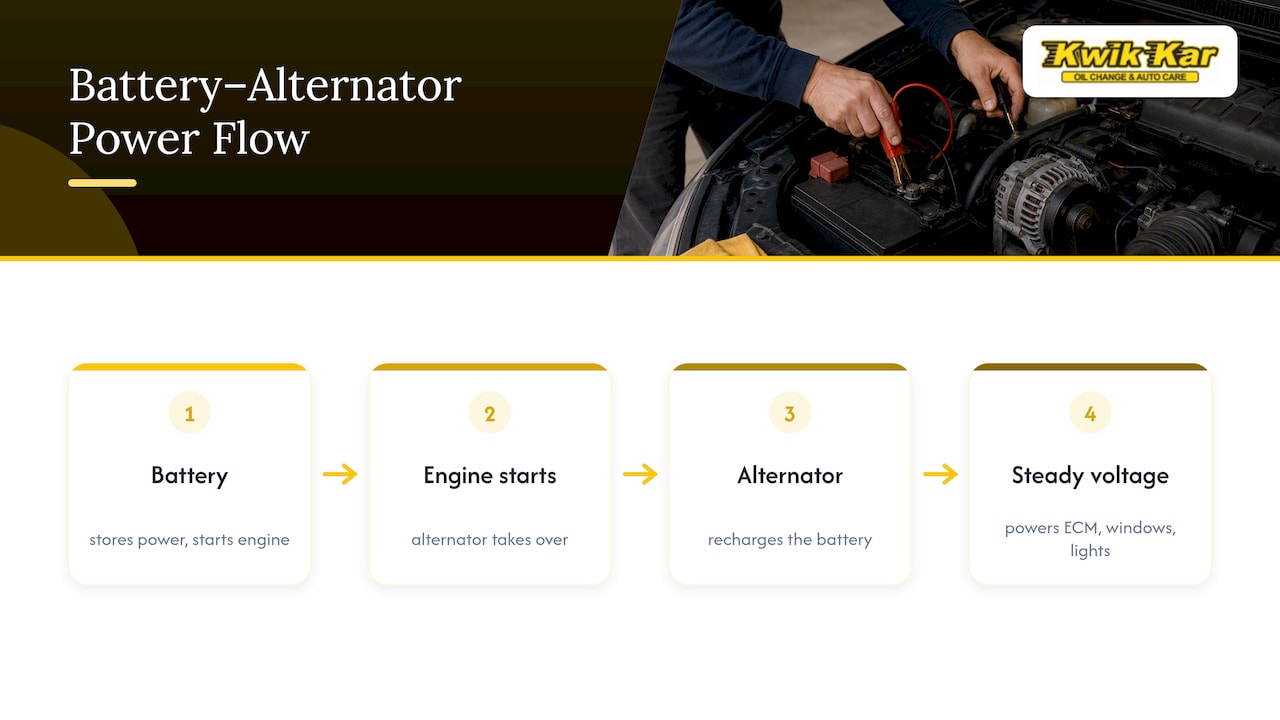
When the charging system falls out of its normal voltage range, sensitive electronics can behave unpredictably long before the engine actually stalls. Dimming lights, glitchy infotainment screens, or slow power windows are often the first visible clues that voltage has dropped below what the system needs. Because so many components rely on a stable electrical supply, a battery light isn’t just about whether the engine will start again. It’s a signal that the entire electrical system is running on borrowed time until the underlying issue is fixed.
How hot and cold weather affect the battery light
Extreme temperatures put real strain on both the battery and the charging system, which is one reason the battery light shows up more often during heat waves and cold snaps. Heat accelerates the chemical reactions inside a battery, which speeds up internal corrosion and shortens the battery’s usable life. A battery that’s already near the end of its lifespan is more likely to trip the warning light during a hot Texas summer than during mild weather.
Cold weather works differently, thickening engine oil and increasing the current needed to start the engine, which puts more demand on a battery that already produces less power in low temperatures. A battery that seemed fine in warm weather can fail to keep up on a cold morning, triggering the light during startup. Because both extremes reveal a battery’s weaknesses rather than causing new ones, a battery close to the three to five year replacement window is the most likely to set off the light when temperatures swing sharply in either direction.
Our take: skip the guesswork, not the checks
The conventional advice on this topic tends to swing between two extremes: panic and ignore it. Neither serves drivers well. A battery light isn’t automatically a tow-truck emergency, but it’s also not something to shrug off until the car won’t start. The middle ground, doing the simple checks yourself and getting a real diagnostic quickly, is the part most guides skip.
What’s overrated is guessing at the cause based on symptoms alone. Dim headlights and slow cranking can mean a dying battery, a failing alternator, or corroded terminals, and treating any single symptom as a diagnosis leads to replacing the wrong part. What matters most is voltage testing, not visual guesswork, because it’s the only way to know for certain which component is failing.
If you take one thing from this guide, let it be this: the light coming on is your cue to act within days, not months. Waiting for a second warning sign, like a slow crank, usually means the problem has already gotten worse.
— Kwik Kar
Get your charging system checked at Kwik Kar Spring Valley
A lit battery light shouldn’t mean guessing which part to replace or paying for repairs you don’t need. Our ASE Certified Master technicians run a full charging-system diagnostic, including voltage and load testing plus a digital inspection with photos, so you get a clear, itemized estimate before any work begins.
- Call or book online for same-day diagnostics on our full auto repair services page.
- Need a battery replacement? Visit our battery replacement service page for details on what’s included.
- Vehicle stalling or showing severe symptoms? Arrange a tow rather than risk driving in, and we’ll have your diagnostic ready when it arrives.
FAQ
Can I still drive my car with the battery light on?
Driving with the battery light on is risky since the charging system may not be keeping the battery charged, and the vehicle can stall without warning. If you must drive, keep the trip short, turn off nonessential electronics, and head straight to a shop rather than continuing normal use.
What will cause a battery light to come on?
The most common causes are a failing alternator, a weak or aging battery, loose or corroded terminals, a worn serpentine belt, or wiring and parasitic drain issues. A proper diagnostic test is the only reliable way to confirm which one applies to your vehicle.
Does battery light mean bad alternator?
Not always, but a dashboard battery light frequently points to an alternator or charging-system problem rather than the battery itself. A voltage and load test at a shop can confirm whether the alternator, battery, or wiring is the actual cause.
Why is my battery light on but my car is running fine?
The engine can keep running temporarily on residual battery power even if the alternator has stopped charging, which is why the car may feel normal at first. This won’t last, since the battery will eventually drain, so it’s worth getting the charging system checked before you’re left stranded.
When should I worry about the battery light?
You should treat the battery light as urgent any time it comes on while driving, especially if you notice dimming lights, slow cranking, or other electrical glitches alongside it. A light that appears only briefly at startup and disappears is less urgent, but still worth mentioning at your next service visit.