
A smoke test finds hidden leaks in your car’s EVAP, vacuum, or exhaust system by pumping visible smoke into a sealed line and watching where it escapes. Checking your gas cap or looking for cracked hoses is fine to do yourself. Anything that involves introducing smoke into the fuel or EVAP system, or working near the charcoal canister, calls for a certified shop with the right equipment and safety controls.
TL;DR:
- Smoke testing for leaks requires specialized shop equipment with precise control to avoid safety hazards, especially around fuel vapor systems.
- Diagnostic codes like P0442 or P0455 can help narrow down which system—EVAP, intake, or exhaust—needs testing, saving time and resources.
- DIY smoke testing is risky due to flammable vapors and potential over-pressurization, making professional inspection safer and more reliable.
- Cost varies depending on leak accessibility and repair complexity, with detailed diagnostics often including photos or videos to justify repairs.
- Certified technicians use experience and controlled procedures to accurately locate leaks, ensuring that repairs are safe and effective.
Table of Contents
- How a smoke test works and what it can diagnose
- When to run a smoke test: symptoms and codes to watch
- Safety, risks, and where DIY should stop
- Tools and machine types: what pros use versus what you can buy
- What to expect at a repair shop: process and cost factors
- Why a certified shop’s smoke test diagnosis matters
- Book your smoke test diagnostic at Kwik Kar Spring Valley
- Sources
- FAQ
How a smoke test works and what it can diagnose
A technician connects a smoke machine to the system through a designated access point, then watches for smoke escaping at a crack, loose hose, or failed seal. Where the smoke enters and how it’s introduced depends on which system is being checked.
- EVAP system testing: smoke enters through the vehicle’s built-in service port or a filler neck adapter, tracing leaks in the fuel vapor recovery system that trigger check engine codes.
- Intake and vacuum testing: smoke is introduced through an intake manifold adapter, revealing unmetered air entering the engine that causes rough idle or poor fuel economy.
- Exhaust testing: smoke is pushed into the tailpipe with the exhaust temporarily blocked, showing leaks in pipes, gaskets, or the muffler.
Many modern vehicles include a built-in service port that allows non-destructive access for EVAP testing. When a car lacks one, shops use filler-neck or intake adapters and control pressure carefully to avoid overloading the charcoal canister or tripping a sensor. That level of control is one reason shop-grade machines outperform basic consumer tools.
When to run a smoke test: symptoms and codes to watch
A smoke test isn’t the first move. It’s the confirmation step after other clues point to a leak.
- A fuel smell in the cabin or near the gas tank often signals an EVAP leak worth investigating.
- A hissing sound near the engine bay usually means a vacuum leak affecting idle quality.
- A rough or uneven idle can point to unmetered air entering through a cracked hose or gasket.
- A failed emissions test frequently traces back to an EVAP leak that a smoke test can pinpoint. Our guide to passing emissions walks through common failure causes in more detail.
- OBD-II codes like P0440, P0442, P0455, and P0456 point specifically to EVAP system faults, with P0442 and P0456 typically flagging a small leak and P0455 flagging a large one.
Technicians scan for codes first because the code narrows down which system to test, saving time and labor before smoke ever enters the line.
Safety, risks, and where DIY should stop
Smoke testing looks simple on video, but the EVAP system holds fuel vapor, and that changes the risk profile. Peer-reviewed SAE research on EVAP leak testing found that purge flows used during leak testing can create flammable vapor and air mixtures near the fuel tank and charcoal canister, which is why controlled purge flow and ignition source management matter during the test.
Safety statistic: the SAE study modeled vapor distribution during EVAP purge and documented conditions where flash-fire hazards can develop, recommending limited purge flow and controlled procedures. That’s the kind of risk a home garage setup isn’t built to manage.
Exhaust leaks carry a different but equally serious hazard. AAA warns that exhaust leaks can let carbon monoxide and other gases into the cabin, and recommends prompt professional inspection whenever occupants smell fumes or notice unusual exhaust noise.
Some ground rules for anyone tempted to try this at home:
- Ventilate the work area and keep all ignition sources, including sparks and open flames, well away from the vehicle.
- Never run an extended purge on a saturated charcoal canister without proper ventilation and controls.
- Avoid over-pressurizing the EVAP or intake system, which can damage seals or sensors.
- Leave any test that requires opening the EVAP system, working near the canister, or testing exhaust with a blocked tailpipe to a trained technician.
Visual inspections, gas-cap checks, and listening for hissing sounds are reasonable for most owners. Anything beyond that belongs in a shop bay.
Tools and machine types: what pros use versus what you can buy
Smoke test equipment falls into a few categories, and knowing the difference helps you understand what a shop is doing and what a home kit can actually accomplish.
- Professional bench and shop machines handle EVAP and exhaust testing with adjustable pressure and OEM-approved smoke fluid, letting technicians control flow precisely to avoid displacing large volumes of fuel vapor.
- Handheld 12-volt smoke generators are common for vacuum leak diagnosis on intake systems and are more affordable than full shop units.
- Smoke pens and aerosol testers work for small, isolated connections but lack the pressure control needed for full-system testing.
Product listings for smoke machines show a wide range of features across price tiers, but adjustable pressure and the right adapters matter more than raw smoke output. Owners considering a basic detector should prioritize safety features and compatibility with their vehicle’s service port over price alone.
What to expect at a repair shop: process and cost factors
A shop visit for a suspected leak generally follows a set sequence.
- Scan for codes to identify which system, EVAP, intake, or exhaust, needs testing.
- Visual inspection of hoses, connections, and the fuel cap before any equipment is connected.
- Smoke test to confirm and pinpoint the exact leak location.
- Isolate and repair the failed component, whether it’s a hose, clamp, valve, or the canister itself.
- Re-test and verify that the repair resolved the leak and the code clears.
Cost depends mainly on how accessible the leak is and what needs replacing. A loose hose clamp is a quick fix; a failed charcoal canister buried under the vehicle takes more labor and parts. Before authorizing work, ask what the diagnostic fee covers, whether you’ll get photos or video of the leak, and what warranty applies to the repair.
Why a certified shop’s smoke test diagnosis matters
Smoke testing rewards experience. Reading a faint wisp of smoke at a hose joint under the car, distinguishing a small EVAP leak from a large one, and knowing how much purge flow is safe all come from doing this work regularly. Skilled ASE Certified technicians typically run these diagnostics with extensive experience, often supported by industry-recognized certifications.
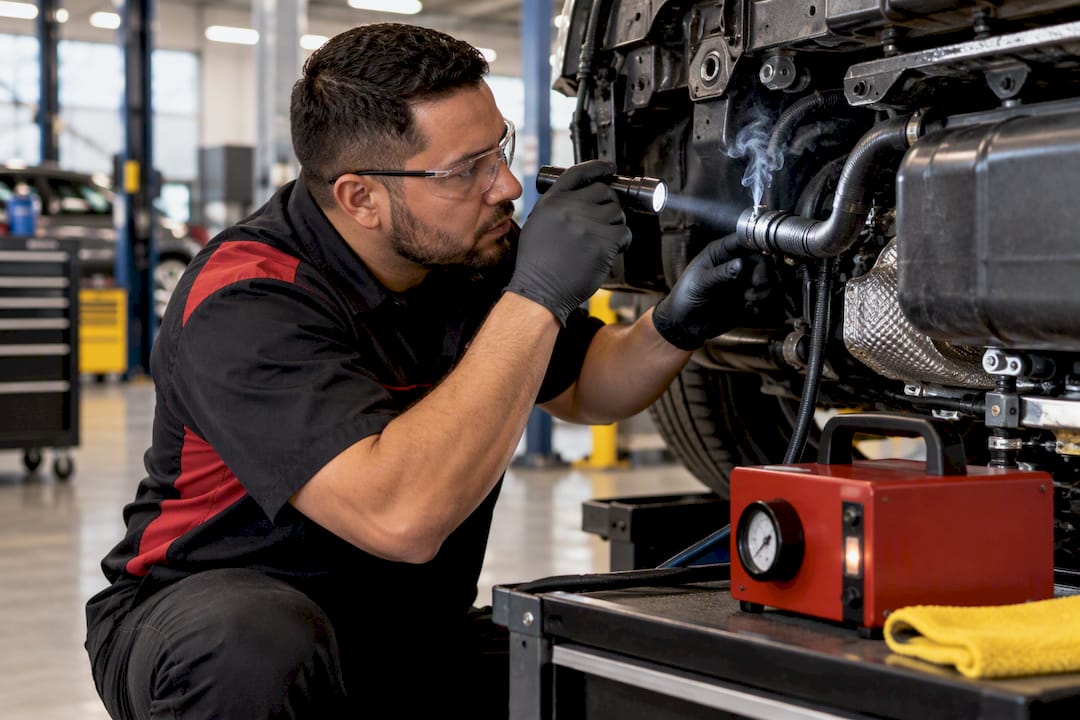
A reliable diagnostic process usually includes a clear estimate before any repair begins, and may provide digital vehicle inspections with photo and video documentation to show where the leak is and why the recommended fix is needed. That documentation also reduces guesswork if a warranty claim comes up later.
If you’ve already pulled a code like P0442 or P0455, or you’ve noticed a fuel smell or rough idle, bring that information to your appointment. It helps the technician move straight to a targeted smoke test instead of starting from scratch.
— Kwik Kar
Book your smoke test diagnostic at Kwik Kar Spring Valley
If you’ve got a check engine light, a fuel smell, or a failed emissions test, skip the guesswork and let a certified technician pinpoint the leak with proper equipment and safety controls. Bring any error codes or symptoms you’ve noticed, and we’ll take it from there. Visit our full auto repair services page to schedule a diagnostic appointment or check current service options at Kwik Kar Spring Valley.
FAQ
How much does a smoke test on a car cost?
Kwik Kar does not publish a set price for smoke testing since cost depends on the diagnostic scope and vehicle. Contact your local shop for a transparent estimate before any work begins.
What is a smoke test on a car for?
A smoke test finds leaks in the EVAP, intake, or exhaust system by pushing visible smoke into a sealed line and watching where it escapes. It’s typically used to confirm and locate a leak after a check engine code or symptom like a fuel smell or rough idle points to a problem.
Will an auto parts store do a smoke test?
Most retail auto parts stores don’t perform smoke testing since it requires shop-grade equipment and trained technicians to manage pressure and safety controls. A repair shop with ASE certified technicians is the appropriate place for this diagnostic.
Can a smoke test damage your engine?
A properly performed smoke test with controlled pressure and OEM-approved smoke fluid should not damage your engine. Risk increases when pressure or purge flow isn’t managed correctly, which is why SAE research recommends trained technicians handle EVAP purge procedures rather than DIY setups.