



If your engine takes forever to warm up, your heater blows lukewarm air, and both radiator hoses feel about the same temperature during warm-up, you’re likely looking at a thermostat stuck open. The fastest way to confirm it: watch the temperature gauge, test your cabin heater after a few minutes of driving, and feel the lower radiator hose right after a cold start. If two or more of these line up, it’s time to run the checks below or book a diagnostic.
TL;DR:
- A thermostat stuck open causes the engine to run cool, resulting in persistent low temperature gauge readings and weak or lukewarm cabin heat.
- Feel the radiator hoses after start-up; if both are similarly warm early on, the thermostat may be stuck open since the lower hose should stay cooler until it opens.
- Continuous coolant circulation due to a stuck-open thermostat can lead to engine oil thickening, reduced emissions efficiency, and increased engine wear over time.
- Using a coolant temperature scan tool or infrared thermometer provides more accurate diagnosis than touch tests, especially for checking hose temperatures and system pressures.
- Short trips may be manageable with a stuck-open thermostat, but prolonged driving or towing can cause extra engine wear and emissions problems; prompt repair is recommended.
Table of Contents
- Common symptoms to watch for
- Why those symptoms happen
- Safe, practical checks to diagnose a stuck-open thermostat
- Risks and how long you can drive with it
- What to do next: DIY steps and when to see a pro
- Kwik Kar’s approach and what our technicians look for
- Book a thermostat diagnostic with Kwik Kar Spring Valley
- Sources
- FAQ
Common symptoms to watch for
A thermostat stuck open sends a specific set of signals, and most of them show up before you’d ever suspect a cooling system problem. Here’s what to look for, roughly in order of how often drivers notice them:
- Your temperature gauge sits low or never climbs into the normal operating range, even after a long drive.
- The cabin heater blows weak or lukewarm air no matter how long you’ve been driving.
- Fuel economy drops and the engine feels sluggish until it’s fully warmed up.
- The upper and lower radiator hoses feel similarly warm early in warm-up, and the lower hose heats up almost immediately after a cold start.
- You notice erratic gauge readings or a coolant leak near the thermostat housing, both of which can point to a failing thermostat.
That combination of a cold-running engine and a warm lower hose is one of the clearest signs mechanics look for, since a healthy thermostat keeps the lower hose cool until the engine reaches operating temperature. Weak heater output deserves its own look too, since it often gets mistaken for a heater core problem when the real cause is upstream.
Why those symptoms happen
A thermostat is a small valve with a wax-filled element that isolates the engine from the radiator while the engine warms up, then opens at a set temperature to let coolant flow through and stabilize the engine’s running temperature, according to Caltech’s explanation of engine cooling systems. That restriction also helps build pressure in the cooling system, which raises the boiling point of the coolant under load.
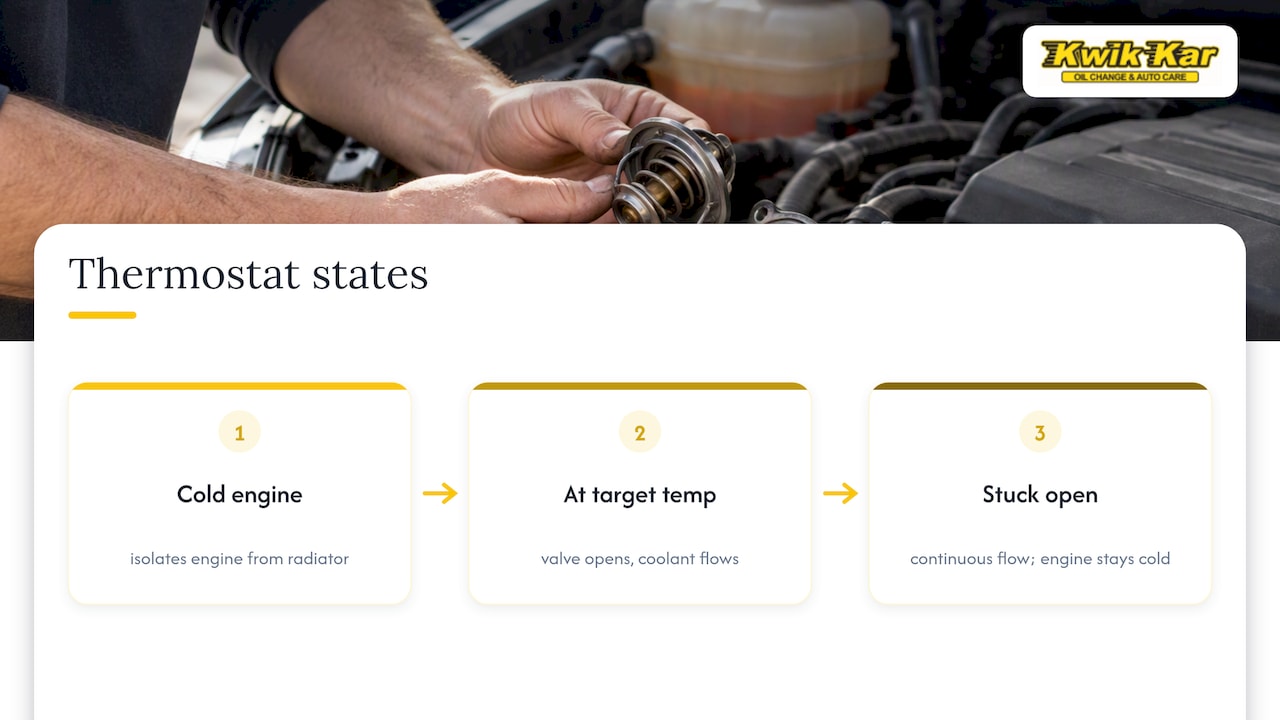
When the valve sticks open, coolant circulates through the radiator continuously, and the engine never gets the chance to hold heat long enough to reach that target temperature. The downstream effects add up fast. Engine oil stays thicker than it should at low temperatures, which increases friction and wear. The air-fuel mixture tends to run rich because the engine control computer is still compensating for a “cold” engine. The heater core gets less hot coolant to work with, which is why your vents blow cool air. Emissions components tuned for normal operating temperature can also be thrown off.
Safe, practical checks to diagnose a stuck-open thermostat
Before you assume the worst, a few simple checks can confirm whether the thermostat is the culprit.
- Watch the gauge on a cold start. Give it 10 to 20 minutes of driving and note whether it climbs toward the normal range or stays low the whole time.
- Compare hose temperatures. With the engine warm, feel the upper and lower radiator hoses. If they feel about the same early in warm-up, the thermostat may be stuck open, since the lower hose should stay cooler until the thermostat opens.
- Test the heater. Idle the engine, then rev it briefly. Weak or cool airflow after several minutes suggests the engine isn’t reaching normal operating temperature.
- Use a better tool if you have one. An infrared thermometer or an OBD-II scan tool reading the coolant temperature PID gives you a more precise number than touch alone.
- Stop and call a shop if anything looks off. Erratic gauge behavior, visible leaks, or uncertainty about what you’re seeing are good reasons to bring the car in rather than guess.
Pro Tip: Never remove the radiator cap on a hot engine. Wait until it’s cool to the touch, and keep your hands away from the fan and hoses during any warm-up test.
Risks and how long you can drive with it
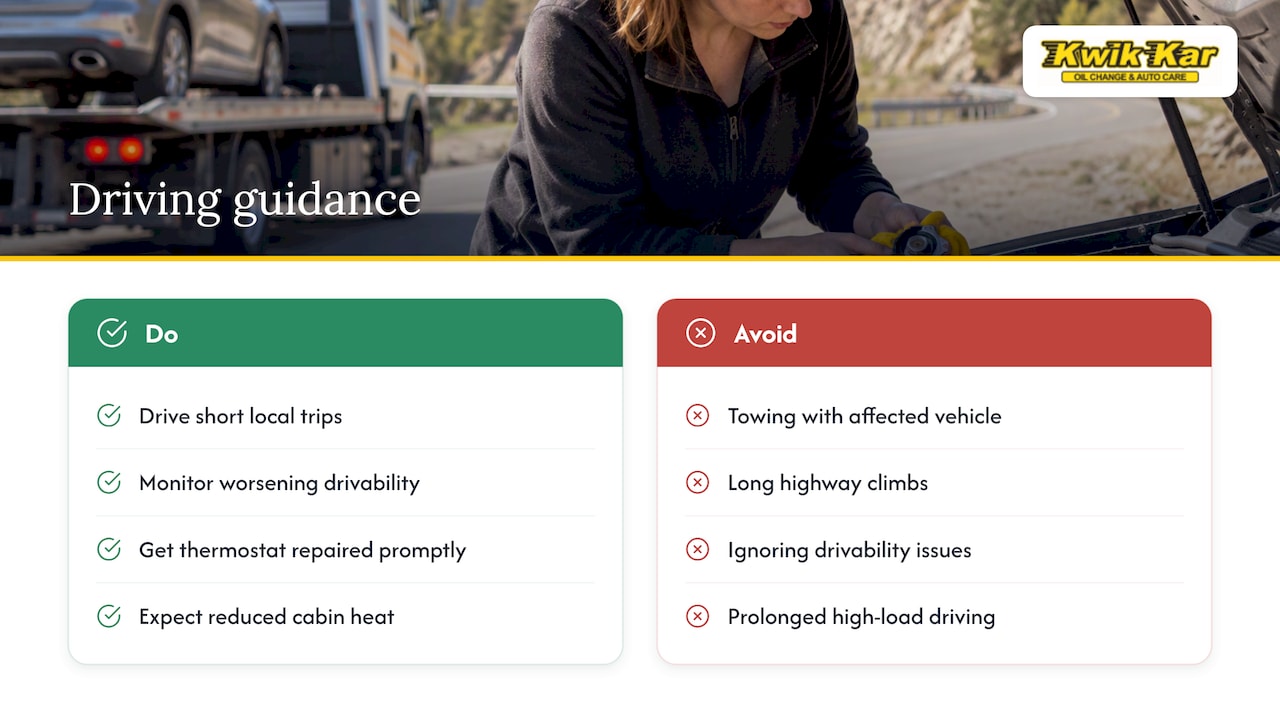
A stuck-open thermostat rarely causes sudden overheating since coolant is flowing freely, but it keeps the engine running colder than it should, which adds wear over time and can put extra load on emissions systems. Expect reduced fuel economy, weak cabin heat, and gradual engine wear the longer it goes unaddressed, with possible complications for catalytic converters or diesel particulate filter regeneration. Short local trips are usually fine in the meantime, but avoid towing or long highway climbs, and get it repaired promptly if you notice the drivability issues getting worse.
What to do next: DIY steps and when to see a pro
Once you’ve confirmed the symptom pattern, here’s how to move forward:
- Check your coolant level first, since low coolant can mimic some of the same symptoms as a stuck-open thermostat.
- Run the hose-temperature and heater checks described above to build confidence in the diagnosis.
- Replace the thermostat yourself only if you’re comfortable working around coolant and following your vehicle’s service manual.
- Bring the car to a professional auto repair shop if you’d rather have a technician confirm the reading, check for leaks, and handle the repair with the correct parts and torque specs.
A shop visit typically includes confirming coolant temperature readings, checking the system for leaks under pressure, replacing the thermostat and its gasket, and inspecting related components before buttoning things up. That extra step avoids a misdiagnosis, especially when heater complaints could point to a heater core issue instead.
Kwik Kar’s approach and what our technicians look for
Technicians confirm a thermostat failure before recommending any repair, using digital inspections that include photos and video so you can see the problem firsthand. They check OBD-II coolant temperature readings, compare hose temperatures, test cooling-system pressure, and inspect the thermostat housing for leaks before suggesting part replacement.
Book a thermostat diagnostic with Kwik Kar Spring Valley
If your gauge won’t climb and your heater’s blowing cool air, a stuck-open thermostat may be the cause and a professional diagnostic can confirm it and provide an estimate before any work begins. Technicians run a full engine diagnostic to check coolant temperature behavior, hose readings, and system pressure, so you know what to expect in terms of service.
Call Kwik Kar Spring Valley or book your engine diagnostic online to get your cooling system checked properly, or browse our full auto repair services to see everything we handle in one visit.
Sources
Thermostat function and cooling-system pressure are explained by Caltech’s engineering FAQ, while common thermostat failure signs are detailed in UTI’s cooling system guide, both used here to confirm symptoms and mechanical causes.
- Question of the Week: Why Does an Engine Cooling System Have a Thermostat, and How Does It Relate To the Coolant Flow Rate? – Caltech
FAQ
What will happen if my thermostat is stuck open?
Your engine will run cooler than normal, which shows up as weak heater output, lower fuel economy, and a temperature gauge that never climbs into its usual range. Over time this adds engine wear and can affect emissions performance, though it rarely causes sudden overheating.
How long can I drive with a stuck open thermostat?
Short local trips are usually tolerable, but sustained high-load driving like towing or long highway climbs puts extra strain on an engine that isn’t reaching proper operating temperature. Schedule a repair as soon as you notice reduced heat, poor fuel economy, or other drivability issues.
What triggers a thermostat to open?
A thermostat opens once coolant reaches its designed temperature threshold, at which point the wax element inside expands and lifts the valve to let coolant flow to the radiator, as Caltech explains. Before that point, the valve stays closed so the engine can warm up faster.
How do you unstick a stuck thermostat?
A thermostat that’s stuck open generally cannot be safely “unstuck” and reset since the wax element or spring has failed. The reliable fix is replacing the thermostat and its gasket, which a technician can confirm is needed through temperature and pressure checks before doing the work.