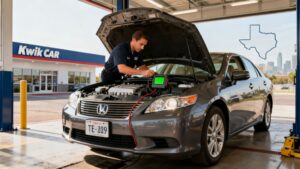




A blinking TPMS light almost always points to a system malfunction, such as a failed sensor or a communication problem, rather than a simple low-pressure warning. A solid, steady light usually means low tire pressure instead. Either way, check your tire pressures now. If they’re fine and the light keeps flashing, plan on a diagnostic visit soon.
TL;DR:
- Federal rules require a malfunction warning to flash for 60–90 seconds, then stay lit; the system must detect faults within 20 minutes of qualifying driving.
- Check all four tires and any spare with a sensor when cold, using the door jamb placard rather than the pressure printed on the tire.
- If a tire is flat or losing air quickly, stop driving and call roadside assistance; a brief drive can warm tires and hide low pressure.
- After checking pressure, try the manual reset; persistent flashing needs a scan tool for sensor diagnosis and, after replacement, programming.
- Ask the shop to scan fault codes and sensor IDs, inspect for leaks, and provide a written estimate before replacing or programming any parts.
Table of Contents
- What flashing vs. solid TPMS lights actually mean
- Common causes of a blinking TPMS light
- Quick checks: step-by-step actions you can take right now
- Reset, relearn, and why the light sometimes disappears after driving
- When to bring the car to a shop and what happens next
- How we diagnose a blinking TPMS light
- A flashing TPMS light is a safety system down, not a nuisance
- Get your TPMS checked
- FAQ
- Sources
What flashing vs. solid TPMS lights actually mean
Your TPMS light runs a quick bulb check every time you start the car, then turns off if everything’s normal. When something’s wrong with the system itself, federal safety standards require the light to flash for a set period before settling into a steady glow, and the system must flag a malfunction within a defined window of driving time. According to NHTSA’s TPMS final rule, that malfunction telltale must flash for 60 to 90 seconds and then stay lit, and the system is required to detect malfunctions within 20 minutes of driving in a specified speed range.
That timing matters because it changes what the light is telling you:
- A steady light means the system detected low pressure in at least one tire.
- A flashing light means the system itself has a fault and can’t reliably monitor your tires anymore.
Once it’s flashing, you’re driving without a working pressure alert, which is why it deserves quicker attention than a routine low-tire warning.
Common causes of a blinking TPMS light
Several issues can trigger that flashing pattern, and most trace back to the sensors inside each wheel rather than the tires themselves.
- Weak or dead sensor battery: TPMS sensors are sealed units, so when the battery runs down, the sensor typically needs replacing rather than repairing.
- Damaged or missing sensor: impact damage, corrosion, or a sensor knocked loose during a tire change can break communication with the car.
- Incorrect or incompatible replacement sensors: aftermarket parts that don’t match your vehicle’s protocol often fail to register correctly.
- Intermittent communication issues: corrosion on contacts, antenna problems, or module glitches can cause the light to flash on and off unpredictably.
- Cold-weather stress on marginal sensors: a sensor that’s already weakening may finally give out once temperatures drop.
Quick checks: step-by-step actions you can take right now
Before assuming the worst, run through a short checklist. Most of this takes less than ten minutes.
- Check each tire’s cold pressure with a gauge, matching it against the PSI listed on your door-jamb placard, not the number printed on the tire sidewall.
- Check all four tires, plus the spare if it carries a sensor.
- If a tire reads low, add air to the placard number and recheck after a short drive.
- Look over each tire for nails, cuts, sidewall bulges, or a valve stem that looks cracked or loose.
- If the light goes solid or shuts off after driving a few minutes, that’s a sign pressure was the issue.
Pro Tip: Keep a small gauge in your glove box. Checking pressure takes seconds and catches slow leaks before they become blowouts.
If a tire is losing air fast or already flat, stop driving and call for roadside help rather than continuing on a damaged tire. For a full walkthrough on reading your placard and using a gauge correctly, see our guide to checking tire pressure.
Reset, relearn, and why the light sometimes disappears after driving
Sometimes the light goes off after you’ve driven a while, and that can be misleading. Driving warms the air inside your tires, which raises pressure enough to clear a low-pressure telltale, but it does nothing for an actual sensor fault.
- Some vehicles have a simple owner’s-manual reset procedure you can run once pressures are confirmed correct.
- Many vehicles need a vehicle-specific relearn procedure that requires a scan tool to re-sync the sensors with the onboard module.
- Any time a sensor gets replaced, it has to be programmed so the car recognizes it. Sensor replacement and programming typically go together as one job.
- If you’ve confirmed pressures are correct and tried a basic reset but the light keeps flashing, that’s your signal to book diagnostics.
When to bring the car to a shop and what happens next
Once a flashing light outlasts a basic pressure check and reset attempt, a shop visit is the next logical step.
- A technician runs a TPMS code read and sensor ID scan to pinpoint which sensor or module is causing the fault.
- Shops check actual pressures, hunt for slow leaks, inspect valve stems, and bench-test sensors that aren’t communicating.
- Common repairs include sensor replacement, new valve or grommet kits, and the programming or relearn step that follows any sensor swap.
- Ask for a written estimate and a digital inspection before work starts, and confirm the fix with a post-repair check.
For more on what a diagnostic scan actually involves, our page on why a diagnostic scan matters breaks down the process step by step.
How we diagnose a blinking TPMS light
Our technicians use dedicated TPMS tools to read fault codes, test individual sensors, and handle the programming or relearn step a new sensor needs. We provide a written estimate before any work starts, along with a digital vehicle inspection that includes photos and video so you can see exactly what we found.
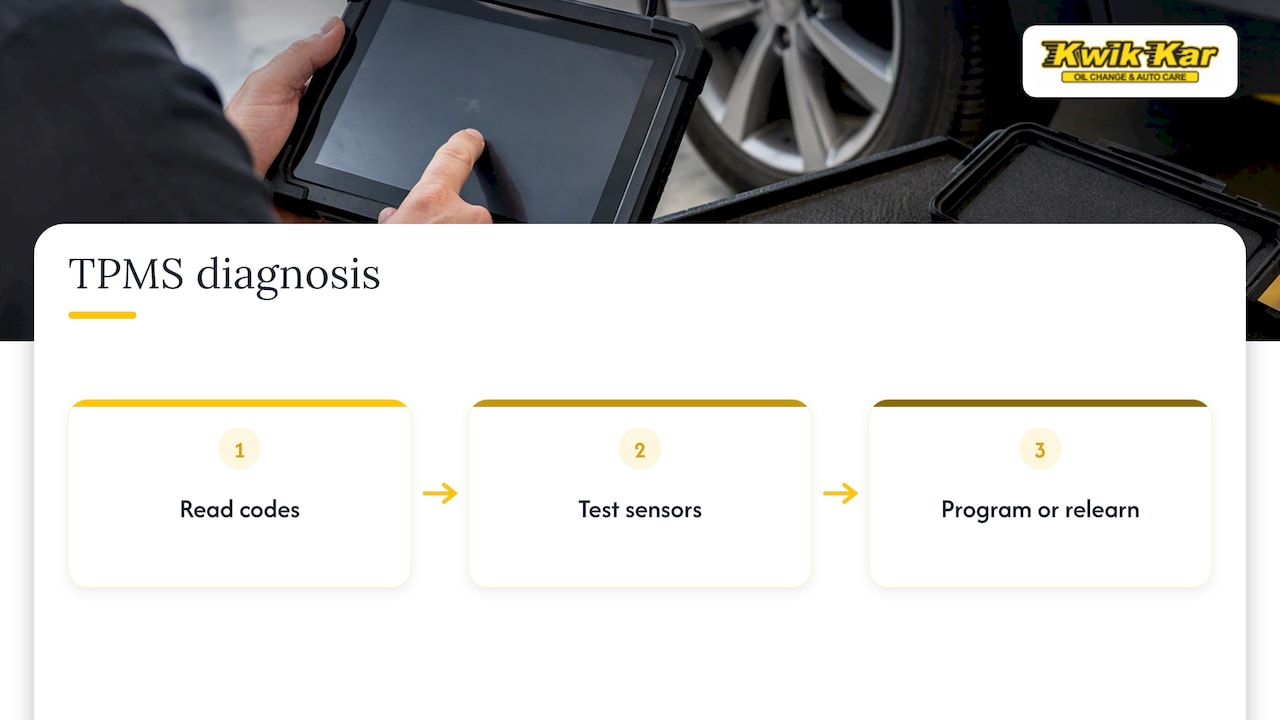
We’ll walk you through which costs are for parts versus labor and recommend a simple follow-up: checking pressures monthly going forward. If your light has been flashing for more than a day or two, it’s worth getting in front of our engine diagnostic team before it turns into a bigger repair.
A flashing TPMS light is a safety system down, not a nuisance
TPMS is a helpful backup, not a replacement for checking your own tires. AAA still recommends monthly manual checks because the light may not catch every slow leak in time. A flashing light means that backup is offline, and that’s worth acting on quickly.
— Kwik Kar
Get your TPMS checked
A blinking TPMS light doesn’t need to turn into a guessing game. We offer on-site TPMS diagnostics, a full pressure check, and sensor programming or replacement performed by experienced technicians familiar with Dallas-area driving conditions.

- Every visit includes a visual inspection, a written estimate, and photo or video documentation of what we find.
- We explain parts and labor costs clearly before any work begins.
- Book through our tire services page or call our Spring Valley Road location to get on the schedule this week.
FAQ
Can I fix a TPMS error myself?
You can check and correct tire pressure yourself, and that resolves many flashing-light cases. A true sensor fault, dead sensor battery, or communication error usually needs a scan tool and shop-level programming to fix properly.
How much does it cost to replace a TPMS sensor?
Pricing depends on your vehicle, the sensor type, and whether programming is needed, so it’s best to get a written estimate from a shop before any work starts. Ask for that estimate upfront so you know exactly what’s included.
How do you manually turn off the TPMS light?
Some vehicles have an owner’s-manual reset procedure that works once you’ve confirmed all tires are at the correct pressure. Others require a vehicle-specific relearn process using a scan tool, which is typically done at a shop.
Why is my TPMS light on but tires are fine?
A steady light with normal pressures can point to a sensor that’s reading incorrectly or a system that needs a relearn after a tire rotation or service. A flashing light under the same conditions usually means the system itself has a fault rather than the tires.
Sources
- Federal Motor Vehicle Safety Standards — TPMS final rule (NHTSA)
- Tire Pressure Monitoring Systems servicing — Tire Rack
- Don’t let your tire pressure monitoring system leave you feeling flat — AAA Newsroom