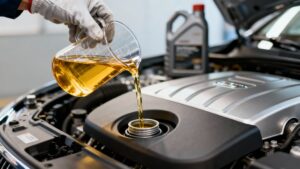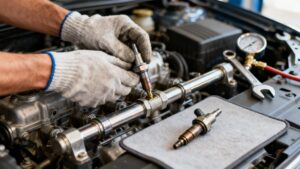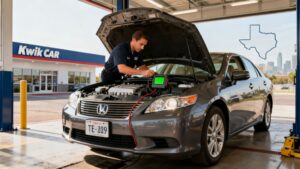


P0420 means your catalytic system is underperforming on Bank 1, flagged as “Catalyst System Efficiency Below Threshold.” Do not assume it is safe to keep driving. Arrange a prompt diagnostic, and seek immediate professional help if the engine runs poorly or the check engine light flashes. Left alone, it can lead to a failed emissions test or more expensive damage. Your next step is a diagnostic scan that captures live oxygen sensor data and confirms the engine is in proper fuel control.
TL;DR:
- The computer infers converter efficiency by comparing upstream and downstream oxygen sensor activity; a downstream signal that mirrors the upstream one triggers P0420.
- Technicians should check sensor response, exhaust leaks, fuel trims, and misfires before evaluating the converter, because each can cause misleading readings or damage.
- If P0420 appears with misfire codes or rough running, repair the engine fault first; an unresolved misfire can damage a replacement converter.
- Replace the converter only after fuel control is verified and tests rule out sensor, wiring, and exhaust faults or confirm internal converter damage.
- Before approving repairs, request live data findings, evidence of damage, an itemized estimate for parts and labor, warranty terms, and confirmation that the root cause was corrected.
Table of Contents
- What does the P0420 code actually measure?
- What symptoms show up with a P0420?
- What causes P0420, and what do technicians check first?
- How do we diagnose P0420 step by step?
- Does P0420 always mean a new catalytic converter?
- What do P0420 repairs cost, and what should you ask your mechanic?
- How can you prevent P0420 from coming back?
- Why professional diagnostics matter for P0420
- Book an engine diagnostic at Kwik Kar Spring Valley
- FAQ
- Sources
What does the P0420 code actually measure?
Your car’s computer does not test the catalytic converter directly. It compares oxygen-sensor readings before and after the converter and uses the difference as a stand-in for how well the converter stores oxygen. EPA’s OBD frequently asked questions describe the system as an early warning that flags emissions problems before they become bigger repair bills.
Here is how the logic works:
- The upstream sensor reads exhaust before it enters the converter, so its signal swings quickly as fuel mixture changes.
- The downstream sensor reads exhaust after the converter. On a healthy system, its signal stays steadier and lower in activity.
- When the downstream signal starts to mirror the upstream one, the computer concludes the converter is no longer storing oxygen as expected.
- The code sets when that comparison crosses a threshold stored in the computer, so it is an efficiency alert, not a single-sensor readout.
The federal OBD criteria documents explain why this monitoring exists: OBD systems watch emissions controls and tie directly into state inspection and maintenance programs.
What symptoms show up with a P0420?
Many drivers notice nothing at all except the check engine light. Others pick up small changes. What you feel depends on the real cause, which is why the symptoms alone cannot confirm a bad converter.
- A steady check engine light is the typical P0420 signature. A flashing light points to an active misfire, which needs attention right away.
- Lower fuel economy can appear if a fuel or sensor problem sits behind the code.
- Rough idle or hesitation suggests the engine itself needs repair first, since misfires can trigger a false P0420.
- A failed emissions inspection is often how drivers learn about the problem, even with no drivability complaints.
An isolated P0420 with a smooth-running engine usually points to a sensor, exhaust, or converter issue. P0420 alongside misfire codes means fix the engine first.
What causes P0420, and what do technicians check first?
Shops work from the cheapest, most likely cause to the most expensive. Obd-codes notes that downstream oxygen sensor behavior and exhaust leaks are common contributors, which is why the converter is not the first suspect. In the order we typically check:
- A lazy or failed downstream oxygen sensor. A sensor that reads slowly or incorrectly can make a healthy converter look weak.
- Exhaust leaks. A leak between the two sensors lets outside air skew the readings and mimics a failing converter.
- Fuel-control and ignition faults. Misfires, leaking injectors, and rich or lean fuel trim can overload a converter or trigger the code falsely.
- An aging or contaminated converter. Overheating, oil burning, or coolant entering the exhaust can coat the catalyst and reduce its efficiency.
- Less common causes. Wiring damage, a computer software update need, or an aftermarket exhaust change can all set the code.
Pro Tip: Ask whether your shop has confirmed the engine is in fuel control before anyone quotes a converter. An unresolved misfire can put additional strain on a replacement converter.
How do we diagnose P0420 step by step?
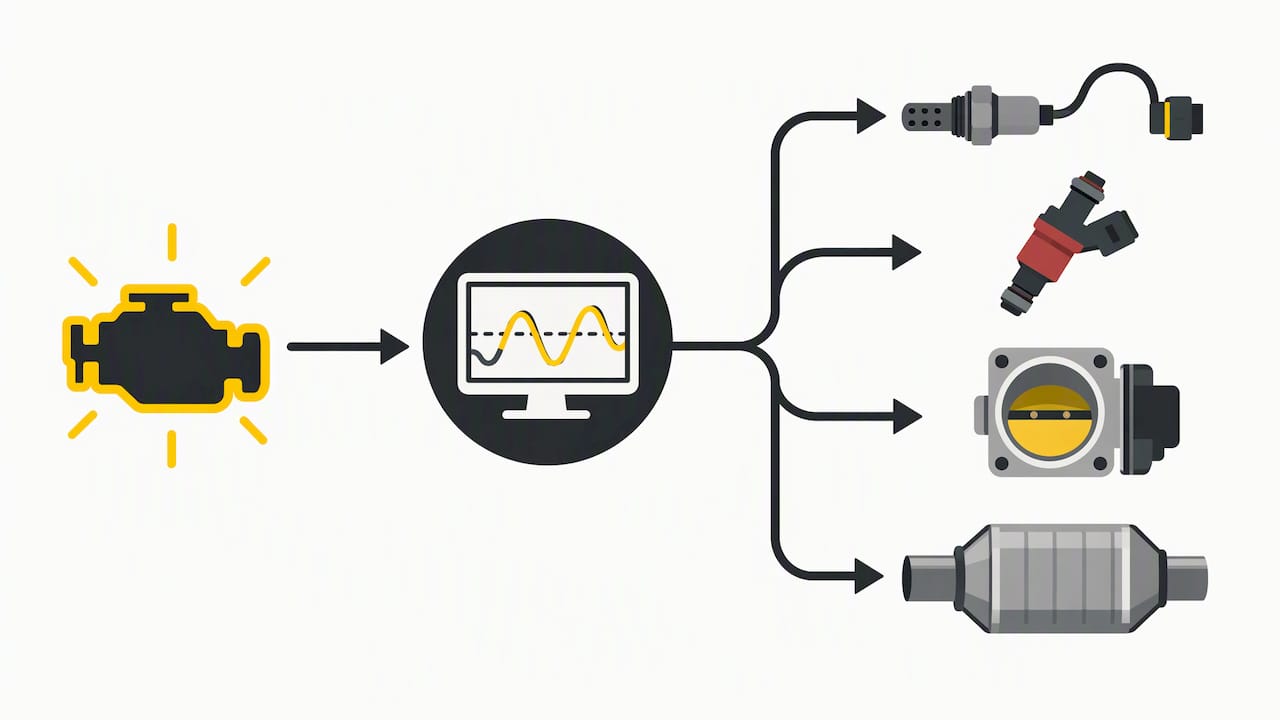
A proper diagnosis follows a sequence, and replacing the converter comes last. ICarsoft’s P0420 guide describes the same basic approach technicians rely on: read the data, test the sensors, then look at the exhaust. Our process looks like this:
- Read all stored and pending codes, plus freeze-frame data showing the conditions when the code set.
- Watch live upstream and downstream oxygen sensor voltages, looking for a downstream signal that mirrors the upstream one.
- Check short-term and long-term fuel trim, look for misfires, and inspect vacuum lines and the intake for leaks.
- Test the oxygen sensors and inspect their wiring and connectors.
- Inspect the exhaust for leaks or damaged piping, using a smoke or pressure test when needed.
- Only after those checks, evaluate the converter itself.
What you can expect to hear from a good shop:
- A summary of what the live data showed
- Which sensors and exhaust sections were tested
- Why the converter is or is not the likely culprit
Pro Tip: Our engine light diagnostic guide walks through what a diagnostic appointment includes, so you know what to expect before you arrive.
Does P0420 always mean a new catalytic converter?
No. The technician rule is simple: do not replace the converter until fuel control is verified. Skip that step and the new converter can be damaged by the same fault that hurt the old one.
Plenty of P0420 cases end without a converter swap:
- A worn downstream oxygen sensor gets replaced and the code stays gone.
- An exhaust leak is welded or patched, and readings return to normal.
- A misfire or fuel-trim problem is fixed, and the converter recovers its efficiency.
Converter replacement becomes the likely answer when other causes are ruled out and you see confirmed internal damage, melting, contamination, or a failed converter-specific test.
Even consumer-facing references like KBB’s P0420 explanation treat the code as a converter-efficiency fault with several repair paths, not a single guaranteed fix.
What do P0420 repairs cost, and what should you ask your mechanic?
We do not quote a price for this repair here, because the right number depends on what the diagnosis finds. What we can tell you is what drives the cost. Oxygen sensor replacement and exhaust leak repair are common and usually much cheaper than a converter. Our oxygen sensor replacement guide explains that repair in detail.
Converter replacement cost depends mostly on:
- OEM versus aftermarket parts
- Whether the converter is integrated into the exhaust manifold or sold as a separate unit
- Labor time for your specific vehicle
Our catalytic converter cost guide helps you prepare for an estimate. Before you approve any work, ask for:
- A diagnostic report showing live data
- Photos or video of any damage
- An itemized estimate for parts and labor
- Warranty details on both parts and labor
- Documentation that the root cause was fixed, which helps at your next emissions test
Pro Tip: If an estimate jumps straight to a converter with no live-data evidence, ask the shop to explain how fuel control and the sensors were ruled out.
How can you prevent P0420 from coming back?
The converter lasts longer when the engine feeding it runs cleanly.
- Keep ignition and fuel systems serviced on schedule to prevent misfires and rich or lean conditions.
- Fix oil and coolant leaks promptly, and avoid running low on oil or overheating.
- Replace aging oxygen sensors early rather than waiting for a code.
- Choose a qualified technician who shows diagnostic evidence before recommending major replacements.
Why professional diagnostics matter for P0420
We have seen how often a P0420 turns out to be a sensor or exhaust leak, not a failed converter. That is why we believe no one should authorize a major repair without a scan and a written diagnostic report in hand. Our technicians use diagnostic tools, and our digital vehicle inspections include photos and video so you can see what we see.
— Kwik Kar
Book an engine diagnostic at Kwik Kar Spring Valley
Our engine diagnostic helps identify the cause, and we provide an estimate before any work begins. You get experienced technicians and transparent estimates. Ask us about the warranty on our work. If your check engine light is on, book an engine diagnostic at our Spring Valley shop and we can help identify the cause.
FAQ
What is the most common cause of a P0420 code?
A faulty downstream oxygen sensor or an exhaust leak can contribute to P0420, so technicians check them before condemning the converter. OBD-Codes.com points to downstream sensor behavior and exhaust leaks as frequent contributors. That is why technicians test them before condemning the converter.
How do you fix the code P0420?
The fix depends on the diagnosis. It may be an oxygen sensor, an exhaust leak repair, a fuel or ignition fix, or a converter replacement. Clearing the code without finding the cause will only bring the light back.
Does P0420 mean I need a new catalytic converter?
Not necessarily. Technicians verify fuel control and rule out sensor, wiring, and exhaust problems first. A converter is replaced only when those checks point to internal damage or failure.
How expensive is it to fix a P0420 code?
Cost depends on what is actually wrong. Sensor and exhaust-leak repairs are usually far less than converter replacement, and our converter cost guide explains the main cost drivers. We provide a written estimate after diagnosis.
Is it safe to drive with a P0420 code?
Do not assume it is safe to keep driving. Arrange a prompt professional assessment, and seek immediate help if the engine runs poorly or the check engine light flashes.
Sources
- On-Board Diagnostics – Second Generation (OBD-ll) System Criteria for Alternate-Fueled Vehicles
- OBD: Frequently Asked Questions (EPA-420-F-02-014, August 2002) (Rev September 2012)
- P0420 Catalyst System Efficiency Below Threshold
- P0420 — Catalyst System Efficiency Below Threshold (Bank 1)