


A P0300 code means your engine computer has detected misfires in more than one cylinder, or in a random pattern that it cannot pin on a single cylinder. It is a symptom, not a diagnosis. The cause can be as simple as worn spark plugs or as involved as a vacuum leak, a failing fuel injector or a mechanical problem inside the engine. If your check engine light is steady, you can usually drive carefully to a shop. If it is flashing, you should stop driving as soon as it is safe.
Below, we explain what the code means, what you will feel, what causes it, how a technician finds the real problem, and what to do if you drive in the Dallas area.
TL;DR
- P0300 means random or multiple cylinder misfire. The computer sees misfires but cannot assign them to one cylinder.
- A flashing check engine light is urgent. EPA guidance describes it as a severe, catalyst-damaging misfire, so cut your driving to a minimum.
- Common causes fall into three groups: ignition, fuel and air, or mechanical. Replacing parts based on the code alone is guessing.
- Fix it early. Ongoing misfires can damage the catalytic converter, the most expensive emission part on your car.
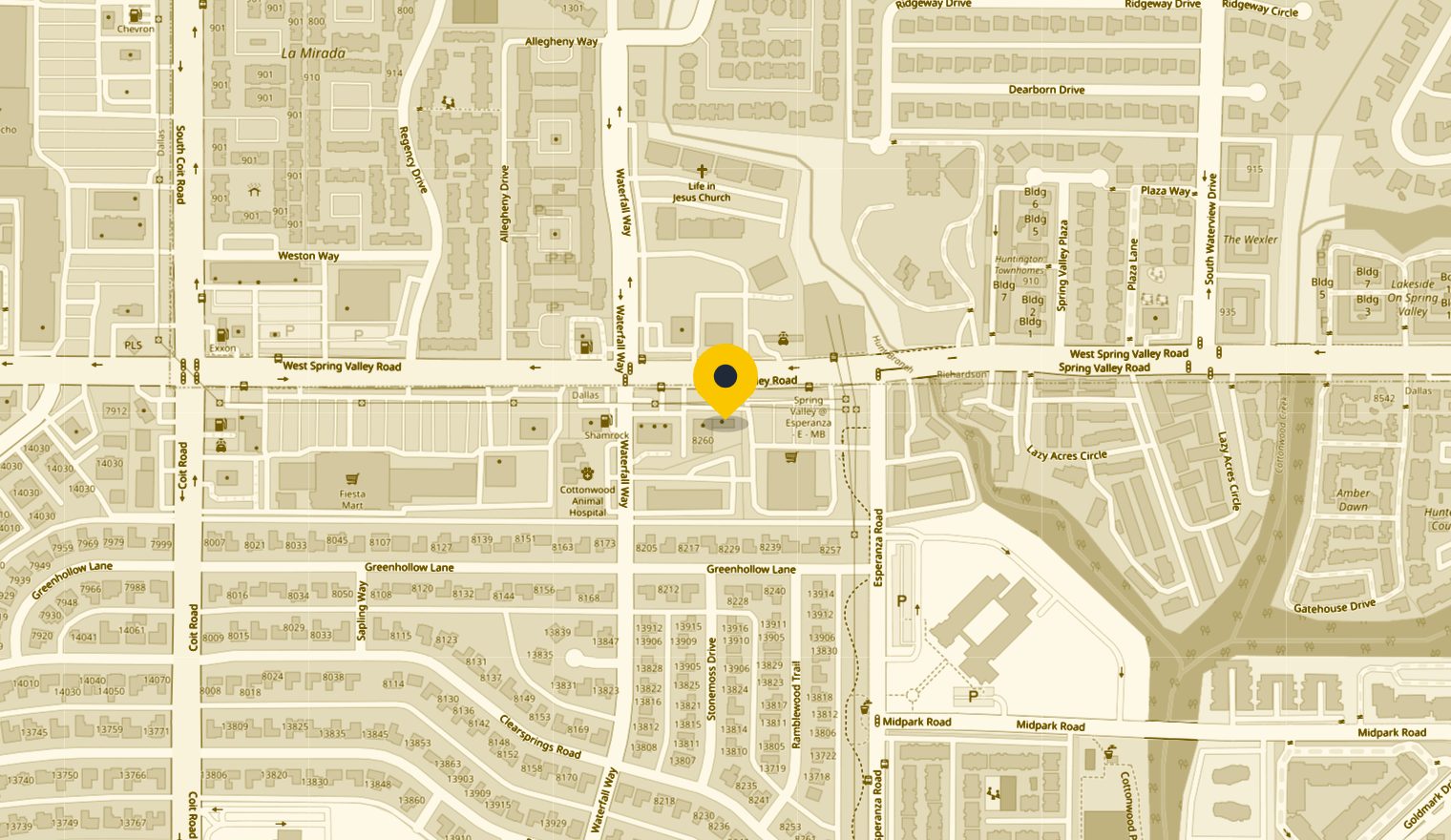
- We diagnose it and give you an estimate before any work begins. Book a diagnostic at Kwik Kar on Spring Valley Road in Dallas.
Table of Contents
- What the P0300 code actually means
- Symptoms you may notice
- How serious is P0300, and can you drive with it?
- P0300 causes: three groups to check
- Why you should not just replace parts
- How we diagnose a P0300
- Is P0300 expensive to fix?
- What you can check before you call
- P0300 and Texas emissions inspections
- Our perspective: why the misfire code is a starting line
- Related maintenance that helps prevent misfires
- Get your P0300 diagnosed at Kwik Kar
- FAQ
- Sources
What the P0300 code actually means
Every car and light truck sold in the U.S. since model year 1996 has an on-board diagnostics system, or OBD II. According to the EPA, it monitors the engine and emission controls, and it stores a trouble code when it sees a problem.
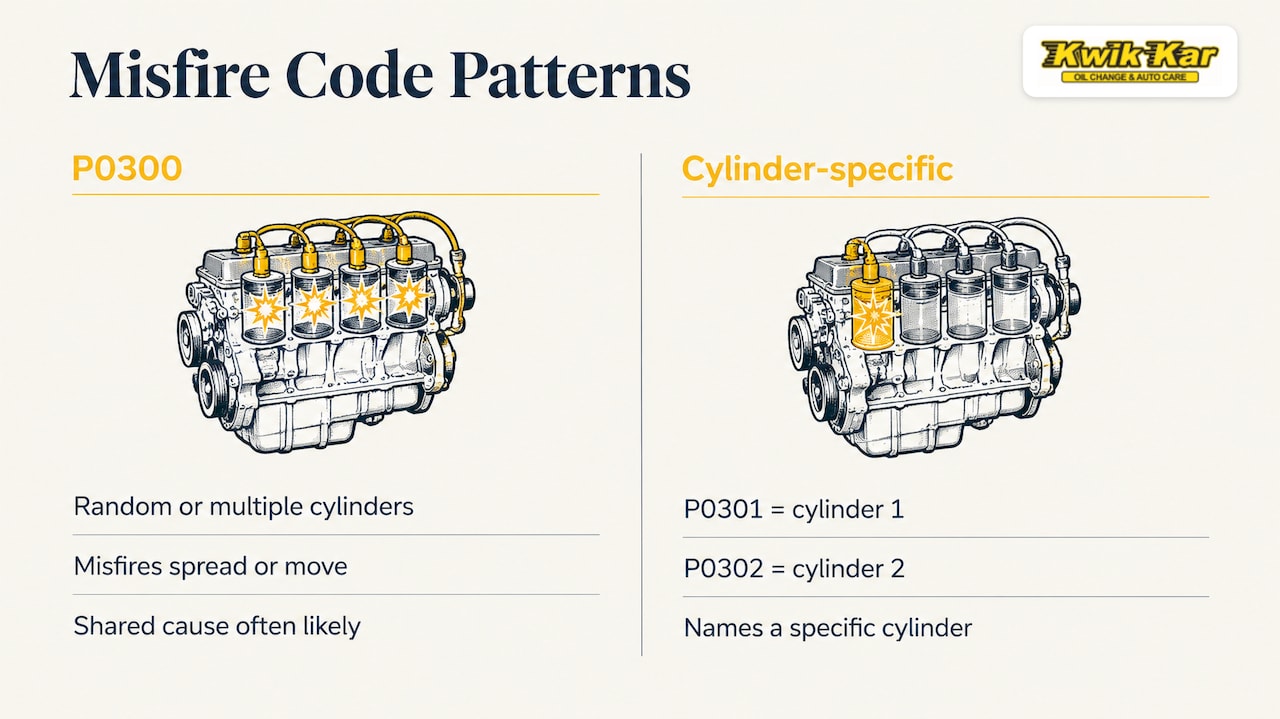
P0300 is the generic code for “random or multiple cylinder misfire detected.” A misfire happens when a cylinder fails to burn its air and fuel mixture properly during the combustion stroke. The computer notices because the crankshaft speed flickers for a moment.
The key word is random. Related codes name a specific cylinder: P0301 is cylinder 1, P0302 is cylinder 2, and so on. P0300 is stored when misfires are spread across cylinders or move around. That pattern usually points to something shared by all cylinders, such as fuel pressure, a vacuum leak or old spark plugs, rather than one bad coil.
You may see P0300 alone, or along with one or more cylinder-specific codes. Both tell the technician something, so do not clear the codes before you visit a shop.
Symptoms you may notice
Some drivers feel nothing but a lit check engine light. Others notice one or more of these:
- Rough idle. The engine shakes at a stoplight or feels uneven in Park.
- Hesitation or stumbling when you accelerate onto Central Expressway or the Dallas North Tollway.
- Loss of power, especially going uphill, towing or carrying passengers.
- Hard starting or an engine that cranks longer than it used to.
- Poor fuel economy, because unburned fuel is wasted.
- A fuel smell from the exhaust.
- A steady or flashing check engine light.
The light matters. A steady light means the computer stored a fault. A flashing light means the misfire is severe enough to harm the catalytic converter. Our guide on what a flashing check engine light means walks through the shop steps for that situation.
How serious is P0300, and can you drive with it?
It depends on how the car is behaving.
| What you see | What it suggests | What to do |
|---|---|---|
| Steady light, engine runs close to normal | A mild or intermittent misfire | Drive gently and book a diagnostic within days, not weeks |
| Steady light, rough running or low power | A misfire that is happening regularly | Limit trips and get the car checked soon |
| Flashing light | Severe misfire that can overheat the catalytic converter | Reduce driving to a minimum and have the car towed or inspected right away |
The EPA’s guidance says that if the light flashes, you should minimize driving, avoid high speeds, and avoid towing or heavy loads to prevent permanent damage to the catalytic converter. Unburned fuel entering a hot converter is what causes that damage.
There is also a safety side. A car that stumbles or loses power while merging, or in the middle of an intersection, is a risk to you and the drivers around you. If your engine hesitates under load, treat it as more than an emissions issue.
The EPA also describes the check engine light as an early warning system: catching an emission-related failure early allows a targeted repair before secondary damage occurs. That is the practical reason not to wait on a P0300.
P0300 causes: three groups to check
Technicians group misfire causes into ignition, fuel and mechanical problems. Because P0300 is a multi-cylinder code, some causes are more likely than others.
Ignition system
This is the most common starting point.
- Worn or fouled spark plugs. Plugs wear out with mileage, and the gap widens until the spark gets weak.
- Failing ignition coils or coil boots. One weak coil often sets a cylinder-specific code, but several aging coils can set P0300.
- Damaged plug wires on vehicles that still use them.
Fuel and air
- Clogged or weak fuel injectors. A dirty injector delivers an uneven spray. Our fuel injector service is part of our full repair lineup.
- Low fuel pressure from a weak pump or a clogged filter, which starves all cylinders at once.
- Vacuum leaks. Unmetered air enters through a cracked hose or a leaking intake gasket and leans out the mixture.
- Faulty sensors. A mass airflow sensor, oxygen sensor or camshaft position sensor can feed the computer bad data and throw off the mixture or timing.
Mechanical
- Low compression from worn rings, a burned valve or a failing head gasket.
- Timing problems, such as a stretched timing chain or a worn timing belt that has jumped a tooth.
- EGR problems that let too much exhaust gas into the intake at the wrong time.
Mechanical causes are less common, but they are the ones that make a guess-and-replace approach expensive.
Why you should not just replace parts
A code reader tells you what the computer saw. It does not tell you why. ASE training material makes this point clearly: scan tool data is a starting point, and it must be confirmed by measuring the actual component to tell electrical, mechanical and fuel-related misfires apart.
In practice, swapping plugs or coils because a website said so can cost you money and leave the misfire in place. The right order is test first, repair second.
How we diagnose a P0300
Here is the process you can expect from a technician who works methodically.
- Scan and record the codes. We note every stored code and any freeze-frame data, which shows engine conditions when the fault was set.
- Check the basics. That means a visual look at plugs, coils, wires, hoses and connectors, plus the air intake path.
- Review live data. Fuel trims, misfire counters and sensor readings show whether the engine is running lean, rich or unevenly.
- Test the suspect system. Depending on what the data shows, that may be ignition testing, fuel pressure testing, a smoke test for vacuum leaks or a look at sensor signals.
- Check mechanical health when needed. Modern engines make traditional compression testing hard because it requires removing parts. Experts note that relative compression testing uses diagnostic tools to measure engine speed variations, which can evaluate mechanical integrity without extensive disassembly.
- Explain the finding and give an estimate. You see what we found, and you approve the work before we start.
Our engine diagnostic service follows this approach, and our digital vehicle inspections include photo and video so you can see what the technician sees.
Is P0300 expensive to fix?
It ranges widely, and any honest shop will say so. A set of spark plugs sits at the low end of what a misfire repair can involve. A failed head gasket or a damaged catalytic converter sits at the high end. The EPA notes that the catalytic converter is typically the most expensive emission control component to replace, which is why a misfire left unaddressed can turn a small repair into a big one.
We do not publish a flat price for P0300 repairs, because the cause decides the cost. What we do commit to is an estimate before work begins.
What you can check before you call
These steps are safe for most drivers and can help you describe the problem.
- Check the gas cap. A loose cap can trigger other emission codes. The EPA notes that if a temporary issue is resolved, the system may turn the light off by itself after several successful driving cycles. That does not apply to a true misfire, which usually returns.
- Note when it happens. Cold starts, highway speeds, going uphill or after refueling each point to different causes.
- Notice the light’s behavior. Steady or flashing matters when you talk to a technician.
- Remember your last tune-up. If you cannot recall the last spark plug change, that is useful information.
- Do not clear the code and hope. The misfire will usually return, and you lose the stored data that helps diagnosis.
P0300 and Texas emissions inspections
If you live in Dallas County, this part matters. Dallas is one of the Texas counties with emissions testing, and a lit check engine light is generally an automatic fail in those counties. A P0300 therefore needs to be repaired before your vehicle can pass.
Resetting the light right before an inspection is not a plan. The system needs to complete its checks again, and a misfire that is still there will bring the light back. For more on this, see our guides on how to pass emissions and what to do after a failed emission test. We also handle state inspections, including commercial inspections for fleet vehicles.
Our perspective: why the misfire code is a starting line
We see P0300 often, and the most common mistake is treating it as a shopping list. A driver reads the code, buys plugs and coils, and the light returns a week later. Sometimes the plugs really were the issue. Just as often the plugs were worn and something else was feeding the problem, such as a vacuum leak or a tired injector.
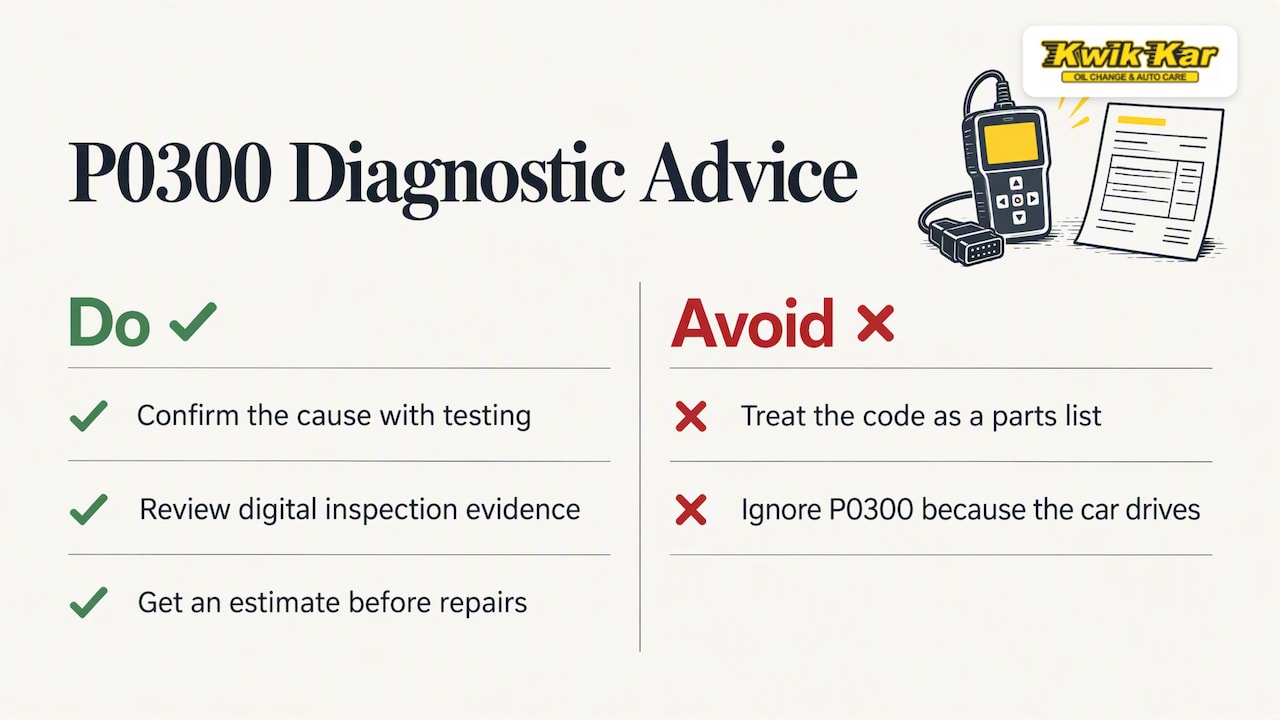
Our ASE Certified Master technicians work from data. We confirm the cause with testing, show you the evidence in a digital inspection, and give you an estimate before we pick up a wrench. We have been a family-owned shop serving this community for nearly 30 years, and our reputation depends on you leaving with the right fix, not the biggest invoice.
Our advice is simple. Do not ignore a P0300 because the car still drives. Misfires wear on the catalytic converter, hurt fuel economy and can leave you stranded. A diagnostic now is almost always cheaper than a tow and a bigger repair later.
— Kwik Kar
Related maintenance that helps prevent misfires
A lot of misfires start as deferred maintenance. These habits cut the odds:
- Change spark plugs on the schedule in your owner’s manual. Intervals differ by engine and plug type.
- Keep up with oil changes. Dirty oil is hard on timing components and variable valve timing systems.
- Replace the air filter and fuel filter when due, so the engine gets clean air and steady fuel pressure.
- Address other warning lights early. Our guide to early vehicle diagnostics explains why small codes should not wait.
- Watch your battery and charging system. Weak voltage can affect sensors and ignition. See our check engine light and battery guide.
- Follow your timing belt interval if your engine uses one.
If you want a broader read on the light itself, start with our Dallas driver’s guide to engine light diagnostics or the page on check engine light repair.
Get your P0300 diagnosed at Kwik Kar
We diagnose and repair misfires on domestic and import vehicles at our Spring Valley Road location in Dallas. You get ASE Certified Master technicians, advanced diagnostic tools, a written estimate before work begins, and a 24-month/24,000-mile warranty. We also offer same-day service options, which helps if you commute or run a fleet and cannot spare the vehicle for long.
Ready to find out what is behind your check engine light? Visit our engine diagnostic page to book, or see the full list of our auto repair services, including oil changes, brakes, batteries, tires, A/C, transmission, fluid exchanges and fleet maintenance.
FAQ
How do I fix code P0300?
You fix it by finding the cause of the misfire, not by clearing the code. A technician checks ignition parts, fuel delivery, air leaks and engine mechanical health, then repairs what the tests point to. Common repairs include spark plugs, ignition coils, injector service and vacuum leak repair.
What sensors can cause a P0300?
A failing mass airflow sensor, oxygen sensor or camshaft position sensor can send bad data that upsets fuel delivery or timing and leads to misfires. These are less common than plugs and coils, which is why testing comes before replacing sensors. Live data from a scan tool helps separate a bad sensor from a real mixture problem.
Can I still drive my car with a P0300 code?
With a steady light and a car that runs smoothly, short, gentle trips to a shop are usually reasonable. If the light is flashing, the EPA advises minimizing driving and avoiding high speeds, towing and heavy loads, because the catalytic converter can be damaged. If the car stumbles or loses power, get it inspected before driving in traffic.
Is P0300 expensive to fix?
It depends on the cause. Ignition repairs are generally on the lower end, while mechanical problems or a damaged catalytic converter cost more. A diagnostic gives you the real answer, and at Kwik Kar you receive an estimate before work begins.
Will the P0300 code go away on its own?
The light can turn off if a temporary issue is resolved and the system passes its checks over several driving cycles. A real misfire usually returns. If the light comes back, have the car diagnosed instead of resetting it again.
Sources
- EPA: Do you drive a 1996 or newer car or light truck? (EPA-420-F-02-016)
- EPA: Frequently Asked Questions About On-Board Diagnostics
- EPA: OBD Frequently Asked Questions
- ASE: Misfire Diagnostics webinar
- ASE: Advanced Engine Performance Specialist (L1) study guide
- ASE: Modern Engine Diagnostics, Relative Compression Testing
- GarageGuide: Passing Texas inspection with the check engine light on