



An AGM battery is the stronger, more expensive option. It uses fiberglass mats to hold the acid in place, handles deep and frequent discharges, and suits vehicles with heavy electronics. An EFB battery is an upgraded flooded battery built for entry-level start-stop cars. The one you need is the one your car was built with. If your car came with AGM, replace it with AGM. If it came with EFB, an EFB is the match, and an AGM is generally a safe step up.
Below, we explain how the two work, where each one fits, how to charge them, and how to check which type is in your car. We also cover why Dallas heat is hard on both.
TL;DR
- AGM (Absorbent Glass Mat) batteries hold acid in fiberglass mats. They are spill-resistant, vibration-resistant, and built for high electrical demand.
- EFB (Enhanced Flooded Battery) batteries keep liquid electrolyte but have sturdier plates. They are made for basic start-stop vehicles.
- In lab and fleet testing, Clarios reports AGM delivers double the cycling performance of EFB, which is why AGM is the premium choice.
- Always replace with the same technology the factory installed. Never put an EFB where an AGM belongs.
- AGM batteries need a charger with an AGM setting. A standard flooded-battery profile is not the right tool.
Table of Contents
- What an AGM battery is
- What an EFB battery is
- AGM vs EFB side by side
- AGM vs a standard flooded battery
- Do you need an AGM battery?
- Why you should replace like with like
- AGM battery charging requirements
- How to maintain an AGM or EFB battery
- Dallas heat and your battery
- Warning signs your battery needs attention
- Our perspective
- Get your battery tested in Dallas
- FAQ
- Sources
What an AGM battery is
AGM stands for Absorbent Glass Mat. Inside, thin fiberglass mats sit between the lead plates and soak up the electrolyte. The acid is held in the mats instead of sloshing around freely. That design is why the battery is sealed, doesn’t spill, and tolerates vibration well.
Clarios, a major battery manufacturer, says it introduced the first AGM battery to the automotive market in 2001. Since then, AGM has become common as vehicles added more features and more electrical load.
You will most often find AGM batteries in:
- Vehicles with start-stop systems that restart the engine at every red light
- Cars with heavy electronics: advanced safety systems, large touchscreens, heated seats, power accessories
- Many European and luxury models
- Vehicles where the battery sits inside the cabin or trunk, where leaks and gassing are a bigger concern
Why AGM handles modern demands
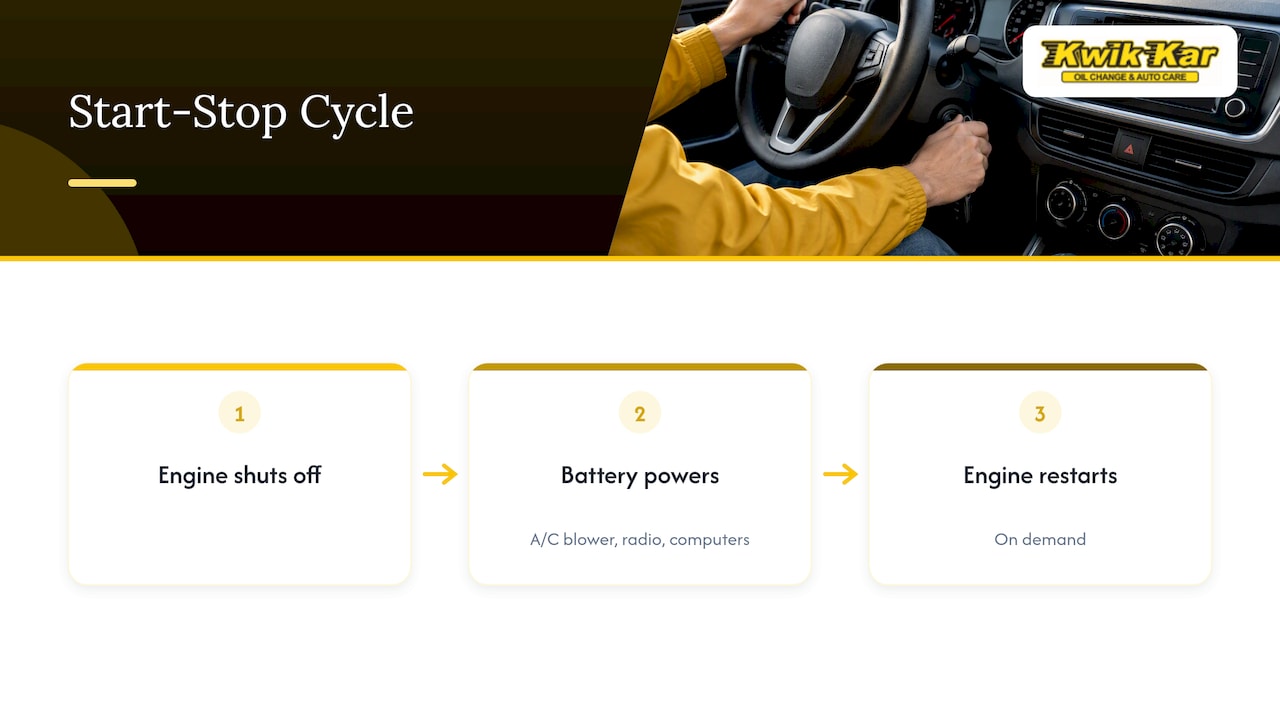
The main strength of AGM is how it copes with frequent, deep discharges and then recovers. A start-stop car does this all day in Dallas traffic: the engine shuts off, the battery runs the A/C blower, radio, and computers, then it has to restart the engine on demand. AGM is built for that loop.
What an EFB battery is
EFB stands for Enhanced Flooded Battery. It is still a flooded battery, meaning the electrolyte is liquid. The difference from a standard flooded battery is in the construction. Clarios describes its enhanced flooded batteries as having thicker plates fitted to the structure, which makes them more resilient to deterioration and supports longer battery life.
EFB was designed as a cost-conscious step up for basic start-stop vehicles. These are cars that need to restart often but don’t carry the heaviest electrical loads. It handles more cycling than a conventional battery, and it costs less than AGM.
AGM vs EFB side by side
| Feature | AGM | EFB |
|---|---|---|
| Electrolyte | Held in fiberglass mats | Free liquid |
| Spill resistance | Sealed, spill-resistant | Flooded design, more conventional |
| Vibration tolerance | High | Moderate |
| Best for | Advanced start-stop, heavy electronics, premium vehicles | Basic start-stop, entry-level vehicles |
| Cycling performance | Higher | Lower than AGM |
| Upfront cost | Typically higher | Typically lower |
| Charging | Needs an AGM-compatible charger | Charges like a standard flooded battery |
| Swap into a car built for AGM? | Yes, that is the match | No |
The test numbers help show the gap. Clarios lab and fleet tests report that in start-stop applications, EFBs lost six times more water and 60% more capacity than AGM batteries. Keep in mind this comes from a manufacturer that sells AGM, so treat it as one data point. It does match what we see: heavily loaded cars tend to be harder on a battery that wasn’t built for the job.
AGM vs a standard flooded battery
People often ask whether AGM is better than a plain flooded battery. On durability and deep-cycle ability, yes. On cost, no: standard flooded batteries are usually the cheapest.
A standard flooded battery is fine for an older vehicle with modest electrical needs and no start-stop system. Sticking with the type the car was built with is a smart decision. Paying for AGM in a basic older car may add durability, but it is not required.
The reverse is the risk. Putting a flooded battery into a car designed for AGM is where problems start.
Do you need an AGM battery?
You need AGM if any of these are true:
- The factory battery was AGM. Look at the label on the battery itself.
- Your vehicle has an advanced start-stop system.
- The owner’s manual calls for AGM.
- The battery is installed in the trunk or passenger compartment, which often points to a sealed AGM design.
You can likely use EFB if the car came with EFB and a basic start-stop system. You can use a standard flooded battery if the car never had start-stop and came with a conventional battery.
How to tell which battery you have
- Read the label. AGM and EFB are usually printed on the case or label.
- Check the owner’s manual. It lists the battery specification.
- Look at the top. A conventional flooded battery may have removable caps. A sealed AGM typically does not.
- Ask us. If the label is worn or the battery has been replaced before, we can check what your vehicle needs. Don’t assume the last battery was the right one.
Why you should replace like with like
Modern vehicles with battery management systems (BMS) adjust charging based on the battery they expect. When the battery type doesn’t match, the charging strategy no longer fits.
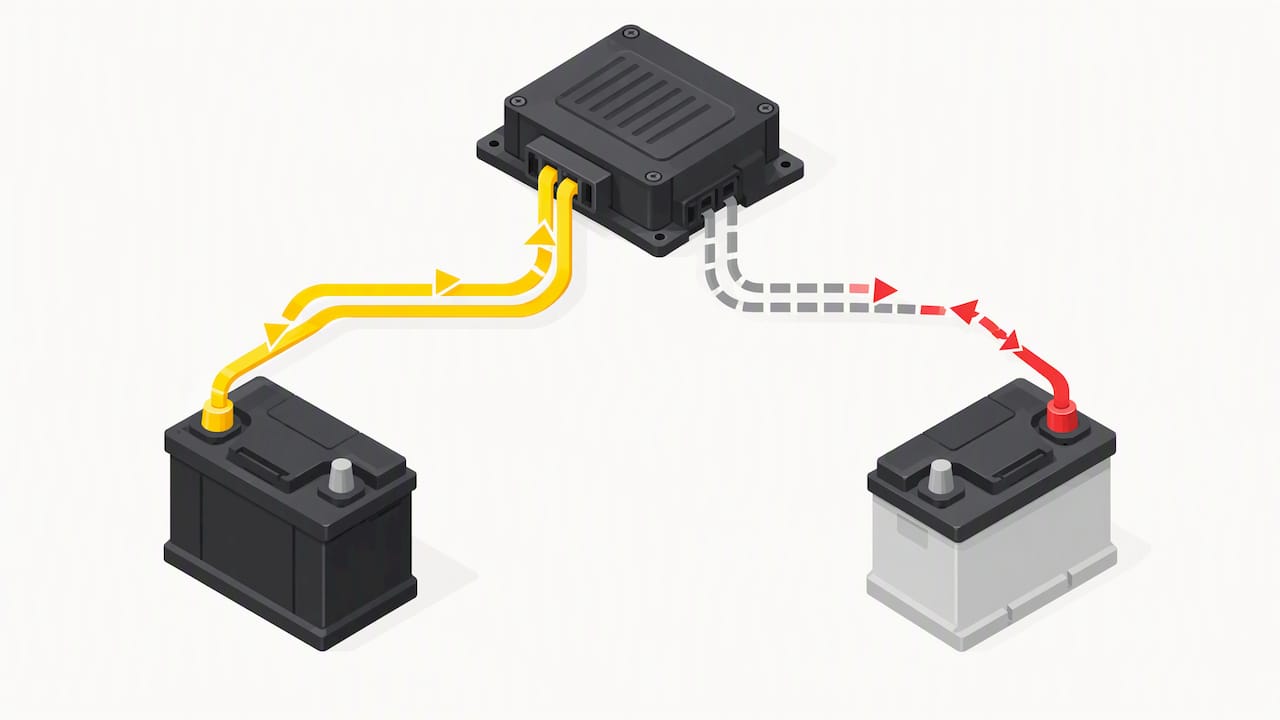
Clarios says EFBs were never intended for conventional non-start-stop vehicles or high-demand systems, and that forcing them into those roles can lead to acid stratification, where the acid separates and settles at the bottom. The result can be early failure and misleading state-of-charge readings.
In practical terms, a mismatch can show up as:
- Start-stop that stops working or becomes erratic
- A battery that dies earlier than expected
- Warning lights or electrical glitches
- Slow cranking that comes and goes
Some vehicles also need the new battery registered or coded to the car after installation. Requirements vary by make, so check the manufacturer’s procedure rather than guessing.
AGM battery charging requirements
This is where AGM owners get caught. A flooded battery and an AGM battery do not want the same charging profile.
- Use a charger with an AGM mode. Over-voltage can damage an AGM battery and, if it is connected, sensitive electronics.
- Set the maintainer to AGM if you use a trickle charger or maintainer on a car that sits.
- Avoid high-amp shop-style chargers unless they have a proper AGM setting.
- Follow the charger and battery manufacturer’s instructions. If you are unsure, don’t connect it. Bring the car in.
As for EFB, it generally follows the same charging approach as a standard flooded battery. But if your car’s system expects a specific profile, a jump or charge should still be done carefully. Our guide to battery charging basics walks through the fundamentals, and the battery voltage chart helps you read what a multimeter is telling you.
Can you charge an EFB with an AGM charger? Often yes, if the charger’s AGM mode is within the battery maker’s guidance. Read the battery’s label and the charger manual first. When in doubt, ask a technician.
How to maintain an AGM or EFB battery
Both types last longer when you treat the whole electrical system well.
- Drive it regularly. Short trips don’t give the alternator time to recharge a battery that restarts the engine often.
- Keep terminals clean and tight. Corroded or loose connections cause hard starts that look like battery failure.
- Watch for parasitic drain. Something drawing power while the car is off will wear any battery down. We cover it in our guides on testing for battery drain and what causes a battery to drain overnight.
- Test it before it fails. A battery can look fine and still be weak. Our page on checking car battery health explains the basics.
- Check the charging system. A weak alternator will kill a new battery. If you see dimming lights or a battery warning, read about alternator warning signs.
Dallas heat and your battery
Most people blame winter for dead batteries. Heat does more damage. AAA says hot weather can kill more batteries than cold, and that heat is the leading cause of battery failure and shortened battery life. It also reports more roadside calls when temperatures stay above 90 degrees for several days.
Dallas summers regularly do that. Heat speeds up fluid loss and corrosion inside a battery, and the weakness often shows up on the first cool morning or the next hot afternoon. If your battery is a few years old, getting it tested before summer, and again in fall, is cheap insurance against a no-start in a parking lot.
Warning signs your battery needs attention
- Slow or labored cranking
- Dim headlights at idle
- Start-stop system disabled or acting strangely
- A battery or check engine light. See our guides on the battery light, a flashing battery light, and the check engine light and the battery
- Swollen case, corrosion on the terminals, or a rotten-egg smell
- Electrical oddities: windows, radio, or dash behaving erratically
A battery light does not always mean a bad battery. It can point to the alternator or wiring, which is why testing the whole system matters.
Our perspective
At Kwik Kar on Spring Valley Road, the most common battery mistake we see is not buying the wrong brand. It is buying the wrong type, or replacing a battery without checking the charging system behind it.
Our ASE Certified Master technicians start with a diagnosis. We test the battery, check the charging system, and look for drains before recommending a replacement. We give you an estimate before any work begins, and our digital vehicle inspections include photo and video so you can see what we see.
Our advice on AGM vs EFB is simple. Match what your car was designed for. If it came with AGM, stay with AGM. If it came with EFB, an AGM can be a reasonable upgrade if you want more durability. If the car is an older conventional model, you don’t need to pay for technology it never asked for. Our work comes with a 24-month/24,000-mile warranty, and we would rather explain the choice than upsell you.
— Kwik Kar
Get your battery tested in Dallas
If your car is slow to start, or you aren’t sure whether it takes AGM or EFB, bring it to us. We test the battery and the charging system, tell you what your vehicle needs, and give you an estimate before work begins. See our battery testing and replacement service, or browse all our auto repair services. Commuters, families, and local fleets are all welcome.
If the battery tests fine but the problem continues, our engine diagnostic service can trace the cause.
FAQ
Is AGM better than EFB?
For durability and heavy electrical demand, yes. AGM is built to handle deeper, more frequent discharges, and manufacturer testing shows it outlasting EFB in start-stop use. EFB costs less and works well in basic start-stop cars that were designed for it.
Can I replace an AGM battery with an EFB?
No, that is not recommended. A car built for AGM expects an AGM’s charging behavior, and an EFB can fail early or give the system false readings. Going the other way, from EFB to AGM, is generally acceptable.
Do I need an AGM battery if my car doesn’t have start-stop?
Not necessarily. If your car came with a standard flooded battery and has modest electronics, a matching standard battery is fine. AGM may add durability, but check your owner’s manual first.
Can I use a regular charger on an AGM battery?
Only if it has an AGM setting or the charger maker approves it for AGM. An unsuitable charger can overcharge the battery and stress your car’s electronics. If you are not sure, have a technician handle it.
How do I know which battery my car needs?
Check the label on your current battery and your owner’s manual. If the car has been serviced before, the previous battery may not have been the right type, so we can confirm the correct specification for your vehicle.
Sources
- AGM batteries, the best choice for start-stop vehicles (Clarios)
- AGM Automotive Batteries (Clarios)
- Flooded Automotive Batteries (Clarios)
- AAA: Car Care Tips for Extreme Heat