


A persistent gasoline smell in your car is a safety issue, not a nuisance to ignore. The three most likely culprits are a loose or damaged gas cap, a fuel-system leak, or an evaporative emissions (EVAP) system fault, and a sharp or lingering odor can signal leaking fuel near an ignition source. AAA Club Alliance notes this combination poses a real fire risk, so if the smell is strong, stop driving, ventilate the area, and have a certified shop like Kwik Kar inspect it right away.
TL;DR:
- Loosened or cracked gas caps are the most common cause of gasoline odors, and replacing or tightening them can often resolve the issue.
- Fuel leaks from lines, pumps, or injectors tend to produce stronger, more urgent odors and may involve visible wet spots or stronger smell after idling.
- Persistent or sharp smells, especially with a check-engine light, require immediate professional inspection due to fire risk and safety concerns.
- Overfilling the tank or allowing fuel spills can saturate vapor lines and cause ongoing odors, which routine maintenance can prevent.
- Smoke testing and diagnostic scans are the most effective methods for identifying EVAP system leaks, but only trained technicians should perform these procedures.
Table of Contents
- Common causes and quick symptom checks
- Health, fire risk, and immediate actions to take
- How professionals diagnose gasoline odors
- Prevention and routine maintenance to stop recurring odors
- What our technicians see most often
- Get your fuel system checked at Kwik Kar Spring Valley
- FAQ
- Sources
Common causes and quick symptom checks
Most gasoline odors trace back to a handful of sources, and a few quick checks can narrow things down before you even open the hood.
A loose or missing gas cap is one of the simplest fixes. If the cap is cracked, doesn’t click when tightened, or was left off after a fill-up, fuel vapor escapes and can trigger a check-engine light. EPA observations show stand-alone gas-cap tests catch many failures that onboard diagnostics miss entirely.
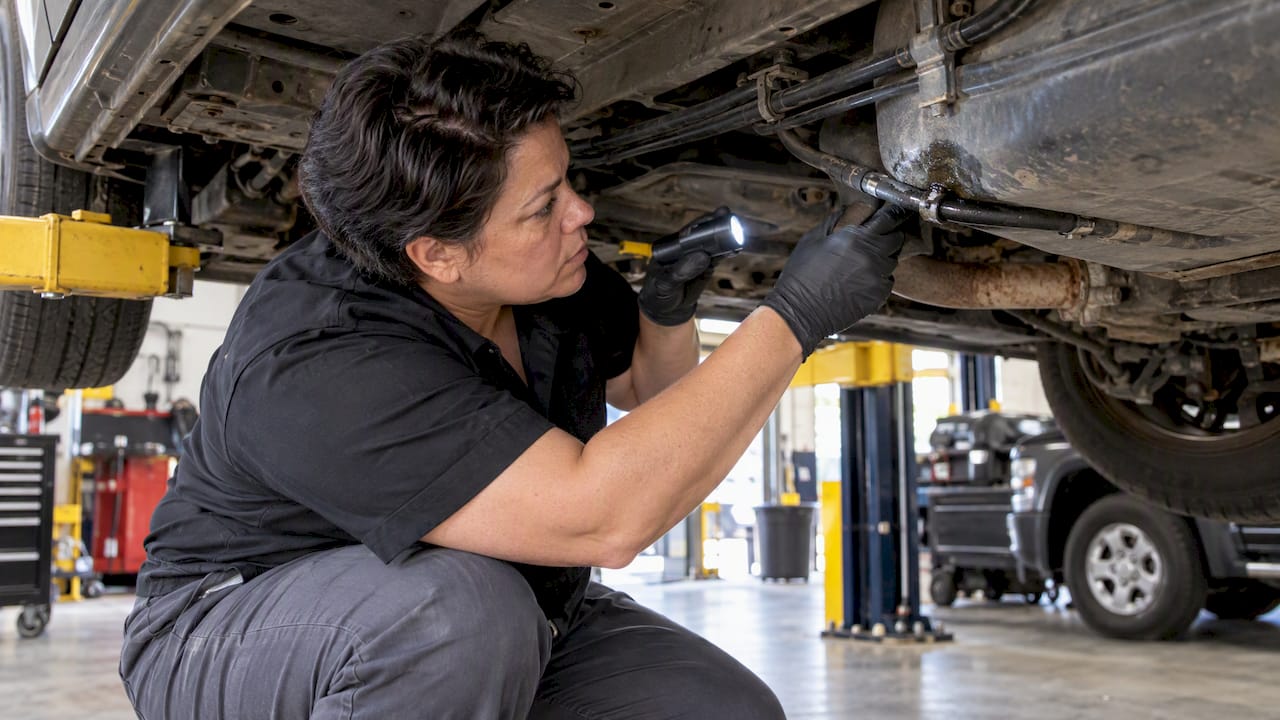
Fuel-line, pump, or injector leaks are more serious. Look for wet spots under the car, especially near the tank or engine bay, or a smell that gets stronger right after the engine has been idling.
EVAP system issues, including a saturated charcoal canister or a cracked purge or vent line, often show up as a smell right after refueling. Topping off the tank can saturate that canister and damage vapor-recovery parts, leaving a lingering odor and sometimes a check-engine light.
A few other causes round out the list:
- Overfilling at the pump forces liquid fuel into vapor-recovery lines designed to handle gas only, which can damage components over time.
- Bad or contaminated fuel often smells sour rather than sharp and may come with rough idling or hard starts.
- Exhaust or engine-bay leaks, including oil drips on a hot manifold, can mimic a gasoline smell even when the fuel system is fine. Our guide to diagnosing burning rubber or odd engine smells covers the non-fuel culprits in more depth.
If the smell is faint and only noticeable right after fueling, it’s likely minor. If it’s sharp, constant, or paired with a check-engine light, treat it as urgent.
Health, fire risk, and immediate actions to take
Gasoline vapor is flammable and breathing it in concentrated amounts can cause headaches or dizziness. Treat a strong smell as an emergency, not a weekend project.
- Stop driving as soon as it’s safe and pull into an open, ventilated area.
- Turn off the engine and avoid anything that could spark, including cigarettes or running electronics near the source.
- Move the car outside if the smell appears in a garage, before doing any further inspection.
- Skip DIY flame tests or makeshift leak-finding methods that involve any open flame.
- Note when and where the smell shows up (after fueling, after idling, only in cold weather) so a technician has useful detail to work from.
Pro Tip: Never use a lighter, match, or open flame to “sniff out” a leak. Professional smoke testing uses controlled, non-combustible vapor and trained safety procedures for exactly this reason.
How professionals diagnose gasoline odors
Shops rely on a mix of tools because no single test catches every leak. An OBD-II scan checks for evaporative system fault codes, but EPA documentation notes these monitors typically detect leaks around 0.020 to 0.040 inches, meaning smaller leaks can slip past a scan entirely. That’s why a functional gas-cap test and manual pressure check often follow.
A thorough inspection also includes:
- Visual checks of fuel lines, fittings, clamps, and the pump area for wear or wet spots
- Smoke testing to pinpoint EVAP leaks the scan tool missed
- Fuel sampling or tank inspection when contamination is suspected
Smoke testing is effective, but it isn’t something to try at home. SAE technical literature documents flash-fire risks when fuel vapor and smoke-testing media mix without proper ventilation and trained handling.
A technician working from a documented estimate cuts down on guesswork and repeat visits. If the scan comes back clean, our smoke test guidance explains what that next step actually finds.
Prevention and routine maintenance to stop recurring odors
Most gasoline odors are preventable with a few consistent habits.
- Stop topping off at the pump. Once the nozzle clicks off, stop. Extra fuel pushed into vapor lines can saturate the charcoal canister.
- Wipe up spills immediately and avoid parking over a wet patch until it’s identified.
- Replace a cracked or aged gas cap seal rather than waiting for a check-engine light.
- Have fuel lines and the fuel filter inspected during routine tune-ups, not just when a symptom shows up.
- Store fuel properly if you keep gas for equipment or a seasonal vehicle. A partner guide on fuel stabilizers notes that stabilized fuel can stay usable for 12 to 24 months when stored correctly, far longer than untreated gas left to sit.
Pro Tip: If your check-engine light comes on after a fill-up and the smell lingers for more than a day, schedule a diagnostic scan before it becomes a bigger EVAP repair.
What our technicians see most often
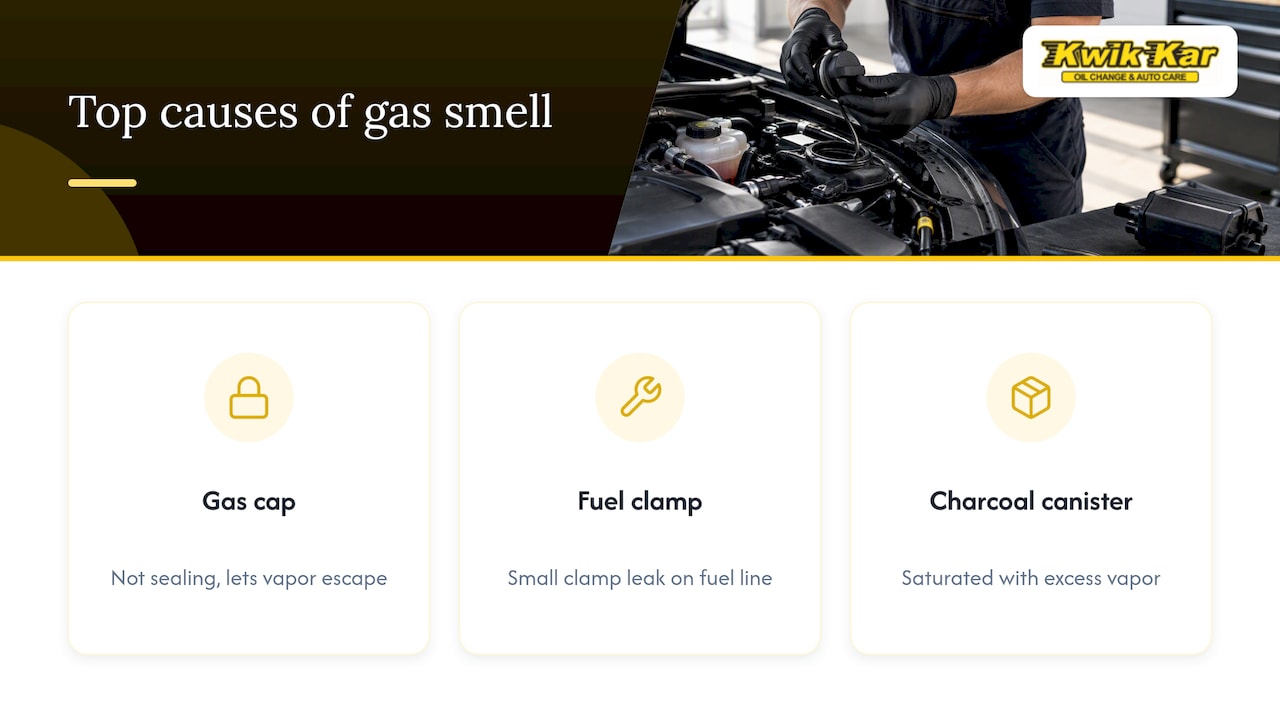
When a customer brings in a car for a gasoline smell, we usually start with the simplest explanations: a gas cap that isn’t sealing, a small clamp leak on a fuel line, or a charcoal canister that’s taken on more vapor than it can handle. Catching those early keeps a minor issue from turning into a bigger repair.
We walk you through what we find with photos and a clear estimate before any work starts, because a gasoline smell is unsettling enough without added uncertainty. If something feels off, it’s worth getting checked rather than waiting it out.
Get your fuel system checked at Kwik Kar Spring Valley
Driving around with an unresolved gasoline smell isn’t worth the risk to your safety or your engine. We offer full engine diagnostic services, fuel system inspections, and EVAP-related repairs, all performed by ASE-certified technicians using the latest diagnostic tools.
Every job comes with a documented estimate before we start. Whether the culprit turns out to be a worn gas cap seal or something deeper in the fuel system, we’ll show you exactly what we found and what it takes to fix it. Browse our full range of repair services or stop by our Spring Valley Road location in Dallas to get a gasoline smell checked out before it becomes a bigger problem.
FAQ
Is it safe to drive a car that smells like gas?
Driving with a strong, persistent gasoline smell isn’t safe, since it often points to a fuel leak or EVAP issue that carries a fire risk near ignition sources, according to AAA Club Alliance. A faint smell that fades shortly after fueling is usually low-risk, but anything constant or paired with a check-engine light should be inspected promptly.
Why does my car smell like gas but no leak?
A smell without a visible leak often points to a loose gas cap or an EVAP system fault, such as a saturated charcoal canister, rather than a mechanical leak you can see. Topping off your tank is a common cause, since it can push liquid fuel into vapor-recovery lines not built to handle it.
How to fix gas smell inside car?
Start by checking that the gas cap is tightened and undamaged, since that’s the simplest and most common fix. If the smell continues, have a technician run an OBD-II scan and, if needed, a professional smoke test to locate the source, since small EVAP leaks can fall below what a basic scan detects.
Does gas smell eventually go away?
A faint smell from a recent spill or a slightly overfilled tank usually fades within a day as vapor disperses. A smell that persists longer than that usually means an underlying issue, such as a bad cap seal or an EVAP fault, that needs a proper inspection rather than time.
Sources
- Why Does My Car Smell? Finding the Source of Vehicle Odors | AAA Club Alliance
- Evaporative Emission Control (EVAP) Systems overview | EPA
- Fuel tank and charcoal canister fire hazards during EVAP system leak testing (SAE paper)