
A used car inspection is a professional, independent evaluation of a vehicle’s mechanical, safety, and cosmetic condition conducted before purchase to identify hidden problems and confirm the car’s true value. Also called a pre-purchase inspection (PPI), this process goes far beyond a Carfax report or a quick visual walkthrough. With used vehicles averaging $26,000 to $28,000 in 2026, a PPI costing $100 to $250 is one of the most cost-effective financial decisions a buyer can make. Kwik Kar Oil Change & Auto Care sees buyers every week who wish they had scheduled one before signing.
What does the used car inspection process involve?
A professional used car inspection covers every major system of the vehicle, from the engine bay to the trunk latch. The goal is to give you a complete, unbiased picture of what you are actually buying, not just what the seller is presenting.
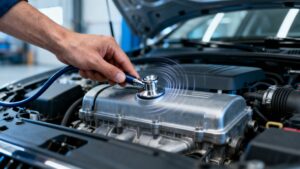
A complete used car inspection covers visual checks of engine fluids, brakes, tires, suspension, bodywork, and electronics, plus a test drive to detect noises or performance issues. That test drive component matters more than most buyers realize. A cold-start idle, a hard acceleration run, and a highway cruise can reveal transmission hesitation, brake fade, or suspension clunks that never show up in photos.
Modern vehicles add another layer of complexity. Hybrid battery systems, advanced driver-assistance systems (ADAS), and lane-keep assist modules all require electronic evaluation, not just a visual check. Vehicle complexity in 2026 makes professional inspections essential because these systems cannot be reliably assessed without specialized diagnostic tools.
The inspection also includes an OBD-II diagnostic scan. Diagnostics scanning reveals pending and stored error codes even when sellers have cleared them beforehand, uncovering hidden problems the seller may not disclose. This is one of the most valuable parts of the process because a cleared code still leaves a stored history in many vehicle computers.
Here is a breakdown of what a thorough used car pre-purchase inspection covers:
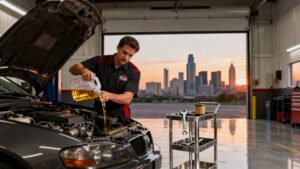
- Engine and drivetrain: Fluid levels and condition, belts, hoses, oil leaks, and transmission behavior
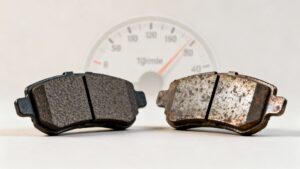
- Brakes and suspension: Pad thickness, rotor condition, shock absorbers, and steering response
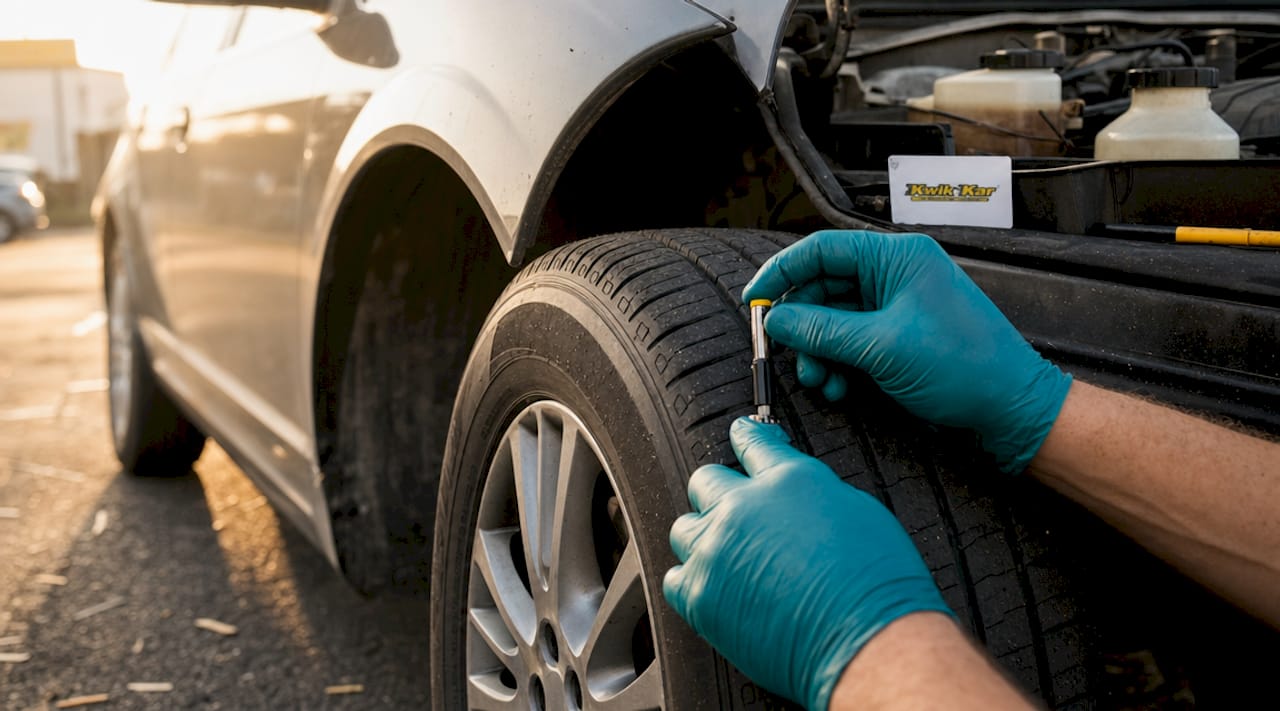
- Tires and wheels: Tread depth, uneven wear patterns that signal alignment or suspension issues, and wheel condition
- Body and frame: Rust, paint inconsistencies, panel gaps, and signs of prior collision repair
- Interior and electronics: HVAC function, power windows, infotainment systems, warning lights, and seat condition
- Safety systems: Airbag status, TPMS sensors, and ADAS calibration where applicable
- Test drive: Cold start behavior, acceleration, braking feel, and any unusual noises under load
Pro Tip: Ask the inspector to photograph every item they flag. A written report with photos is far more useful in negotiations than a verbal summary.
Shop-based vs. mobile inspection
The two main formats for a used vehicle evaluation are shop-based and mobile. A shop-based inspection uses a lift for a full undercarriage view, which is the preferred option for any vehicle over 80,000 miles. Mobile mechanics come to the seller’s location, which is convenient but limits undercarriage access. For a vehicle under $15,000 or with lower mileage, a mobile inspection is often sufficient.
| Inspection Type | Best For | Typical Cost | Undercarriage Access |
|---|---|---|---|
| Shop-based PPI | High-mileage or luxury vehicles | $150 to $250 | Full lift access |
| Mobile mechanic | Lower-mileage, budget vehicles | $100 to $175 | Limited or none |
| Dealer inspection | Certified pre-owned vehicles | Often included | Varies |
Most inspections take between 60 and 90 minutes. Budget for the full time and plan to be present so you can ask questions directly.
Why is a used car inspection important?
The importance of a used car inspection comes down to one number: the cost of what you cannot see. Transmission repairs cost $1,500 to $3,500, and head gasket repairs frequently exceed $2,000. A single missed issue can cost more than ten times the price of the inspection itself.
“Professional, independent mechanical inspections have shifted from optional to essential due to vehicle complexity and potential repair costs.” — comparethecarrier.com
An independent mechanic has no financial stake in whether you buy the car. That objectivity is the core benefit of a used car pre-purchase inspection. A dealer’s in-house inspection, by contrast, is conducted by someone whose income depends on the sale closing.
Here are the four most important protections a PPI provides:
- Financial protection. Identifying a $2,500 repair before purchase gives you the option to renegotiate the price, request the repair, or walk away entirely.
- Safety assurance. Brake wear, tire condition, and airbag status are safety-critical items that a seller has no obligation to disclose in most states.
- Negotiation leverage. A documented list of repair needs gives you a factual basis for a lower offer, not just a gut feeling.
- Peace of mind. Knowing a certified mechanic has reviewed the vehicle removes the anxiety that follows most used car purchases.
You can review a vehicle inspection checklist to understand exactly what mechanics evaluate, which helps you ask better questions when reviewing your report.
How to schedule and prepare for a used car inspection
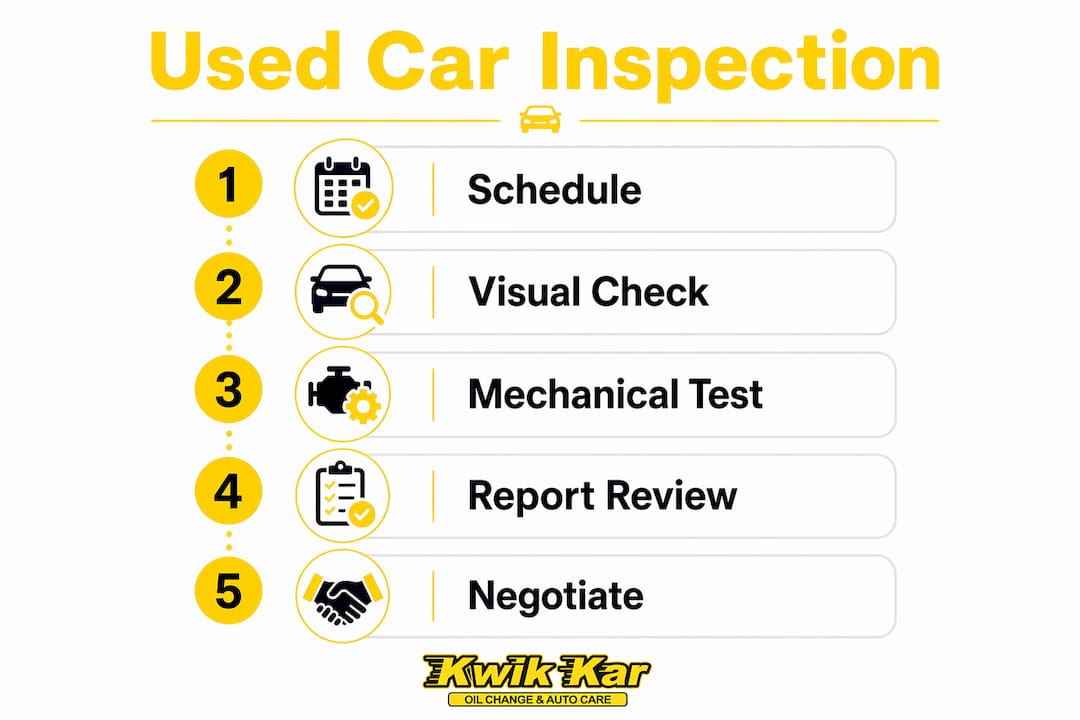
Schedule the inspection after you have narrowed your choice to one specific vehicle but before you make any financial commitment. This timing gives you maximum leverage. If the inspection reveals serious problems, you can walk away without losing a deposit.
Here is how to prepare effectively:
- Choose an independent mechanic. ASE-certified shops or RepairPal-verified locations are reliable choices because their technicians meet documented competency standards.
- Coordinate with the seller. Confirm the seller will allow the vehicle to be driven or transported to a shop. Most private sellers agree when asked professionally.
- Gather the vehicle’s paperwork. Request the title, any available service records, and the VIN before the appointment so the mechanic can cross-reference the Carfax report.
- Confirm what the inspection covers. Ask specifically whether the shop performs an OBD-II scan, checks the frame for prior collision damage, and evaluates ADAS systems if applicable.
- Plan for a test drive. The mechanic needs to drive the vehicle. Confirm the seller or their representative will be available for this step.
Dealer resistance to allowing vehicles off the lot is common. When a dealer refuses, use a mobile mechanic who comes directly to the location to keep the inspection independent and convenient. If a seller refuses any form of independent inspection, treat that refusal as a serious warning sign.
Pro Tip: Request that the inspector note the remaining life percentage on brakes and tires. These items give you a concrete repair timeline and dollar figure to use in negotiations.
After the inspection, review the report carefully before contacting the seller. Understanding how to compare repair estimates helps you convert inspection findings into specific dollar amounts for your negotiation.
What to check in the inspection report and how to use it
An inspection report provides detailed photos and condition descriptions, making it a negotiable document that can justify price reductions or seller repairs before the sale closes. Most professional reports categorize findings into three tiers: critical issues that affect safety or driveability, moderate issues that need attention within six months, and minor items like cosmetic wear.
Critical issues are your strongest negotiation tool. If the report shows worn brake rotors, a leaking valve cover gasket, or a failing wheel bearing, you have documented evidence of a specific repair cost. Present that cost estimate to the seller and request either a price reduction or proof that the repair will be completed before closing.
| Issue Tier | Examples | Buyer Action |
|---|---|---|
| Critical | Failed brakes, frame damage, transmission fault codes | Negotiate price reduction or walk away |
| Moderate | Worn tires, aging belts, minor fluid leaks | Request repair or adjust offer by repair cost |
| Minor | Cosmetic scratches, worn cabin air filter | Accept or use as minor negotiating point |
Moderate issues are often the most useful for negotiation because sellers are more willing to address them than to drop the price significantly on a critical problem. A $400 tire replacement is easier to negotiate than a $3,000 transmission repair.
Walking away is always a valid outcome. The inspection report gives you the factual basis to do so without second-guessing yourself. Once you sign the title and drive off, legal recourse for undisclosed defects is limited in most states, which reinforces why the pre-purchase inspection is your primary protection.
Key takeaways
A used car pre-purchase inspection is the single most effective tool for protecting your investment, with a cost under $250 that can prevent repair bills exceeding $3,500.
| Point | Details |
|---|---|
| PPI cost vs. value | A $100 to $250 inspection protects against repairs that routinely cost $1,500 to $3,500 or more. |
| Diagnostic scanning matters | OBD-II scans reveal stored error codes even after sellers clear them, exposing hidden problems. |
| Timing is strategic | Schedule after selecting a vehicle but before any financial commitment to maximize negotiation leverage. |
| Report is a negotiation tool | Documented repair costs from the report justify price reductions or seller repairs before closing. |
| Independent mechanic is non-negotiable | ASE-certified or RepairPal-verified mechanics provide unbiased assessments that dealer inspections cannot match. |
The honest truth about skipping a PPI
At Kwik Kar Oil Change & Auto Care, we have seen the same scenario play out dozens of times. A buyer skips the inspection to save $150, drives the car for three weeks, and then discovers a transmission issue that was generating fault codes before the sale. The seller is unreachable, and the buyer is facing a $2,800 repair on a car they paid full market price for.
The buyers who come in for a pre-purchase inspection almost never regret it. The buyers who skip it sometimes do. That asymmetry is the whole argument for making a PPI standard practice rather than optional.
One thing most articles do not tell you: the inspection report is useful even when the car passes. A clean report with documented brake life percentages and fluid condition gives you a maintenance baseline. You know exactly what the car needs in the next 12 months, which helps you budget and plan service intervals from day one. We use that kind of baseline data every time a new customer brings in a recently purchased used vehicle.
The other underappreciated benefit is that automotive electronics diagnostics have become a specialized skill. A general visual inspection from a non-certified mechanic will miss ADAS calibration issues, hybrid battery degradation, and module communication faults. These are the problems that cost the most and show up the least on a casual walkthrough. Paying for an ASE-certified technician with the right scan tools is not a luxury. It is the only way to get a complete picture on a modern vehicle.
— Kwik Kar
Get a trusted inspection before you buy
When you are ready to move forward on a used vehicle, Kwik Kar Oil Change & Auto Care gives you the certified expertise to make that decision with confidence.
Our ASE and RepairPal certified technicians use current diagnostic tools to evaluate every major system, from the engine and transmission to ADAS electronics and brake condition. We provide a written report with clear findings before any work begins, so you always know what you are dealing with. Our full auto repair services cover everything from the inspection itself to any repairs the report uncovers. Check our current maintenance service offer for $30 off with a free inspection. Call or schedule online today.
FAQ
What is a used car pre-purchase inspection?
A used car pre-purchase inspection (PPI) is a professional mechanical evaluation of a vehicle’s condition conducted by an independent mechanic before the buyer commits to the purchase. It covers the engine, brakes, suspension, electronics, bodywork, and a test drive to identify existing or developing problems.
How much does a used car inspection cost?
A professional PPI typically costs $100 to $250, which is less than 0.6% of the average used car purchase price in 2026. Mobile mechanic inspections tend to fall on the lower end, while shop-based inspections with full lift access cost more.
What if the seller won’t allow an inspection?
If a dealer refuses to let the vehicle leave the lot, mobile mechanics can come directly to the location to conduct an independent evaluation. A seller who refuses any form of inspection is a significant red flag and a valid reason to walk away from the deal.
Can I use the inspection report to negotiate the price?
Yes. Inspection reports with documented repair costs are direct negotiation tools. Present the specific repair estimates to the seller and request a price reduction, a seller-funded repair, or both before closing.
Is a Carfax report enough instead of a physical inspection?
A Carfax report documents ownership history, reported accidents, and title status, but it does not evaluate current mechanical condition. A vehicle can have a clean Carfax and still have worn brakes, leaking gaskets, or stored fault codes. A physical inspection is the only way to assess the car’s actual condition at the time of purchase.